
Egypt Reveals Why Its Bold Cultural Revival Is Capturing Global Hearts Across The Whole Travel World

Published
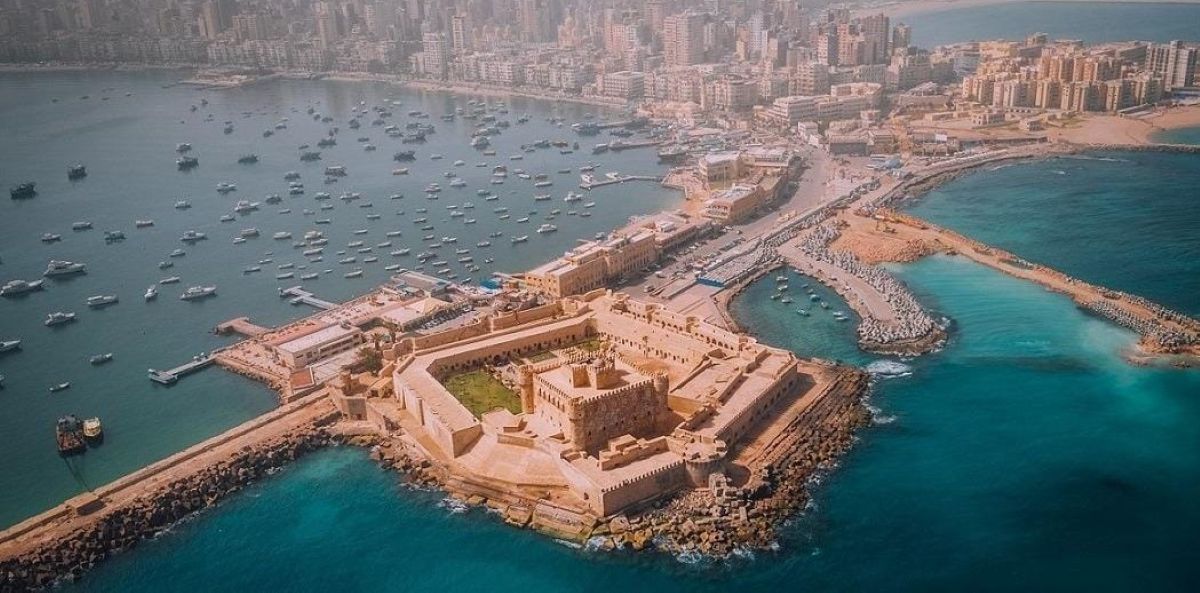
Walking into Egypt now feels like seeing history change before our eyes. There is a feeling of excitement in the air from the bright sun on the stones of the Giza Plateau to the beautiful rooms of the Grand Egyptian Museum (GEM). Egypts tourism revival is causing growth and creating great value in the whole world of travel. Seeing wonder mix with top-quality modern hotels is not just amazing it changes completely how we feel about the birthplace of civilization. This big change is not just bringing millions back it is hearts making people feel wonder and changing travel, around the world forever.
The Transformative Economic Momentum and Record Financial Achievements Across the Hospitality Sector
Advertisement
Advertisement
Financial experts noted that the national hospitality sector had reached historic financial achievements, surpassing pre-pandemic benchmarks across every primary operational index. It was reported that the total monetary contribution generated by international visitors had exceeded $34 billion, demonstrating a remarkable surge in total arrival numbers and individual expenditure rates. Furthermore, authorities indicated that simplified visa procedures and targeted global promotional campaigns had driven exponential visitor growth. Consequently, this massive inflow of foreign capital has strengthened regional supply chains, generated thousands of specialized employment opportunities, and catalyzed municipal development across historical regions.
Market analysts observed that this extraordinary revenue expansion created far-reaching ripple effects across the entire global travel sector. International airlines are swiftly increasing seat capacities on routes heading toward Cairo, while overseas tour operators restructure regional holiday packages to satisfy rising consumer demand. Additionally, industry experts emphasized that extended visitor stay durations were yielding significantly higher revenue per traveler. This financial influx directly supports local retail networks, regional transport systems, and ongoing archaeological conservation projects. Ultimately, this sustained financial strength guarantees that holiday commerce remains a main engine of national economic growth.
Advertisement
Advertisement
Ancient Cultural Heritage Serving as the Primary Engine of Sustainable Global Tourism Growth
Observers declared that the main focal point of this national cultural revival was the Grand Egyptian Museum (GEM), an architectural masterpiece anchoring the entire heritage sector. Positioned adjacent to the legendary Giza Plateau, this state-of-the-art facility provides an unprecedented exhibition environment designed to display ancient artifacts in climate-controlled spaces. Furthermore, urban planners highlighted that extensive restoration efforts throughout Old Cairo had successfully preserved historic streetscapes while introducing high-end amenities for international guests. Consequently, these combined developments have elevated the country into an unrivaled destination for high-value cultural tourism.
Advertisement
Advertisement
In addition to mega-museum developments, localized urban revitalization projects have transformed surrounding historical districts into dynamic cultural hubs. It was reported that the thoughtful introduction of pedestrian walkways, restored monuments, and modern visitor centers allowed tourists to explore ancient history with maximum comfort. Moreover, global heritage preservation bodies praised these measures for successfully balancing massive visitor volumes with rigorous conservation practices. Thus, by converting traditional archaeological locations into immersive cultural hubs, the nation has established a groundbreaking benchmark for international tourism management.
Strategic Infrastructure Upgrades Connecting Major Archaeological Hubs and Transit Corridors
Transport authorities explained that extensive regional infrastructure modernization played a decisive role in supporting this rapid surge in international arrivals. In particular, major expansion projects at Sphinx International Airport have dramatically expanded passenger handling capacities, providing direct air access to world-famous archaeological monuments. Furthermore, civil engineering experts stressed that newly constructed highways and modern railway lines now directly connect key urban transit hubs to the Giza Plateau and neighboring historic sites. Consequently, transit times for arriving international passengers have been drastically reduced, enabling tourists to navigate iconic landmarks with remarkable ease.
Beyond expanding aviation capacity, domestic transit corridors have undergone thorough upgrades to streamline regional transit for international travel groups. Industry analysts pointed out that direct transport links between regional airports and historical districts effectively eliminate urban traffic congestion, ensuring a seamless journey for travelers. Furthermore, these regional transport enhancements have encouraged international visitors to explore secondary historical destinations located far beyond the traditional capital corridor. As a result, visitor density is distributed more evenly across the country, driving balanced economic growth and stimulating regional commerce.
Public and Private Synergies Enhancing Visitor Dwell Time and Overall Spending Value
Economic experts highlighted that joint ventures between public institutions and private commercial investors had substantially enriched the overall international visitor experience. It was reported that high-end culinary venues, luxury retail outlets, and boutique hospitality facilities had been tastefully introduced near major historical sites. Furthermore, renowned contemporary art initiatives, including Art d’Égypte, have successfully combined ancient historical backdrops with modern artistic displays, attracting diverse global traveler demographics. Consequently, these multi-faceted recreational offerings have encouraged foreign tourists to extend their stays significantly.
Advertisement
Advertisement
Private sector partners have also invested heavily in modernizing customer service standards, digital ticketing infrastructure, and multilingual tour services. Operational analysts stressed that these structural improvements directly enhanced guest satisfaction levels and generated positive global recommendations. Moreover, integrating fine dining and artistic events into historic settings effectively transformed standard sightseeing tours into comprehensive cultural lifestyle journeys. Therefore, this elevated service model ensures that visitor spending spreads evenly across multiple commercial sectors, maximizing localized economic benefit.
Ambitious National Targets Driving the Strategic Vision for the Horizon Year of 2030
National planning officials confirmed that current tourism strategies were precisely aligned with an ambitious long-term national objective: attracting 30 million annual international visitors by the year 2030. Observers emphasized that achieving this milestone required continuous cooperation among civil aviation boards, heritage management authorities, and private hospitality investors. Furthermore, travel strategists noted that the systematic execution of these plans was rapidly establishing a highly resilient tourism framework capable of managing high visitor volumes. Consequently, this target serves as a clear roadmap for continuous infrastructure investment and global promotional outreach.
Finally, international travel strategists noted that achieving this target would permanently redefine global tourism flows throughout the Mediterranean and Middle Eastern regions. As destination capacity expands and operational standards rise, global itinerary planners increasingly treat the country as a primary anchor destination for multi-country international tours. Furthermore, the firm commitment to sustainable site management guarantees that ancient monuments are preserved for future generations despite surging visitor numbers. Ultimately, these historic developments guarantee that the current tourism renaissance will leave a permanent, positive footprint on the global travel industry for decades to come.
Doubling National Lodging Capacity to Satisfy Massive Influx Projections
Official developmental assessments revealed that accommodating the target quota of 30 million annual overseas travelers by 2030 necessitates expanding total accommodation capacity from the baseline figure of 240,000 operational rooms to nearly 500,000 fully equipped units nationwide. Industry reports highlighted that a development pipeline encompassing approximately 35,000 upscale and luxury keys remains actively under construction across primary urban centers. Consequently, this rapid growth in lodging inventory significantly raises international guest capacity while incentivizing longer visitor stays near prime heritage corridors.
Advertisement
Advertisement
In addition to strengthening urban hotel infrastructure in core metropolitan areas, substantial foreign capital continues to fuel resort projects along newly prioritized maritime stretches. Market analysts observed that targeted financial investments are converting emerging coastal territories into lucrative luxury destinations. Furthermore, localized economic metrics indicate that every newly added hotel key generates an estimated 1.5 direct and indirect service opportunities within surrounding supply ecosystems. As a result, this vast accommodation expansion serves as a major engine of localized business activity and job creation.
Strategic Geographical Diversification Away from Historic River Basins into Northern Coastal Enclaves
Tourism planning boards detailed a structural strategy designed to broaden focus beyond traditional archaeological corridors along the Nile River and historic Red Sea resort areas. Instead, massive capital expenditure has been directed toward transforming Mediterranean waterfront territories, including El Alamein and Ras El-Hekma, into year-round high-end resort zones. Consequently, this spatial redistribution eases seasonal overcrowding at ancient monuments while unlocking multi-billion-dollar coastal real estate opportunities for international investors and travelers.
Industry specialists noted that combining historical sightseeing excursions with Mediterranean beach resort stays creates a far more dynamic offering for global tour operators. Furthermore, expanding direct charter flight connectivity into El Alamein International Airport enables international travelers to seamlessly pair cultural exploration with coastal relaxation. Thus, this geographical expansion fosters balanced regional tourism distribution while driving higher average spend per passenger across diverse geographic zones.
The Operational Rise of Sphinx International Airport as a Dedicated Gateway to Heritage Destinations
Civil aviation authorities confirmed that comprehensive modernization projects at Sphinx International Airport have elevated its operational capacity to over 1.2 million passengers per year. Situated strategically on the western perimeter of the metropolitan region, this airport hub offers international visitors direct access to the Giza Plateau and the Grand Egyptian Museum (GEM) without navigating central urban traffic bottlenecks. Consequently, transfer durations from terminal gates to premier archaeological landmarks have dropped by more than 50%.
Advertisement
Advertisement
Furthermore, commercial airlines have inaugurated specialized domestic flight circuits linking this western aviation portal directly to southern archaeological nodes like Luxor and Aswan. Transit analysts emphasized that this point-to-point air network enables international travelers to completely bypass standard city transfers. As a result, travel planners are redesigning short-duration itineraries to maximize sightseeing efficiency for high-value long-haul visitors.
Cutting-Edge Restoration Facilities and Display Infrastructure at the Grand Egyptian Museum
Heritage preservation specialists noted that the Grand Egyptian Museum (GEM) complex houses the Middle East’s largest antiquities restoration and research center, featuring 19 specialized conservation laboratories connected across a 200-meter subterranean corridor. Reports confirmed that this facility utilizes advanced micro-climate controls and non-invasive diagnostic equipment to preserve over 100,000 priceless historical artifacts. Consequently, this state-of-the-art facility establishes a benchmark for archaeological conservation and scientific heritage management worldwide.
Beyond its conservation capabilities, the institution presents the complete 5,000-piece treasure collection of King Tutankhamun within a unified gallery space spanning 7,000 square meters for the first time in history. Museum administrators indicated that digital interface technology and interactive augmented reality displays heighten visitor engagement while maintaining strict climate control standards. Therefore, this blend of high-tech display systems and scientific conservation elevates the global appeal of cultural travel.
Digital Access Systems and Automated Visitor Flow Controls Across Sensitive Historic Environs
To safeguard sensitive heritage sites such as the Giza Pyramids and Old Cairo from physical degradation, authorities have implemented digital visitor flow protocols. Operational reports indicated that fully integrated ticketing systems enforce daily access limits and hourly entry quotas across major historic landmarks. Consequently, these operational adjustments have dramatically curbed overcrowding while improving overall visitor safety and movement across ancient sites.
Advertisement
Advertisement
Furthermore, economic analysts noted that contactless transaction integration and automated queue controls improved ticketing processing efficiency by over 40%. In addition to streamlining site entry, real-time data gathered by these digital entry systems allows conservation authorities to monitor crowds dynamically. As a result, this technological integration balances commercial tourism demands with necessary site conservation mandates.
Modernizing Immigration Policies Through Broadened Electronic Visa Access
Immigration authorities announced that comprehensive entry reforms have extended electronic visa (e-Visa) access to citizens of over 180 nations globally. Furthermore, multi-entry visas valid for 5 years were introduced to stimulate repeated business travel and longer leisure stays. Consequently, these simplified entry regulations have significantly lowered travel planning hurdles for international tourists and corporate visitors alike.
Industry experts emphasized that streamlined entry processes directly correlate with a measurable surge in short-notice flight reservations. Furthermore, specialized transit visa options allowing short layover excursions have successfully captured high volumes of airline passengers transferring through regional hubs. Therefore, these policy adjustments serve as an efficient catalyst for sustained arrival growth across major global source markets.
Integrating Fine Dining and Contemporary Art Exhibitions to Maximize Visitor Dwell Time
Economic analysts highlighted that incorporating luxury retail outlets, fine dining venues, and contemporary art exhibitions directly increases international visitor dwell time. Initiatives such as Art d’Égypte held amidst ancient architectural settings have transformed traditional sightseeing trips into multi-day lifestyle experiences. Consequently, recent traveler survey data reveals that the average stay length for cultural visitors increased from 5 nights to over 8 nights per visit.
Advertisement
Advertisement
Furthermore, spending metrics verify that extended stay durations translate directly into higher daily per-capita expenditure within local culinary, retail, and artisan sectors. Researchers pointed out that tourists participating in these curated lifestyle events spend up to 35% more daily than standard excursion travelers. Ultimately, blending modern lifestyle amenities with ancient monuments maximizes localized revenue generation without overcrowding physical sites.
Expanding Modern Mass Transit Networks to Connect Urban Core Districts to Historic Complexes
Urban mobility engineers detailed the ongoing construction of dedicated transit projects, including Cairo Metro Line 4, designed specifically to link central urban hubs directly to the Giza Pyramids Station. Transport planners confirmed that this electric transit line possesses a passenger throughput capacity capable of moving tens of thousands of commuters and tourists daily. Consequently, this rail infrastructure significantly reduces dependence on private vehicle travel across busy metropolitan highways.
In addition to easing urban traffic bottlenecks, shifting toward electric mass transit supports long-term environmental sustainability goals across historical municipal regions. Analysts observed that direct rail connectivity lowers vehicle emissions near open-air archaeological monuments while offering budget-conscious international travelers safe, efficient transport options. Thus, these transit investments reinforce the commitment to building a modern, sustainable tourism framework.
The Final Verdict
Standing before these monuments today you can truly feel the heart of a nation that honors its past and steps boldly into the future. Egypt is not opening new museum doors or expanding airports; Egypt is also opening its arms to the world with fresh pride and warmth. This extraordinary renaissance goes beyond numbers, figures or tourist benchmarks. It is, about the chills you feel when ancient wonder meets heartfelt Egyptian hospitality. As world travelers return home inspired one thing remains crystal clear, the magic of the Nile will forever captivate our shared soul.
Advertisement
