
Greece, Cyprus and Egypt Transform Seasonal Migration as Hospitality Labour Shortages Threaten Mediterranean Tourism Growth

Published
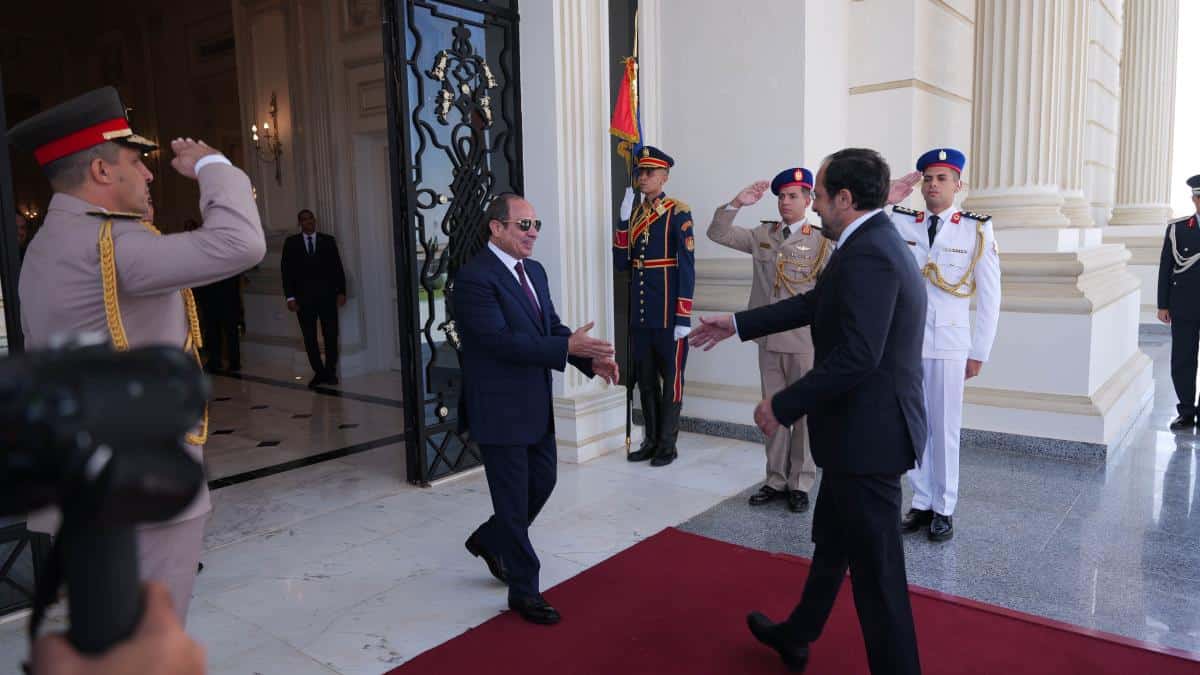
Greece, Cyprus and Egypt are to be the major connectors in a new Mediterranean tourism workforce corridor to a persistent crisis in shortages of staff affecting industry in all corners of the region. With more and more seasonal resort services relying on foreign personnel to keep its restaurants, houses and overall tourism industry going at a very busy level now and during summer, coordinated bilateral labor contracts, established channels for recruitment, staff training programs and increased mobility have begun to provide an organized structure for staffing shortages across. This newer corridor not only connects tourism and aviation, migration policies, and regional economic growth but also permitsGreece,CyprusandEgypt to develop workforce capacity and employment prospects. This evolving corridor may shape Mediterranean tourism competitiveness and elasticity for years to come.
Macroeconomic Pressures and Demographic Realities in Greece and Cyprus
The resort-centred economies of the Eastern Mediterranean are navigating a widening structural contradiction. International visitor arrivals across Greece and Cyprus have surged to historic highs, generating record foreign exchange earnings and driving national economic growth. In Greece, the tourism and hospitality sector produced €23.6 billion in direct travel receipts during 2025, accounting for 14.4% of total domestic employment and more than 40% of the nation’s service export earnings. Concurrently, Cyprus recorded consistent economic expansion fuelled by visitor expenditure, with tourism directly contributing over 12% to national gross domestic product.
However, this commercial vitality is increasingly constrained by acute operational labour shortfalls. Data released by the Panhellenic Federation of Workers in Food Service and Tourism (POEET) and validated by the Research Institute for Tourism (ITEP) of the Hellenic Chamber of Hotels revealed an annual operational shortfall of between 80,000 and 90,000 positions across Greek hospitality and food services, with 53,000 to 54,000 vacancies concentrated within hotel properties alone. In Cyprus, official figures from the Statistical Service of Cyprus (CYSTAT) showed 13,905 unfilled vacancies across the broader economy in early 2026, pushing the national job vacancy rate to 2.8%, with the accommodation and catering sectors accounting for the highest operational vacancy density.
| Macroeconomic and Workforce Metric | Hellenic Republic (Greece) | Republic of Cyprus | Source Authority / Baseline |
| Sector Revenue Contribution | €23.6 billion (2025 direct receipts) | >12% of Gross Domestic Product | Bank of Greece / OECD Tourism Review |
| Services Export Share | 42.0% of total national service exports | ~38.5% of total service receipts | Hellenic Statistical Authority / OECD |
| Combined Annual Hospitality Vacancy Volume | 80,000 – 90,000 unfilled seasonal positions | ~13,905 economy-wide vacancies | POEET / ITEP / CYSTAT |
| Hotel Property-Specific Labour Shortage | 53,000 – 54,000 operational vacancies | ~4,500 – 6,000 peak seasonal vacancies | ITEP Hotel Panel / PASYXE |
| Targeted Intake of Third-Country Nationals | 28,000 positions allocated for foreign intake | ~3,000 – 5,000 bilateral entries sought | Greek Ministry of Migration / CY Ministry of Labour |
| 2035 Projected Structural Workforce Shortfall | 290,000 positions (27% sector deficit) | Compounding operational capacity caps | World Travel & Tourism Council (WTTC) |
This deficit is not a temporary post-pandemic disruption; it is structural. Rapid domestic population ageing, declining fertility rates, and the persistent migration of educated youth to Northern European service markets have drained the domestic seasonal labour pool. Simultaneously, internal European Union labour mobility from Eastern and Central European member states—once the primary recruitment reservoir for Mediterranean coastal destinations—has contracted sharply due to domestic wage convergence in those economies.
Advertisement
Advertisement
The Strategic Shift Toward Bilateral Labour Mobility
Recognising that internal European Union labour reserves cannot meet regional operational requirements, Greek and Cypriot policymakers have pivoted toward managed external migration. Projections published by the World Travel and Tourism Council warn that without institutional labour corridors, Greece’s hospitality shortfall will reach 290,000 positions by 2035, representing a 27% deficit against total sector demand—the second-most severe tourism labour gap globally after Japan.
To avert long-term capacity caps and deterioration of service quality, the focus has shifted toward building bilateral seasonal work frameworks with geographically adjacent partner states. The operational deployment of the Egypt-Greece-Cyprus work corridor represents the primary institutional response to this structural crisis, creating an organized, state-monitored channel that links vetted, vocational-trained Egyptian workers with destination resorts across the Eastern Mediterranean.
Advertisement
Advertisement
Bilateral Agreements and Legal Architecture: Greek and Cypriot Frameworks
Greek Immigration Reform: Law 5275/2026 and Seasonal Visas
Greece overhauled its legislative architecture governing economic migration through the enactment of Law 5275/2026, published in the National Government Gazette on 6 February 2026. Amending the comprehensive Greek Immigration Code (Law 5038/2023), Law 5275/2026 formally transposes Directive (EU) 2024/1233 on single application procedures, while providing specific statutory enhancements for seasonal labour mobility.
Prior Greek legal frameworks restricted seasonal work authorisations to a maximum of six months per calendar year, forcing island hoteliers to conduct dual recruitment cycles during extended operating seasons. Law 5275/2026 addresses this operational friction by expanding the statutory maximum stay for third-country seasonal workers to nine continuous months within any twelve-month rolling period. This nine-month window matches the operational cycle of Greek coastal resorts in Crete, Rhodes, the Cyclades, and Attica, which typically open in late March and conclude operations in late November.
Advertisement
Advertisement
| Legal Dimension | Greek Regulatory Architecture (Law 5275/2026) | Cypriot Regulatory Architecture (Bilateral MoU) | Baseline European Standard (Directive 2014/36/EU) |
| Maximum Authorised Seasonal Duration | Up to 9 continuous months within a 12-month rolling period | Up to 9 months per calendar season | Maximum 5 to 9 months per 12-month rolling window |
| Application and Verification Mechanism | Centralised digital portal (“OPS Migration”) under the metaklisi system | Accelerated Department of Labour clearance and CRMD processing | Harmonised single application or expedited national visa |
| Statutory Equality and Parity Mandate | Full parity with domestic collective labour agreements and AMKA registration | Mandatory adherence to Hotel Industry Decree K.D.P. 55/2025 | Absolute equality in pay, working hours, and workplace safety |
| Accommodation Governance | Mandatory housing declaration; verified municipal health inspection | Deductions capped at 10% for housing; verified sanitary norms | Mandatory proof of adequate housing; rent cannot be excessive |
| Circularity and Re-Entry Enforcement | Mandatory departure within 10 days; 5-year Schengen re-entry ban for overstays | Return flight guarantee; digital exit tracking with Ministry of Labour | Simplified re-entry procedures for compliant returning workers |
Under the updated metaklisi invitation mechanism established in Article 61 of Law 5038/2023 and streamlined under Law 5275/2026, Greek employers apply electronically via the “OPS Migration” platform. Employers must demonstrate tax compliance, verify the unavailability of domestic or EU jobseekers via the Public Employment Service (DYPA), submit a verified employment contract, and provide legally certified proof of adequate worker accommodation. Employers pay a statutory fee of €150 per deployee and deposit a security payment equivalent to two months of social insurance contributions. Once approved by regional administrative directorates, invitations are transmitted directly to the Greek Consular Authority in Cairo for visa stamping.
The Cyprus-Egypt Bilateral Memorandum of Understanding
Cyprus formalised its dedicated workforce partnership with Egypt by signing an intergovernmental Memorandum of Understanding (MoU) in June 2024, explicitly designed to replenish workforce shortfalls in tourism, hospitality, construction, and agriculture. The operational implementation of this accord was reviewed during an official ministerial summit held in Cairo from 20 to 22 April 2026, led by Cypriot Minister of Labour and Social Insurance Marinos Mousiouttas and Egyptian Minister of Labour Hassan Radat El Sayed.
During the bilateral meetings, the ministers affirmed that the agreement establishes a stable, transparent framework for regular migration, combining verified employment offers with robust protections for worker dignity. The ministerial delegation also conducted site inspections of the Al-Hegaz Vocational Training Centre in Cairo, reviewing specialized pre-departure technical training programmes established by the Egyptian Ministry of Labour. Under this corridor, the Cypriot Department of Labour Relations processes employer staffing requisitions, while the Civil Registry and Migration Department (CRMD) issues dedicated seasonal work authorisations, granting accelerated visa clearances for candidates pre-screened by Egyptian authorities.

Alignment with European Union Directive 2014/36/EU
Both national frameworks operate within the parameters of EU Directive 2014/36/EU, the foundational European Union directive governing conditions of entry and stay for third-country seasonal workers. The directive enforces strict legal standards:
Advertisement
Advertisement
- Member states must ensure seasonal workers receive equal treatment compared to domestic employees regarding basic pay, working hours, occupational health and safety, and social insurance coverage.
- Employers must provide verifiable documentation of adequate accommodation meeting national safety and sanitary codes, with rent charges strictly regulated to prevent exploitative wage clawbacks.
- Administrative and visa fees must remain proportionate, and the costs of recruitment and processing cannot be transferred onto seasonal workers.
- Seasonal workers must retain their main domicile in their country of origin and depart the host state upon contract expiration, with simplified re-entry protocols offered to incentivize circularity and voluntary return.
The European Commission’s implementation evaluation (COM(2026) 261) affirmed that transparent bilateral corridors represent the primary mechanism for member states to align domestic operational demands with EU migration law, ensuring seasonal labour needs are resolved without facilitating undocumented migration or wage dumping.
Cyprus’s Diversified Third-Country Labour Ecosystem
While the bilateral corridor with Egypt provides a geographical anchor across the Eastern Mediterranean basin, Cyprus has structured an internationally diversified recruitment architecture. To insulate its travel economy against geopolitical disruption, seasonal supply fluctuations, or administrative backlogs, the Cypriot government has formalised distinct regulatory channels across multiple non-EU partner states.
| Country of Origin | Primary Hospitality and Tourism Roles | Legal Framework and Pathway | Structural Governance and Safeguards |
| Egypt | Housekeeping, F&B Service, Kitchen Staff, Maintenance | Bilateral Seasonal MoU (Ministry of Labour) | Accelerated processing, direct seasonal return protocols, vocational alignment |
| Republic of India | Culinary Specialists, F&B, Facilities Engineering, Hotel Tech/Ops | India–Cyprus Strategic Partnership Framework (2025) | Multi-year workforce integration, language-trained talent pool, consular vetting |
| The Philippines & Vietnam | Resort Operations, Housekeeping Supervision, Specialist F&B | Standard Temporary Residence and Work Permit (TRWP Single Permit) | Employer-sponsored visas, strict minimum wage adherence under K.D.P. 55/2025 |
| Nepal & Bangladesh | Utility Kitchen Staff, Groundskeeping, Logistics, Heavy Cleaning | State-Regulated Recruitment Protocols (e.g., BMET) | Mandatory government clearance cards, apostilled documentation, electronic payroll |
Strategic Partnership with India
Workforce cooperation between Cyprus and India reached an institutional milestone during the official state visit of Prime Minister Narendra Modi to Nicosia on 15–16 June 2025, where he and President Nikos Christodoulides issued a Joint Declaration on the Implementation of the Comprehensive Strategic Partnership. This framework facilitates structured workforce integration across multiple economic sectors, including technology, construction, and hospitality.
Indian workers deployed into Cypriot resorts supply specialized talent in culinary arts, front-of-house food and beverage service, and hotel engineering operations. The institutional scaffolding draws upon India’s extensive network of vocational hospitality colleges and an educated, English-fluent labour pool, allowing Cypriot operators to integrate workers into front-line guest relations and digital hotel management functions.
Single Permit Deployments from Southeast Asia
For front-of-house service, floor management, and specialized resort housekeeping, Cypriot hoteliers have long utilised the Temporary Residence and Work Permit (TRWP) Single Permit pathway with the Philippines and Vietnam. Filpino hospitality staff, trained in international service curricula and fluent in English, are deployed across hotel guest relations, concierge desks, and food service supervision. Recruitments from Vietnam supply structured resort housekeeping teams and facility operations. Both pathways require employment contracts to be authenticated by the Department of Labour Relations, guaranteeing that all terms adhere strictly to statutory Cypriot wage decrees.
Regulated Back-of-House Channels from South Asia
Back-of-house utility, dishwashing, groundskeeping, and resort logistics are largely staffed via state-regulated recruitment agreements with Bangladesh and Nepal. Deployments from Bangladesh operate under the supervision of the Bureau of Manpower, Employment and Training (BMET), which mandates the issuance of digital clearance cards verifying verified employment contracts, clean police records, and medical testing before departure. Deployments from Nepal require apostilled documentation and approval via the Department of Foreign Employment in Kathmandu. This diversified ecosystem enables Cypriot hoteliers to allocate international staff based on operational specialization, ensuring baseline staffing resilience across coastal resort corridors.
Advertisement
Advertisement
Operational Timelines and Statutory Wage Mandates
The Annual Six-Phase Workforce Deployment Cycle
Deploying seasonal personnel from third countries requires synchronization between corporate recruitment calendars and state immigration agencies. The annual seasonal staffing lifecycle follows six structured phases across a twelve-month rolling calendar:
- Phase One: Operational Auditing and Quota Assessment (October to December). Resort human resource departments audit year-end staffing figures, identify operational vacancies, and lodge workforce requests with national associations such as PASYXE or SETE. Properties submit formal requisitions to state employment portals to fulfill domestic labour market testing mandates.
- Phase Two: Administrative Filing and Candidate Screening (January to February). Biennial national quotas are confirmed, and employers upload formal dossiers to the Greek OPS Migration platform or submit applications to the Cypriot Department of Labour. In Egypt, candidate lists are prepared via the Ministry of Labour and partner institutions like the Al-Hegaz Training Centre.
- Phase Three: Consular Clearance and Logistics Finalisation (March to April). Consular authorities in Cairo process biometrics, review background checks, and issue seasonal entry visas. Hoteliers finalize block flight reservations and inspect staff accommodations to ensure compliance with municipal sanitary codes.
- Phase Four: Deployment and Statutory Integration (Late April to Early May). Workers transit via dedicated air bridges to Athens, Heraklion, Rhodes, and Larnaca airports. Upon arrival, property HR divisions register employees for statutory tax numbers, biometric residence cards, and national social security—AMKA in Greece, Social Insurance in Cyprus.
- Phase Five: Operational Execution and Labour Inspections (May to October). Staff execute 38- to 40-hour workweeks under active contract supervision. State labour inspectorates conduct unannounced site audits to enforce statutory wage scales, overtime limits, and working hour regulations.
- Phase Six: Demobilisation and Circular Repatriation (Late October to November). Seasonal contracts conclude at resort closure. Final pay statements, accrued leave allowances, and social insurance records are settled, followed by transit back to Cairo, logging verified exits within national border databases.
Cypriot Hotel Industry Minimum Wage Decree K.D.P. 55/2025
A core operational requirement for hoteliers operating in Cyprus is compliance with the statutory Hotel Industry Decree (K.D.P. 55/2025), published in the Official Gazette of the Republic and enforced as the governing wage order for accommodation establishments. Unlike the general national minimum wage order (which applies horizontally across unskilled non-specialised sectors), K.D.P. 55/2025 sets legally binding minimum wages across nineteen individual occupational categories within hotel properties.
Paying an employee below the statutory minimum designated for their specific occupational title constitutes a prosecutable breach of Cypriot employment law under the Protection of Wages Law. The decree incorporates step-rate scales that adjust pay based on continuous service tenure, accounting for operational skill acquisition. All wage figures are calibrated to a standard working week of 38 hours distributed over five days.
| Occupational Category (K.D.P. 55/2025) | Service Tenure Bracket | Gross Monthly Minimum (38-Hour Week) | Minimum Statutory Hourly Rate |
| Room Attendant / Chambermaid | Up to 3 months continuous service | €1,020.00 | €6.20 |
| Room Attendant / Chambermaid | More than 3 months service | €1,075.00 | €6.53 |
| Hotel Common Area Cleaner | Irrespective of service tenure | €1,075.00 | €6.53 |
| Assistant Waiter / Table Server | Up to 6 months continuous service | €998.00 | €6.07 |
| Assistant Waiter / Table Server | More than 6 months service | €1,153.00 | €7.01 |
| Bar Assistant / Service Staff | Up to 6 months continuous service | €998.00 | €6.07 |
| Bar Assistant / Service Staff | More than 6 months service | €1,153.00 | €7.01 |
| Kitchen Apprentice / Commis | Up to 6 months continuous service | €998.00 | €6.07 |
| Kitchen Apprentice / Commis | More than 6 months service | €1,153.00 | €7.01 |
| Laundry / Linen Attendant | Irrespective of service tenure | €1,065.00 | €6.47 |
| Pool Attendant / Groundskeeper | Irrespective of service tenure | €1,065.00 | €6.47 |
| Luggage Attendant / Porter | Up to 6 months continuous service | €965.00 | €5.86 |
| Luggage Attendant / Porter | More than 6 months service | €1,037.00 | €6.30 |
| Receptionist Grade B | Qualified / post-probationary | €1,187.00 | €7.21 |
Overtime performed beyond 38 hours must be compensated at a 1:1.5 ratio, while work performed on mandatory rest days (the sixth day), Sundays, and official public holidays attracts premium rates as defined in sectoral collective agreements.
Greek Statutory Baselines and Collective Bargaining Parity
In Greece, the baseline compensation for seasonal workers is governed by the national statutory minimum wage uplift to €920 per month implemented in April 2026, alongside sectoral collective labour agreements signed between POX and POEET. The national collective agreement for hotel workers establishes wage tiers that stand roughly 14.5% above the statutory minimum, with entry-level chambermaids, dining attendants, and kitchen staff receiving between €1,050 and €1,150 gross per month, augmented by statutory allowances for seniority, marital status, and seasonal bonuses. Article 3 of Law 5275/2026 guarantees third-country seasonal workers full parity with domestic employees under these collective agreements, ensuring that employers cannot utilize foreign intake to undercut domestic compensation standards.
Statutory Ceilings on Board and Accommodation Deductions
Because resort hospitality frequently entails living on-site, deduction mechanisms for housing and meals are closely regulated to prevent worker exploitation. Under Article 10 of the Cypriot legal framework, an employer who provides food and lodging may reduce an employee’s cash wage only if explicitly stipulated in a signed written contract and within rigid statutory ceilings:
Advertisement
Advertisement
- Deductions for meals cannot exceed 15% of gross pay.
- Deductions for accommodation cannot exceed 10% of gross pay.
- Total deductions for board and lodging cannot exceed 25% of the gross wage under any circumstances.
In Greece, Law 5275/2026 requires employers to submit a formal declaration verifying the provision of adequate accommodation as a condition of visa approval. Where employers provide housing, deductions must not depress cash earnings below the statutory minimum wage, and housing must satisfy municipal hygiene, fire safety, and space per occupant standards.
Vocational Mobility Protocols and Curriculum Harmonisation
Academic and Institutional Partnerships in Egypt
A critical challenge in seasonal workforce corridors is closing the gap between the operational practices of sending countries and the customer service expectations of high-end European resorts. Deploying untrained staff increases onboarding friction, places operational strain on department heads, and risks operational disruptions.
To resolve this bottleneck, the Egypt-Greece-Cyprus work corridor incorporates structured vocational mobility protocols. The framework connects the Egyptian Ministry of Labour and the Egyptian Tourism Federation (ETF) with leading academic faculties, notably the Faculty of Tourism and Hotel Management at Helwan University in Cairo. Under state supervision, specialised facilities such as the Al-Hegaz Vocational Training Centre conduct structured pre-deployment programmes tailored to the operating manuals of European hotel chains, including Grecotel, Mitsis Hotels, and Leptos Calypso Hotels.
| Vocational Training Module | Technical Curriculum and Operational Competencies | Standard / Accreditation | Target Roles in Hospitality |
| Food Safety & Hygiene | European HACCP protocols, cold-chain monitoring, cross-contamination | Egyptian Tourism Federation / National Food Safety Authority | Kitchen Apprentices, Commis Chefs, Buffet Attendants |
| Digital PMS & POS Systems | Oracle Micros POS, Opera PMS, digital inventory and housekeeping terminals | Al-Hegaz Hospitality Laboratory Standards | Table Servers, Bar Staff, Housekeeping Dispatch |
| Housekeeping Operations | Ergonomic cleaning methods, linen management, sanitation standards | European Resort Chains SOPs (e.g., Grecotel Manuals) | Room Attendants, Common Area Cleaners, Linen Staff |
| Applied Hospitality Languages | Conversational Modern Greek (A1 basics) and functional hospitality English | Helwan University Hospitality Language Department | Guest-Facing Waitstaff, Porters, Reception Support |
| Labour Rights and Safety | Working hours limits, payslip auditing, AMKA/Social Insurance entitlements | Joint Ministry of Labour / ILO Training Framework | All Seasonal Deployees Across Resort Divisions |
Standardised Technical Competencies and Dual Certification
The pre-departure training matrix comprises 120 hours of modular instruction focused on four core operational competencies:
- Hazard Analysis Critical Control Point (HACCP) compliance, qualifying kitchen and dining staff in European food safety regulations.
- Property management systems (PMS) and digital point-of-sale (POS) literacy, training workers on platforms like Opera and Micros to facilitate operational deployment.
- Linguistic proficiency, emphasizing functional hospitality English and conversational modern Greek (covering essential greetings, guest interactions, and occupational safety vocabulary).
- Cultural acclimatisation and service standards, introducing European resort service expectations, guest privacy norms, and statutory workplace rights.
Candidates who complete the curriculum receive dual-certification credentials recognized by the Egyptian Ministry of Labour and national hospitality federations in Greece and Cyprus. This pre-departure training reduces on-property onboarding times from several weeks to a few days, providing resorts with operational capacity from the beginning of the season.
Cross-Border Aviation Infrastructure and Seasonal Air Bridges
Route Topography and Scheduled Capacity
The operational viability of the corridor depends on reliable civil aviation connectivity across the Eastern Mediterranean basin. Moving seasonal workforces between Egypt and resort destinations requires direct, scheduled air capacity linking Cairo International Airport (CAI) with primary tourism airports: Athens International Airport (ATH), Heraklion International Airport (HER) in Crete, Rhodes International Airport (RHO) in the Dodecanese, and Larnaca (LCA) and Paphos (PFO) in Cyprus.
Advertisement
Advertisement
Scheduled connectivity is anchored by EgyptAir and Aegean Airlines. EgyptAir operates daily non-stop services between Cairo and Larnaca, completing the transit in 1 hour and 25 minutes. For Greek destinations, Aegean Airlines provides high-frequency connections linking Cairo with Athens, offering onward connections to Heraklion, Chania, Rhodes, Kos, and Santorini. The total transit time from Cairo to Heraklion via Athens averages approximately 4 hours and 50 minutes to 6 hours.
Additionally, regional carriers such as Cyprus Airways, Air Cairo, and Wizz Air operate scheduled point-to-point flights connecting Cairo and Alexandria (HBE) with Larnaca, Paphos, and Athens, offering affordable capacity for individual arrivals and mid-season workforce adjustments.
| Aviation Corridor | Primary Operating Carriers | Flight Profile and Duration | Strategic Logistical Function |
| Cairo (CAI) to Larnaca (LCA) | EgyptAir, Cyprus Airways, Aegean | Non-stop; 1 hr 25 min | Primary arterial corridor for Cypriot resort clusters |
| Cairo (CAI) to Athens (ATH) to Heraklion (HER) | Aegean Airlines, EgyptAir (Codeshare) | 1-stop connecting; 4 hr 50 min to 6 hr | Primary corridor for Cretan luxury hotel operators |
| Cairo (CAI) to Rhodes (RHO) | Aegean, EgyptAir, Air Cairo, Smartwings | Direct seasonal / 1-stop via ATH; ~2 hr 30 min | Primary corridor for Dodecanese resort properties |
| Alexandria (HBE) to Larnaca / Athens | Air Cairo, Wizz Air, Sky Express | Direct low-cost scheduled flights | Secondary corridor for culinary and maintenance staff |
| Cairo to Heraklion / Rhodes (Seasonal Charters) | Aegean Charter, Air Cairo / EgyptAir Charters | Dedicated direct charters; 1 hr 30 min | Concentrated group mobilization (April) and demobilization (Nov) |
Industry-Subsidised Charters and Group Block Bookings
During peak mobilization windows in mid-April to early May and reciprocal demobilization windows in late October, scheduled flight capacity is insufficient to move thousands of seasonal workers without displacing high-yield leisure tourists. To address this bottleneck, regional hotel associations—including SETE and POX in Greece and PASYXE in Cyprus—coordinate directly with Aegean Airlines and EgyptAir to organize bulk flight block allocations and dedicated seasonal charters.
These chartered air bridges operate under collective ticketing agreements funded directly by hotel management consortia. Under EU Directive 2014/36/EU and the Egypt-Cyprus MoU, international transit costs cannot be deducted from worker wages; employers directly absorb outbound and return airfares. Consolidating seasonal arrivals on chartered air bridges also simplifies border control management, allowing immigration authorities in Heraklion, Rhodes, and Larnaca to process biometrics and verify work documentation in coordinated cohorts upon arrival.

Fair Recruitment Protocols, Digital Monitoring, and Rights Protection
Eradicating Debt Bondage via the Zero-Fee Model
Protecting the institutional integrity of circular migration corridors requires eliminating exploitative recruitment fees. When workers incur heavy debt to private brokers to secure overseas placements, they become vulnerable to debt bondage and workplace exploitation.
To eliminate this vulnerability, both Greek Law 5275/2026 and the Cyprus-Egypt MoU integrate the International Labour Organization’s General Principles and Operational Guidelines for Fair Recruitment, enforcing the zero recruitment fee principle. Employers are legally required to bear the full cost of recruitment, administrative fees, entry visas, and cross-border transit. Under Law 5275/2026, licensed recruitment and temporary work agencies must maintain a paid-up share capital of at least €1,000,000 and post institutional financial guarantees that are forfeited if illegal fees are charged to workers.
Advertisement
Advertisement
In Egypt, candidate recruitment is managed directly by the Ministry of Labour, excluding unlicensed commercial intermediaries. Candidates execute standardized bilingual employment contracts (Arabic-Greek or Arabic-English) prior to departure, clearly defining job titles, wage scales, working hours, and housing terms.
Digital Compliance Platforms and Contract Traceability
Workplace compliance is tracked through synchronized digital monitoring platforms. In Greece, the “OPS Migration” platform integrates with the national ERGANI system, which logs all formal employment contracts, daily working hour declarations, and social security payments. ERGANI monitors that the digital employment contract conforms to the parameters authorized during the initial application. Wage payments must be disbursed via direct electronic bank transfers; cash wage disbursements are prohibited, providing an automated audit trail for the Greek Labour Inspectorate (SEPE).
In Cyprus, the Department of Labour Relations maintains continuous oversight through its digital registry and the Social Insurance Services database. Third-country workers are registered for Social Insurance upon arrival, providing immediate access to the General Healthcare System (GESY). Department inspectors conduct unannounced site audits at resort hotels to verify whether staff allocations match the wage tiers established under Hotel Industry Decree K.D.P. 55/2025.
Under Cypriot law, seasonal hotel employees who complete 26 weeks of continuous employment gain statutory protections against unfair dismissal, shielding workers from arbitrary end-of-season terminations. Concurrently, digital entry-exit systems monitor compliance with authorized stays. Workers who complete their seasonal contracts and return home within authorized timelines qualify for fast-track re-entry during subsequent seasons, creating an experienced, returning workforce that supports resort operations year after year.
Geopolitical Integration and Future Strategic Outlook
Remedying Pilot-Year Administrative Bottlenecks
The institutional evolution of the Egypt-Greece-Cyprus corridor offers operational lessons for bilateral labour governance. During the pilot year of the Greece-Egypt seasonal worker agreement, administrative delays on the digital platform and rigid consular processing led to low initial placement numbers: out of a 5,000-worker pilot quota, only 211 individuals were formally approved and deployed by late 2025. Employers identified central candidate matching—which initially prevented properties from conducting direct interviews—and bureaucratic processing delays that missed narrow spring operational windows as primary constraints.
The passage of Law 5275/2026 directly addressed these bottlenecks by decentralizing recruitment authority to verified employers, standardizing nine-month permits, and simplifying the single permit process. Expanding consular processing capacity at Greek and Cypriot diplomatic missions in Cairo and Alexandria remains essential to ensure seasonal visas are issued within 30 to 45 days of application submission.
Advertisement
Advertisement
| Development Phase | Current Baseline (2025–2026) | Projected Target (2027–2030) | Policy and Operational Reforms Required |
| Bilateral Placement Volume | ~5,000 annual seasonal permits authorized | 25,000 to 40,000 hospitality workers deployed annually | Expansion of consular processing desks and digitized fast-track visas in Cairo |
| Regulatory Harmonisation | National implementation of EU Directives | Unified Eastern Mediterranean Seasonal Mobility Standard | Mutual recognition of vocational certifications between Greece, Cyprus, and Egypt |
| Digital Traceability | Disconnected national platforms (OPS, ERGANI, CRMD) | Fully integrated trilateral digital visa and payroll ledger | Automated contract-to-payroll tracking and biometric exit/entry verification |
| Operational Skill Level | Primary concentration in housekeeping and basic F&B | Multi-skilled front-of-house, culinary, and technical roles | Joint-degree curricula between European and Egyptian hospitality faculties |
| Aviation Logistics | Scheduled flights supplemented by ad-hoc group charter blocks | Permanent seasonal air bridges operated by Aegean and EgyptAir | Bilateral open-skies exemptions for seasonal hospitality charter corridors |
The Egypt-Greece-Cyprus Work Corridor as a Benchmark for Circular Mobility
The Egypt-Greece-Cyprus work corridor demonstrates that international labour mobility can be aligned with national economic interests and worker protections. By connecting robust regulatory scaffolds like Greece’s Law 5275/2026 and the Cyprus-Egypt MoU with rigorous vocational training and dedicated regional air bridges, this trilateral partnership addresses seasonal hospitality staffing deficits while safeguarding employment rights and establishing a sustainable model for managed circular migration across the Mediterranean basin.
The strategic integration of bilateral labour agreements provides an operational blueprint for stabilizing Mediterranean tourism amidst demographic contraction. As Greece and Cyprus navigate severe seasonal workforce deficits, structured migration pipelines resolve staffing shortfalls across housekeeping, dining, and technical operations while eliminating exploitative informal recruitment. Operating under European standards, the Egypt-Greece-Cyprus work corridor establishes a managed framework combining pre-departure vocational training, direct aviation bridges, and robust wage protections. By aligning sovereign migration governance with commercial industry requirements, this collaborative model safeguards service quality and economic resilience, setting a permanent benchmark for sustainable, transparent, and circular international workforce mobility across Mediterranean destinations.
Conclusion
Greece, Cyprus, and Egypt are all increasing the coherence of their policy responses to increased pressure on staffing of seasonal workers in the Mediterranean tourism sector. Migratory regimes designed to increase safe-emigration channels, increase recruitment standards, and enhance skills while preventing illegal employment, plus cooperation across countries, allow the resort sector to secure a steady, qualified stream of workers while also bettering the conditions they find and mitigating recruitment risks. The creation of the migration corridor will also open space for greater economic integration beyond recruitment via aviation, training, and hospitality investment, as well as potentially for the creation of circular migration. Future expansion of tourism demand in the Mediterranean region will inevitably be constrained by labor availability. Greece and Cyprus increase long-term competitiveness in tourism by seeing seasonal labor mobility as vital infrastructure. For workers there is a new well-defined conduit for access to the global hospitality market in Egypt.
Advertisement
