
Australia’s Byron Bay Is Leaving Beaches Behind as Wellness Tourism, Regenerative Luxury, and Nature-Led Escapes Create the Country’s Most Coveted Travel Movement—Here’s Why It Matters

Published
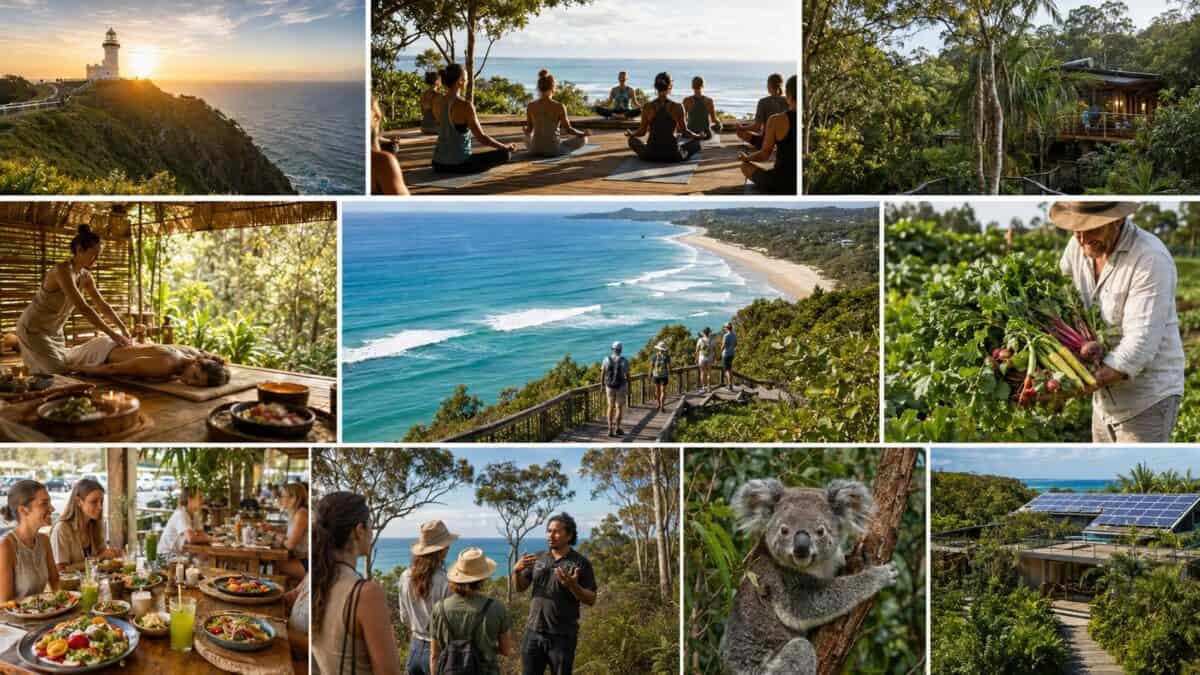
Image generated with Ai
Byron Bay tourism is entering a new phase. Byron Bay wellness tourism means the region’s identity is shifting away from celebrity culture, surfing, and scenic beaches. Now, outside of those aspects, Byron Bay has a visitor economy focused on restorative travel and wellness, as well as nature-based, environmentally sustainable luxury travel. Rather than market its beaches, Byron Bay is transforming its identity to attract travelers interested in wellness retreats, rainforest immersion and sleep retreats, as well as sustainable, wellness-focused, and nutrition-based digital detox travel. This change is part of a greater, global travel trend where wellness tourism drives travel more than leisure activities travel.
Byron Bay Shire and Byron Bay’s Northern Rivers continue experiencing high demand from visitors. Official tourism statistics estimate that in the year ending September 2024, approximately 862,000 domestic travelers stayed the night in Byron Shire and the surrounding protected areas, and Byron Bay’s protected areas continue to see very high rates of visitation. Meanwhile, Cape Byron remains one of the most popular protected natural attractions in New South Wales. Byron Bay’s natural environments provide tourism that is more valuable for less visitation. Byron Bay demonstrates that Australia’s tourism economy can be built on the value of wellness and slower travel, rather than fast, high volume tourism.
Advertisement
Advertisement
From Surf Capital to Australia’s Wellness Frontier
Few Australian destinations have experienced such a profound repositioning over the past two decades. Once recognised primarily for surf breaks, backpacker culture and music festivals, Byron Bay has gradually developed into one of Australia’s most recognised centres for holistic living.
Today’s visitor economy revolves around experiences that extend far beyond conventional sightseeing. Wellness programmes combine coastal landscapes with evidence-based health practices including yoga, meditation, breathwork, cold-water immersion, nutritional coaching, massage therapies and nature-based mindfulness. This broader ecosystem has enabled Byron Bay to compete not simply with traditional Australian beach destinations, but increasingly with internationally recognised wellness hubs across Asia-Pacific.
Advertisement
Advertisement
The appeal lies in the destination’s ability to integrate multiple dimensions of wellbeing within a compact geographical area. Visitors can begin the day watching sunrise over the Pacific Ocean, spend the afternoon exploring subtropical rainforest, enjoy locally produced organic cuisine and finish with therapeutic spa treatments or guided meditation sessions without travelling significant distances.
Advertisement
Advertisement
Unlike purpose-built wellness resorts elsewhere, Byron Bay’s offerings are embedded within an established coastal community, creating experiences that feel authentic rather than manufactured.
Nature Has Become the Destination’s Greatest Wellness Infrastructure
Unlike many international wellness destinations that rely heavily on constructed facilities, Byron Bay’s greatest competitive advantage is its natural landscape.
The meeting point of the Pacific Ocean, subtropical hinterland and protected ecosystems creates environmental diversity rarely found within such a compact region. This natural setting supports experiences increasingly associated with preventive health tourism.
Cape Byron’s walking tracks, rainforest ecosystems, marine environments and coastal headlands encourage low-impact outdoor activities that align with growing traveller interest in physical and mental wellbeing.
Recent NSW Government visitation figures illustrate the importance of these landscapes. Across the state’s North Coast, protected areas recorded 6.81 million visits during 2024–25, while overall NSW national park visitation reached a record 65.6 million visits. Cape Byron continues ranking among the state’s most frequently visited protected landscapes, highlighting how conservation assets are becoming major tourism drivers rather than secondary attractions.
Advertisement
Advertisement
| Natural Asset | Contribution to Wellness Travel | Visitor Benefit |
|---|---|---|
| Cape Byron coastline | Sunrise walks and ocean viewpoints | Mental restoration |
| Hinterland rainforest | Forest immersion experiences | Stress reduction |
| Pacific beaches | Ocean therapy and mindfulness | Physical activity |
| Marine environment | Wildlife encounters | Nature connection |
| Walking trails | Low-impact exercise | Sustainable recreation |
Why Wellness Travellers Are Spending More Than Traditional Holidaymakers
The economics of wellness travel differ considerably from conventional leisure tourism.
Rather than concentrating expenditure on accommodation and dining alone, wellness visitors typically distribute spending across multiple sectors, including therapeutic services, specialised fitness classes, nutrition consultations, organic food, eco-retreats, guided experiences and locally produced wellness products.
This diversification strengthens local supply chains while reducing dependence on seasonal visitor behaviour.
International research consistently indicates wellness tourists generally remain longer and spend more than average leisure travellers. For destinations such as Byron Bay, this creates greater economic resilience because visitor value increasingly depends on quality of experience instead of sheer visitor numbers.
The model also complements Australia’s wider ambition of encouraging regional dispersal and higher-yield tourism rather than pursuing unrestricted volume growth.
Advertisement
Advertisement
Local Produce Is Becoming a Tourism Experience Rather Than Simply Dining
Food has emerged as one of the defining components of Byron Bay’s wellness identity.
The surrounding Northern Rivers region has evolved into one of Australia’s most productive areas for premium agricultural products. Macadamias, avocados, tropical fruits, coffee, artisan dairy products, vegetables and regenerative farming operations increasingly feature within visitor itineraries.
Restaurants increasingly highlight seasonal menus based on regional sourcing rather than imported ingredients. Many accommodation providers incorporate nutritional philosophy into guest experiences through plant-forward menus, organic produce and farm partnerships.
This approach reflects broader global demand for food experiences connected to provenance, sustainability and health outcomes rather than luxury consumption alone.
For travellers, the culinary landscape therefore becomes part of the destination’s broader wellness narrative rather than an independent attraction.
Advertisement
Advertisement
| Emerging Wellness Travel Driver | How Byron Bay Responds |
|---|---|
| Plant-based dining | Extensive café and restaurant ecosystem |
| Organic ingredients | Strong regional agricultural base |
| Farm experiences | Hinterland producers welcome visitors |
| Nutritional wellbeing | Integrated retreat programmes |
| Sustainable gastronomy | Local sourcing initiatives |
Digital Detox Holidays Are Emerging as a Premium Travel Segment
An increasingly significant trend influencing Byron Bay is the growth of travellers intentionally disconnecting from digital devices.
Corporate professionals, entrepreneurs and remote workers are seeking destinations where reduced screen time becomes a central objective rather than an incidental outcome.
Byron Bay’s geography naturally supports this movement. Coastal walks, rainforest landscapes, marine wildlife, wellness retreats and outdoor recreation encourage visitors to replace digital engagement with physical experiences.
Rather than positioning technology as the problem, operators increasingly design itineraries that naturally reduce dependence on constant connectivity.
For international visitors experiencing Australia’s east coast, this creates an attractive alternative to urban tourism dominated by fast-paced itineraries and intensive sightseeing.
Advertisement
Advertisement
The result is a slower style of travel where emotional wellbeing, environmental appreciation and meaningful experiences become the principal outcomes of the journey rather than simply accumulating attractions.
Regenerative Tourism Is Shaping Byron Bay’s Next Growth Phase
The next stage of Byron Bay wellness tourism is being influenced by a broader transition from sustainable tourism towards regenerative travel. While sustainable tourism focuses on reducing environmental impacts, regenerative tourism seeks to leave destinations in a stronger ecological and social condition than before visitors arrived.
Across Byron Shire and the Northern Rivers, this philosophy is increasingly reflected in tourism businesses that invest in habitat restoration, renewable energy, water conservation, waste reduction and partnerships with regional producers. Accommodation providers are adopting solar energy, rainwater harvesting, composting systems and environmentally sensitive architecture, while wellness operators increasingly incorporate environmental stewardship into visitor experiences.
This evolution aligns closely with Australia’s national visitor economy priorities, which encourage tourism businesses to enhance environmental resilience while creating high-value experiences. Rather than measuring success solely through visitor arrivals, destinations are placing greater emphasis on environmental quality, community wellbeing and visitor satisfaction.
For travellers, this means wellness holidays increasingly contribute to preserving the landscapes that attract visitors in the first place.
Advertisement
Advertisement
| Traditional Tourism Model | Regenerative Wellness Model |
|---|---|
| High visitor volume | Higher visitor value |
| Seasonal demand | Year-round experiences |
| Resource consumption | Resource conservation |
| Passive sightseeing | Active participation |
| Standard accommodation | Eco-conscious retreats |
| Short visits | Longer immersive stays |
The Northern Rivers Has Become the Foundation of Byron Bay’s Wellness Economy
Although Byron Bay captures international attention, the surrounding Northern Rivers region provides much of the destination’s authentic wellness character.
The region’s fertile volcanic soils support one of Australia’s most productive agricultural landscapes, supplying premium produce that underpins Byron Bay’s acclaimed food culture. Boutique coffee plantations, macadamia farms, tropical fruit growers, artisan cheesemakers, regenerative farms and organic vegetable producers contribute to a visitor experience centred on freshness, provenance and sustainability.
The hinterland villages—including Bangalow, Newrybar, Federal and Mullumbimby—have also become integral to wellness itineraries. Rather than remaining confined to the coastline, many visitors now explore inland communities offering artisan markets, wellness studios, creative workshops, farm cafés and nature-based accommodation.
This dispersal benefits regional tourism by spreading economic activity beyond Byron Bay’s town centre while reducing pressure on heavily visited coastal areas.
According to official tourism monitoring, Byron Shire welcomed approximately 862,000 domestic overnight visitors, 669,000 domestic day visitors, and generated visitor expenditure exceeding A$1 billion during the year ending September 2024, demonstrating the destination’s substantial contribution to the regional economy.
Advertisement
Advertisement
| Regional Wellness Asset | Tourism Significance |
|---|---|
| Bangalow | Boutique accommodation and cafés |
| Mullumbimby | Holistic wellness community |
| Federal | Farm-to-table experiences |
| Newrybar | Artisan shopping and rural retreats |
| Hinterland farms | Culinary and regenerative tourism |
Luxury Has Shifted From Opulence to Personal Wellbeing
Luxury travel in Byron Bay has undergone a notable transformation.
Rather than emphasising extravagant interiors or lavish amenities alone, premium accommodation increasingly markets experiences centred on personal wellbeing. Guests are looking for privacy, tranquillity and personalised wellness programmes instead of traditional luxury symbols.
Many high-end retreats now integrate sleep optimisation, nutrition planning, yoga instruction, guided meditation, hydrotherapy, spa treatments and tailored fitness programmes into longer-stay packages.
This reflects broader international travel trends identified by wellness industry analysts, who note that affluent travellers increasingly prioritise experiences that improve physical and emotional wellbeing.
Consequently, Byron Bay has established itself as a destination where luxury is measured by time, space, nature and personal restoration rather than conspicuous consumption.
Advertisement
Advertisement
Wellness Travel Is Becoming a Year-Round Economic Driver
Historically, Australia’s coastal destinations have experienced pronounced seasonal fluctuations. Summer holidays traditionally generated the highest visitor numbers, while quieter periods presented operational challenges for tourism businesses.
Wellness tourism is helping reshape this pattern.
Yoga retreats, meditation programmes, corporate wellbeing events, nutrition workshops and spa experiences are less dependent on warm-weather beach activities. Visitors are increasingly travelling during autumn, winter and spring specifically to avoid peak-season crowds while enjoying quieter environments better suited to restorative experiences.
This growing year-round demand benefits accommodation providers, cafés, wellness practitioners and regional producers by creating more consistent economic activity.
For destination managers, this also reduces pressure on infrastructure during peak holiday periods while improving employment stability across tourism businesses.
Advertisement
Advertisement
| Seasonal Beach Tourism | Year-Round Wellness Tourism |
|---|---|
| Peak summer demand | Consistent annual demand |
| Short leisure breaks | Multi-day retreats |
| Weather dependent | Less climate sensitive |
| Beach activities | Indoor and outdoor programmes |
| Higher seasonal fluctuations | More balanced visitation |
Indigenous Cultural Experiences Add Depth to Nature-Based Travel
Another important dimension of Byron Bay’s visitor offering is the growing recognition of Indigenous cultural heritage.
The Byron Bay region lies on the traditional lands of the Arakwal People of the Bundjalung Nation, whose enduring connection with Country stretches back thousands of years. Increasingly, tourism experiences are incorporating cultural interpretation that highlights traditional ecological knowledge, native food systems and the spiritual significance of landscapes.
For many travellers, these experiences enrich wellness journeys by encouraging a deeper understanding of place rather than simply visiting scenic locations.
This approach also reflects wider Australian tourism strategies that recognise Indigenous cultural tourism as an important avenue for strengthening visitor engagement while supporting First Nations communities.
Experiences centred on storytelling, bush foods, traditional knowledge and cultural landscapes provide a more meaningful appreciation of Byron Bay’s identity beyond its contemporary reputation.
Advertisement
Advertisement
Global Wellness Trends Are Strengthening Byron Bay’s Competitive Position
The worldwide wellness economy has expanded rapidly over the past decade, reshaping traveller expectations across multiple sectors of tourism.
According to the Global Wellness Institute, the global wellness economy reached approximately US$6.3 trillion in 2023, while wellness tourism accounted for US$830 billion, with forecasts projecting the segment to exceed US$1.3 trillion by 2028. These figures illustrate that wellness is no longer a niche market but one of the fastest-growing areas of international travel.
Against this backdrop, Byron Bay is well positioned to benefit from increasing demand for destinations that combine nature, sustainability and holistic experiences. Unlike purpose-built wellness resorts that rely heavily on constructed attractions, Byron Bay’s competitive advantage lies in its authentic combination of protected landscapes, coastal ecosystems, regional food production and established wellness culture.
This positioning allows the destination to appeal simultaneously to domestic travellers seeking restorative short breaks and international visitors looking for immersive Australian experiences.
| Global Wellness Indicator | Latest Estimate |
|---|---|
| Global wellness economy (2023) | US$6.3 trillion |
| Wellness tourism market | US$830 billion |
| Forecast wellness tourism value by 2028 | Over US$1.3 trillion |
| Expected long-term growth | Above overall tourism growth |
How Byron Bay Compares With Leading International Wellness Destinations
International comparisons demonstrate that Byron Bay occupies a distinctive niche within the global wellness landscape.
Advertisement
Advertisement
Unlike Bali, where wellness often centres on resort-based experiences, Byron Bay combines coastal environments with national parks, regenerative agriculture and regional communities. Compared with Costa Rica, Byron Bay offers easier integration of luxury hospitality with holistic programmes. Relative to New Zealand’s wellness destinations, Byron Bay benefits from a subtropical climate that supports outdoor activities throughout much of the year.
Rather than replicating overseas models, Byron Bay has developed a distinctly Australian interpretation of wellness travel—one rooted in ocean landscapes, biodiversity, local food systems and environmental stewardship.
| Destination | Primary Wellness Strength | Distinctive Character |
|---|---|---|
| Byron Bay | Coastal wellbeing and regenerative travel | Ocean, hinterland and holistic lifestyle |
| Bali | Resort wellness | Spiritual retreats and spa culture |
| Costa Rica | Eco-wellness | Rainforests and biodiversity |
| New Zealand | Nature restoration | Alpine and geothermal experiences |
| Sedona (USA) | Desert wellness | Spiritual and geological landscapes |
Practical Considerations for Travellers Planning a Wellness Escape
Travellers considering Byron Bay for a wellness-focused holiday should recognise that experiences often extend well beyond accommodation bookings. Many retreats operate with limited group sizes and seasonal programmes, making advance reservations advisable, particularly during school holidays and major events.
The destination is served primarily via Ballina Byron Gateway Airport and Gold Coast Airport, with road connections linking visitors to the wider Northern Rivers. Hiring a vehicle offers greater flexibility for exploring hinterland villages, farms and nature reserves that form an essential part of the broader wellness landscape.
Those seeking quieter restorative experiences may benefit from travelling outside the peak summer period, when accommodation availability is generally higher and the natural environment offers a more tranquil setting for walking, mindfulness and nature immersion.
Advertisement
Advertisement
A Blueprint for Australia’s Next Generation of High-Value Tourism
The continuing rise of Byron Bay wellness tourism illustrates a broader transformation taking place across Australia’s visitor economy. Rather than competing solely through iconic landmarks or increasing visitor numbers, destinations are increasingly differentiating themselves through meaningful experiences that generate stronger economic returns while protecting natural and cultural assets.
This evolution closely aligns with the priorities outlined in Australia’s THRIVE 2030 national visitor economy strategy, which encourages tourism operators to focus on quality, sustainability, regional dispersal, innovation and resilience. Byron Bay’s combination of protected landscapes, boutique accommodation, holistic wellness operators, regenerative agriculture and community-led tourism demonstrates how regional destinations can support these objectives while maintaining their distinctive identity.
For tourism businesses, the model offers greater commercial resilience. Visitors motivated by wellness are generally less price-sensitive, more likely to participate in multiple experiences and often extend their length of stay. This creates stronger economic benefits across accommodation providers, cafés, wellness practitioners, transport operators, farmers, retailers and cultural experiences rather than concentrating expenditure within a limited number of sectors.
For destination managers, Byron Bay represents a practical example of how environmental stewardship and premium tourism can reinforce each other instead of competing for priority.
What This Means for Today’s Traveller
For modern travellers, Byron Bay increasingly represents an opportunity to experience Australia through a different lens. Instead of planning holidays around busy sightseeing schedules, many visitors are choosing itineraries that prioritise restoration, slower travel and meaningful engagement with local environments.
Advertisement
Advertisement
The destination appeals to a broad spectrum of travellers, including solo visitors seeking mindfulness retreats, couples looking for restorative coastal escapes, families interested in outdoor wellbeing experiences and professionals combining remote work with extended wellness stays.
The increasing integration of wellness into accommodation, gastronomy, outdoor recreation and cultural experiences also means travellers can tailor itineraries according to individual preferences rather than following fixed retreat programmes. Whether the focus is sunrise walks at Cape Byron, rainforest immersion, locally sourced cuisine, spa therapies or creative workshops in the hinterland, the destination offers multiple pathways towards a more balanced travel experience.
This flexibility is becoming one of Byron Bay’s strongest competitive advantages within Australia’s evolving tourism landscape.
Traveller Snapshot
| Traveller Profile | Experiences Likely to Appeal | Potential Benefits |
|---|---|---|
| Solo travellers | Yoga retreats, meditation, coastal walks | Relaxation and self-reflection |
| Couples | Spa retreats, boutique accommodation, fine dining | Reconnection and wellbeing |
| Families | National parks, beaches, farm experiences | Outdoor learning and recreation |
| Remote workers | Longer stays, wellness programmes, cafés | Better work-life balance |
| International visitors | Nature, Indigenous culture, regional food | Authentic Australian experiences |
Why Byron Bay’s Wellness Journey Is Becoming an International Tourism Benchmark
The importance of Byron Bay expands across Australia. Travelers now prefer less polluting, healthier vacations. Byron Bay provides a combination of all these vacation features. Byron Bay naturally evolved the components of its ecosystem through conservation, tourism, and community services.
Byron Bay developed its features without large construction projects. Byron Bay also demonstrates that building wellness tourism places is not the only prerequisite. The combination of locally managed and protected areas, communities, and sustainable services and tourism can develop a successful tourism destination.
Advertisement
Advertisement
Byron Bay also demonstrates a different style of tourism. The future of tourism may depend on the design of active and positive ecosystems and economies. Byron Bay is becoming more recognizable and creating a new regional travel trend based on tourism focused on wellness. Byron Bay is creating a successful tourism destination while simultaneously improving the local ecosystem.
Advertisement
