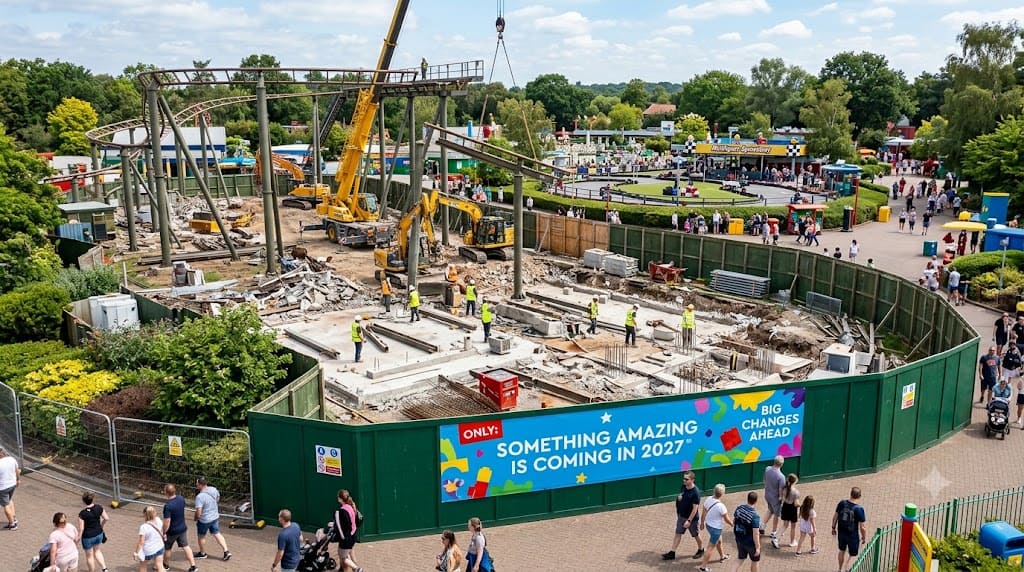
Image generated with Ai
The LEGOLAND Windsor Resort in the UK is currently undergoing a massive transformation. Many visitors will notice profound changes across the park. The iconic Sky Rider attraction is now being dismantled. The beloved LEGO Studios 4D Cinema has also been removed. These spots once held countless family memories for millions. Now, they pave the way for a mysterious, grand vision for 2027.
Construction crews are working hard. Large fences now surround the entire site. A hopeful message greets every curious guest. The signs promise: “You’re going to love it… in 2027.”
Advertisement
This project aims to revitalize a quiet corner of the park. That area felt stagnant since the Space Tower closed in 2017. Industry experts suggest a massive redevelopment is underway. They believe a new, modern 4D theatre is likely. Additional rides could also fill the expanded footprint. This would create a fresh destination for thrill-seekers. It complements the successful Minifigure Speedway launched in 2024.
The resort needs constant innovation to stay relevant. Stagnant zones often dampen the visitor experience. By removing old structures, the park creates space for modern wonders. This ensures the UK remains a global leader in family entertainment.
Advertisement
The UK government actively monitors such developments. According to the Local Government Association, the visitor economy is vital for the nation. Large-scale investments in attractions like LEGOLAND Windsor are crucial. They stimulate regional growth and employment. These projects support the government’s broader Tourism Recovery Plan.
The government’s strategic framework emphasizes long-term resilience. It seeks to recover domestic overnight trip volume and spend. It also aims to boost international visitor numbers significantly. Mega-attractions play a key role in this ambition. They act as “economic powerhouses” for local regions.
However, major construction can temporarily disrupt tourism flow. Frequent visitors might miss their favorite rides. Reduced capacity during long projects often affects total park attendance. Local tourism boards must now adapt their marketing strategies. They must manage expectations for current visitors carefully.
“Long-term growth requires bold changes,” note industry analysts. The temporary loss of classic attractions is a calculated risk. It aims to secure the park’s future competitive edge. The goal is to keep the UK as a top global destination. By refreshing tired infrastructure, the resort hopes to attract repeat international tourists.
Strategic investment improves the overall UK tourism landscape. The Tourism Recovery Plan advocates for innovation. It encourages the use of data to enhance visitor experiences. Modernizing attractions helps meet these high standards. It also supports the goal of employing more UK nationals.
Theme parks are complex ecosystems. They purchase goods from local suppliers. They hire many local workers. This creates a significant “multiplier effect” in the region. When a park invests, the local community often prospers. Yet, the transition period demands careful destination management.
Local authorities now focus on place-shaping. They work with private sectors to ensure future growth. This collaboration is essential for long-term project success. It ensures that infrastructure remains robust. It also keeps the tourism sector competitive against international rivals.
Construction phases often pose unique challenges for tourism. A park under construction offers a different “product” than a fully operational one. Visitor satisfaction relies on transparency. If guests know about the future, they feel more invested in the wait.
Effective communication is the cornerstone of modern destination marketing. Park operators use apps and signage to keep guests engaged. They turn fences into storytelling tools. This keeps the magic alive even while the heavy machinery hums in the background.
The UK’s tourism strategy emphasizes the importance of these experiences. It encourages attractions to maintain high quality during upgrades. When a theme park refreshes its offerings, it signals health. It shows that the industry is thriving despite global economic shifts.
Change at a theme park is never just about steel and concrete. It is about the families who spent sunny afternoons laughing on the Sky Rider. It is about the quiet, shared moments in the dark of the 4D theatre. Every dismantled beam carries a memory of a child’s first big day out.
While we look forward to the promise of 2027, it is okay to feel a twinge of sadness. Progress often requires letting go of the familiar. Yet, the heart of LEGOLAND remains the joy of building together. As new foundations rise, we hope they will soon host a new generation of laughter. The story of this park is a living, breathing thing. We wait with eager hearts to see what magic will unfold next. Our memories remain, even as the park evolves. We look forward to seeing the new smiles this space will bring.
Advertisement
Tags: Berkshire, Legoland Windsor, United Kingdom, Windsor
Advertisement
Advertisement












Wednesday, September 2, 2026

Wednesday, September 2, 2026

Wednesday, September 2, 2026

Wednesday, September 2, 2026

Wednesday, September 2, 2026
Tuesday, September 1, 2026

Wednesday, September 2, 2026

Wednesday, September 2, 2026



