
Singapore and Other Leading Countries Drive South-East Asia Cruise Growth with Expanded 2026 Sailings

Published
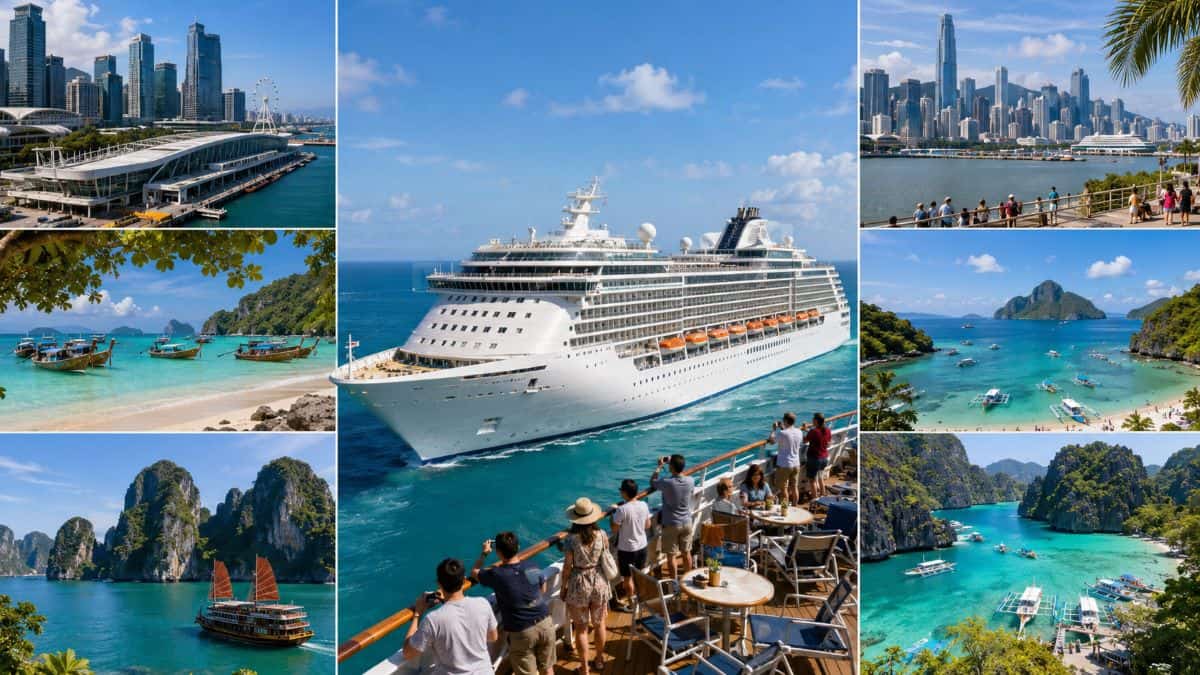
Singapore and Other Leading Countries Drive South-East Asia Cruise Growth with Expanded 2026 Sailings, strengthening regional connectivity and opening more multi-country travel opportunities across Asia. S Having a growing number of ports is helping Singapore prosper as a major cruise ship hub. Vietnam, Malaysia, Thailand, and the Philippines are benefiting from this and cruise lines are now able to provide port options and extend their itineraries. Cruise travel plays a key role in the development of a destination’s economy. As more accessibility to countries becomes available and easier for travelers, the ports are seeing a boost in economic growth along with the tourism providers. From a broader perspective, this trend shows that South East Asia is a growing cruise regions with greater potential for international cruise passengers.
Singapore and Other Leading Countries Push South-East Asia Cruise Tourism Deeper Into 2026
South-East Asia cruise tourism in 2026 is developing around a connected network led by Singapore and supported by Malaysia, Thailand, Vietnam and the Philippines. Singapore Tourism Board’s latest regional assessment shows why this network matters. South-East Asia recorded 3.9 million cruise passenger visits in the study year and generated US$10 billion in total economic output. Singapore accounted for 48% of regional cruise passenger visits, while Malaysia held another 22%, giving the two countries a combined 70% share. The wider opportunity now lies in connecting established hubs with destinations such as Penang, Phuket, Vietnamese ports and Philippine islands through regional sailings that allow travellers to visit several countries within one holiday.
Advertisement
Advertisement
- South-East Asia recorded 3.9 million cruise passenger visits in the STB-backed regional assessment.
- Cruise tourism generated US$10 billion in total regional economic output.
- The sector contributed US$4.5 billion to regional GDP.
- Singapore represented 48% of cruise passenger visits and Malaysia 22%. (
- The regional cruise economy supported about 530,000 jobs.
| South-East Asia cruise indicator | Official figure | Tourism significance |
|---|---|---|
| Cruise passenger visits | 3.9 million | Expanding regional market |
| Total economic output | US$10 billion | Strong spending multiplier |
| GDP contribution | US$4.5 billion | Direct economic importance |
| Jobs supported | 530,000 | Employment across tourism and ports |
| Singapore + Malaysia share | 70% | Strong concentration around major hubs |
Singapore Cruise Tourism 2026 Gains Strength From Larger Terminals and Regional Homeporting
Singapore remains the central gateway in the South-East Asia cruise tourism 2026 story because its port capacity, air links and tourism infrastructure support both short regional voyages and longer Asian itineraries. Singapore recorded 375 cruise ship calls and more than two million passenger throughput in 2025, increases of 10% and 9% respectively. Marina Bay Cruise Centre’s S$40 million expansion increased passenger capacity from 6,800 to 11,700, creating more room for larger and simultaneous ship operations. Singapore also has two cruise terminals with licences currently in force. For 2026, official tourism projections place international arrivals at 17 million to 18 million and tourism receipts at around S$31 billion to S$32.5 billion, strengthening the wider visitor economy surrounding cruise departures and arrivals.
- Singapore handled 375 cruise calls in 2025.
- Cruise passenger throughput exceeded two million.
- Marina Bay Cruise Centre capacity rose to 11,700 passengers.
- Singapore currently has two licensed cruise terminals.
- STB projects 17–18 million international visitors in 2026.
| Singapore indicator | Latest official figure | 2026 impact |
|---|---|---|
| Cruise calls | 375 in 2025 | Strong base for expanded deployment |
| Passenger throughput | More than 2 million | High homeport and transit demand |
| Marina Bay capacity | 11,700 passengers | Greater large-ship capability |
| 2026 visitor forecast | 17–18 million | Larger pre/post-cruise market |
| 2026 receipts forecast | S$31–32.5 billion | Strong tourism-spending environment |
Malaysia Cruise Tourism 2026 Accelerates as Penang Captures Heavy Regional Passenger Traffic
Malaysia is one of the strongest beneficiaries of Singapore-linked South-East Asia cruise tourism because Penang and Port Klang sit naturally within short regional itineraries. The most current Penang Port Commission statistics show substantial activity at Swettenham Pier Cruise Terminal in 2026. From January through July, the terminal recorded 407,447 passengers in its international-vessel transit category, with January alone accounting for 128,605. Swettenham Pier can accommodate as many as 12,000 passengers at one time, supported by an 820-metre main berth. Malaysia’s wider tourism market is also growing: Tourism Malaysia recorded 10.6 million international visitor arrivals in the first quarter of 2026, up 5.4% year on year. Cruise traffic therefore enters a destination already experiencing strong Visit Malaysia 2026 demand.
Advertisement
Advertisement
- Penang recorded 407,447 international-vessel transit cruise passengers from January to July 2026.
- January alone recorded 128,605 transit passengers.
- Swettenham Pier can handle up to 12,000 passengers simultaneously.
- Its main berth measures 820 metres.
- Malaysia received 10.6 million international visitors in Q1 2026, up 5.4%.
| Malaysia indicator | 2026 official data | Cruise-tourism relevance |
|---|---|---|
| Penang transit cruise passengers, Jan–Jul | 407,447 | Major regional port traffic |
| SPCT maximum passenger capacity | 12,000 | Supports large cruise calls |
| Main berth | 820 metres | Large-vessel capability |
| International visitors, Q1 | 10.6 million | Strong destination demand |
| Q1 visitor growth | +5.4% | Expanding tourism market |
Thailand Cruise Tourism 2026 Adds Phuket and Marine Travel to a Huge Visitor Economy
Thailand adds another powerful destination layer to expanded South-East Asia cruise sailings, particularly when itineraries include Phuket and other coastal tourism centres. Government tourism policy in 2026 explicitly places yacht and cruise tourism among the country’s high-potential niche travel segments, linking maritime travel with Thailand’s wider strategy of raising tourism value rather than depending only on visitor volume. By 2 June 2026, Thailand had already received more than 14 million international visitors, generating around 679 billion baht in tourism revenue. The Tourism Authority of Thailand was working towards approximately 33 million international arrivals and around 2.65 trillion baht in combined domestic and international tourism revenue for the year. That scale gives cruise passengers a broad network of hotels, attractions, food, retail and coastal experiences.
- Thailand passed 14 million international arrivals by 2 June 2026.
- Those visitors generated around 679 billion baht
- Thailand’s 2026 programme includes yacht and cruise tourism among targeted niches.
- TAT was targeting approximately 33 million international arrivals for 2026.
- Total 2026 tourism revenue was projected at around 2.65 trillion baht
| Thailand indicator | 2026 official figure | Cruise connection |
|---|---|---|
| International arrivals by 2 June | 14m+ | Large visitor economy |
| Tourism revenue by 2 June | ~679bn baht | High shore-spending potential |
| 2026 international-arrival outlook | ~33m | Strong destination demand |
| 2026 tourism revenue outlook | ~2.65tn baht | Major tourism economy |
| Cruise/yacht status | Priority niche segment | Direct policy relevance |
Vietnam Cruise Tourism 2026 Builds Momentum as Ha Long Expands International Ship Calls
Vietnam provides one of the clearest examples of how cruise expansion can connect maritime arrivals with rapidly rising international tourism. Government data show the country received more than 13.9 million international visitors during the first seven months of 2026, an increase of 13.8% year on year. Cruise activity is also visible at Ha Long in Quảng Ninh. A provincial government update published in February projected approximately 75 international cruise calls and more than 100,000 cruise visitors during 2026. Ha Long therefore gives regional cruise itineraries access to one of Vietnam’s best-known tourism areas while creating demand for excursions, heritage experiences, local food and transport. The combination of national visitor growth and a defined cruise schedule strengthens Vietnam’s position within wider South-East Asian maritime itineraries.
Advertisement
Advertisement
- Vietnam received more than 13.9 million international visitors in January–July 2026.
- International arrivals increased 13.8% year on year.
- Quảng Ninh projected around 75 international cruise calls in 2026.
- The province projected more than 100,000 cruise passengers for the year.
- Quảng Ninh’s wider 2026 target is 22 million visitors, including 5.2 million international arrivals.
| Vietnam indicator | 2026 official figure | Tourism impact |
|---|---|---|
| International visitors, Jan–Jul | 13.9m+ | Strong national growth |
| Year-on-year increase | +13.8% | Rising inbound demand |
| Quảng Ninh cruise calls planned | ~75 | Expanding sea connectivity |
| Cruise visitors planned | 100,000+ | Growing shore-excursion market |
| Quảng Ninh total visitor target | 22m | Large destination ecosystem |
Philippines Cruise Tourism 2026 Surges as More Passengers and Turnaround Calls Reach Local Ports
The Philippines adds a different strength to South-East Asia cruise tourism 2026 through an extensive island network and expanding port infrastructure. Philippine Ports Authority data show that 26 cruise calls carried 76,188 passengers during January and February 2026 across major ports. Manila was also gaining importance as an embarkation point rather than only a port of call: by April, the Eva Macapagal Cruise Terminal had recorded six turnaround calls, compared with two during the previous year. Cruise passenger traffic had already reached 226,247 in 2025, above the 150,903 recorded in 2024. Beyond cruise traffic, the Philippines received 2,955,014 visitor arrivals between 1 January and 16 June 2026, 6.16% more than during the corresponding period a year earlier.
- The Philippines recorded 26 cruise calls in January–February 2026.
- Those calls generated 76,188 cruise passengers.
- Manila recorded six turnaround cruise calls by April 2026.
- National cruise passenger traffic reached 226,247 in 2025.
- Visitor arrivals reached 2,955,014 by 16 June 2026, up 6.16%.
| Philippines indicator | Latest official figure | Cruise-tourism impact |
|---|---|---|
| Cruise calls, Jan–Feb 2026 | 26 | Sustained ship activity |
| Cruise passengers | 76,188 | Strong early-year traffic |
| Manila turnaround calls by April | 6 | Growing homeport function |
| Cruise passengers in 2025 | 226,247 | Higher base entering 2026 |
| Visitors by 16 June 2026 | 2.955m | Expanding tourism market |
South-East Asia Cruise Travel Impact 2026 Extends Beyond Ports Into Hotels, Attractions and Local Economies
Expanded South-East Asia cruise sailings matter because their economic impact does not stop when passengers leave the ship. The STB-backed regional assessment calculated US$2,564 in economic output for every cruise passenger visit, around 2.4 times the global average. Cruise activity supported 530,000 jobs and US$4.1 billion in wages across the regional economy. Importantly for broader tourism, 47% of surveyed cruise travellers said they intended to return to South-East Asia for a land-based trip. This creates a bridge between cruising and future hotel stays, flights, restaurants, attractions and local transport. Singapore can channel passengers into regional itineraries, while Malaysia, Thailand, Vietnam and the Philippines can convert individual port calls into destination discovery and potential repeat travel.
- Economic output reached US$2,564 per cruise passenger visit.
- That was 2.4 times the global average.
- Cruise activity supported approximately 530,000 jobs.
- Regional wages connected with the industry reached US$4.1 billion.
- 47% of cruise travellers indicated an intention to return for land-based travel.
| Tourism-impact measure | Official regional figure | What it means for travellers and destinations |
|---|---|---|
| Output per passenger visit | US$2,564 | High economic value from cruise travel |
| Relative global performance | 2.4× global average | Strong regional spending effect |
| Jobs supported | 530,000 | Benefits spread beyond ports |
| Wages supported | US$4.1bn | Significant labour-market contribution |
| Intention to return by land | 47% | Cruise calls can generate future holidays |
Conclusion
Singapore and Other Leading Countries Drive South-East Asia Cruise Growth with Expanded 2026 Sailings by creating stronger regional links and making multi-country holidays easier for international travellers Singapore is still the top spot for cruise lines, but more and more lines are adding Malaysia, Thailand, Vietnam and the Philippines to their cruise itineraries. Expanded 2026 sailings give hotels, transport, restaurants, tour operators, and services across the region a chance to grow and develop. These sailings are opening up the tourism industry of South East Asia to other countries beyond Singapore, making the area a more connected, accessible and competitive cruise market. The region will also provide travelers more reasons to have several back to back cruises to different destinations.
Advertisement
