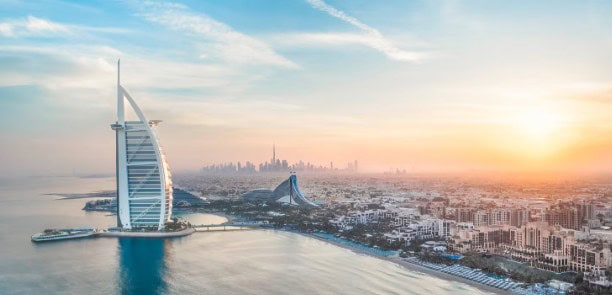
Image generated with Ai
A major transformation has been initiated in Dubai’s hospitality landscape as Jumeirah Burj Al Arab restoration, Dubai luxury hotel renovation 2026, and Burj Al Arab redesign project have been strongly reinforced following the official closure of the iconic property for an 18-month restoration programme.
More than 25 years after its opening, the landmark hotel has been temporarily closed to allow for a comprehensive enhancement and preservation process. The restoration has been entrusted to celebrated French interior architect Tristan Auer, who has been tasked with refining and modernising one of the world’s most recognisable hospitality icons while ensuring its original identity remains intact.
The project has been positioned as a delicate balance between preservation and innovation, where architectural heritage is maintained while subtle upgrades are introduced to elevate guest experience for the next generation of global travellers.
A central role in the transformation has been assigned to Tristan Auer, whose previous work on luxury properties such as the Carlton Cannes and Hôtel de Crillon has established him as a leading figure in high-end hospitality design.
Advertisement
Advertisement
The Burj Al Arab interior redesign, Tristan Auer luxury hotel restoration work, and Dubai hospitality design evolution have been defined by a philosophy of respectful enhancement rather than radical alteration.
The design approach has been shaped by careful observation of the property’s legacy, guest behaviour patterns, and the symbolic value attached to the structure. It has been emphasised that the original vision behind the hotel represents a defining expression of Dubai’s architectural ambition and identity, which has been treated with deep respect throughout the redesign process.
The restoration has been guided by the principle that iconic design should be refined rather than replaced, ensuring continuity of identity while allowing for contemporary improvements.
The Burj Al Arab has long been recognised globally for its sail-shaped silhouette, inspired by a traditional Arabian dhow. This architectural form has become one of Dubai’s most powerful global symbols, representing ambition, innovation, and luxury hospitality excellence.
The Burj Al Arab architectural identity preservation, Dubai landmark hotel sail design, and luxury hospitality icon restoration UAE have been central to the current renovation strategy.
Inside the property, its defining features have historically included expansive atriums, cascading fountains, marine aquariums, and extensive use of precious materials such as gold leaf, marble, and Swarovski crystals. These elements have established the hotel as one of the most visually distinctive hospitality environments in the world.
It has been confirmed that the restoration process will preserve this identity while introducing refined enhancements rather than structural reinvention.
A core design philosophy guiding the project has been the preservation of opulence, which has long defined the Burj Al Arab experience. The hotel’s visual language, characterised by bold colour palettes, intricate detailing, and high-value materials, has been maintained as a central design pillar.
The Burj Al Arab luxury interior preservation, Dubai ultra-luxury hospitality design 2026, and iconic hotel renovation craftsmanship UAE have remained key focus areas.
The restoration has been structured to ensure that modernisation does not dilute the property’s identity. Instead, upgrades have been carefully integrated into existing frameworks, focusing on improved functionality, technological integration, and enhanced guest comfort.
Advanced materials, custom-designed fabrics, and bespoke furnishings have been developed specifically for the property, reinforcing its position as a benchmark for tailored luxury.
A defining feature of the renovation has been the emphasis on craftsmanship and bespoke production. Every design element has been created specifically for the Burj Al Arab, reinforcing its exclusivity and individuality.
The bespoke luxury hotel interiors Dubai, high-end craftsmanship hospitality restoration UAE, and custom design Burj Al Arab renovation project have been strongly embedded within the design process.
Specially developed textiles, embroidery work, and custom-made decorative elements have been designed exclusively for the property, ensuring that no replicated design elements exist elsewhere in the global hospitality market.
The concept of haute decoration has been adopted as a guiding principle, where each element is treated as a unique artistic expression tailored specifically for the hotel environment.
The restoration has been developed through close collaboration between Dubai Holding, Jumeirah, and design leadership teams over a multi-year planning period. Initial involvement began with spa redesign concepts before expanding into a full-scale restoration project.
The Jumeirah Burj Al Arab renovation leadership, Dubai hospitality sector collaboration design project, and luxury hotel restoration strategic planning UAE have highlighted the coordinated nature of the initiative.
Hospitality leadership has emphasised that the property represents far more than a hotel, instead functioning as a global symbol of ambition and architectural excellence. This positioning has reinforced the importance of preserving its legacy while ensuring long-term relevance in an evolving luxury tourism market.
A key objective of the restoration has been the preservation of emotional impact and guest experience. The hotel has long been associated with exclusivity, symbolic luxury, and immersive hospitality experiences that attract global travellers.
The Burj Al Arab guest experience preservation, Dubai experiential luxury tourism icon, and ultra-luxury hospitality emotional design UAE have been prioritised throughout the redesign process.
It has been confirmed that the goal is not to alter the emotional identity of the hotel but to enhance its ability to deliver memorable, immersive stays that align with contemporary luxury expectations.
Advertisement
Tags: Burj Al Arab restoration, Dubai hospitality upgrade, Dubai luxury hotel renovation, Jumeirah Burj Al Arab redesign, Tristan Auer hotel project
Advertisement
Advertisement











Wednesday, September 2, 2026
Wednesday, September 2, 2026

Wednesday, September 2, 2026
Wednesday, September 2, 2026

Wednesday, September 2, 2026
Tuesday, September 1, 2026

Wednesday, September 2, 2026

Wednesday, September 2, 2026



