
Oceania’s 2027 Marine Policy Pivot Fuels a Regenerative Scuba Tourism Revolution Across Australia and the Pacific

Published
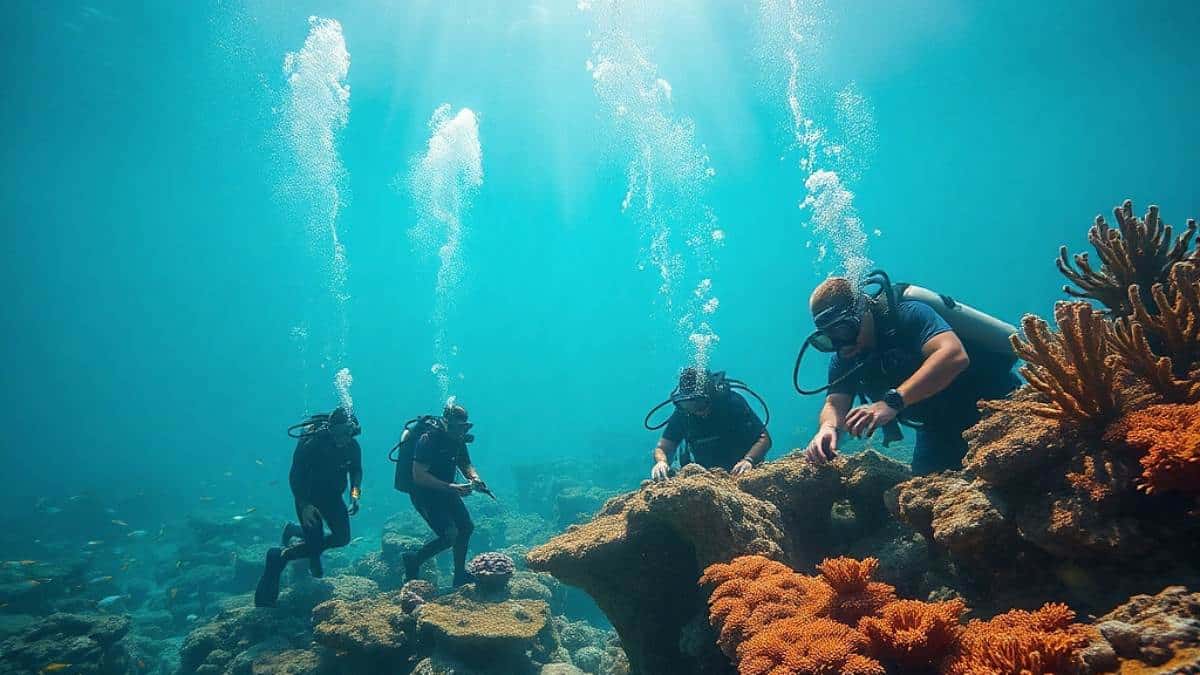
Image generated with Ai
A revolutionary shift in regulation in Oceania will define the future international diving industry prior to 2027. Beyond the old-fashioned concept of observational leisure activity, the coastal agencies in Australia and the Pacific are creating a heavily regulated system of conservation that is aimed at actively restoring the delicate underwater environments. Coastal destinations are employing artificial reef construction, resolving the issue of commercial fishing, and restricting access to the locations. Regenerative scuba tourism represents the core process of this paradigm shift through transforming recreational divers into ecological restoration partners.
Historical Context: The Decline of Passive Diving and the Emergence of Active Remediation
For more than half a century, recreational scuba diving adhered strictly to a non-interventionist doctrine: take only photographs, leave only bubbles. While this ethos was designed to curb direct physical breakage during the early expansion of recreational diving, it has proven fundamentally inadequate in addressing cumulative ecological decline. Coastal waters across Oceania are subject to compounding systemic pressures, including intensifying marine heatwaves, elevated sea surface temperatures, catastrophic runoff of catchment sediments, and decades of industrial commercial fishing. Because these broader environmental drivers degrade benthic communities irrespective of diver presence, passive preservation alone can no longer secure marine ecosystem stability.
Advertisement
Advertisement
In response, national ministries, provincial governments, and marine park authorities across Oceania are completing a structural realignment of coastal ocean policy scheduled for full operational maturity by 2027. Rather than enacting blanket prohibitions on scuba travel, statutory bodies are instituting a framework of hyper-regulated eco-diving. Under this updated regime, access to prime diving grounds is contingent upon commercial operators actively assisting in ecosystem remediation, biomass monitoring, and zero-impact operational practices. The operational philosophy of the dive travel sector is shifting toward regenerative scuba tourism, where commercial tourism infrastructure and recreational visitor capital are deployed directly to heal damaged marine environments.
This transition moves beyond voluntary corporate social responsibility by introducing enforceable legal requirements. Operators, liveaboard fleets, and diving charters must comply with statutory carrying-capacity thresholds, procure specialised environmental permits, adhere to chemical sunscreen bans, and integrate citizen-science data protocols into their daily consumer itineraries. By transitioning from a business model centered on passive extractive visitation to one anchored in verifiable ecological restoration, Oceania is constructing an adaptable, globally relevant blueprint for sustainable marine governance.
Advertisement
Advertisement
South Australia: Remediating Environmental Shocks via Purpose-Built Artificial Reefs
The southern coastline of Australia exemplifies how public capital and marine engineering can remediate acute ecological crises while building high-yield tourism infrastructure. In the wake of an extensive toxic microalgal bloom that devastated temperate marine biotas and coastal fisheries across Gulf St Vincent and Spencer Gulf, the Australian Commonwealth Government and the South Australian Government committed A$165 million toward an integrated marine response and biodiversity recovery program.
Advertisement
Advertisement
A central pillar of this restoration strategy is the deployment of engineered artificial reefs that provide hard substrata for benthic colonisation, shelter recovering fish cohorts, and alleviate recreational diving pressure on fragile natural limestone ledges.
The Scuttling of the MV Andrew Wilson in Gulf St Vincent
The centrepiece of South Australia’s urban marine restoration initiative is the scuttling of the historic maritime vessel MV Andrew Wilson six kilometres off the coast of Brighton in Gulf St Vincent. Built in 1962, the 40-metre grab hopper dredger served more than six decades in South Australian waters, performing vital coastal dredging, maritime salvage operations—including the recovery phase following the May 2000 Whyalla Airlines Flight 904 tragedy—and assisting in earlier marine infrastructure deployments. Donated to the South Australian Government by Maritime Constructions, the vessel represents the first deliberate ship scuttling in the state since the guided-missile destroyer HMAS Hobart was scuttled in Yankalilla Bay in 2002.
Converting an industrial dredger into an ecologically functional underwater habitat required meticulous preparatory decontamination at Port Adelaide. Marine engineers removed all residual hydrocarbons, toxic anti-fouling coatings, polychlorinated biphenyls, and synthetic interior fittings. Furthermore, teams stripped select interior bulkheads and engineered strategic ingress and egress penetrations throughout the vessel hull, allowing open-water scuba divers to navigate safely through the wheelhouse, galley, and engine rooms. The vessel’s prominent exterior deck crane was preserved to create structural relief and serve as an underwater navigational landmark.
Advertisement
Advertisement
Regulatory Exclusion Zones and Fish Biomass Regeneration
Unlike the deep-water resting site of the ex-HMAS Hobart, which requires advanced certifications due to its depth profile, the MV Andrew Wilson sits upright on a flat, sandy substrate in relatively shallow coastal waters. This profile allows entry-level open-water divers to access the site safely, significantly expanding access for domestic and international travelers. The site was chosen due to its optimal depth, stable seabed characteristics, proximity to municipal boat-launching ramps, and safe buffer from primary commercial shipping lanes.
To safeguard structural settlement and support initial marine colonisation, the South Australian Department for Infrastructure and Transport, alongside the Environment Protection Authority (EPA), the Scuba Divers Federation of South Australia, and RecFish SA, instituted a mandatory 12-month post-scuttling exclusion zone. This statutory measure prohibits all commercial and recreational fishing in the immediate zone while permitting access to regulated diving charters. The complex steel structure acts as a high-surface-area settling ground for macroalgae, bryozoans, and ascidians, providing nurseries for commercially and ecologically critical species such as snapper (Chrysophrys auratus), King George whiting (Sillaginodes punctatus), and yellowtail kingfish (Seriola lalandi). By coupling public restoration capital with non-extractive recreation, the project establishes a scalable model for urban regenerative scuba tourism.
Advertisement
Advertisement
Queensland: Structural Reform and Apex Predator Protection across the Great Barrier Reef
In tropical Queensland, environmental authorities are completing significant commercial fishing reforms to restore ecological integrity across the world’s largest coral reef ecosystem. The Great Barrier Reef Marine Park contributes an estimated A$6.4 billion annually to the national economy and supports more than 64,000 full-time jobs, with marine tourism accounting for the overwhelming majority of this value. Persistent warnings from the UNESCO World Heritage Committee regarding water quality, bleaching anomalies, and incidental fisheries bycatch prompted the Australian Commonwealth and Queensland governments to implement far-reaching regulatory changes.
The 2027 Commercial Gill-Net Ban and Aquaculture Transition
Through the Fisheries and Other Legislation (Structural Reform) Amendment Regulation 2023, the Australian and Queensland governments enacted a complete phase-out of commercial gill-net fishing across the entire Great Barrier Reef World Heritage Area by 30 June 2027. Gill-nets have historically imposed heavy bycatch mortality on protected megafauna, including dugongs (Dugong dugon), Australian snubfin dolphins (Orcaella heinsohni), green sea turtles (Chelonia mydas), and multiple species of apex reef sharks. Alongside the net ban, the joint governmental strategy mandates that the commercial wild-harvest coral trade transition entirely to land-based aquaculture facilities by December 2027.
This managed withdrawal of commercial gill-netting eliminates gear conflicts and accelerates biomass recovery across inshore lagoons and fringing reefs near Cairns and Port Douglas. Removing large-mesh nets from coastal passages protects critical biological pathways for migratory apex predators, directly stabilizing the reef’s trophic structure. Protecting top predators produces measurable trophic cascades that suppress mesopredator outbreaks, preserve herbivorous grazer assemblages, and promote natural coral recruitment on degraded reef flats.
Repositioning Dive Operators as Sanctuary Co-Managers
As commercial gill-net licenses are retired, regional dive operators are stepping into formal co-management roles under the oversight of the Great Barrier Reef Marine Park Authority (GBRMPA). Updated Marine Park licensing arrangements tie commercial charter permits directly to active environmental stewardship and data collection. Dive operations in Cairns and Port Douglas are transforming from passive sightseeing providers into active scientific data hubs.
Through the integration of GBRMPA’s “Eye on the Reef” spatial monitoring framework, visiting divers participate in structured citizen-science diving programs. Certified tourists assist in documenting reef health indicators, tracking the movement of apex shark populations, recording water temperature profiles, and reporting crown-of-thorns starfish (Acanthaster planci) aggregations. The elimination of gill-nets has significantly enhanced sightings of large pelagics, providing high-value encounters that reinforce consumer demand for conservation-oriented expeditions. This hyper-regulated ecosystem model secures durable revenue for operators while providing management authorities with a continuous stream of verified ecological monitoring data.
Advertisement
Advertisement

Image generated with Ai
Micronesia: Cultural Heritage Governance and Technical Access Caps in the Marshall Islands
In the central Pacific, the Republic of the Marshall Islands (RMI) is pioneering an underwater cultural heritage management model focused on sovereign dignity, historical preservation, and non-destructive technical diving. Bikini Atoll and Majuro Lagoon contain one of the planet’s most significant assemblages of naval shipwrecks. Submerged during Operation Crossroads in 1946—a series of atmospheric and underwater atomic detonations conducted by the United States military—wrecks including the aircraft carrier USS Saratoga (CV-3), the battleship HIJMS Nagato, and the cruiser Prinz Eugen lie intact across the seafloor.
Preservation of Bikini Atoll’s Nuclear Fleet
Bikini Atoll has historically represented the premier destination for elite technical divers using mixed-gas and closed-circuit rebreather technologies to access deep ship hulls. However, after eight decades in tropical seawater, these naval monuments are exhibiting advanced galvanic corrosion, hull thinning, and localized structural instability, which are exacerbated by unregulated liveaboard anchor drops and diver-induced mechanical stress. Recognizing the exceptional significance of the UNESCO World Heritage-listed testing site, the Marshall Islands Historic Preservation Office (HPO), in conjunction with the Bikini Atoll Local Government Council, has introduced protective access constraints that take full effect by 2027.
The regulatory framework caps the annual volume of liveaboard expedition charters permitted inside the lagoon, implements strict limits on diver penetration into corroded interior compartments, and requires all visiting vessels to employ authorized Marshallese cultural liaison divers and municipal council representatives. Anchoring directly into wreck structures or adjacent patch reefs is prohibited, requiring operators to use heavy mooring assemblies engineered to protect historic surfaces and surrounding coral heads.
Industry Re-routing to Regional Micronesian Hubs
These strict regulatory parameters and access fees have altered the operational structure of Pacific technical diving. Charter fees, national historical exploration permits, and mandated contributions to local Bikinian resettlement trusts have shifted operations toward low-impact, premium archaeological expeditions.
Because annual permits are strictly limited, several commercial liveaboard vessels have adjusted their long-term schedules, redirecting general technical dive travel toward regional hubs such as Chuuk Lagoon (Truk Lagoon) in the Federated States of Micronesia. For the Marshall Islands, this managed reduction in dive volume has protected irreplaceable cultural assets from diver-induced degradation, affirmed indigenous control over nuclear heritage, and demonstrated how capacity constraints can protect sensitive underwater historical sites.
Advertisement
Advertisement
Palau: Statutory Carrying Capacities and National Chemical Bans
The Republic of Palau has long set the global standard for state-level marine conservation and low-impact tourism management. With an ocean-focused economy where tourism accounts for roughly 40% of national Gross Domestic Product (GDP) and nearly 25% of formal employment, Palau identified early that conserving its marine environment was essential for long-term economic resilience. Rather than pursuing high-volume mass tourism, the Palauan national government and Koror State have enacted strict conservation laws that limit tourist volume while increasing per-visitor value.
Enforcing the Responsible Tourism Education Act
Palau established international environmental precedent with the enactment of the Responsible Tourism Education Act of 2018, which instituted a nationwide ban on reef-toxic chemical sunscreens that took full regulatory effect via the Sunscreen Regulations 2020. The statute prohibits the manufacture, commercial importation, distribution, and use of skincare formulations containing ten prohibited chemical filters, including oxybenzone, octinoxate, and octocrylene. These chemical filters have been shown to induce coral bleaching at minute concentrations, disrupt endocrine development in reef fishes, and accelerate DNA damage across stony scleractinian coral colonies.
Regulatory enforcement occurs at international points of entry and dive concessions. Customs officers at Roman Tmetuchl International Airport inspect incoming baggage and confiscate non-compliant sunscreens, while Koror State marine rangers conduct audits of commercial dive vessels across the Rock Islands Southern Lagoon. Tour operators that provide or permit prohibited sunscreen products face substantial civil fines, creating a compliance standard that has spurred the international cosmetics industry to develop verified reef-safe mineral products. Palau’s chemical prohibitions are now being replicated across regional marine park councils in Australia and Fiji.
The High-Yield Low-Volume Economic Formula
Beyond chemical bans, Koror State enforces carrying-capacity management across sensitive, high-traffic aquatic sites, including Blue Corner and Jellyfish Lake (Ongeim’l Tketau). Daily visitor quotas are administered via individual permits that carry mandatory conservation fees, such as the US$100 to US$150 Koror State entry permits. These fees, combined with the mandatory environmental green fees included in airline tickets, directly fund the operational budgets of the Palau National Marine Sanctuary and the Protected Areas Network (PAN).
Macroeconomic data published by the International Monetary Fund (IMF) confirms that Palau has successfully decoupled national tourism revenue from unchecked visitor volume. Average tourist expenditure per visitor arrival has grown from US$971 in 2018/19 to an estimated US$1,315 by 2026/27, proving that high-yield, low-volume environmental governance can expand national revenue while reducing ecological footprints. Visitors entering the country must sign the legally binding Palau Pledge stamped into their passports, committing to avoid stepping on coral heads, harassing wildlife, or littering, under penalty of formal prosecution.
Advertisement
Advertisement
New Zealand: Restoring Benthic Complexity across the Hauraki Gulf and Poor Knights
In the temperate waters of New Zealand, comprehensive policy reform is re-establishing ecological balance across degraded coastal environments. The central legislative vehicle is the Hauraki Gulf / Tīkapa Moana Marine Protection Bill, designed to restore ecosystem function across the two-million-hectare Hauraki Gulf Marine Park adjacent to Auckland. Historical overfishing, destructive bottom trawling, and commercial scallop dredging depleted top predator populations across the gulf, reducing stocks of tāmure / snapper (Chrysophrys auratus) and kōura / packhorse rock lobster (Jasus edwardsii). The loss of these key predators allowed herbivorous kina (Evechinus chloroticus) to proliferate unchecked, resulting in widespread “kina barrens” that stripped rocky reefs of productive macroalgal kelp forests (Ecklonia radiata).
The Hauraki Gulf Marine Protection Bill and Offshore Reserves
The Hauraki Gulf Marine Protection Bill, administered by the New Zealand Department of Conservation (DOC / Te Papa Atawhai), establishes an integrated network of nineteen marine protection zones. The legislation expands existing no-take marine reserves at Cape Rodney–Okakari Point (Goat Island) and Te Whanganui-o-Hei (Cathedral Cove), while introducing twelve High Protection Areas (HPAs) and five Seafloor Protection Areas (SPAs).
Within the High Protection Areas—which protect biodiversity strongholds including the Mokohīnau Islands, Little Barrier Island (Hauturu), and the Ōtata / Noises Islands—commercial and recreational fishing are prohibited, preserving non-commercial customary food gathering for mana whenua under Treaty of Waitangi co-governance frameworks. Ecosystem models show that establishing these protected zones will increase local snapper biomass by up to 380% and egg production by 350%, reversing kina barrens and allowing the recovery of offshore kelp canopies. Within Seafloor Protection Areas, industrial bottom-contact gear, including mobile benthic trawls, Danish seines, and commercial dredges, is banned.
Mooring-Only Mandates and Zero-Trace Protocols
The operational standards for dive charters under this updated regime draw directly from management practices refined at the Poor Knights Islands Marine Reserve in Northland. Fully protected as a complete no-take marine reserve since 1998, the Poor Knights Islands show how eliminating extractive activities supports diverse marine biomass and complex kelp ecosystems.
To protect fragile biogenic reefs and subtidal kelp canopies from mechanical destruction, the Department of Conservation enforces mandatory no-anchoring zones across primary dive sites. Commercial dive vessels cannot drop anchor on submerged reefs; they must secure exclusively to dedicated, heavy-duty public mooring buoys installed and maintained by maritime authorities. Dive charters operating out of Tutukaka and Auckland must adhere to strict zero-trace diving protocols, brief guests on buoyancy control to avoid damaging fragile bryozoan beds, and inspect vessel hulls to prevent the introduction of invasive biosecurity risks like the Mediterranean fanworm (Sabella spallanzanii). These operating parameters show how infrastructure investment and behavioral rules can protect sensitive ecosystems while providing world-class diving access.
Advertisement
Advertisement

Image generated with Ai
Cross-Jurisdictional Policy Comparison
The table below outlines the core environmental policies, legislative mandates, and industry impacts shaping dive tourism across Oceania:
| Jurisdiction & Country | Enacting Body & Primary Legislation | Target Marine Species & Habitats | Core Environmental Restrictions | Structural Impact on Commercial Diving | Implementation Status & Horizon |
| Cairns & Port Douglas, Queensland, Australia | Commonwealth Government & Queensland DAF; Fisheries Structural Reform Regulation 2023 | Apex reef sharks, dugongs, green sea turtles, inshore fringing reefs | Total ban on commercial gill-netting; phase-out of wild coral harvesting by Dec 2027 | Operators become co-managers; mandatory integration of citizen-science tracking networks | Full commercial net elimination completed by 30 June 2027 |
| Brighton & Adelaide, South Australia, Australia | SA Dept for Infrastructure & Transport, EPA, PIRSA; Algal Bloom Response Fund | Snapper, King George whiting, yellowtail kingfish, biogenic sponge gardens | 12-month complete fishing exclusion zone around wreck; entry-level dive profile | Diverts diver pressure from degraded natural reefs; creates an entry-level urban wreck destination | Vessel scuttled; post-sinking statutory exclusion active through 2027 |
| Bikini Atoll & Majuro, Republic of the Marshall Islands | RMI Historic Preservation Office & Bikini Atoll Local Government Council | Operation Crossroads naval fleet (USS Saratoga, Nagato); deep lagoon corals | Annual liveaboard vessel caps; mandatory Marshallese liaison divers; penetration bans | Consolidates operations into high-fee, ultra-low-volume expeditions; diverts standard liveaboards to Truk | Operator caps and liaison mandates enforced through 2027 |
| Koror, Republic of Palau | Ministry of HRCTD, Bureau of Tourism, Koror State Dept of Conservation | Scleractinian stony corals, mastigias jellyfish, schooling pelagics, reef sharks | Nationwide ban on 10 chemical sunscreen toxins; hard daily diver permits at Blue Corner | Protects high-yield, low-volume tourism model; green fees directly fund marine sanctuaries | National chemical bans and daily site carrying capacities active through 2027 |
| Auckland & Northland, New Zealand | Parliament of New Zealand & DOC; Hauraki Gulf Marine Protection Bill | Ecklonia radiata kelp forests, snapper, packhorse rock lobster, benthic communities | Prohibition of commercial trawling/dredging; 12 High Protection Areas; mooring-only rules | Charters adopt zero-trace diving; mandatory use of public moorings; active kina monitoring | Reserve expansions and seabed protections operational across 2026/2027 |
Macroeconomic Dynamics: High-Yield Citizen Science and Operator Economics
The economic transition underpinning Oceania’s marine policies is reshaping commercial dive tourism. Historically, regional tourism models prioritized passenger volume, evaluating sector strength based on gross foreign arrivals and commercial vessel throughput. However, unmanaged visitor volume creates significant environmental externalities: anchor drag across fragile coral gardens, fin strikes on soft sponges, hull discharges, and domestic sewage overload.
Under the hyper-regulated regime emerging across Oceania, dive tour operators are replacing high-volume, low-margin business practices with high-yield citizen-science diving portfolios. Modern adventure divers exhibit high willingness-to-pay for specialized, conservation-focused excursions. By packaging marine park excursions with active restoration activities—such as coral micro-fragment outplanting, predator removal projects, acoustic receiver maintenance, and photogrammetric 3D reef surveying—operators can command premium charter rates while hosting smaller, more controlled groups.
Official macroeconomic data published by the International Monetary Fund demonstrates the financial viability of this strategy, tracking how Palau’s shift toward high-yield tourism increased average visitor spending by more than 35% compared to pre-pandemic baselines while preserving natural resources:
| Metric | 2018/19 (Actual) | 2020/21 (Actual) | 2022/23 (Actual) | 2024/25 (Projected) | 2026/27 (Projected) |
| Nominal GDP (US$ Million) | 282.0 | 232.6 | 268.3 | 357.5 | 392.4 |
| Total Tourist Arrivals | 89,726 | 3,412 | 35,052 | 91,681 | 110,954 |
| Expenditure Per Tourist Arrival (US$) | 971 | 1,261 | 1,194 | 1,265 | 1,315 |
| Total Tourism Receipts (US$ Million) | 83.4 | 4.1 | 37.5 | 104.6 | 132.1 |
Economic analyses from international ocean economy panels indicate that capital invested in sustainable ocean management yields net societal and financial returns at least five times greater than original implementation costs. In Australia, marine park operators that obtain High Standard Tourism Operator certification from GBRMPA receive twenty-year operating permits. This regulatory certainty reduces business risk and allows operators to secure commercial financing for cleaner, hybrid-propulsion catamarans.
Advertisement
Advertisement
Public infrastructure financing also plays a key role in de-risking the dive sector. In South Australia, the deployment of the MV Andrew Wilson creates an accessible dive attraction minutes from metropolitan Adelaide. This publicly financed asset stimulates local economic activity across equipment rentals, dive training programs, boat charters, and hospitality services, while diverting diver pressure from delicate natural reefs recovering from recent algal blooms.
Global Diffusion and Future Outlook for Hyper-Regulated Dive Travel
The policy shift concluding across Oceania by 2027 represents a critical evolution in marine tourism governance. By moving past passive observational frameworks, regional authorities are constructing an operational model that bridges conservation policy, municipal marine management, and commercial eco-tourism.
Developing a successful regenerative diving economy requires navigating complex sociopolitical dynamics. Foremost among these is safeguarding indigenous customary fishing rights and supporting traditional owner co-stewardship. Whether through the Ahu Moana co-management structures and customary harvest protections in New Zealand’s Hauraki Gulf, Traditional Owner partnerships across the Great Barrier Reef, or Bikinian Council jurisdiction over nuclear wreck salvage, modern conservation frameworks must integrate indigenous tenure to remain viable. Collaborative management structures ensure that regulatory policies preserve coastal cultural livelihoods alongside marine biodiversity.
As maritime jurisdictions across the Coral Triangle, Southeast Asia, the Red Sea, and the Caribbean face similar climate-induced coral bleaching and coastal degradation, the hyper-regulated mechanisms perfected in Oceania offer an adaptable, battle-tested governance template. By replacing uncontrolled visitor access with hard spatial quotas, statutory chemical prohibitions, targeted artificial reef infrastructure, and mandatory citizen science, Oceania is proving that dive tourism can actively restore marine environments. Destinations that proactively adopt this regenerative model will protect their biological capital, enhance coastal climate resilience, and build profitable, sustainable ocean tourism economies for the coming century.
Conclusion
The mandates emerging from the statutes being developed in Oceania by 2027 clearly illustrate that ecological restoration is possible in actively displacing large-scale passive marine tourism. Through combining public funding, indigenous management, and enforced quotas of the environment, regions have been able to showcase the ability of recreational diving to restore rather than degrade benthic habitats. In the artificial habitats of South Australia, the net-free marine parks of Queensland, the historic naval lagoons of Micronesia, and the offshore sanctuaries of New Zealand, regenerative scuba tourism offers an example of a sustainable blue economy model.
Advertisement
