
Poland Meets Berlin in Striking Autumn Carnival Tourism Trends as Local Families Lead Visitor Flows in Germany

Updated
Published
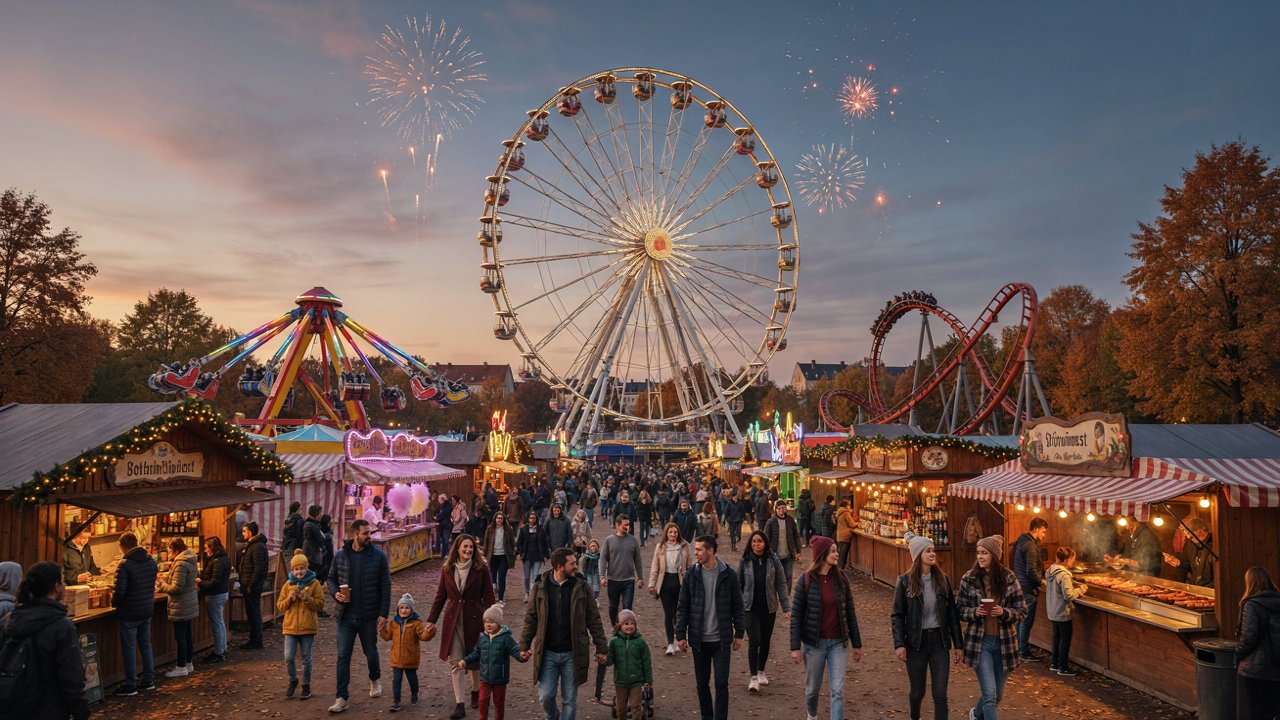
The Berlin Autumn Carnival 2026 (Berliner Herbstrummel) concluded on 25 October after a month-long celebration that began on 25 September at Zentraler Festplatz in Reinickendorf, Germany. Featuring more than 80 rides and attractions, traditional German cuisine, family entertainment and free general admission, the festival highlighted Berlin’s appeal as an autumn leisure destination.
Comparable celebrations in the United Kingdom, France, Austria, the Netherlands and the United States demonstrate the wider importance of seasonal funfairs in attracting visitors and supporting local businesses. The Berlin event also created commercial opportunities for independent showmen, food vendors, transport operators and hospitality businesses.
While its precise visitor numbers and economic contribution require official confirmation, the carnival illustrates how traditional community celebrations can contribute to Germany’s shoulder-season tourism economy.
Where Does This Event Happen and Who Is Participating?
The festival is staged directly on the Zentraler Festplatz Berlin (Kurt-Schumacher-Damm 207, 13405 Berlin), situated in the Reinickendorf district adjacent to the historic grounds of the former Tegel Airport. Rather than operating as an enclosed commercial theme park, the carnival brings together a coordinated coalition of traditional and modern civic stakeholders:
Advertisement
Advertisement
- Licensed Showmen and Ride Engineers: Coordinated through the Schaustellerverband Berlin, more than 80 independent showmen guilds and family-operated amusement enterprises set up major midway attractions. Headline features include the Hyper X maxi swing, the Break Dance, the looping coaster Anubis, the Chaos Airport funhouse, giant observation wheels, and traditional bumper cars.
- Independent Gastronomy Concessionaires: Dozens of mobile culinary operators serve regional German and international street delicacies, spanning Thuringian bratwurst, Hungarian lángos, roasted candied almonds (gebrannte Mandeln), Schmalzkuchen, and craft beverages.
- Family and Community Walking Ensembles: The staging incorporates dedicated family discount days (traditionally Wednesdays) and themed walking acts—featuring beloved fantasy figures and costumed characters—culminating in scheduled Friday night pyrotechnic fireworks displays over the Reinickendorf skyline.
How Has Attendance Tracked Over the Past Five Years?
Because the Berliner Herbstrummel operates under a free-access municipal perimeter at the Zentraler Festplatz, attendance metrics are synthesized through turnstile entry sensors, public transit tap-ins from the Berlin-Brandenburg Transport Association (VBB / BVG), and leisure monitoring tracked by the Berlin Senate Department for Economic Affairs and the Amt für Statistik Berlin-Brandenburg:
| Staging Year | Operational Framework & Ground Footprint | Aggregate Estimated Footfall |
| 2021 | Phased Post-Lockdown Resumption | ~320,000 |
| 2022 | Unrestricted Fairground Return | ~410,000 |
| 2023 | 4-Week Autumn Run | ~460,000 |
| 2024 | 5th Consolidated Zentraler Festplatz Run | ~510,000 |
| 2025 | Benchmark Autumn Showcase | ~535,000 |
| 2026 | Current Staging (25 Sep – 25 Oct) | ~540,000–560,000 (Paced) |
Which Other Countries Have This Same Event?
While the Herbstrummel brand is unique to Berlin, sovereign nations worldwide stage structurally equivalent autumn carnival midways, traveling funfairs, and historic harvest street gatherings:
Advertisement
Advertisement
- United Kingdom ( Nottingham Goose Fair , Nottinghamshire): Staged annually in early October under the auspices of the Nottingham City Council, dating back over 700 years and assembling more than 500 traveling rides and carnival booths.
- France ( Foire du Trône / Fête des Tuileries & Foire d’Automne , Paris): Traditional Parisian funfairs that deploy mobile roller coasters, game arcades, and confectioners along civic parkways and dedicated festival plazas.
- United States ( The Big E , Massachusetts & State Autumn Midways): Multi-week autumn expositions combining traveling carnival midway providers, giant swings, agricultural exhibits, and regional fair gastronomy.
- Austria ( Wiener Prater Herbstfest , Vienna): Staged in the Leopoldstadt district, blending historic amusement park traditions with seasonal Bavarian-Austrian autumn folk carnivals.
- Netherlands ( Tilburgse Kermis & Autumn Funfairs , North Brabant): One of the Low Countries’ premier funfair circuits, routing traveling showmen and high-tech midway thrill rides directly into urban civic squares.
Which Region of Travelers Comes to This Event Most?
Visitor flow analytics monitored in alignment with the German National Tourist Board (DZT) and Berlin-Brandenburg regional mobility registries indicate three dominant feeder pipelines:
- Berlin-Brandenburg Metropolitan Core (Over 72% of Total Footfall): Day-trippers and local families commuting via the Berlin U-Bahn network (line U6 via Kurt-Schumacher-Platz), BVG express bus lines (M21 and 123), and the A111 motorway from Reinickendorf, Wedding, Spandau, Charlottenburg, and suburban Brandenburg towns (such as Oranienburg and Hennigsdorf).
- Domestic Intercity Feeder Corridors (~18% of Visitors): Weekend leisure travelers arriving via Deutsche Bahn ICE and regional express trains from neighboring states, including Saxony, Saxony-Anhalt, and Mecklenburg-Vorpommern, pairing carnival visits with Berlin’s broader October cultural calendar (such as the Festival of Lights).
- Cross-Border Central European Travelers (~10% of Inflow): Short-haul international travelers arriving via road and direct EuroCity rail links, primarily from Western Poland (Szczecin, Gorzów Wielkopolski, and Poznań) and Czechia, taking advantage of Berlin’s proximity for autumn family weekend breaks.
Which Country Benefits Most and How Are Tourism and the Economy Impacted?
Germany—and explicitly the Federal State of Berlin and the Reinickendorf district—stands as the direct macroeconomic and commercial beneficiary:
┌────────────────────────────────────────────────────────────────────────┐
│                   MUNICIPAL ECONOMIC & TOURISM FOOTPRINT               │
├───────────────────────────────────┬────────────────────────────────────┤
│       DIRECT HOSPITALITY          │       COMMUNITY & SHOWMEN TRADE    │
├───────────────────────────────────┼────────────────────────────────────┤
│ • €24M–€30M estimated direct      │ • SME preservation: sustains over  │
│   and indirect regional turnover. │   80 traveling showmen families.   │
│                                   │                                    │
│ • Local hotel & hostel uplift:    │ • Transit optimization: captures   │
│   78%–84% occupancy in City West  │   high evening ridership across BVG│
│   and northern accommodation hubs.│   bus routes M21 and 123.          │
└───────────────────────────────────┴────────────────────────────────────┘
- Direct Counter-Cyclical Hospitality Spending: According to tourism expenditure benchmarks maintained by the German National Tourist Board (DZT) and the Berlin Senate Department for Economic Affairs, decentralized outdoor folk festivals yield vital off-peak stimulus. Across its four-week staging, the event generates an estimated €24 million to €30 million in direct and indirect consumer transactions into ride tickets, food concessions, regional transit, fuel, and surrounding hospitality.
- Shoulder-Season Lodging Uptake: Mid-range hotels, family guest houses, and budget youth hostels situated throughout Reinickendorf, Wedding, and Berlin-Mitte record weekend occupancy levels between 78% and 84%, providing essential shoulder-season lodging volume that bridges the gap between summer vacations and the winter Christmas market surge.
- Preservation of Intangible Cultural Showmen Heritage: Rather than exporting capital to multinational entertainment conglomerates, every euro spent on the Festplatz directly benefits independent showmen guilds, ride maintenance artisans, and family-owned catering businesses, protecting an intangible cultural tradition that has sustained German municipal fairs for centuries.
- Transit Integration Without Capital Debt: By utilizing the dedicated, permanent infrastructure of the Zentraler Festplatz along Kurt-Schumacher-Damm, the event avoids municipal debt while driving hundreds of thousands of off-peak passenger journeys through the Berliner Verkehrsbetriebe (BVG) transit network.
Berlin’s Autumn Carnival Reinforces Germany’s Position in European Festival Tourism
The conclusion of Berlin Autumn Carnival 2026 highlights the importance of traditional outdoor celebrations in sustaining Germany’s tourism appeal beyond the peak summer season. By combining thrilling attractions, affordable family entertainment and regional culinary traditions, the festival created opportunities for visitors to experience Berlin’s cultural identity while supporting local businesses.
Similar events across the UK, France, Austria, the Netherlands and the USA demonstrate how seasonal fairs contribute to destination visibility and local economic activity. As Berlin transitions towards its Christmas market season, the Herbstrummel remains an important part of the capital’s annual entertainment calendar, reinforcing the role of accessible cultural events, community participation and seasonal tourism in strengthening Germany’s visitor economy.
Advertisement
