
USA Travel Shockwave Houston Airport Flight Chaos Erupts as Violent Rainstorms Trigger Massive Delays Across Major Texas Aviation Hubs

Published
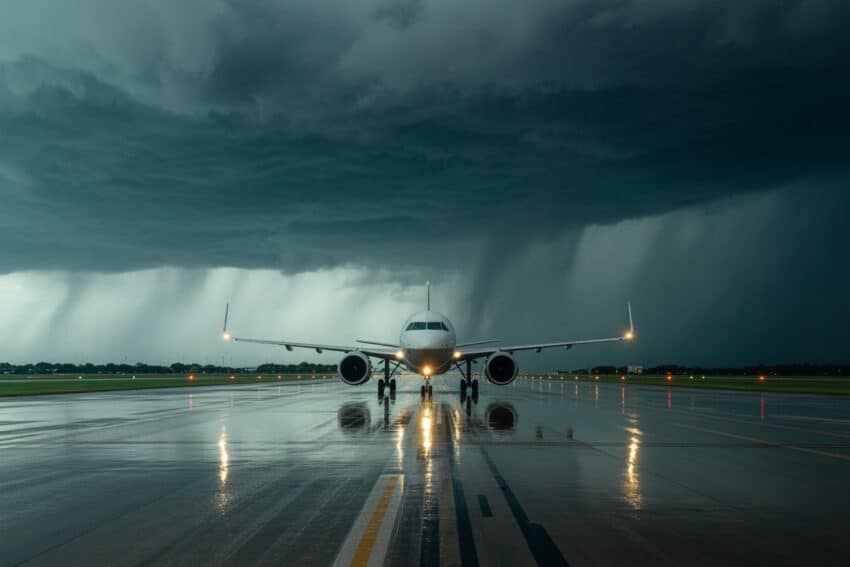
Image generated with Ai
The Houston airport flight delays heavy rain USA travel disruption has intensified as severe storms sweep across Texas, creating cascading operational pressure at both George Bush Intercontinental Airport and William P. Hobby Airport. The Houston aviation weather delays IAH HOU airport chaos reflects how rapidly Gulf Coast weather systems can destabilise major US air traffic hubs. Texas storm flight cancellations USA trends now show growing sensitivity to short-duration but high-intensity rainfall events, especially across Gulf-linked aviation corridors. Gulf Coast weather travel impact continues to shape flight reliability patterns, while US airport disruption rainstorms highlight structural vulnerabilities in weather-exposed aviation systems.
Travellers arriving in or departing from Houston now face unpredictable schedules, sudden gate changes, and rolling delays as thunderstorms intensify over the region. The situation continues to evolve as meteorologists track a developing system feeding heavy moisture into Southeast Texas.
Advertisement
Advertisement
Rainstorms That Disrupt One of America’s Busiest Aviation Hubs
Why Houston reacts so quickly to severe weather
Houston operates in one of the most weather-sensitive aviation environments in the United States. The city sits close to the Gulf of Mexico, which supplies constant moisture. This creates ideal conditions for rapid storm development.
The Houston airport flight delays heavy rain USA travel disruption escalates when rain bands stall over the metro region. Visibility drops quickly. Runway operations slow down. Aircraft spacing increases for safety reasons.
Advertisement
Advertisement
IAH and HOU both operate near low-lying flood-prone zones. This makes them highly reactive to rainfall intensity rather than duration alone.
Advertisement
Advertisement
How storms spread across airport systems
Thunderstorms in Houston rarely stay isolated. They often expand into clusters. These clusters disrupt multiple flight paths simultaneously.
The Houston aviation weather delays IAH HOU airport chaos increases when storm cells overlap arrival and departure corridors. Air traffic controllers must reroute aircraft. This increases fuel consumption and delays.
Ground operations also slow down when lightning activity increases. Safety protocols restrict ramp activity. This creates backlog pressure across terminals.
Inside the Operational Breakdown at Houston Airports
George Bush Intercontinental Airport under pressure
IAH handles high volumes of international and domestic flights. Heavy rain creates immediate congestion in its arrival and departure banks.
The Houston airport flight delays heavy rain USA travel disruption becomes visible through stacked departure queues and extended taxi times. Aircraft often wait longer on runways before takeoff clearance.
Advertisement
Advertisement
Arrival sequencing also slows down. Planes enter holding patterns above Texas airspace. This increases airborne delay time.
Hobby Airport faces cascading schedule shifts
William P. Hobby Airport handles a large volume of domestic traffic. It experiences similar but shorter delay cycles.
The Houston aviation weather delays IAH HOU airport chaos affects Hobby through inbound delays from connecting hubs. Aircraft arrive late. Turnaround times compress. Departures then shift further.
This creates a ripple effect across regional networks.
Meteorological Trigger Behind the Disruption
Gulf moisture fuels unstable storm systems
The Gulf of Mexico plays a central role in Houston weather volatility. Warm sea temperatures generate moisture-rich air masses.
Advertisement
Advertisement
When this moisture interacts with atmospheric instability, storms intensify rapidly. This leads to sudden rainfall bursts across Houston.
The Texas storm flight cancellations USA pattern often begins with these Gulf-fed systems.
Flash flood risk increases aviation stress
Houston’s flat terrain amplifies flood risks during heavy rain events. Drainage systems struggle under intense rainfall.
Runways remain operational but operate under caution. Taxiways accumulate water quickly. This forces slower ground movement.
The Gulf Coast weather travel impact extends beyond airports into road transport and urban mobility.
Advertisement
Advertisement
Airline Operations Under Weather Pressure
Flight scheduling becomes unpredictable
Airlines adjust schedules dynamically during storms. This leads to rolling delays instead of fixed cancellations.
The US airport disruption rainstorms pattern shows airlines prioritising safety over punctuality. This increases buffer times between departures.
Crew rotations also face disruption. Incoming aircraft arrive late. This impacts outbound scheduling across the day.
Air traffic control adds spacing buffers
Controllers increase separation between aircraft during storms. This reduces risk but slows throughput.
Houston airport flight delays heavy rain USA travel disruption worsens when airspace congestion builds up.
Advertisement
Advertisement
Aircraft may circle above regional airspace until safe landing slots open.
Passenger Experience During Houston Storm Delays
Extended waiting times and terminal congestion
Travellers experience longer waits at gates. Boarding schedules shift multiple times.
The Houston aviation weather delays IAH HOU airport chaos creates uncertainty for connecting passengers. Missed connections increase during peak storm periods.
Airlines issue updates frequently. However, timing remains fluid.
Communication gaps add frustration
Passengers often rely on mobile apps for updates. But rapid weather changes make predictions unstable.
Advertisement
Advertisement
The Texas storm flight cancellations USA situation highlights how quickly schedules shift during Gulf Coast weather systems.
Real-time communication becomes essential for managing passenger expectations.
Why Houston Is Uniquely Vulnerable
Geography shapes aviation risk
Houston sits near coastal moisture corridors. This makes it prone to sudden weather volatility.
The US airport disruption rainstorms pattern is stronger here than in inland hubs. Gulf-fed storms develop faster than continental systems.
This reduces reaction time for airlines and controllers.
Advertisement
Advertisement
Infrastructure pressure during peak rainfall
Runways handle high traffic volumes daily. When storms hit, capacity drops sharply.
The Houston airport flight delays heavy rain USA travel disruption increases as both airports share regional airspace constraints.
This creates simultaneous delays across multiple carriers.
Broader Impact Across US Aviation Network
Ripple delays across connecting hubs
Houston delays often spread to Dallas, Atlanta, and Chicago. Aircraft rotations break down across networks.
The Gulf Coast weather travel impact extends into national air traffic systems. Even clear-weather airports may experience secondary delays.
Advertisement
Advertisement
This creates a domino effect across airline schedules.
Increased operational costs for airlines
Delays increase fuel consumption and crew hours. Airlines absorb additional operational costs during storm cycles.
The Houston aviation weather delays IAH HOU airport chaos becomes an economic factor as well as an operational challenge.
Conclusion A Weather System That Tests Aviation Resilience
The Houston airport flight delays heavy rain USA travel disruption demonstrates how quickly Gulf Coast weather can destabilise major aviation hubs. The Houston aviation weather delays IAH HOU airport chaos continues as storms intensify across Southeast Texas, placing operational strain on both major airports.
The Texas storm flight cancellations USA pattern highlights structural vulnerabilities in weather-sensitive regions. Gulf Coast weather travel impact remains one of the most influential factors in US aviation reliability.
US airport disruption rainstorms events like this underline a simple reality. Modern aviation depends not only on infrastructure and scheduling, but also on unpredictable atmospheric forces that reshape travel in real time.
Advertisement
