
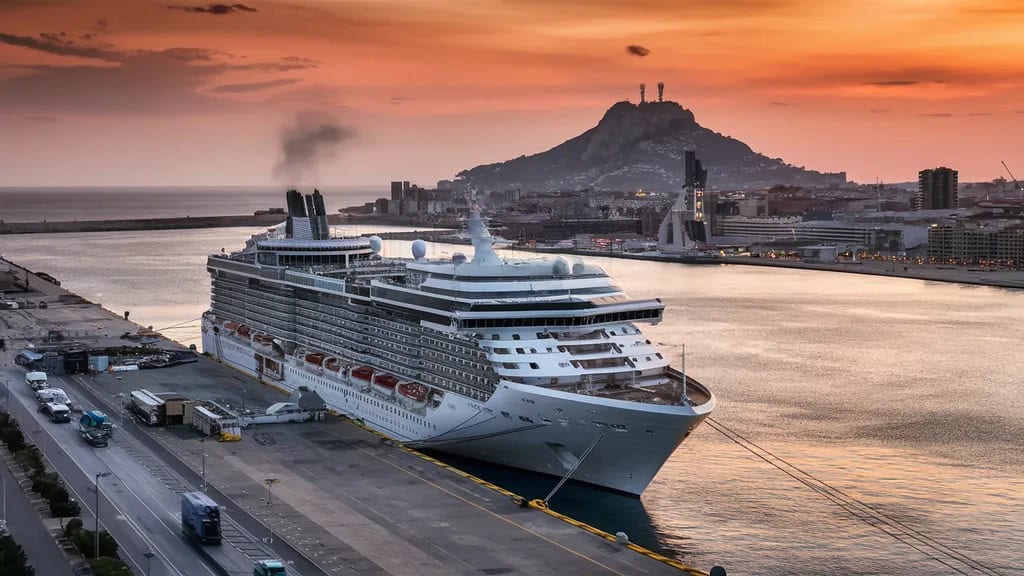
Image generated with Ai
The World Travel & Tourism Council (WTTC) has strongly urged Barcelona authorities to reconsider a proposed tourist tax hike on short-stay cruise passengers. The global authority warns that escalating fiscal penalties will severely damage the city’s international competitiveness and lead to catastrophic local job losses. Industry experts fear that hard-pressed holidaymakers will simply alter their spending habits ashore or abandon the Catalan capital entirely for more affordable Mediterranean alternatives.
The global tourism authority believes that sudden fiscal adjustments create severe economic instability rather than fixing local infrastructure concerns. Barcelona has spent decades establishing itself as a premier global hub for international maritime voyages. However, introducing punitive measures targeting short-stay holidaymakers could instantly dismantle this hard-earned reputation. The private sector thrives on financial predictability, but escalating surcharges threaten to alienate major international operators. Industry leaders note that global economic pressures are already causing a visible softening in overall consumer demand across Europe. Forcing additional financial burdens onto holidaymakers during a period of widespread financial instability is highly risky. Tourism bodies emphasize that long-term city planning must rely on deep stakeholder engagement rather than quick revenue grabs. Collaborative policy-making ensures that local communities prosper without discouraging international visitors. The global travel trade fears an unhelpful domino effect could ripple through the region. Consequently, local operators might face severe financial shortfalls if arrival numbers drop unexpectedly.
Advertisement
The cruise sector acts as a monumental economic engine for regional businesses, high-street shops, and cultural institutions. For instance, Barcelona serves as one of the world’s premier cruise homeports, welcoming roughly 4.0 million global travellers annually. These visitors generate immense financial windfalls, with homeport passengers spending an impressive average of €255 per person. Driving these high-spending individuals away will instantly hurt local restaurateurs, souvenir vendors, and transport providers. Furthermore, maritime holidaymakers contributed a staggering €11.9 million in direct taxes to the Barcelona City Council in 2024 alone. Stripping these vital funds from the public purse via declining arrivals will harm civic infrastructure projects. When visitors reduce their onshore leisure spending to offset rising taxes, the service sector suffers immediately. Local businesses will inevitably face downsizing, which ultimately impacts regional employment and long-term job creation. The WTTC insists that preserving the financial health of working-class citizens requires a balanced approach to visitor management.
Recent economic data confirms that Barcelona is already experiencing a notable decline in transit cruise passengers. Specifically, official metrics tracked a 3.3 per cent dip in transit arrivals during the 2024 financial year. Meanwhile, the city’s projected international spending growth for 2025 sits at a very modest 2.7 per cent. This sluggish growth rate places the iconic destination well behind rival European cities vying for maritime traffic. Holidaymakers are highly sensitive to escalating costs and will easily select alternative routes if prices soar. Nearby ports are actively positioning themselves as more budget-friendly hubs for major cruise liners. If major cruise lines adjust their itineraries to avoid high-tax zones, regional foot traffic will plummet. This shift could leave local tourism infrastructure underutilized and cause long-term damage to the city’s brand.
Advertisement
Advertisement
Historical data gathered from various global destinations shows that sudden tourist tax hikes rarely produce positive long-term outcomes. For example, economic models show that the UK economy risks losing at least £14 billion if daily visitor taxes are introduced. Such massive financial losses highlight how easily defensive fiscal strategies can backfire on major metropolitan areas. When local governments weaponize taxation to solve systemic issues, they often stifle the very industries that fund public services. The future of sustainable global travel cannot be built on short-term, aggressive fiscal adjustments. Instead, modern municipal governance requires robust, multi-year strategic roadmaps co-designed alongside the private travel sector. Protecting public spaces must not happen at the expense of local prosperity.
Independent research from the Cruise Lines International Association (CLIA) highlights a fascinating trend regarding passenger behaviour. Crucially, more than 60 per cent of maritime travellers eventually return to destinations they first discovered via a cruise. Short-stay passengers are essentially highly valuable, pre-qualified leads for future multi-day hotel stays and extended family holidays. If Barcelona restricts this vital introductory channel, it actively chokes off its pipeline for future residential tourism. The initial short-stay visit serves as an essential tasting menu for the city’s broader cultural offerings. When municipal policies discourage cruise liners from docking, they lose the opportunity to showcase their heritage to millions. Cultivating lifelong brand advocates requires a welcoming atmosphere rather than immediate financial barriers at the port.
The WTTC stands fully prepared to collaborate with local authorities to design holistic, balanced management strategies. Sustainable tourism management relies heavily on optimized crowd flow technology, smarter itinerary scheduling, and upgraded green port infrastructure. Rather than implementing blunt fiscal penalties, the local government should work directly with industry leaders to address over-tourism. Public-private partnerships can fund eco-friendly urban initiatives without dismantling the economic engine that drives local prosperity. For example, staggered arrival times can significantly reduce physical congestion at popular architectural landmarks. Investing in shore-power technology allows docked vessels to run cleanly without impacting urban air quality. By bringing together operators, residents, and government officials, Barcelona can safeguard its matchless historical charm. Protecting the community while remaining a competitive, thriving global hub is entirely achievable through shared innovation.
Advertisement
Tags: Barcelona tourist tax, Cruise Ship News, Mediterranean cruise holidays, travel economy updates, WTTC tourism report
Advertisement
Advertisement












Saturday, September 5, 2026

Saturday, September 5, 2026
Saturday, September 5, 2026

Saturday, September 5, 2026

Saturday, September 5, 2026
Saturday, September 5, 2026

Saturday, September 5, 2026

Saturday, September 5, 2026



