
Mexico City Turns World Cup Boom Into Tourism Push as Meet México Targets North American Travellers

Published
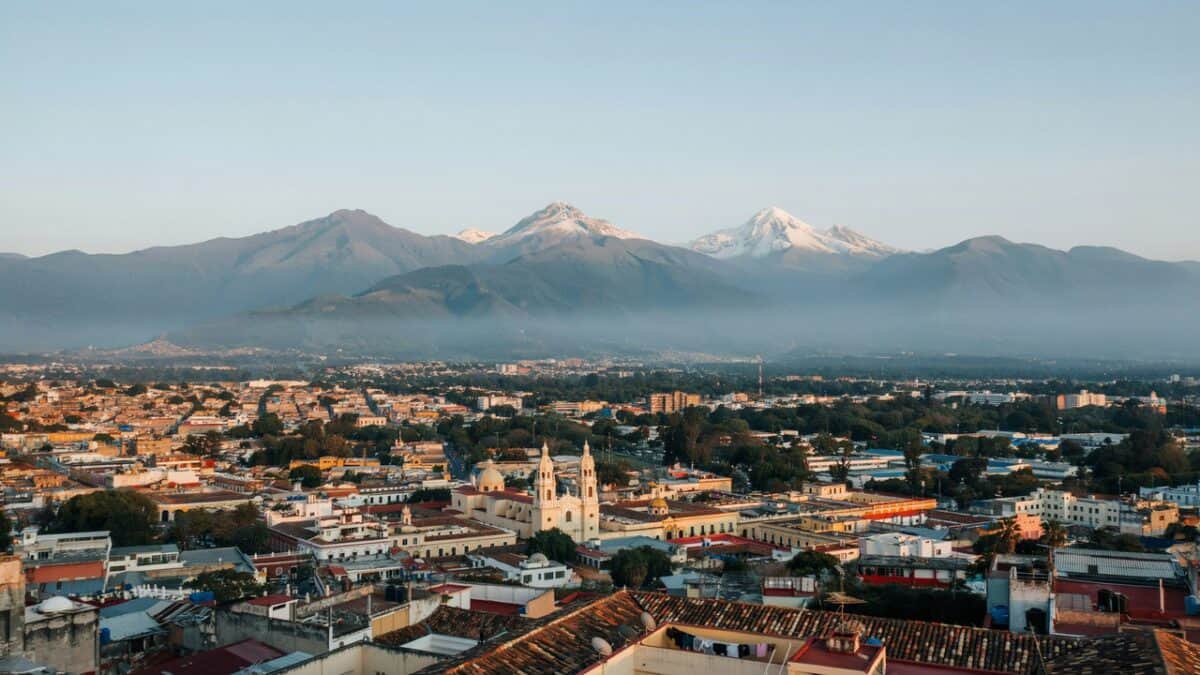
Image generated with Ai
Mexico City turns its World Cup boom into a tourism push as Meet México targets North American travellers, with strong match-day hotel demand, millions of tournament visitors and an expanding international promotion strategy designed to convert the 2026 football surge into repeat leisure and business travel.
Mexico is attempting to ensure that the extraordinary tourism activity created by the FIFA World Cup 2026 does not disappear with the final whistle.
Advertisement
Advertisement
Mexico City stood at the centre of the country’s tournament experience, while Guadalajara and Monterrey completed the three-city host network. Together, the destinations attracted millions of domestic and international travellers and generated billions of pesos in tourism expenditure.
The next challenge is retention.
Advertisement
Advertisement
Federal tourism authorities are now trying to persuade visitors who discovered Mexico through football to return for food, culture, heritage, beaches, nature and city experiences, while travel-trade initiatives such as Meet México are strengthening relationships with tour operators, airlines and travel agencies across North America.
Mexico City Converts World Cup Visibility Into a Tourism Opportunity
Mexico entered the World Cup expecting the tournament to become one of the biggest tourism opportunities in its recent history.
Advertisement
Advertisement
That expectation translated into significant visitor activity.
Official post-tournament figures show that 7.8 million domestic and international travellers visited Mexico’s three World Cup host cities during the competition.
Tourism expenditure across the host destinations exceeded 42 billion pesos.
Mexico City was especially important because it hosted the tournament’s opening ceremony and matches at the Estadio Ciudad de México, giving the capital enormous international visibility.
The economic impact reached far beyond football.
Visitors required:
Advertisement
Advertisement
- Hotels
- Restaurants
- Flights
- Ground transportation
- Attractions
- Shopping
- Entertainment
- Tours
- Cultural experiences
For Mexico City, the World Cup effectively became a massive international destination-marketing campaign delivered through sport.
Hotel Occupancy Surges to 85–90% on Match Days
The official accommodation figures demonstrate the strength of World Cup demand.
Average hotel occupancy across Mexico City, Guadalajara and Monterrey reached 66% during the five weeks of the tournament.
On match days, however, occupancy surged to between 85% and 90%.
| World Cup Tourism Indicator | Official Result |
| Travellers in three host cities | 7.8 million |
| Tourism expenditure | More than MXN 42 billion |
| Average hotel occupancy | 66% |
| Match-day hotel occupancy | 85–90% |
| Airport passengers across host destinations | 6.4 million |
| Jobs generated across host cities | 130,900 |
| Mexico City jobs | 100,000 |
| Monterrey jobs | 15,800 |
| Guadalajara jobs | 15,100 |
These figures provide a stronger and more reliable picture than the unsupported claim that Mexico City hotel occupancy increased by more than 150%.
The important finding is that football created intense, concentrated accommodation demand around match dates.
Advertisement
Advertisement
Mexico City Accounts for 100000 World Cup-Related Jobs
Mexico City also dominated the employment impact.
Of the 130,900 jobs generated across Mexico’s three host destinations, approximately 100,000 were attributed to Mexico City.
Monterrey accounted for another 15,800, while Guadalajara generated around 15,100.
The figures show why major sporting events matter to tourism economies.
The benefits are not limited to stadium employees.
Hotels need additional workers. Restaurants require staff. Transport companies need drivers. Tourism operators serve visitors. Event suppliers provide temporary infrastructure, while retailers and entertainment businesses gain additional customers.
Advertisement
Advertisement
Mexico City’s challenge is now to convert some of that temporary economic activity into more sustainable visitor demand.
That requires giving World Cup travellers reasons to return when there is no football match attached to the journey.
6.4 Million Airport Passengers Show the Scale of Tournament Mobility
Aviation played another major role.
Airports serving Mexico’s three host destinations handled approximately 6.4 million passengers during the World Cup period.
For Mexico City, aviation connectivity is a crucial competitive advantage.
The metropolitan area is supported by major airport infrastructure connecting it with domestic destinations and international markets across North America, Latin America, Europe and beyond.
Advertisement
Advertisement
That connectivity allows the capital to function as both a final destination and a gateway to the wider country.
A World Cup visitor arriving in Mexico City could potentially continue towards beaches, archaeological sites, colonial cities or nature destinations.
The government’s post-tournament tourism strategy is increasingly focused on encouraging exactly that behaviour.
Mexico Launches Campaign to Bring World Cup Visitors Back
On 14 July 2026, shortly after the tournament, Mexico’s Tourism Ministry formally launched a campaign built around a straightforward idea: people who came for the World Cup should return to experience Mexico itself.
The initiative seeks to maintain international attention generated during the competition and redirect it towards conventional tourism.
The strategy is important because mega-events create enormous but temporary spikes in destination awareness.
Advertisement
Advertisement
Without follow-up marketing, that visibility can fade rapidly.
Mexico instead wants to convert first-time football visitors into repeat leisure travellers.
The tourism proposition extends well beyond the three host cities.
Potential return experiences include:
- Gastronomy
- Pueblos Mágicos
- Archaeological sites
- Beaches
- Indigenous culture
- Nature
- Adventure tourism
- Historic cities
- Festivals
- Rail tourism
The objective is to transform a sports journey into a longer-term relationship with the destination.
Meet México Takes Tourism Promotion Directly to North American Buyers
Mexico’s Meet México roadshow strategy provides the commercial side of that international push.
Advertisement
Advertisement
The programme brings Mexican destinations directly to travel agents, tour operators, airlines, tourism organisations and other industry partners in important source markets.
Official tourism roadshows have already taken Meet México into cities including:
- Chicago
- Toronto
- Montréal
- New York-New Jersey
- Dallas
- Houston
- San Francisco
- Los Angeles
The strategy is designed to strengthen Mexico’s position in the United States and Canada, its two most important international source markets.
These events are different from consumer advertising.
Instead of attempting to persuade one traveller at a time, Mexican tourism representatives meet companies capable of selling thousands of future holidays.
Chicago and Toronto Demonstrate the B2B Strategy
The Chicago and Toronto roadshow illustrates how the programme works.
Advertisement
Advertisement
Mexican representatives met airlines, tour operators, travel associations and commercial partners while presenting destinations and strategic tourism projects.
The Meet México seminar in Chicago attracted 80 representatives from local travel agencies serving the US market.
In Toronto, the delegation held discussions with major tourism partners including Sunwing Vacation Group and Destination Toronto.
The Canadian market is particularly important.
During the first half of 2025, approximately 1.5 million Canadians travelled to Mexico, including more than 500,000 visitors from Ontario.
Mexican tourism authorities also identified increasing Canadian interest in shorter low-season trips and authentic cultural and gastronomic experiences.
Advertisement
Advertisement
This provides an opportunity to diversify beyond traditional winter resort tourism.
Meet México Expands Across the United States
Other roadshows have targeted major US aviation and population centres.
In San Francisco, Meet México brought Mexican destinations before travel professionals from the Bay Area.
The wider West Coast programme also included Los Angeles, where tourism officials met business organisations and airlines to discuss investment, connectivity and promotion.
Dallas and Houston provided another strategically important market.
Dallas tourism and airport representatives held discussions with the Mexican delegation around connectivity and the opportunities created by the World Cup.
Advertisement
Advertisement
Meet México events then introduced travel agents to participating Mexican states and destinations.
The underlying objective is consistent across each city: strengthen distribution.
A destination can have excellent hotels and attractions, but international tourism grows more efficiently when travel sellers understand the product and have commercial relationships with local suppliers.
United States and Canada Remain Critical to Mexico Tourism
The roadshow geography is not accidental.
The United States and Canada are Mexico’s most important international tourism markets.
Official Mexican government data showed that the United States, Canada and United Kingdom together supplied more than 9.2 million foreign tourists arriving by air during the first half of 2025.
Advertisement
Advertisement
The US and Canada consequently sit at the centre of Mexico’s tourism diplomacy.
Maintaining those markets becomes especially important after the World Cup.
Millions of North Americans were exposed to Mexican destinations through tournament coverage, fan travel and related promotions.
Meet México gives the country a mechanism for maintaining that attention once the global sporting spotlight moves elsewhere.
Mexico City Strengthens Its Business Events Position Too
Mexico City’s post-World Cup opportunity extends beyond leisure tourism.
In August 2026, the capital hosted IBTM Americas, one of the region’s important meetings and events industry gatherings.
Advertisement
Advertisement
The event brought together:
- More than 555 specialised buyers
- More than 420 exhibitors
- Around 4,400 visitors
- More than 9,000 scheduled business meetings
- 60 educational sessions
- Representation from 21 international markets
Mexican tourism authorities estimated the commercial opportunities connected with the event at approximately US$14 billion.
That demonstrates why business tourism matters.
Corporate travellers, convention delegates and event organisers can generate substantial spending while also helping destinations reduce dependence on conventional holiday seasons.
Sports Tourism Becomes Part of Mexico City’s Long-Term Strategy
Mexico City reinforced its sporting credentials again in September when it hosted the World Tourism Sports Congress from 7–9 September at the Autódromo Hermanos Rodríguez.
It was the first time the international event had been held outside Europe.
Advertisement
Advertisement
Mexican authorities estimate sports tourism represents around 10% of national tourism GDP, grows by more than 25% annually and generates more than 65 billion pesos.
Those figures explain why Mexico does not want the World Cup to remain an isolated event.
The capital already hosts major sporting competitions and possesses extensive accommodation, aviation and event infrastructure.
The long-term opportunity is to use that capacity repeatedly.
Mexico Wants to Become the World’s Fifth Most-Visited Country
The post-World Cup strategy connects with a larger national ambition.
Mexico is seeking to position itself among the five most-visited countries in the world by 2030.
Advertisement
Advertisement
That requires growth beyond traditional tourism centres.
The country’s international promotion increasingly involves all 32 states rather than concentrating solely on Cancún, Los Cabos, Puerto Vallarta and Mexico City.
At FITUR 2026 in Madrid, all 32 states participated together in Mexico’s largest-ever pavilion.
The strategy reflects a fundamental challenge.
Mexico already attracts enormous numbers of international visitors. Future growth depends partly on encouraging travellers to discover more destinations and spend across a wider range of communities.
World Cup Legacy Could Extend Far Beyond 2026
The most valuable World Cup outcome may ultimately be what happens after the tournament.
Advertisement
Advertisement
Mega-events generate immediate demand, but their lasting tourism value depends on conversion.
Mexico now possesses:
- Millions of recent visitors
- Global destination exposure
- Improved visitor infrastructure
- New tourism routes
- Stronger travel-trade relationships
- Expanded sports-tourism credentials
- International promotional campaigns
The question is whether those advantages translate into repeat visits.
A football fan who arrived for a match in Mexico City could return for Día de Muertos, gastronomy, museums or neighbourhood experiences.
Another traveller might use Mexico City as the beginning of a journey towards Oaxaca, Puebla, Yucatán or another region.
That conversion is where the long-term economic opportunity lies.
Advertisement
Advertisement
Conclusion: Mexico City Turns World Cup Boom Into Tourism Push as Meet México Targets North American Travellers
Mexico City turns its World Cup boom into a tourism push as Meet México targets North American travellers because Mexico is using the extraordinary visibility, hotel demand and visitor flows created by FIFA World Cup 2026 to build repeat leisure, business and event tourism from the United States, Canada and beyond.
The World Cup delivered measurable results.
Mexico’s three host destinations received 7.8 million travellers, generated more than 42 billion pesos in tourism expenditure, recorded average hotel occupancy of 66% and reached 85–90% occupancy on match days.
Approximately 6.4 million passengers moved through host-city airports, while 130,900 jobs were generated, including around 100,000 in Mexico City.
Now the strategy has changed from hosting to retention.
The post-World Cup campaign is encouraging visitors to return. Meet México roadshows are strengthening relationships with travel sellers in key North American markets. IBTM Americas is expanding business-tourism opportunities, while Mexico City’s hosting of the World Tourism Sports Congress reinforces its ambition to remain a major sports-tourism destination.
For Mexico City, the real World Cup legacy will therefore not be measured only by packed hotels during match weeks. It will be measured by how many of those visitors come back when there is no World Cup at all.
Advertisement
