
Japan’s Hahajima Travel from Tokyo via Chichijima Faces Dual Fuel Surcharges and Same Day Ferry Ticketing

Updated
Published
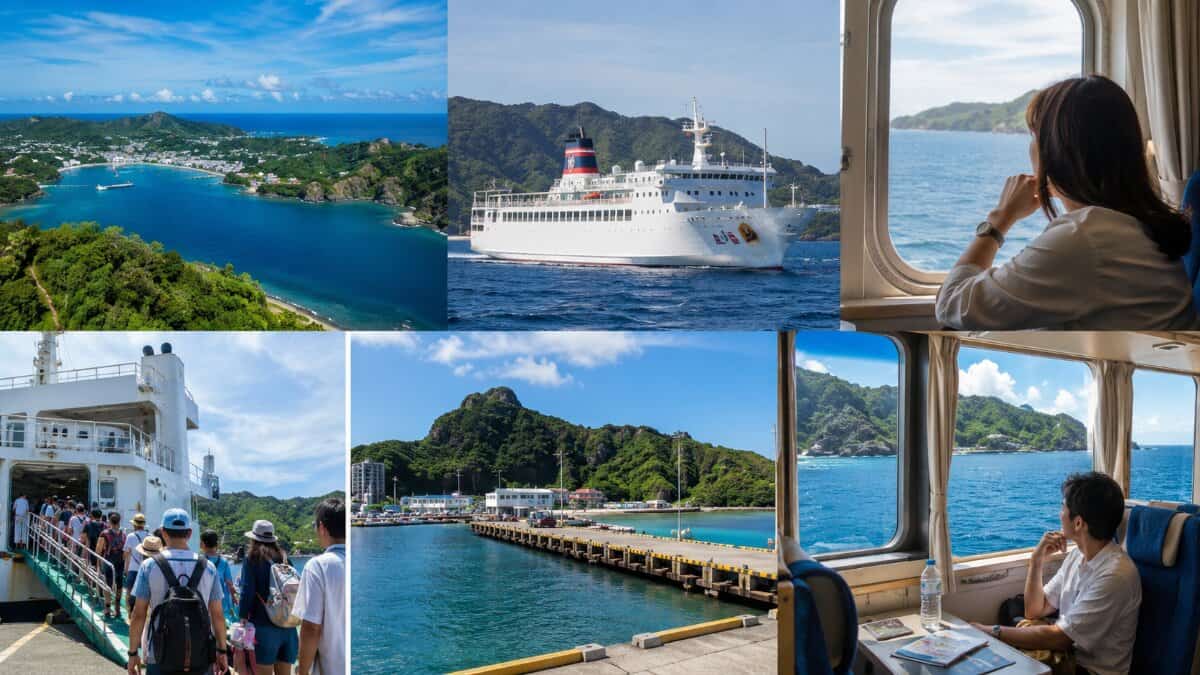
Image generated with Ai
Travellers reaching Hahajima from Tokyo in September 2026 face a minimum adult economy transport cost of ¥36,940 one way, but the bigger planning issue sits inside that figure. Two separately calculated fuel adjustments account for ¥9,350, while passengers reaching Chichijima at 11:00 must normally buy their non-reservable Hahajima Maru ticket after arrival before the connecting ferry leaves at 12:00. The reverse connection can also leave only one hour between vessels.
Japan’s Hahajima Fare Is Really Two Separate Transport Products
The journey from Tokyo to Hahajima can look deceptively simple on a map, yet it is commercially and operationally composed of two distinct maritime sectors.
The first is the Ogasawara Maru from Tokyo’s Takeshiba area to Chichijima. For September 2026, Ogasawara Kaiun lists the adult economy one-way fare at ¥31,450, including a ¥7,810 fuel surcharge. The second sector requires the Hahajima Maru from Chichijima to Hahajima, priced at ¥5,490 for an adult in September, including another ¥1,540 fuel adjustment.
That produces a minimum September transport cost of ¥36,940 one way or ¥73,880 for an equivalent same-month return journey, excluding accommodation, ground transport, activities and any upgraded accommodation aboard either ship.
Advertisement
Advertisement
The combined fuel component alone reaches ¥9,350 one way and ¥18,700 return. That means approximately 25.3 per cent of the minimum September one-way ferry bill is attributable to fuel adjustments rather than the underlying combined fare.
September 2026 Hahajima Cost Breakdown
| Journey component | Adult economy fare | Fuel adjustment included | Underlying amount excluding fuel |
|---|---|---|---|
| Tokyo to Chichijima | ¥31,450 | ¥7,810 | ¥23,640 |
| Chichijima to Hahajima | ¥5,490 | ¥1,540 | ¥3,950 |
| Total one way | ¥36,940 | ¥9,350 | ¥27,590 |
| Equivalent return | ¥73,880 | ¥18,700 | ¥55,180 |
The calculation is particularly relevant to travel agents because the second fuel adjustment does not merely extend the first operator’s pricing structure. Official Hahajima Maru information states that its fuel-adjustment methodology differs from the system applied by Ogasawara Kaiun. Both are therefore monthly variables that need to be checked independently.
Advertisement
Advertisement
October Reveals Why Fuel Pricing Is the Hidden Hahajima Story
The clearest evidence of this two-layer exposure appears when September is compared with October.
The combined underlying September fare, after removing both fuel components, is ¥27,590. In October, the Ogasawara Maru economy fare falls to ¥28,610, including a ¥4,970 fuel adjustment, while the Hahajima Maru falls to ¥5,020, including a ¥1,070 adjustment.
Advertisement
Advertisement
The October combined total is therefore ¥33,630, with ¥6,040 attributable to fuel adjustments and the same ¥27,590 underlying combined fare.
This means the entire ¥3,310 reduction between September and October is explained by the lower combined fuel adjustments, rather than a reduction in the underlying two-leg fare.
| Travel month | Tokyo–Chichijima | Chichijima–Hahajima | Combined one-way | Combined fuel component | Fuel share |
|---|---|---|---|---|---|
| August 2026 | ¥35,760 | ¥5,610 | ¥41,370 | ¥11,130 | 26.9% |
| September 2026 | ¥31,450 | ¥5,490 | ¥36,940 | ¥9,350 | 25.3% |
| October 2026 | ¥28,610 | ¥5,020 | ¥33,630 | ¥6,040 | 18.0% |
For B2B sellers, this creates a pricing lesson that is easy to miss. A quotation for remote Japan produced several months before travel should not treat the Hahajima extension as a static supplement. The operators publish fares according to monthly fuel-adjustment mechanisms, meaning the final transport cost can move materially even when the basic journey itself remains unchanged.
Chichijima Creates a 60-Minute Connection That Cannot Be Booked as a Normal Through Journey
Price is only half of the September story.
Advertisement
Advertisement
Ogasawara Kaiun states that reservations are not accepted for the Hahajima Maru and that travellers must purchase the ticket at its waiting room after arriving at Chichijima. The ticketing facility is located next to the Ogasawara Maru waiting area.
The September timetable then creates a tightly coordinated transfer.
On 1, 7, 13, 19 and 26 September, the Ogasawara Maru reaches Chichijima at 11:00 following the sailing from Tokyo. On those same arrival days, the Hahajima Maru is scheduled to leave Chichijima at 12:00 and reach Hahajima at 14:00.
The practical transfer window is therefore 60 minutes.
September Connections from Tokyo to Hahajima
| Tokyo departure | Chichijima arrival | Hahajima Maru departure | Hahajima arrival | Scheduled transfer |
|---|---|---|---|---|
| 31 August | 1 September, 11:00 | 12:00 | 14:00 | 60 minutes |
| 6 September | 7 September, 11:00 | 12:00 | 14:00 | 60 minutes |
| 12 September | 13 September, 11:00 | 12:00 | 14:00 | 60 minutes |
| 18 September | 19 September, 11:00 | 12:00 | 14:00 | 60 minutes |
| 25 September | 26 September, 11:00 | 12:00 | 14:00 | 60 minutes |
The booking distinction matters. A traveller may reserve the long-distance Ogasawara Maru before leaving Tokyo, but that reservation does not function as a conventional through-ticket securing the onward Hahajima sector.
The official Ogasawara tourism organisation also indicates that inability to board because the Hahajima Maru is full is very uncommon. The operational issue should therefore not be exaggerated into a chronic capacity crisis. The meaningful point for travel professionals is that the second ticket is handled separately and on the day of travel, creating another procedural step inside a short scheduled transfer.
Advertisement
Advertisement
The Return Journey Creates the Same One-Hour Dependency
The same timetable architecture appears on the journey back towards Tokyo.
On Ogasawara Maru departure days in September, the Hahajima Maru is scheduled to leave Hahajima at 12:00, reach Chichijima at 14:00, and connect with the Ogasawara Maru departure for Tokyo at 15:00.
This pattern applies on 4, 10, 16, 22 and 29 September.
That gives travellers another scheduled 60-minute connection.
For agents building Japan itineraries, this is more significant than the two-hour inter-island sailing may initially suggest. The Hahajima sector must remain synchronised with the much longer Tokyo service. Moving one element casually can disrupt the intended structure of the wider trip.
Both operators also warn that operating schedules may change because of weather, sea conditions or island circumstances. This reinforces the importance of treating Chichijima as a genuine maritime connection point rather than presenting Hahajima as a simple extension that can be added independently.
Advertisement
Advertisement
Why Tokyo’s Distance Makes Hahajima Different from Ordinary Japanese Island Hopping
According to the Tokyo Metropolitan Government, the Ogasawara Islands have no airport and can only be reached by passenger ship. The official guidance places Chichijima about 984 kilometres from Takeshiba Passenger Boat Terminal, with the Ogasawara Maru taking approximately 24 hours. Hahajima then requires another maritime sector of about two hours.
A traveller leaving Tokyo at 11:00 and using a scheduled September connection can therefore reach Hahajima at approximately 14:00 the following day, producing roughly 27 hours of elapsed journey time from Tokyo before local transfers are considered.
The Tokyo Metropolitan Government also advises that a standard Ogasawara visit generally requires a minimum of about six days, including nights aboard the vessel. That structural time requirement explains why changes affecting one ferry sector can have consequences far beyond the nominal two-hour Hahajima crossing.
The Hahajima Maru itself is a 453-tonne vessel with an official passenger capacity of 200, a length of 65.2 metres and a cruising speed of 16.5 knots. Izu Shoto Kaihatsu places the Chichijima–Hahajima route at 59 kilometres and approximately two hours.
World Heritage Demand Meets Deliberately Limited Transport Geography
The unusual access model also needs to be understood in the context of what travellers are travelling to see.
According to Japan’s Ministry of the Environment, the Ogasawara Islands lie roughly 1,000 kilometres south of Tokyo and form part of a highly distinctive oceanic ecosystem. Chichijima and Hahajima are among the principal island groups included in the World Natural Heritage property.
Advertisement
Advertisement
UNESCO has listed the Ogasawara Islands as a World Heritage property since 2011. The designated property covers 7,939 hectares and encompasses more than 30 islands across several groups, including Chichijima and Hahajima.
The tourism model is consequently very different from high-frequency Japanese destinations connected by domestic aviation or dense rail networks. Access capacity, accommodation inventory and visitor timing remain closely tied to ship movements.
The Ogasawara Village Tourism Association advises travellers to secure accommodation before arrival because camping and sleeping outdoors are prohibited locally. Its planning guidance also specifically recommends coordinating Hahajima accommodation with Ogasawara Maru arrival and departure cycles.
Trade Analysis: The Real Product Is a Timetable Chain, Not Two Ferry Tickets
For travel distributors, the most important information gain from the September data is that Hahajima should be costed and operationally managed as a linked timetable chain with separate commercial rules.
The Tokyo–Chichijima fare is one product. The Chichijima–Hahajima fare is another. Their fuel adjustments are calculated differently. The second ticket cannot normally be reserved before arrival. The principal September connections provide only one scheduled hour between vessels. Accommodation must also be secured before travelling.
That combination changes how agents should price packages.
Advertisement
Advertisement
A package quoted simply as Tokyo to Ogasawara plus Hahajima supplement risks hiding the volatility created by two monthly fuel adjustments. Likewise, an itinerary displaying only the two-hour Chichijima–Hahajima sailing understates the effective travel commitment because reaching the transfer point already requires roughly 24 hours by sea.
The September-to-October comparison makes the pricing issue particularly visible. The combined underlying adult economy amount remains ¥27,590, yet the traveller pays ¥36,940 in September and ¥33,630 in October because the stacked fuel component changes.
For wholesalers, dynamically packaged Japan specialists and tailor-made operators, that is the element worth building into quotation validity periods, client documentation and margin calculations.
Critical Operational Takeaways for Travel Agents and Tour Operators
- Price both ferry sectors independently: September adult economy travel costs ¥31,450 from Tokyo to Chichijima plus ¥5,490 onward to Hahajima.
- Account for two fuel mechanisms: the combined September fuel component reaches ¥9,350 one way.
- Do not imply through-ticketing: Hahajima Maru reservations are not accepted in advance and tickets are purchased at Chichijima.
- Protect the connection window: principal September arrival and departure patterns create only 60 minutes between the two services.
- Recheck monthly fares before ticketing: September and October share the same calculated underlying combined amount, but different fuel adjustments change the final price by ¥3,310 one way.
- Secure accommodation first: official destination guidance advises visitors to arrange lodging before arrival, while camping and outdoor sleeping are prohibited.
- Build weather contingency into client communication: ferry schedules can change because of sea, weather and operational conditions.
- Avoid presenting Hahajima as a short standalone excursion from mainland Japan: the full access chain begins with a roughly 24-hour Tokyo–Chichijima crossing followed by the inter-island ferry.
Hahajima Shows Why Remote Japan Requires Different Travel Distribution
Hahajima will not reshape global tourism volumes on its own but its September 2026 pricing structure illustrates a wider challenge facing the distribution of remote and environmentally significant destinations.
Travellers increasingly looking beyond conventional gateways can encounter journeys where access cost is influenced not only by distance but by fuel exposure with limited frequency alongside fragmented ticketing and tightly coordinated local transport.
For Japan specialists, the lesson from Tokyo, Chichijima and Hahajima is clear. The advertised mainland ferry fare is only the first layer.
Advertisement
Advertisement
In September, reaching Hahajima in adult economy requires ¥36,940 one way, including ¥9,350 in two fuel-linked adjustments, a non-reservable onward ticket and a scheduled 60-minute Chichijima transfer. Returning through the same system produces an equivalent ¥73,880 ferry bill before accommodation and other trip costs.
That makes the most remote stage of this Japan itinerary not simply another ferry ride, but a tightly interdependent travel product in which price, timing, ticketing and risk management must all be sold together.
Advertisement
