

Japan Takayama Festival Finale Reveals the Skilled Work Behind Its Historic Floats

Updated
Published
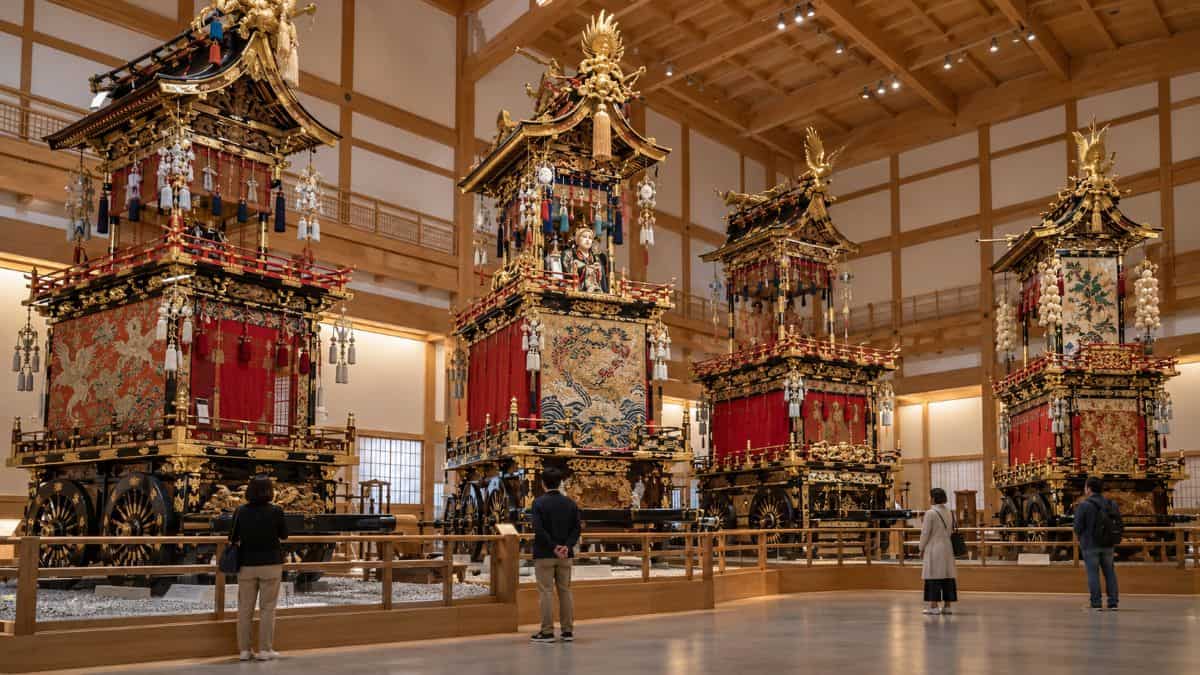
Finale of the Takayama Festival is more than just the spectacle of the magnificent floats. It gives one an insight into the craftsmanship behind preserving such heritage. Once the crowds have dispersed, one may go about admiring the art of conservation at the Takayama Festival Floats Exhibition Hall located next to Sakurayama Hachimangu. Normally, four floats from the autumn season are displayed at the exhibition hall with the exhibits rotated thrice annually. Opening hours are between 9am to 5pm, from March to November and cost of admission is ¥1,000. However, before making the trip, one should take note that the information provided does not mention which floats are housed at the time.
What is happening on the festival’s final day?
The Autumn Takayama Festival, also known as Hachiman Matsuri, takes place on 9 and 10 October. Saturday is the final scheduled day for 2026. Its main events are centred on Sakurayama Hachimangu and nearby streets in Takayama’s old town.
Advertisement
Advertisement
The official programme sets the daytime float display from about 9am to 4pm. Nine floats are due to stand along the shrine’s front approach. Hoteitai, the float known for its puppet performance, is displayed within the shrine grounds. The Goshinko procession, a large ceremonial parade, is scheduled to pass through the festival area in the morning and again in the afternoon.
At 8.40am Japan time, the official tourism guide reported that floats were leaving their storehouses for the approach and that the procession had already left the shrine. That update is a useful snapshot, not a final report. Schedules can change during the day. Visitors should check the festival’s live notices before travelling between viewing points. The official festival guide carries same-day information.
Advertisement
Advertisement
Why are only 10 floats on display this year?
The autumn festival is traditionally associated with 11 floats. In 2026, Gyojintai is under repair, so the official guide says that 10 will be shown to the public. This is the year’s most important change for visitors and the clearest starting point for a story that goes beyond the usual descriptions of gilded carvings and old streets.
The float’s absence should not be framed as a sudden loss or a sign that the festival is in danger. Repair is part of how the tradition continues. Takayama City’s cultural-property records describe Gyojintai’s long history of damage and renewal. A fire in 1875 destroyed part of it. Local groups rebuilt it in 1883 with components received from another float. Major repairs in 1951 helped it return after a long period out of use. Its history shows that preservation has always meant care, skilled work and, at times, reconstruction. The city’s float records provide the historical detail.
Advertisement
Advertisement
What does the repair work tell us about the festival?
Takayama’s fiscal 2026 public-works forecast lists about ¥30 million in estimated work for preserving festival floats. The planned project includes structural or exterior repairs to four floats: Gyojintai, Seiryutai, Hoteitai and Kimpotai.
This estimate needs careful explanation. It is a forecast for a wider repair project, not the final bill for Gyojintai alone. It is not the festival’s operating budget, either. Yet it gives readers a rare, concrete view of what happens behind a major cultural event. The floats do not remain ready for the streets by magic. The city and local preservation groups have to plan and fund work that protects them for future festivals.
The city’s earlier education-board review adds more context. It records six float or storehouse repairs in fiscal 2024, against a target of three. The report also describes support for training future repair specialists. Together, these records suggest a story about maintenance as a continuing public and community task, not a one-off response to this year’s absent float. The fiscal 2026 public-works forecast and the education-board evaluation set out the plans and earlier work.
Who keeps the floats and their skills alive?
A float is more than a decorated wooden structure. Its upkeep calls for people who understand how its parts fit together and how traditional finishes, carvings and ornaments should be treated. Takayama’s education-board report says the city supports businesses that train people in conservation skills, as well as workers learning those skills. The city also reports that repairs can help train repair specialists.
That detail offers a strong human angle. Visitors see the finished float for a short time. Behind it stand local groups, technicians and trainees who work across much longer periods. The repair process can also explain why a float may sit out a festival year. Conservation aims to protect the object and the skill needed to care for it.
The tradition depends on more than expert repair. Each float belongs to a local group, and community bodies help carry the festival from one generation to the next. The Agency for Cultural Affairs names local shrine preservation groups as the bodies that protect Takayama’s festival events. The question for future reporting is practical: who is learning the work today, what does the training involve, and how do the groups share responsibility?
Advertisement
Advertisement
What makes the Hoteitai puppet performance remarkable?
One of the festival’s most intricate acts takes place on Hoteitai. The official historical guide says eight operators control 36 strings to move the puppets. The performance combines careful timing, detailed movement and years of practice. A visitor may see only a few minutes of action. The people operating the figures have built the skill over much longer.
On Saturday, the official programme lists performances at about 11am and 1pm in the shrine grounds. The city’s tourism guide explains that some operators begin learning while still at primary school. It describes the work as demanding practice, experience and judgement. That makes the performance a useful lens on living heritage: the tradition is not held only in the objects. It also lives in the knowledge people pass on.
A report should avoid treating the puppets as a simple novelty. The performances form part of a shrine festival and a community tradition. A fresh article can explain how the strings work, who operates them and what it takes to train, while respecting that the ceremony means more than entertainment.
How should visitors understand the two festival days?
The two days do not offer the same programme. Friday, 9 October, was the only scheduled day for the evening Yoimatsuri, when lantern-lit floats move through the town. The official guide describes about 100 lanterns on each float. It also schedules a four-float parade for the afternoon of the 9th.
Saturday’s events are different. The last day centres on the display, the Goshinko procession and the Hoteitai puppet performances. Visitors arriving today should not expect a repeat of Friday night’s lantern procession. This clear distinction can help travellers plan and prevent an article from promising an event that is not on today’s schedule.
The festival marks the autumn observance of Sakurayama Hachimangu Shrine. It is not the same event as the spring Takayama Festival, which is linked to Hie Shrine and uses a different group of floats. The national cultural-property database describes the spring and autumn events together under the broader Takayama Festival tradition, while distinguishing their shrines and seasons.
Advertisement
Advertisement
How does UNESCO recognition fit into the story?
Takayama’s festival float events became part of the UNESCO Intangible Cultural Heritage listing for Japan’s “Yama, Hoko, Yatai, float festivals” in 2016. The Agency for Cultural Affairs classifies the Takayama event as an important intangible folk cultural property and identifies local preservation groups.
The year 2026 marks ten years since that international inscription. It gives reporters a timely reason to ask what recognition means on the ground. Has it encouraged more training? What repair work has taken place? How do the local groups balance public interest with the care of fragile objects?
But the article must use the correct language. This is an intangible cultural heritage listing. It does not make the festival a UNESCO World Heritage site. Nor do the official sources reviewed announce a special anniversary ceremony for this weekend. The anniversary is a useful reporting frame, not a reason to claim a celebration is happening.
What do Takayama’s visitor figures reveal?
The city’s 2025 accommodation report counted 978,312 foreign overnight guests, up 27.1% from 2024. October recorded 112,775 foreign overnight guests, the highest month in that year’s report. These figures show that Takayama attracts visitors from abroad and that October is an important month for overnight stays.
They do not show how many international visitors attended the festival. The count covers overnight guests across the city over a month or year. It cannot be used as a festival gate count, and it cannot prove that the event caused the October total.
The city also reported 195,000 visitors at the two-day autumn festival in 2025, up from 182,000 in 2024. It has not yet published a 2026 attendance total in the statistics page reviewed for this report. That means a headline claiming record crowds in 2026 would be premature. The useful analysis is more measured: Takayama’s international overnight market is growing, while the festival’s own visitor total still needs to be confirmed.
Advertisement
Advertisement
What should travellers know before they visit?
The festival draws large crowds, and the main streets are subject to traffic restrictions. The official guide advises visitors to follow staff instructions, avoid touching the floats and take rubbish away. It warns that some roadside drains are uncovered, so people should watch their footing, especially after dark.
There are no general spectator seats. The guide identifies a viewing area for wheelchair users near the shrine’s Ema-den during the puppet performance. It also recommends livestream viewing for people who may find the crowd difficult. A visitor who needs an accessible route should check the current map and ask the information centre before moving to a viewing spot. The guide also says crowd controls may limit entry to some viewing areas.
Weather can change the programme. Events may be reduced or cancelled, and they are not moved to a later date. The official guide says the puppet performance may be held at Sakurayama Nikkokan in wet conditions, while other events can be changed or cancelled. Travellers should rely on the live festival update for the latest decision.
Can visitors see the floats after the festival?
Takayama Autumn Festival is over in Japan, yet another tale of care goes on beyond those ten floats which have been observed in the city. One can learn about four autumn floats at the Festival Floats Exhibition Hall next to Sakurayama Hachimangu. Displays are being changed three times per year; thus, displayed objects might be different. The exhibition hall is open from 9 am until 5 pm during March to November, while an adult ticket costs ¥1,000. However, do not forget to check for the current information before visiting this place, especially after the festival, because regular display list cannot guarantee which floats are inside.
Advertisement
