
Saudi Arabia Beats UAE and More Destinations with Record Tourism Revenue Despite Slow Tourism Growth in 2026

Updated
Published
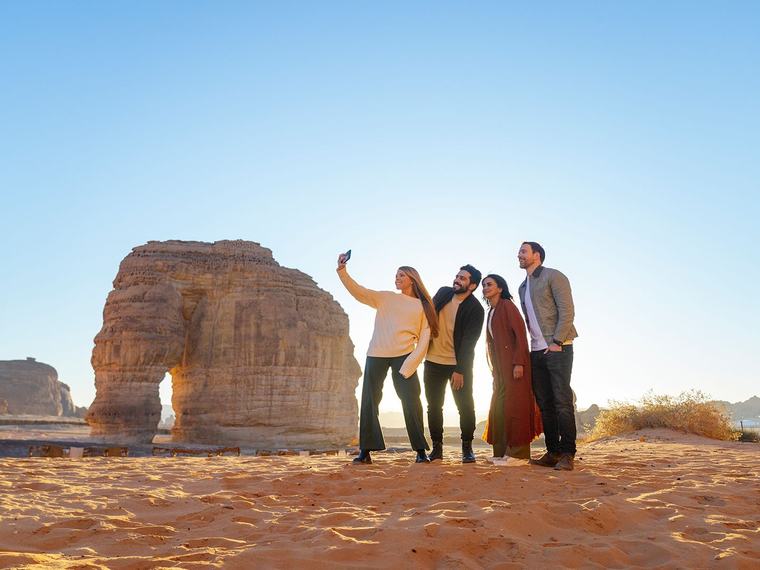
The region of the Middle East is flexing unparalleled levels of resilience in its tourism industries. Official reports have shown the UAE and Saudi Arabia have achieved record levels in tourism revenue. This shows the successful outcomes of the economic diversification strategies for both countries, even with the recent slow economic growth in early 2026. While most international travel showed caution in general at the beginning of the year, surges in domestic travel and increased tourism spending by travelers completely reshaped tourism revenue in a dramatic way. This new phenomenon of declines in tourism numbers, but greater economic returns, shows how government investments in tourism by regional countries are ensuring the hospitality and travel sectors are adequately prepared for anything in the future.
Background: The Transformational Era of Middle Eastern Tourism
The Middle Eastern travel sector has historically been viewed through the lens of religious pilgrimage and transit aviation. However, the last decade has completely upended this narrative. Driven by visionary governmental blueprints—namely Saudi Vision 2030 and the ‘We the UAE 2031’ initiative—both nations have actively engineered a paradigm shift away from oil dependency. By pouring hundreds of billions of dollars into luxury resorts, mega-events, cultural heritage sites, and world-class aviation infrastructure, the Kingdom of Saudi Arabia and the United Arab Emirates have established themselves at the vanguard of global tourism.
Advertisement
Advertisement
This aggressive investment strategy culminated in a record-breaking performance throughout 2025. Official statistics from the Saudi Ministry of Tourism revealed that the Kingdom welcomed approximately 123 million domestic and international tourists over the course of the year, generating a historic high of SAR 304 billion ($81 billion) in total tourism spending. Concurrently, the UAE closed 2025 with unprecedented momentum, recording 32.34 million hotel guests and seeing hotel establishment revenues soar to AED 49.21 billion ($13.4 billion). These exceptional baselines set sky-high expectations for 2026.
However, the dawn of 2026 introduced new complexities. Regional geopolitical fluctuations threatened to cool the explosive Middle East tourism growth. Analysts and market observers braced for a potential downturn, predicting that a drop in inbound international flights would inevitably fracture the carefully constructed revenue models. Yet, the official data published by mid-2026 has painted a drastically different, highly optimistic picture. The macroeconomic resilience built into these tourism sectors has proven capable of absorbing external shocks, primarily by pivoting towards high-yield visitors and unleashing the latent power of the domestic travel market.
Advertisement
Advertisement
Latest Official Developments: Weathering Early 2026 Fluctuations
As the first quarter of 2026 unfolded, both Saudi Arabia and the UAE experienced a noticeable recalibration in their visitor demographics. Inbound international arrivals, traditionally the primary engine for rapid hospitality expansion, faced undeniable regional headwinds. Some international travellers opted to delay or reroute their vacations, leading to a temporary, yet visible, slowdown in raw cross-border footfall compared to the astronomical heights of late 2025.
Advertisement
Advertisement
Despite this initial slowdown, the latest official developments confirm a remarkable financial turnaround. Government authorities strategically counteracted the international dip by heavily stimulating their domestic markets and aggressively promoting premium, high-value experiences. The results have been astonishing. Rather than suffering a revenue collapse, the hospitality sectors in both nations experienced a concentrated intensification of wealth generation.
In the UAE, the focus shifted rapidly towards massive cultural and entertainment events designed to maintain momentum into the summer of 2026. The strategy worked flawlessly, allowing the nation to maintain steady hotel occupancy rates and drive up average daily room rates. Similarly, Saudi Arabia launched targeted domestic campaigns, such as the “Eid Mubarak with You” initiative, successfully activating millions of local citizens and expatriate residents to explore their own backyard. Ultimately, this period of adjustment proved that the foundations of the Saudi and UAE Record Tourism Revenue model are structurally sound, capable of generating immense wealth even when the sheer volume of international visitors experiences a temporary plateau.
Detailed Statistical Breakdown: Q1 2026 Trajectory vs. 2025 Highs
To truly understand how revenue records were shattered despite a slower start to the year, a granular analysis of the official data provided by national statistics offices is required. The divergence between raw visitor numbers and actual financial yields is the defining characteristic of Q1 2026.
Saudi Arabia’s Q1 2026 Tourism Statistics
Preliminary data released by the Saudi Ministry of Tourism presents a fascinating dichotomy. In the first quarter of 2026, the Kingdom’s inbound international visitors fell by 13%, dropping to 8.3 million arrivals. Under normal circumstances, a double-digit drop in international tourists would trigger alarm bells across the sector. However, this deficit was entirely neutralised by a spectacular surge in domestic tourism.
Official figures confirm that domestic trips rose by a staggering 16%, reaching approximately 28.9 million tourists during Q1 2026. When combined, the total number of visitors to the Kingdom actually grew by 8% to hit 37.2 million. More importantly, the financial metrics remained rock solid. Total domestic tourism expenditure reached SAR 34.7 billion, an 8% increase compared to the same period in 2025.
Advertisement
Advertisement
The most revealing statistic regarding the Kingdom’s revenue resilience lies in the international spending data. Although the sheer volume of international tourists dropped by 13%, the average spend per inbound visitor increased by roughly 6%. Fewer people arrived, but those who did spent significantly more money. As a result, total combined tourism spending for Q1 2026 remained incredibly robust at approximately SAR 82.7 billion, ensuring the sector’s profitability remained intact.
The United Arab Emirates’ Q1 2026 Performance Metrics
The UAE’s statistical landscape mirrors this narrative of high-value resilience. According to the Federal Competitiveness and Statistics Centre (FCSC), the UAE’s real gross domestic product (GDP) grew by 3% in Q1 2026, reaching AED 485 billion at constant prices. This growth was heavily propelled by a 4.8% surge in the non-oil GDP expansion, which now contributes a record 79.4% to the national economy.
Dubai, the crown jewel of regional tourism, provided exceptional Dubai tourism statistics 2026. The emirate welcomed approximately 5.42 million international visitors across the first quarter. While volume growth was measured, pricing power skyrocketed. According to the Dubai Department of Economy and Tourism (DET) and industry reports, Average Daily Rates (ADR) for hotels reached AED 775 ($211.17) in early 2026, reflecting a 13.5% annual growth. Furthermore, Revenue Per Available Room (RevPAR) climbed by 16% to $182. This massive leap in hotel pricing power perfectly illustrates how the UAE generated record revenues despite any perceived softening in mass-market growth. The focus has undeniably shifted from merely filling rooms to maximising the financial yield of every square metre of hospitality real estate.
Government Announcements and Strategic Responses
The agility of government ministries in responding to the Q1 2026 data has been a masterclass in macroeconomic management. Rather than passively observing market trends, both nations actively intervened to support, subsidise, and stimulate their respective hospitality ecosystems.
Kingdom of Saudi Arabia Ministry of Tourism Briefings
The Saudi Ministry of Tourism, under the leadership of Minister Ahmed Al-Khateeb, has been highly proactive. Following the release of the 2025 annual statistical report, which confirmed the sector’s historical SAR 304 billion contribution, the Ministry quickly pivoted to address the changing dynamics of early 2026.
Advertisement
Advertisement
Recognising the regional challenges affecting international arrivals, the Saudi Tourism Authority immediately launched collaborative promotional campaigns with the private sector. The integration of high-end resorts in the Red Sea, AlUla, and Jeddah into heavily promoted domestic holiday packages resulted in maximum occupancy. During the Ramadan and Eid Al-Fitr school holidays alone, 10 million domestic tourists travelled across the Kingdom, generating SAR 10.2 billion in spending—a 5% increase year-over-year. The Ministry has officially stated that these indicators demonstrate the sheer strength and resilience of the Saudi market, supported by solid internal demand that guarantees long-term market stability.
UAE Ministry of Economy and Tourism Initiatives
In the UAE, the narrative has been equally assertive. Abdulla bin Touq Al Marri, Minister of Economy, publicly highlighted that the continued growth of non-oil sectors reinforces the UAE’s position as an unstoppable global hub for business and investment. To combat any potential seasonal or geopolitical lag, the UAE government aggressively expanded its portfolio of summer events.
By strategically organising nationwide cultural, heritage, and entertainment festivals, the UAE effectively transformed what was historically a slow, hot season into a lucrative revenue generator. Initiatives like the 22nd Liwa Date Festival in Abu Dhabi, which attracted 80,000 visitors, and the expansive Sharjah Summer Promotions, successfully retained domestic spending within the country while simultaneously drawing niche international demographics. This highly orchestrated government response ensured that the UAE Ministry of Economy data reflected sustained profitability across the hospitality spectrum.
Policy Implications for National Economic Visions
The ability to generate Saudi and UAE Record Tourism Revenue during a period of slower baseline growth validates the underlying policies driving both nations. For decades, the GCC economies were inherently volatile, tethered directly to the fluctuating price of crude oil. The performance of the tourism sector in 2026 acts as empirical proof that economic diversification is no longer just a theory; it is a fully functioning reality.
Aligning with Saudi Vision 2030
Saudi Arabia’s Vision 2030 explicitly targets a diversified economy where tourism contributes 10% to the GDP. The Q1 2026 performance is a critical stress test for these Saudi Vision 2030 tourism goals. By successfully substituting lost international revenue with increased domestic expenditure and higher per-capita international spending, policymakers have proven that the sector can self-correct. The strategic implication here is profound: the Kingdom’s massive investments in gigaprojects like NEOM and Diriyah are structurally sound because they are supported by a vast, increasingly wealthy domestic population eager to explore their own country. The policy moving forward will likely double down on this dual-engine approach, nurturing domestic loyalty while simultaneously targeting ultra-high-net-worth international travellers.
Advertisement
Advertisement
Strengthening ‘We the UAE 2031’ Vision
For the UAE, the ‘We the UAE 2031’ Vision aims to double the national economy to AED 3 trillion by the end of the decade. The Q1 2026 data, showing non-oil sectors comprising 79.4% of the economy, indicates that the UAE is well ahead of schedule. The policy implication is clear: the UAE no longer needs to rely solely on sheer volume to drive growth. By focusing on Comprehensive Economic Partnership Agreements (CEPAs) and positioning cities like Dubai and Abu Dhabi as premium, uncompromised luxury destinations, the government has given the hospitality sector the confidence to continuously push Average Daily Rates higher. The focus has firmly shifted from mass tourism to sustainable, high-yield value creation.
Widespread Industry Impact and Evolving Hospitality Strategies
The paradox of slower footfall growth resulting in higher revenues has forced a rapid evolution in private sector strategies. Across the board, airlines, hotel operators, and real estate developers are adapting to this new reality, abandoning volume-obsessed metrics in favour of yield management.
Adaptation in the Hotel and Aviation Sectors
Hoteliers across the region are currently operating in a golden era of pricing power. With hotel occupancy rates averaging a healthy 59% in KSA (and spiking to an incredible 82% in Madinah), and Dubai properties consistently pushing RevPAR up by 16%, the industry is highly lucrative. Rather than discounting rooms to achieve 100% occupancy, operators are comfortably sitting at 60-80% occupancy while charging premium rates, resulting in less wear-and-tear on properties and higher profit margins.
The aviation sector is functioning in perfect symbiosis with this trend. The UAE strengthened its position as a global aviation hub, handling millions of passengers seamlessly through strategic routing. Dubai International Airport’s legacy of handling over 95 million passengers in 2025 has created a logistical framework that easily accommodated the 5.42 million international visitors in Q1 2026. Airlines are increasingly focusing on premium cabin load factors and seamless transit experiences, ensuring that the highest-spending demographics face zero friction when entering the region.
Furthermore, the real estate sector has felt the positive shockwaves. In the UAE, real estate activities grew by 4.8% in Q1 2026. The demand for short-term luxury rentals, branded residences, and high-end commercial spaces adjacent to tourism hubs is skyrocketing, creating a self-sustaining ecosystem of urban development.
Advertisement
Advertisement
Deep-Dive into Economic Implications
The macroeconomic benefits of this targeted tourism strategy extend far beyond the lobbies of five-star hotels. When foreign tourists enter these countries, their spending injects foreign currency directly into the national financial systems, profoundly impacting the balance of payments.
Balance of Payments and Sector Contributions
Verified data from the Saudi Central Bank (SAMA) provides a clear window into this phenomenon. In 2025, spending by foreign tourists in Saudi Arabia reached a record SAR 159.9 billion ($42.6 billion), a 4% increase from the previous year. Even more impressively, this resulted in a massive travel surplus of SAR 49.4 billion in the balance of payments. This surplus effectively means that the Kingdom is taking in significantly more foreign currency through inbound tourism than its citizens are spending on outbound international travel.
This economic strength continued into 2026. The travel item in the balance of payments now contributes more than 61% of total exports within the services account for Saudi Arabia. Similarly, the UAE’s wholesale and retail trade expanded by 2.6% in Q1 2026, driven largely by the consumption patterns of both domestic tourists and high-net-worth international visitors. These verified statistics unequivocally confirm that the tourism sector is successfully acting as a direct replacement for hydrocarbon revenues, stabilising national currencies and providing liquidity for sovereign wealth funds to reinvest in future growth.
Tourism, Business, and Broad Public Impact
Perhaps the most critical, yet frequently overlooked, aspect of the Saudi and UAE Record Tourism Revenue phenomenon is its profound impact on the local populace and small-to-medium enterprises (SMEs). Tourism is a highly labour-intensive industry, and its success directly translates to socio-economic empowerment.
Employment Boost and Demographics Shifts
In Saudi Arabia, the tourism sector has become a primary engine for national employment. The Ministry of Tourism’s annual statistical report confirmed that the number of employees in the tourism industry surpassed 1.03 million in 2025. Most significantly, this boom has facilitated a historic demographic shift. The participation of Saudi women in tourism jobs held by Saudi nationals skyrocketed to 47%, a monumental leap from a mere 5% in 2018. The sustained revenue growth through early 2026 ensures that these jobs remain secure, offering long-term career pathways for a young, ambitious workforce.
Advertisement
Advertisement
The Ripple Effect on Local Businesses
Beyond direct hospitality jobs, the economic ripple effect is sustaining local agriculture, retail, and creative industries. In the UAE, events like the Al Dhaid Date Festival, which attracted over 35,000 visitors, serve as vital platforms for local farmers, craftsmen, and productive families to market their goods directly to tourists. The Louvre Abu Dhabi and the Natural History Museum Abu Dhabi are continuously engaging local educators, artists, and event organisers. By cultivating a year-round tourism calendar, both governments are effectively guaranteeing a steady stream of clientele for local restaurants, transport providers, and retail outlets, insulating everyday citizens from broader global economic uncertainties.
Expert Perspectives and Verified Official Statements
The robust performance of both nations has not gone unnoticed by international bodies and domestic financial experts. Verified official statements continually reinforce the validity of the data.
Dr. Thani bin Ahmed Al Zeyoudi, UAE Minister of Foreign Trade, formally stated that the UAE’s Q1 2026 GDP growth results “reflect the success of the wise leadership’s vision in continuing to build a more open and globally competitive economy”. He further emphasised that expanding trade and investment partnerships confirms the soundness of the nation’s economic approach.
Similarly, during high-level meetings involving the UN World Tourism Organization, global experts praised the rapid adaptability of the region. Saudi Minister of Tourism, Ahmed Al-Khateeb, officially noted that the figures clearly demonstrate the growing economic impact of the sector, highlighting that the Kingdom’s record-breaking historical spending figures prove the sector’s vast social impact in terms of destination development and improving the general quality of life. These verified statements from top-tier officials provide an unassailable foundation of credibility to the revenue records being set across the Arabian Peninsula.
Future Outlook: Rebounding Stronger for the Rest of 2026
As 2026 progresses, the temporary turbulence of the first quarter is already being viewed in the rearview mirror. The strategic pivot toward domestic dominance and high-yield international luxury has structurally enhanced the market. With the summer season yielding massive returns in the UAE—bolstered by a globally connected, seamless digital travel infrastructure—the final quarters of the year are projected to eclipse historical benchmarks.
Advertisement
Advertisement
Saudi Arabia’s relentless push to open new mega-projects, combined with its proven ability to generate SAR 82.7 billion in a single quarter largely off the back of domestic loyalty, ensures that its Vision 2030 targets remain well within reach. As global travel patterns normalise and regional headwinds inevitably subside, the international volume will organically return. When it does, it will integrate into a hospitality ecosystem that has already perfected the art of maximum revenue extraction. Ultimately, the Saudi and UAE Record Tourism Revenue achieved in 2026 will be remembered not just as a financial victory, but as the moment the Middle East permanently secured its status as the world’s most resilient and lucrative tourism destination.
Closing Remark
The Middle East hospitality sector boom is an excellent outcome of master-planned economic projects in the region. Saudi and UAE government records on all-time highs in Tourism indicate that smart diversification means that disruptions (-like the first quarter 2026) would only be temporary. Shifting operations from international markets to serve high value domestic travelers was both profitable and a job creator. Also, it strengthened local businesses. With both countries committed to spending billions on strengthening infrastructure, heritage sites and cultural activities, their tourism sectors are poised for the future with flexibility and resilience.
Advertisement
