
Hawaii Travel Gets Crucial Visitor Alert as Wildlife Rules and Local Customs Demand More Respect

Published
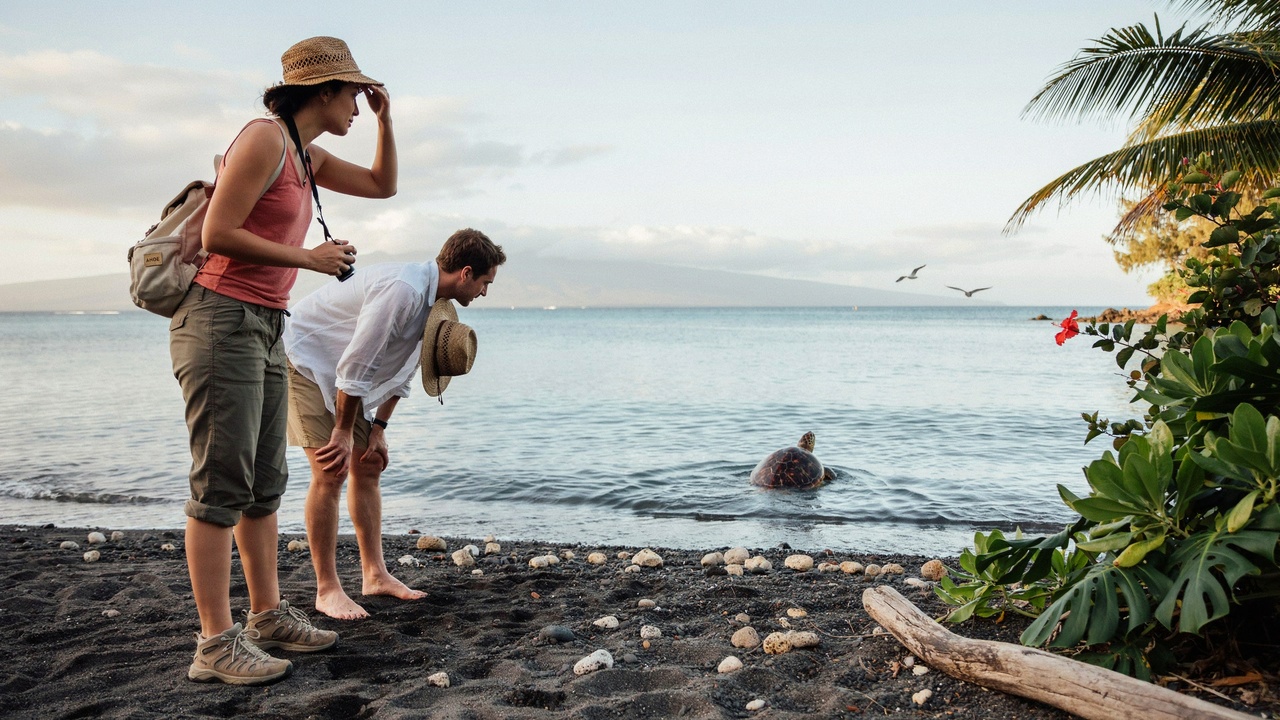
Image generated with Ai
Hawaii Travel is facing renewed attention over the simple mistakes visitors can make within minutes of arriving on the islands. The issues range from sunscreen ingredients and approaching protected wildlife to impatient driving, entering restricted areas, removing natural materials and overlooking local culture. The guidance is particularly important because some visitor behaviour is more than poor etiquette. Federal and state agencies impose specific protections for marine wildlife, while Hawaiʻi authorities have warned travellers to respect signs, barriers and sensitive natural areas. The islands remain one of the world’s most spectacular holiday destinations, but the best experience comes with understanding that Hawaiʻi is also a living community and a fragile environment. For visitors, knowing the rules before arrival can prevent an otherwise unforgettable holiday from becoming an expensive or dangerous mistake.
Hawaii Travel Starts With the Right Sunscreen
One of the first things visitors should check before travelling to Hawaiʻi is the sunscreen in their luggage.
Advertisement
Advertisement
Hawaiʻi restricts the sale, offer for sale and distribution of sunscreens containing oxybenzone or octinoxate without a prescription. The restriction took effect on 1 January 2021.
The environmental concern is particularly serious in a destination surrounded by coral reefs and marine ecosystems.
Advertisement
Advertisement
Hawaiʻi’s Department of Land and Natural Resources has warned that oxybenzone can damage coral, contribute to coral bleaching and harm coral larvae.
Travellers should check the ingredient label rather than relying only on marketing language.
Advertisement
Advertisement
A product described as reef-friendly should still be checked carefully against local requirements.
Mineral sunscreens containing zinc oxide or titanium dioxide are identified in the supplied travel guidance as alternatives.
Advertisement
Advertisement
Visitors should also continue protecting themselves from strong tropical sunlight while taking steps to reduce environmental harm.
Wildlife Encounters Can Quickly Become a Legal Problem
Hawaiʻi’s wildlife is one of its biggest tourism attractions.
Visitors may encounter Hawaiian monk seals, green sea turtles, dolphins and humpback whales along beaches and in surrounding waters.
The temptation to approach an animal for a photograph can be difficult to resist.
Advertisement
Advertisement
But wildlife viewing is subject to specific distance requirements.
NOAA Fisheries recommends maintaining at least 50 feet from Hawaiian monk seals and 150 feet from mothers with pups.
For Hawaiian green sea turtles, the recommended distance is 10 feet.
The requirements become even stricter for whales and spinner dolphins.
Federal rules require people and vessels to remain at least 100 yards from humpback whales in Hawaiʻi, while regulations prohibit swimming with, approaching or remaining within 50 yards of Hawaiian spinner dolphins.
A close-up wildlife photograph is therefore not worth risking an encounter that disturbs a protected species.
Advertisement
Advertisement
Monk Seals Need Extra Protection
The Hawaiian monk seal illustrates why visitors must pay attention to temporary signs and barriers.
The species is endangered, and seals sometimes come ashore on popular beaches to rest or give birth.
In May 2026, Hawaiʻi’s Department of Land and Natural Resources issued guidance after a monk seal gave birth at Kaimana Beach on Oʻahu. Officials instructed the public to stay at least 150 feet from the mother and pup and at least 50 feet from monk seals generally.
The guidance also included keeping dogs leashed and remaining behind barriers.
This means wildlife rules can change according to circumstances.
A beach that is normally accessible may receive additional restrictions when a protected animal arrives.
Advertisement
Advertisement
Visitors should follow the latest signs and instructions rather than relying on old photographs or previous visits.
Hawaii Travel Requires Patience Behind the Wheel
Not every important rule involves a fine.
Some are about understanding local behaviour.
The supplied Islands.com feature highlights Hawaiʻi’s slower pace and the local concept of talk story, referring to relaxed conversation and social interaction.
Visitors driving on the islands may encounter congestion, narrow roads, pedestrians, cyclists and scenic routes where traffic naturally moves more slowly.
Repeatedly sounding the horn or driving aggressively will not make the journey better.
Advertisement
Advertisement
Travellers unfamiliar with the islands should allow additional time.
A road trip through Hawaiʻi is often about the landscape as much as reaching the next destination.
Patience can therefore improve both safety and the quality of the holiday.
Hawaiʻi Is a Home, Not Just a Holiday Resort
One of the most important messages for visitors is cultural.
Hawaiʻi is a major international tourism destination, but it is also home to more than a million residents.
That distinction matters particularly when travellers leave major resort areas.
Advertisement
Advertisement
Residential neighbourhoods are not tourist attractions.
Public roads are not private photography locations.
Sacred places are not props for social-media content.
The supplied guidance warns against crossing No Trespassing signs, climbing dangerous cliffs, entering restricted areas or disturbing sacred and cultural sites for photographs.
Visitors should remain on designated routes and respect barriers.
That approach protects both travellers and the communities that live in these places.
Advertisement
Advertisement
Do Not Take Hawaiʻi Home in Your Suitcase
Another mistake concerns natural materials.
Visitors sometimes collect lava rocks, sand, plants, shells or other pieces of the landscape as souvenirs.
The guidance advises travellers not to remove natural resources from protected areas or cultural sites unless specifically permitted.
There are environmental and cultural reasons for leaving these materials where they belong.
Volcanic landscapes, beaches and forests are part of Hawaiʻi’s natural heritage.
Travellers can instead purchase locally produced and approved souvenirs.
Advertisement
Advertisement
That approach supports local businesses while avoiding unnecessary damage to natural areas.
It also prevents visitors from accidentally carrying restricted agricultural or natural materials when leaving the islands.
Learning Hawaiian Culture Can Transform the Trip
Cultural awareness should begin before arrival.
The supplied guidance encourages visitors to learn basic Hawaiian words and understand local customs.
Knowing a few expressions such as mahalo can be a respectful starting point.
But cultural understanding goes much further than vocabulary.
Advertisement
Advertisement
Travellers should avoid mocking Hawaiian pronunciation, language or traditions.
They should also recognise that Hawaiʻi has a complex history involving Native Hawaiian culture, colonisation, statehood and the development of mass tourism.
Learning some of that history can make visits to historic and cultural sites more meaningful.
It can also help travellers understand why certain places and practices require particular respect.
Responsible Tourism Is Becoming Essential in Hawaii Travel
The five visitor issues ultimately connect to one broader principle: responsible tourism.
Visitors do not need to avoid enjoying Hawaiʻi.
Advertisement
Advertisement
They need to understand how their behaviour affects the destination.
That means protecting coral reefs.
Keeping a safe distance from wildlife.
Driving patiently.
Respecting residents.
Following barriers.
Advertisement
Advertisement
Avoiding restricted locations.
Protecting cultural sites.
Leaving natural materials where they are.
Hawaiʻi’s Department of Land and Natural Resources reinforces these principles through guidance on protected marine species and visitor behaviour.
Wildlife Photography Does Not Require Getting Close
Some visitors worry that following wildlife-distance rules will ruin their photographs.
It does not have to.
Advertisement
Advertisement
NOAA recommends tools such as binoculars and telephoto lenses so visitors can observe wildlife without approaching animals.
A monk seal can be fascinating from 50 feet away.
A humpback whale can be spectacular from 100 yards.
A sea turtle can remain an unforgettable sight without being touched.
In fact, greater distance can produce better wildlife behaviour.
Animals are more likely to continue natural activities when visitors do not crowd them.
Advertisement
Advertisement
That makes responsible wildlife tourism beneficial for both the visitor and the animal.
Tourists Should Watch Signs and Barriers Carefully
Temporary signs can be particularly important in Hawaiʻi.
Wildlife may appear unexpectedly.
Trails can close because of weather.
Coastal areas can become dangerous.
Cultural sites may have access restrictions.
Advertisement
Advertisement
The monk seal guidance issued after the Kaimana Beach birth demonstrates why visitors should not assume that a familiar beach always has the same access conditions.
Travellers should obey current instructions even if they see other visitors ignoring them.
Following the crowd is not a substitute for following official guidance.
What Visitors Should Do Before Flying to Hawaii
The easiest way to avoid problems is to prepare before leaving home.
Travellers should check sunscreen ingredients.
They should research wildlife viewing distances.
Advertisement
Advertisement
They should understand local driving conditions.
They should learn basic cultural etiquette.
They should check whether attractions require reservations or have temporary closures.
They should also review current guidance for beaches, trails and protected areas.
This preparation takes only a small amount of time.
It can make a significant difference once visitors arrive.
Advertisement
Advertisement
The Bigger Hawaii Travel Picture
Hawaiʻi’s attractions are precisely what make responsible tourism so important.
Its beaches, coral reefs, volcanoes, forests, mountains and wildlife attract visitors from around the world.
But these environments can be damaged by careless behaviour.
The islands are also communities with residents, traditions and cultural sites that deserve respect.
The supplied travel feature’s central message is therefore less about catching visitors breaking rules and more about avoiding preventable mistakes.
A traveller does not need to climb a restricted cliff to get a memorable photograph.
Advertisement
Advertisement
They do not need to touch a sea turtle.
They do not need to take home volcanic rock.
And they do not need to rush through local roads.
The strongest travel memories often come from experiencing the destination without trying to control it.
Conclusion
Hawaii Travel offers extraordinary beaches, wildlife, volcanic landscapes and cultural experiences, but visitors who arrive without understanding local rules can quickly turn a dream holiday into an avoidable problem. Sunscreen ingredients, wildlife distances, driving etiquette, restricted areas, natural materials and cultural respect all matter. Federal and state guidance makes some protections especially important, including the requirement to maintain significant distances from monk seals, turtles, humpback whales and spinner dolphins. For travellers, the answer is not to fear Hawaiʻi but to experience it thoughtfully. Follow barriers. Protect the reefs. Give wildlife space. Respect residents and cultural sites. Leave natural materials behind. A considerate visitor can enjoy the islands just as deeply while helping preserve the extraordinary places that make Hawaiʻi one of the world’s most powerful travel destinations.
Advertisement
