
Image generated with Ai
Tourism is evolving into a new phase where individuals are no longer sticking to the old paths but are seeking more meaningful and practical experiences. One of the examples of the transition is the Philippines, which is using digital solutions, data analysis and the community tourism model in order to promote lesser-known spots. Rather than concentrating tourists in crowded places, the more innovative micro-itineraries provide opportunities for the regions to be explored, as well as to help local businesses and create genuine cultural experiences. This trend combines evolving technologies with sustainability, enabling both locations to sustain development and communities to be directly affected.
The architectural framework governing international tourism has undergone a decisive realignment. For decades, regional tourism strategies relied heavily on standardized, multi-city “golden routes”—rigid seven-to-ten-day itineraries designed to move large groups of visitors across well-trodden corridors such as Manila to Boracay and Cebu, or Bangkok to Chiang Mai and Phuket. While these legacy routes generated substantial aggregate arrival metrics, they frequently created localized environmental degradation, economic leakage, and severe cultural over-tourism within primary hubs.
Advertisement
In the post-pandemic landscape, traveler preferences have shifted away from mass-market itineraries in favor of authentic, short-duration immersion. Modern consumers increasingly seek high-intent 24-to-48-hour experience curations centered on hyper-local culture, ecology, and gastronomy. This movement toward experiential travel design has forced Destination Marketing Organizations (DMOs) and National Tourism Organizations (NTOs) to rethink traditional destination management.
Aspect Traditional Golden Route Model Post-Pandemic Micro-Itinerary Ecosystem Core Travel Structure Linear tourism route focused on a few iconic destinations Flexible, decentralised network built around multiple smaller experiences Starting Point Capital Gateway Hub Regional Transit Hub Travel Flow Capital city → major attractions → coastal resort → return journey Regional hub → emerging destination → local immersion → direct onward movement Destination Focus Famous cities, landmark attractions and established resorts Secondary regions, hidden destinations and community-based experiences Planning Model Pre-designed fixed itineraries created by tour operators Data-driven itineraries shaped by traveller behaviour and real-time demand signals Trip Duration Pattern Longer packaged journeys of around 7–10 days Short, focused experiences lasting 24–48 hours Transport Dependency Relies heavily on mass transit corridors connecting major tourism zones Uses regional connectivity, local transport and flexible mobility options Visitor Behaviour Tourists follow popular routes and high-volume attractions Travellers seek personalised, authentic and less crowded experiences Demand Identification Based on historical tourism patterns and traditional booking data Powered by search telemetry, digital trends and real-time traveller interest Role of Technology Limited role beyond booking and navigation Central role in identifying demand spikes, recommending routes and distributing visitors Economic Impact Model Revenue concentrated among major hotels, resorts and large tourism operators Revenue distributed directly to local businesses, MSMEs and community providers Local Business Integration Smaller businesses often remain outside major tourism circuits Digital platforms connect travellers directly with local enterprises Experience Type Sightseeing-focused tourism Immersive experiences involving culture, food, nature and local lifestyles Crowd Management Approach Concentrates visitors in established hotspots Reduces pressure by redirecting demand towards secondary destinations Revenue Distribution Primarily benefits major tourism hubs and large companies Enables direct MSME digital payouts and broader regional economic growth Flexibility Fixed routes with limited changes after booking Dynamic itineraries adjusted according to traveller interests and live data Tourism Growth Strategy Expand existing high-volume destinations Create new tourism ecosystems across regions Post-Pandemic Relevance Less aligned with demand for safer, quieter and personalised travel Matches trends towards sustainable, authentic and experience-driven travel Typical Outcome High visitor concentration and seasonal overcrowding Balanced visitor distribution and stronger local participation
To capture this evolving demand, public sector authorities are forging multi-year strategic partnerships with digital travel platforms to leverage real-time consumer data. A prominent example of this institutional shift occurred on 1 September 2026, when the Philippines Department of Tourism (DOT) renewed its multi-year Memorandum of Understanding (MOU) with Online Travel Agency (OTA) platform Klook. Under the leadership of Tourism Secretary Dita Angara-Mathay and Klook Philippines General Manager Michelle Ho, this strategic alliance focuses on bringing provincial micro, small, and medium-sized enterprises (MSMEs) into the global digital ecosystem.
Advertisement
This joint initiative builds upon earlier institutional programs, such as the Philippine Experience Program (PEP) launched under Secretary Christina Frasco. The PEP systematically packages regional culture, heritage, and arts into accessible travel circuits across island groups. By integrating these regional circuits into digital booking platforms alongside national marketing campaigns like “Love the Philippines” and “Discover More to Love”, public agencies are actively steering foot traffic toward lesser-known destinations.
According to official statistics published by the Philippines Department of Tourism, international visitor arrivals to the country reached 4.11 million between January and August 2026. Freedom of Information (FOI) tracking data from the DOT (#DOT-267334625894) highlights a strategic shift in monitoring metrics, moving beyond macro entry counts to track provincial arrival distributions and post-pandemic recovery trends across secondary markets.
Similar policy re-orientations are underway across Southeast Asia. The Tourism Authority of Thailand (TAT) has deployed strategic initiatives to promote 55 secondary cities, shifting away from mass volume toward high-spending, sustainable, slow-travel experiences. Simultaneously, the Vietnam National Authority of Tourism (VNAT) is expanding regional craft village networks and rural eco-cycling routes across the Red River Delta to diversify visitor traffic away from overcrowded spots like Ha Long Bay.
The successful deployment of localized travel campaigns depends on advanced travel tech analytics. Rather than relying on retrospective survey data, modern digital platforms process millions of daily user interactions to construct predictive models of consumer intent.
Traditional destination planning operated on historical booking trends, leaving tourism boards unprepared for sudden shifts in visitor interest. Modern OTA engines evaluate search-to-book velocity—measuring the precise acceleration of specific search queries relative to conversion rates over defined timeframes.
When platform algorithms detect a rapid surge (such as a 300 percent increase) in searches for niche keywords like “indigenous pottery,” “night paddleboarding,” or “cloud-forest tea” within a secondary province, the system flags an emerging trend. This metric allows DMOs to identify localized demand patterns months before they register on traditional search engines or appear in printed travel guides.
Independent travelers frequently bypass centralized tour desks, making their spending patterns difficult to track through traditional receipting. To capture these movement patterns, digital platforms analyze micro-transaction flows—small-ticket digital purchases ranging between $10 and $30 USD. These include street-food tasting passes, artisanal workshop fees, and provincial ferry or jeepney transfers.
By mapping anonymized payment tokens across rural merchant networks, analysts can track the geographical drift of independent travelers once they leave primary transportation hubs. When thousands of small-ticket transactions cluster in secondary municipalities that lack multi-story hotel chains, platform data confirms the organic formation of a functional micro-destination.
Mobile booking applications continuously gather anonymized spatial data through in-app GPS heatmapping. Analysts focus on identifying extended dwell times, tracking instances where visitors spend between three and six hours within a specific geographic coordinate without purchasing admission to a primary, listed attraction.
Extended dwell times in secondary coordinates reveal informal visitor activities, such as self-guided architectural walks, local culinary explorations, or visits to unmapped natural swimming holes. Tourism authorities use these heatmap insights to identify precise locations where public investments—such as bilingual directional signage, sanitation facilities, and trained local guides—are required.
Analytics Metric Operational Data Mechanism Primary Behavioral Indicator Strategic Tourism Outcome Search-to-Book Velocity Real-time monitoring of niche keyword query acceleration Spikes (>200–300%) in specific activity or regional searches Early curation of micro-tours before mainstream guides publish listings Micro-Transaction Tracking Aggregation of $10–$30 USD digital payment tokens Small-ticket spend clustered outside urban destination hubs Identification of rural transit paths and independent traveler drift Dwell-Time Heatmaps Anonymized GPS mapping within mobile applications Extended stays (3–6 hrs) in non-attraction coordinates Targeted public infrastructure funding and MSME digital onboarding
Converting raw platform data into functional micro-itineraries requires bridging the technological gap between rural experience providers and global distribution networks. MSME digital onboarding provides the operational framework needed to connect provincial merchants with international travel platforms.
A significant proportion of regional cultural and eco-adventure activities in developing markets operate informally. Local river boatmen, village weaving cooperatives, and provincial culinary artisans often operate without digital booking software, real-time availability calendars, or electronic payment systems.
Digital enablement frameworks provide provincial operators with lightweight, mobile-first technology stacks. Using basic smartphones, rural operators are equipped to scan QR codes, manage real-time seat inventory allocations, and accept multi-currency digital wallet payments. Digitizing offline inventory allows global travelers to view and reserve verified local activities with instant confirmation.
Integrating informal community operators into global booking platforms introduces operational challenges regarding safety compliance, service consistency, and risk management. Public-Private Partnerships (PPP)—such as the collaboration between the Philippine Department of Tourism and Klook—address these challenges through standardized Service Level Agreements (SLAs).
Under these joint frameworks, public tourism departments provide safety training, clear operational guidelines, and baseline insurance coverage for registered provincial merchants. Simultaneously, the OTA platform delivers multilingual user interfaces, customer service integration, and automated payout systems. This structure provides micro-merchants with global reach while safeguarding the authentic local character of their offerings.
To complement digital tools with physical support, the Philippines DOT is integrating its network of Tourist Rest Areas (TRAs) onto OTA map interfaces. These TRAs provide travelers navigating provincial routes with access to clean sanitation facilities, device charging hubs, and verified local product showcases, strengthening the physical infrastructure supporting regional micro-itineraries.
Sustaining visitor engagement within secondary sub-regions requires interactive digital mechanics that encourage exploration beyond primary tourist nodes. Platforms deploy gamified travel rewards and user-generated content (UGC) loops to turn routine trips into rewarding exploration campaigns.
Digital passporting programs utilize mobile geolocation technology to encourage exploration outside congested tourist zones. When travelers complete activities within designated emerging zones—such as attending a rural craft workshop or trekking along a community-managed river—the mobile app awards collectible digital badges and platform credit multipliers like KlookCash.
These gamification mechanics tap into consumer desires for achievement and social sharing. Structuring regional campaigns around badging milestones—such as completing the “Visayan Heritage Trail” or the “Northern Highlands Tea Trail”—helps disperse visitor traffic across broader geographic regions while building brand loyalty.
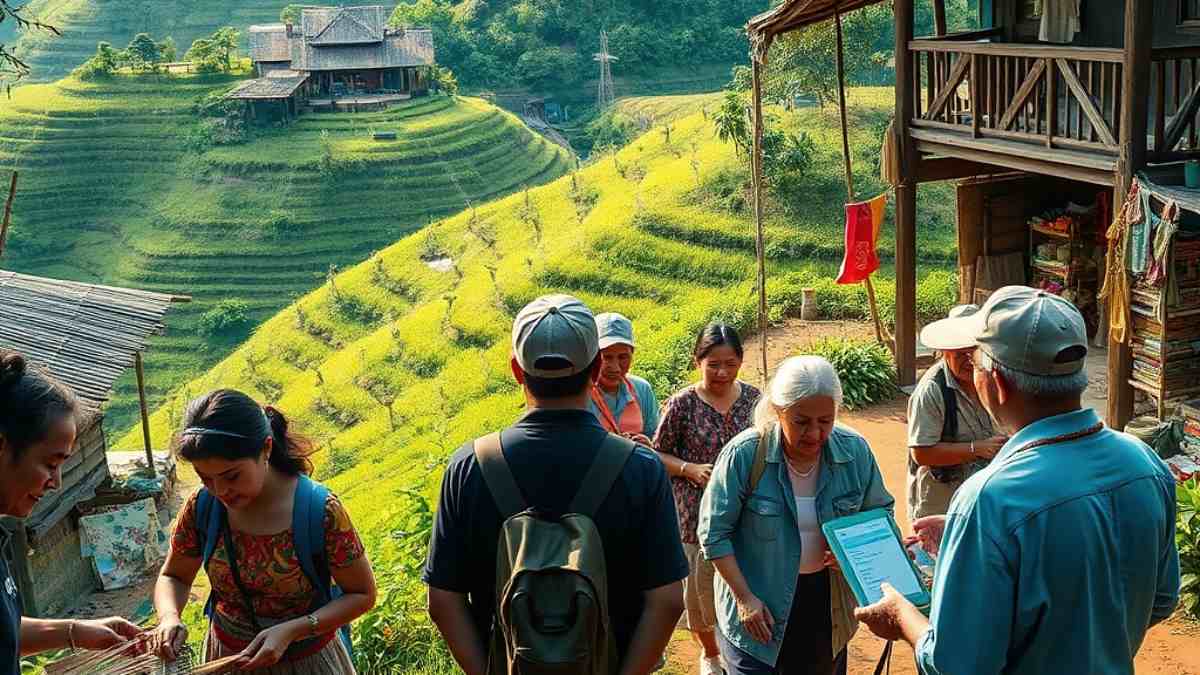
Image generated with Ai
User-Generated Content remains a primary factor influencing travel decisions. However, unorganized user reviews often require extensive manual research by prospective visitors.
Modern booking platforms utilize automated content processing to extract geotags, photos, and time-stamped transit details from verified traveler reviews. The system compiles these inputs into dynamic, bookable 24-to-48-hour micro-itinerary templates available to upcoming platform users. Prospective travelers searching for weekend trips can browse real-world, community-validated timelines complete with integrated booking options for transport, admission fees, and local guides.
To demonstrate how data-driven curation functions in practice, four detailed case studies highlight how secondary Asian sub-regions are transforming localized assets into scalable, high-yield travel products.
Region & Country Primary Focus Micro-Itinerary Concept Operational Data Mechanics Antique & Capiz
(Panay Island, PH)Eco-Adventure & Indigenous Crafts 36-Hour Kawa Hot Bath & Bugang River Eco-Trek Conversion algorithms detect “wellness + nature” searches, prompting DMOs to route Boracay over-spill traffic to Antique. Mae Hong Son Loop
(Northern Thailand)Ethno-Culinary & Slow Travel 48-Hour Shan Artisan & Cloud-Forest Tea Curations Mobile app location pins push real-time notifications for village tea workshops when travelers rent vehicles along the loop. Siquijor & Southern Negros
(Visayas, PH)Marine Conservation & Folk Heritage 24-to-36-Hour Traditional Healing & Black-Sand Diving High drop-off rates on overcrowded waterfall listings trigger automated recommendations for highland herbalist tours. Coastal Ninh Binh & Nam Dinh
(Vietnam)Rural Architecture & Craft Villages 36-Hour Craft Beer & Limestone Delta Cycling Platforms aggregate micro-payments for bike rentals and park entry fees into a single regional digital pass.
Located along the western coast of Panay Island, Antique Province offers a distinct alternative to the heavily developed resort environment of neighboring Boracay in Aklan Province. Antique combines coastal marine ecosystems with inland rivers, mountain ranges, and traditional textile weaving centers.
Eco-conscious solo travelers, soft-adventure seekers, and experiential wellness travelers looking for uncrowded natural landscapes.
The itinerary begins in the municipality of Tibiao with an early morning excursion to the Bugang River—officially recognized as one of the cleanest inland bodies of water in the Philippines. Travelers participate in bamboo river rafting and river tubing guided by local eco-wardens.
In the afternoon, visitors transition to a traditional Kawa hot bath experience. Guests soak in large iron cauldrons—originally used in historical sugar production—heated over open fires and infused with local medicinal leaves, ginger, and native citrus. The day ends with a farm-to-table dinner featuring Kularat, a regional wild mushroom curry.
The second day starts with a short outrigger boat trip from Culasi to Mararison Island (also known as Malalison). A guided ridge walk across the island’s rolling hills offers panoramic views of the Mount Madja-as range and opportunities to view endemic pitcher plants.
In the afternoon, travelers return to the mainland to visit the Bagtason Loom Weavers Association in Bugasong. Visitors attend a hands-on workshop to learn the intricate production process of Patadyong—a traditional handwoven cotton fabric featuring distinct plaid patterns.
OTAs analyze conversion rates for search queries combining “nature” and “wellness” across Western Visayas. When algorithms detect high search volume but limited hotel availability in Boracay, platform systems display targeted recommendation banners. These banners offer direct land transfers from Caticlan airport to Antique’s micro-merchants, channeling tourist spend into secondary provincial communities.
Mae Hong Son Province, located along Thailand’s mountainous northwestern border, features a distinct cool climate and a rich cultural heritage shaped by Shan (Tai Yai) and ethnic hill-tribe communities. Positioned along the famous 1,864-curve road loop, this micro-itinerary focuses on high-altitude tea cultivation and slow travel, bypassing urban Chiang Mai.
Slow-travel advocates, tea connoisseurs, cultural history enthusiasts, and independent road-trippers.
The itinerary begins at sunrise in Ban Rak Thai, a highland village situated around a peaceful lake near the Thai-Myanmar border. Travelers navigate the misty waters on wooden flat-bottomed boats as morning light hits the lakeside earthen tea houses.
Following the boat tour, visitors take part in a guided tea-tasting excursion across family-owned Oolong plantations terraced into the surrounding hillsides. The afternoon focuses on regional Yunnanese-Shan cuisine, including tea-leaf boiled eggs, fresh mantou steam buns infused with green tea, and locally produced Oolong varieties.
The second day highlights eco-foraging and thermal wellness. Guided by ethnic Karen forest wardens, travelers participate in a low-impact foraging walk through the pine forests of Pang Tong, learning to identify endemic medicinal plants and forest herbs.
In the afternoon, travelers visit the Pha Bong Hot Springs, a community-managed thermal park. After soaking in mineral-rich thermal pools, visitors sample Shan Khao Sen—a regional dish made with fresh rice noodles served in a light, savory broth with tomato and fermented soybean paste.
The Tourism Authority of Thailand (TAT) collaborates with booking platforms to monitor mobile GPS pins along the Mae Hong Son loop road. When app data indicates vehicle rentals or long driving pauses near Pang Ung or Ban Rak Thai, the platform issues real-time notifications. These alerts invite travelers to reserve small-group tea workshops hosted by local village families.
The island province of Siquijor, paired with the coastal diving municipality of Dauin in Negros Oriental, creates an engaging sub-region combining traditional herbal healing arts with marine biodiversity conservation.
Scuba divers, marine conservation enthusiasts, cultural history seekers, and holistic wellness travelers.
The tour opens in the mountain village of San Antonio, located in the central highlands of Siquijor Island. Travelers meet traditional Mananambal (herbal healers) to observe the harvesting of wild plants, barks, and natural ingredients used in traditional botanical remedies.
To avoid crowding at Cambugahay Falls, travelers are guided to Pitogo Cliff along Siquijor’s southern coast for cliff jumping and coastal swimming. The day concludes with a tasting of Pan Bisaya—a traditional locally baked coconut bread prepared over wood fires.
On the second day, travelers board an early morning ferry across the Tañon Strait to Dauin in Negros Oriental—a world-renowned hub for muck diving and marine macro-photography.
Co-guided by local marine sanctuary wardens, divers complete two specialized macro-dives along Dauin’s volcanic black-sand reefs. The dives focus on identifying rare species, such as ghost pipefish, frogfish, flamboyant cuttlefish, and blue-ringed octopuses. The itinerary concludes with an educational session on community-managed coral conservation projects led by local fisherfolk associations.
Platform algorithms monitor user drop-off rates on high-density attraction listings like Cambugahay Falls. When wait-time indicators show severe congestion, automated recommendation engines present alternative itineraries. Travelers receive prompt options for highland healer workshops in Siquijor and macro-diving packages in nearby Dauin.
Situated in the Red River Delta south of Hanoi, Nam Dinh Province remains off the standard tourist path, which typically concentrates in central Ninh Binh and Ha Long Bay. Nam Dinh offers a combination of French-Gothic rural architecture, traditional handicraft villages, and coastal wetland reserves.
Architectural enthusiasts, active cyclists, cultural craft collectors, and regional culinary travelers.
The micro-tour begins at sunrise in Xuan Truong district, where travelers ride hybrid electric bicycles along paved canal paths. The cycling route links historical French-Gothic rural churches, including the ruined Church of the Heart (Nhà thờ Đổ) located along the coastal shoreline.
In the afternoon, cyclists travel to Viencu village for a workshop led by master woodcarvers who produce traditional water puppets (Múa rối nước). Visitors observe the carving process and learn how control levers are operated beneath demonstration ponds.
The second day focuses on the coastal environment of Giao Thuy district. Travelers take a small boat tour through the mangrove channels of Xuan Thuy National Park, a designated RAMSAR wetland site. Visitors spend the morning with local aquaculture families harvesting mud clams along the tidal flats.
The tour ends in Nam Dinh city with a culinary masterclass dedicated to the origins of Phở Bò Nam Định. Local chefs demonstrate how to select traditional spices, simmer marrow broth, and prepare fresh rice noodles.
Regional travel associations aggregate small payments—including bike rentals, craft workshop fees, and national park entry passes—into a single digital “Red River Heritage Pass” on mobile applications. App location tracking monitors cycling speeds and rest stops to continually optimize suggested bike routes for safety and scenic quality.
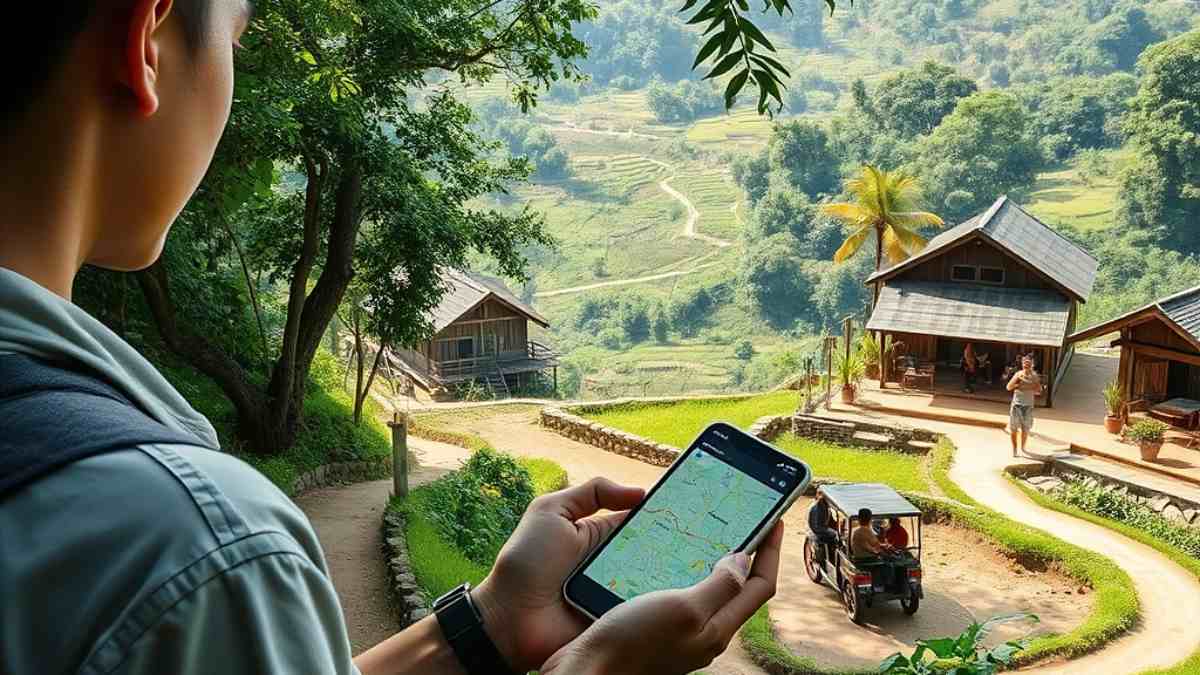
Image generated with Ai
While data-driven micro-itineraries create economic opportunities for secondary destinations, expanding access to small communities introduces complex operational challenges. Managing hyper-local travel products requires balancing market access with long-term ecological and cultural protection.
Operational Component Process Trigger Strategic Intervention Expected Outcome Market Demand Surge Management Rapid increase in traveller interest towards secondary sub-regions Inventory throttling, visitor capacity caps and controlled availability management Preserved community authenticity, reduced overcrowding and protection of local resources Tourism Supply Regulation Growing pressure on accommodation, attractions and local services Managed expansion of tourism inventory based on carrying capacity Sustainable visitor growth without damaging destination character Platform Integration Strategy Increasing dependence on digital booking and discovery platforms Introduction of tiered low-commission structures (5–8%) for local operators Higher participation of small businesses and stronger local economic retention Local Capital Retention Model Tourism revenue leakage through external platforms and intermediaries Direct digital connections between travellers and community-based providers Greater income retention within local economies and MSME empowerment Visitor Mobility Telemetry Collection of real-time movement and demand behaviour data Analysis of visitor flows, travel patterns and destination pressure points Better understanding of tourism demand distribution Data-Led Infrastructure Planning Identification of high-growth visitor zones through mobility data Data-directed public infrastructure capital expenditure (CapEx) Targeted municipal upgrades aligned with actual visitor needs Municipal Development Approach Increased tourism activity in emerging regions Investment in transport, utilities, public spaces and visitor facilities Improved destination readiness while maintaining regional identity Overall Ecosystem Impact Interaction between demand, technology and infrastructure systems Balanced tourism growth framework combining regulation, digital access and investment Sustainable secondary destination development with stronger community benefits
A primary challenge facing secondary micro-destinations is the risk of over-commercialization. When a quiet location—such as Ban Rak Thai in Mae Hong Son or Mararison Island in Antique—is listed on global booking platforms, sudden influxes of visitors can strain local infrastructure and disrupt community life.
To address this issue, destination managers and OTAs deploy dynamic inventory throttling algorithms. Booking platforms establish daily booking limits based on community-defined carrying capacities rather than open market demand. When daily booking thresholds are met, the platform automatically flags the listing as “Sold Out” for that date and suggests alternative micro-tours in neighboring municipalities.
In addition, public tourism departments implement mandatory community orientation protocols. Requiring visitors to complete short environmental and cultural briefings before entering sensitive areas helps preserve local heritage and natural ecosystems.
Standard commercial contracts between global booking platforms and major hotel chains typically include commission rates ranging from 15 to 25 percent. Applying these corporate fee structures to provincial micro-enterprises—such as local river boatmen, village weaving groups, or independent guides—is economically unsustainable for small operators.
To ensure fair economic distribution, public-private agreements establish tiered commission models. Platform commission rates for certified provincial MSMEs are capped between 5 and 8 percent, covering basic digital payment processing and hosting costs.
Merchant Category Standard Platform Commission Specialized MSME Commission Tier Local Revenue Retention Rate Global Hotel Chains 15% – 25% Standard Commercial Tier (15% – 25%) 75% – 85% Provincial Eco-Guides N/A (Offline) Micro-Enterprise Tier (5% – 8%) 92% – 95% Village Craft Cooperatives N/A (Offline) Micro-Enterprise Tier (5% – 8%) 92% – 95% Rural Culinary Vendors N/A (Offline) Micro-Enterprise Tier (5% – 8%) 92% – 95%
Furthermore, digital platforms integrate real-time mobile wallet payouts. Instead of adhering to traditional 30-day corporate payment cycles, digital platforms transfer funds directly to local operators’ digital wallets upon QR-code verification at the activity site. This system ensures that 92 to 95 percent of visitor spending remains within the host community, supporting local livelihoods and conservation initiatives.
Promotional campaigns can generate sudden demand for secondary destinations that lack basic physical infrastructure—such as paved access roads, public rest facilities, stable power grids, micro-EV charging stations, or mobile network coverage.
Rather than allowing infrastructure deficits to negatively affect visitor experiences, tourism boards use platform telemetry to guide public capital allocation. By analyzing search growth, travel routes, and mobile coverage drop-off points, public works departments can identify where infrastructure improvements are most urgently needed.
In the Philippines, the Department of Tourism uses platform movement data to determine locations for new Tourist Rest Areas (TRAs). Constructing TRAs along high-growth routes identified by platform data ensures public infrastructure investments directly support emerging travel corridors.
The combination of real-time platform telemetry, digital MSME enablement, and curated micro-itineraries represents an important shift in regional tourism policy. National tourism ministries throughout Southeast Asia are increasingly incorporating spatial dispersion and localized spending metrics into their long-term planning frameworks.
As global travelers prioritize personal, high-yield experiences over rigid sightseeing itineraries, a destination’s competitiveness will depend on its ability to dynamically connect visitors with secondary sub-regions. By supporting public-private data sharing, maintaining equitable commission structures, and investing in data-informed public infrastructure, tourism authorities can build a sustainable model. This balanced approach protects regional heritage, supports rural economies, and provides international travelers with meaningful access to Asia’s emerging destinations.
The growth of Philippines micro-itineraries illustrates how data analytics and local collaboration can reshape regional travel dynamics. By moving away from concentrated mass tourism toward sustainable, dispersed exploration, destination managers can deliver memorable experiences while ensuring long-term economic benefits for local communities across the region.
The strategic development of micro-travel in the Philippines can be seen as a significant milestone in the tourism sector. Some organizations are employing data to reshape tourism behavior in terms of local destinations and travelers’ preferences. This approach encompasses proper use of technological developments based on analytics and tourism, giving an opportunity to local small businesses receive a portion of tourists’ money. As travelers are seeking for an authentic experience, full immersion, rather than standard mass tourism, a peak period for the digital tourism has just begun.
Philippines travel
Advertisement
Advertisement
Advertisement












Wednesday, September 2, 2026

Tuesday, September 1, 2026

Wednesday, September 2, 2026

Wednesday, September 2, 2026

Tuesday, September 1, 2026

Tuesday, September 1, 2026

Wednesday, September 2, 2026

Wednesday, September 2, 2026



