
Lyon and More Surge as Europe’s Secondary Cities Capture Tourism Beyond Saturated Capitals

Published
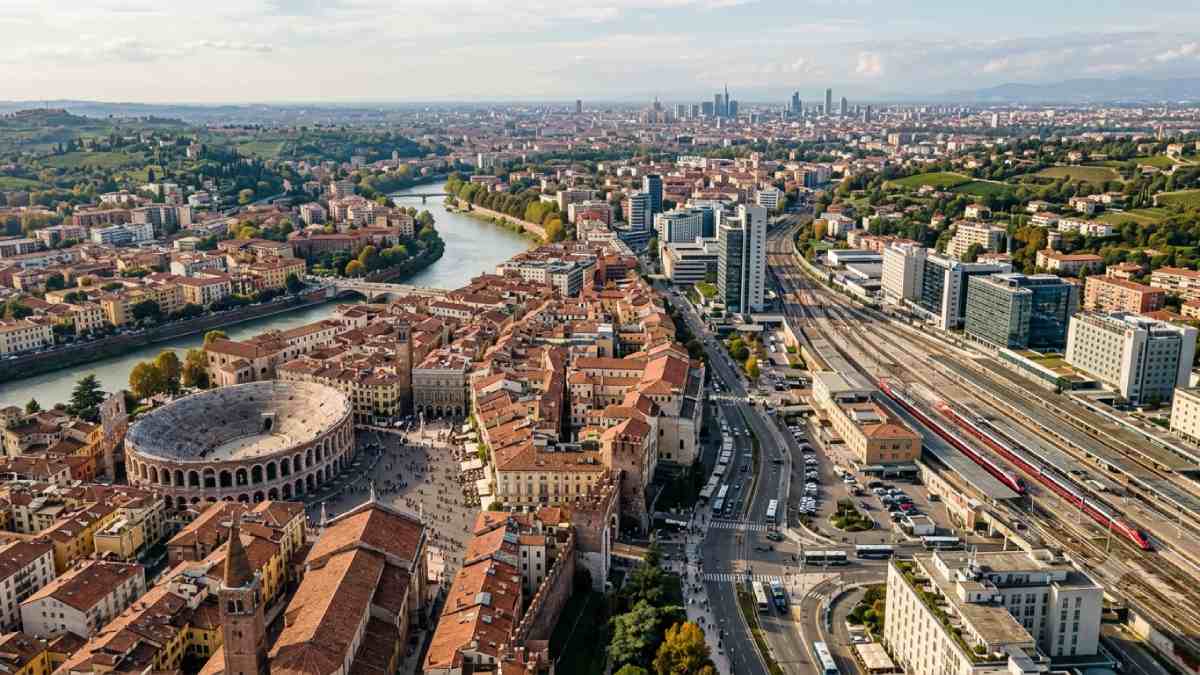
A massive restructuring phenomenon is taking place in continental tourism, due to the strict imposition of maximum capacity limits, short-term rentals bans, and increases in accommodation charges, by the traditional gateway cities. Facing the restrictions from historical taxation and saturated regulations in traditional gateways like Paris, Amsterdam, and Barcelona, the decentralization process in favor of dynamic secondary cities of the region is gaining momentum among corporate managers and leisure tourists. Through the development of extensive high-speed rail systems, dynamic industrial revival projects, and cheap hotel costs, a larger market share and longer periods of stay are achieved by these secondary metropolitan centers.
The Structural Reallocation of Western European Visitor Economics
For decades, an intensely monocentric hierarchy was followed by the dominant model of Western European urban tourism. Near-exclusive funnels for inbound international arrivals, transatlantic flights, and corporate convention capital were provided by tier-one gateway capitals. Disproportionate shares of national hospitality gross value added were absorbed by metropolises such as Paris, Amsterdam, Barcelona, and Rome.
Advertisement
Advertisement
However, severe structural friction was generated by this acute spatial concentration. Carrying-capacity thresholds were reached by saturated historical centres, whereupon residential displacement, escalating municipal service costs, hyper-inflation in local retail, and protracted public protests were triggered.
The marginal utility of capital-city travel was altered by the resulting economic distortions. As defensive regulatory restrictions were enacted by municipal authorities to curb congestion, room tariffs were increased by private hospitality operators to preserve margins amid rising operational overheads.
Advertisement
Advertisement
Consequently, the Average Daily Rate and Revenue Per Available Room across primary European capitals surged to historic peaks, whereby significant tranches of leisure travellers and cost-conscious corporate groups were priced out of the market. A structural displacement effect was created by this inflationary environment, through which the decentralisation of travel demand toward high-performing regional secondary cities was accelerated.
Fundamental structural advantages are leveraged by these secondary metropolitan alternatives to capture footloose European travel spend. Far from being regarded as peripheral transit stops, cities such as Lyon, Lille, Essen, Dortmund, Utrecht, Rotterdam, Bilbao, and San Sebastián are operated as sophisticated economic and cultural centres.
Advertisement
Advertisement
Direct integration into electrified high-speed rail networks, pioneering industrial heritage conversions, modernised regional aviation gateways, and substantial accommodation price discounts compared to tier-one capitals are featured. By offering authentic urban culture unmarred by overtourism bottlenecks, transitory transit traffic is converted into extended, high-yield visitor stays by Western Europe’s regional corridors.
Municipal Containment Policies and Regulatory Saturation in Gateway Capitals
The accelerating rotation of visitor economics into regional territories has been directly correlated with aggressive administrative intervention within legacy capitals. Traditional destination-marketing mandates have been abandoned by municipal governments across Western Europe in favour of strict visitor containment and volume caps.
Advertisement
Advertisement
In Amsterdam, the Hotelbeleid framework was enacted by municipal policymakers, through which an explicit statutory freeze on new hotel development was implemented throughout the municipality. Under this regime, permission is granted for a new hotel to open only if an existing property is closed, and the bed capacity of its predecessor cannot be exceeded by the replacement property.
Simultaneously, the municipal room surcharge was raised to establish the highest tourist tax in the European Union, while strict municipal targets are maintained so that annual overnight stays are kept below official containment thresholds. Complementary policies include ocean cruise ships being banned from the central Passenger Terminal Amsterdam and targeted campaigns being enforced to discourage disruptive stag tourism.
A parallel regulatory realignment is being unfolded in Barcelona. Under the powers granted by the Government of Catalonia’s Decree-Law, it was announced by the municipal leadership that all active tourist apartment licences (Habitatges d’Ús Turístic) will be terminated by the Ajuntament de Barcelona.
By holiday lets being refused renewal, residential properties are intended to be repatriated into the permanent housing market by the municipal administration to counter steep surges recorded in local rents over the prior decade. This ban builds upon the Special Urban Plan for Tourist Accommodation (PEUAT), through which new hotel construction across the historic Ciutat Vella and Eixample districts has been blocked.
Advertisement
Advertisement
These policy curbs alter the supply elasticity of capital-city accommodation. With bed supply legally capped and transaction taxes increased, structural capacity ceilings are faced by primary hubs. Consequently, viable alternative destinations are sought by international tour operators, conference organisers, and independent travellers, with capital expenditure being redirected into adjacent regional economies.
Regional Growth Pillars Across Key European Corridors
Pillar 1: France’s High-Speed Rail Nodes and the Rise of Lyon and Lille
A comprehensive regional redistribution strategy has been operationalised in France, supported by the national tourism development agency Atout France and the state rail operator SNCF Réseau. Following historic national tourism receipts and high international arrival volumes, the dispersal of visitor traffic outside the Île-de-France corridor has been prioritised by public policy.
National and regional investment capital is specifically allocated by the government’s Destination France plan to modernise secondary transportation links, expand sustainable urban infrastructure, and preserve cultural heritage sites beyond Paris.
The Auvergne-Rhône-Alpes administrative region serves as the anchor for Lyon, which is positioned as a primary beneficiary of this nationwide infrastructure coordination. As the central operational pivot of the French high-speed rail network, rapid rail connections to Paris-Gare de Lyon are provided by Lyon-Part-Dieu station, while non-stop services to Marseille, Geneva, and Brussels are maintained. Lyon-Saint Exupéry Airport is operated as an agile continental air hub, enabling Paris-Charles de Gaulle to be bypassed altogether by European visitors.
It is revealed by statistical audits from the National Institute of Statistics and Economic Studies and regional hospitality tracking groups that an exceptional price-to-quality ratio is delivered by Lyon. Hotel rooms in Lyon are traded at an Average Daily Rate noticeably below comparable properties in central Paris, while robust occupancy rates are maintained.
Global prestige as a UNESCO World Heritage urban centre and France’s historical gastronomic capital is leveraged by Lyon to drive leisure travel. Concurrently, the Renzo Piano-designed Cité Internationale complex and the Eurexpo exhibition centre are deployed to sustain high-yield MICE tourism. Steady midweek business travel is generated by this corporate foundation, insulating regional hoteliers from seasonal downturns.
Advertisement
Advertisement
To the north, a post-industrial structural transformation overseen by the Métropole Européenne de Lille has been executed by Lille. Situated at the geographic centroid of the Paris-Brussels-London triangle, high-speed rail integration across three sovereign nations is enabled by Lille Europe station. London St Pancras International, Brussels-Midi, and Paris are directly connected via Eurostar and TGV services.
This tri-capital accessibility is capitalised upon by Lille to host European congresses, academic conferences, and cross-border short breaks. The city’s cultural landscape—anchored by the Palais des Beaux-Arts, the Tripostal contemporary arts exhibition centre, and the adaptive preservation of the Gare Saint-Sauveur freight terminal—attracts cosmopolitan travellers seeking museum exhibitions and historic architecture without the queues characteristic of Paris.
Pillar 2: Germany’s Polycentric Network and Industrial Heritage Reuse in the Ruhr
In Germany, the visitor economy is anchored by a polycentric regional urban structure rather than a single dominant capital. Supported by the German National Tourist Board and the Regionalverband Ruhr, a systemic economic reinvention has been executed by the Ruhr Valley in North Rhine-Westphalia—encompassing Essen, Dortmund, and Duisburg.
Vast industrial architecture has been repurposed by the region into a dense concentration of cultural venues and public exhibition parks.
The defining catalyst of this regional transformation is found in the strategic execution of industrial heritage conversions. Rather than decommissioned heavy-industrial machinery being dismantled, industrial complexes were repurposed into public facilities by regional planners.
The Zollverein Coal Mine Industrial Complex in Essen, designated a UNESCO World Heritage site, is represented as the global benchmark for this architectural methodology. Spanning expansive grounds of Bauhaus-influenced industrial design, the Ruhr Museum, the Red Dot Design Museum, commercial conference venues, and open-air event spaces are housed within Zollverein, welcoming hundreds of thousands of corporate and cultural visitors annually.
Advertisement
Advertisement
Similarly, the Landschaftspark Duisburg-Nord—a decommissioned blast furnace plant revitalised through the landscape designs of Peter Latz—welcomes over a million visitors per year. Preserved smelting works, climbing gardens within aggregate bunkers, an indoor diving centre inside a former gasometer, and open-air theatrical facilities are integrated within the facility.
The operational mechanics supporting this regional model depend on an integrated public transport network. Under the Verkehrsverbund Rhein-Ruhr, one of the world’s largest transit authorities, travel between Essen, Dortmund, and Duisburg is conducted by visitors and conference attendees on unified ticket tariffs and rapid regional express lines.
Accommodation demand is distributed by this transport cohesion across a contiguous metropolitan agglomeration, eliminating lodging bottlenecks. When major cultural events take place—such as the international contemporary art biennial Manifesta Ruhr across host venues in Duisburg, Essen, Gelsenkirchen, and Bochum—guest bookings are dispersed smoothly across multiple urban centres.
Direct point-to-point connections with Central, Eastern, and Southern Europe are provided through regional air access via Dortmund Airport and nearby Düsseldorf Airport, allowing the region to be accessed by travellers without navigating congested hubs in Frankfurt or Munich.
Pillar 3: Rebalancing the Randstad: Rotterdam and Utrecht Capturing Amsterdam’s Overflow
In the Netherlands, visitor redistribution is treated as an official component of national economic policy. Responding to resident friction and severe overtourism in Amsterdam, the operating mandate of the Netherlands Board of Tourism & Conventions was fundamentally altered with the implementation of the Perspectief 2030 strategic vision.
A shift was enacted from aggressive external destination promotion toward comprehensive destination management and spatial dispersal. Under this framework, domestic and international travel demand is actively channeled away from Amsterdam’s saturated central canal rings and into dynamic secondary nodes across the Randstad, specifically Utrecht and Rotterdam.
Advertisement
Advertisement
The primary domestic and regional transit intersection of the Netherlands is operated via Utrecht. Utrecht Centraal railway station serves as the busiest transport node in the country, where high-frequency train services reaching Amsterdam-Centraal in rapid intervals are run, alongside direct intercity connections to Schiphol Airport, Rotterdam, The Hague, and cross-border European ICE services to Germany.
Capitalising on this exceptional connectivity, transit-oriented urban developments surrounding the central railway interchange have been advanced by Utrecht, expanding design-led boutique hotels, extended-stay aparthotels, and carbon-neutral conference hubs. High-quality lodgings within walking distance of medieval canal wharves are secured by visitors, while Amsterdam’s high municipal room tax is bypassed by corporate organisations.
Furthermore, corporate, medical, and academic visits have been stimulated by the expansion of the Utrecht Science Park, supporting consistent multi-day hotel stays.
An architectural and commercial counterweight to Amsterdam’s historical focus is provided by Rotterdam. Largely rebuilt following the Second World War, innovative post-war urban planning is showcased by Rotterdam, featuring the Erasmus Bridge, the Markthal, the Cube Houses, and contemporary waterfront redevelopments along the Kop van Zuid.
Direct corporate and regional passenger routes are handled by Rotterdam The Hague Airport, while steady, high-value corporate travel is driven by the Port of Rotterdam and Erasmus University. By municipal lodging taxes being maintained significantly lower than those in Amsterdam, major corporate trade events, architecture symposiums, and short-break leisure seekers desiring modern cultural amenities are captured by Rotterdam.
Pillar 4: Spain’s Northern Atlantic Corridor: High-Yield Strategies in Bilbao and San Sebastián
In Northern Spain, a sustainable, high-yield tourism model has been pioneered by the Basque Country (Euskadi), providing an alternative to the crowded mass-market holiday enclaves of the Mediterranean coast. Supported by the Basque Tourism Agency, the success of cultural regeneration and culinary tourism is illustrated by the regional economic corridor anchored by Bilbao in Biscay and Donostia / San Sebastián in Gipuzkoa.
Advertisement
Advertisement
Bilbao’s post-industrial turnaround is recognised worldwide as a blueprint for urban reinvention. The industrial banks of the Nervión River were revitalised, with the transformation anchored by the Frank Gehry-designed Guggenheim Museum Bilbao.
This flagship institution was integrated into a wider urban regeneration framework, which included the Norman Foster-designed metro network, the Santiago Calatrava-designed terminal at Bilbao Airport (La Paloma), and modern conference facilities at the Euskalduna Conference Centre.
The sustained growth of this Basque transport hub is demonstrated by official aviation data from airport operator Aena. Successive record passenger levels have been handled by Bilbao Airport. Operating as the premier aviation gateway across northern Spain, international markets are connected through direct flights to London, Frankfurt, Paris, Amsterdam, and Zurich, channelling visitors directly into the regional economy.
Eastward along the Cantabrian Sea, a focused, luxury-oriented yield model paired with proactive capacity management is pursued by Donostia / San Sebastián. To protect urban liveability, a municipal ordinance was enacted by the Ayuntamiento de Donostia prohibiting large guided tour groups in the historic Parte Vieja district, while all organised group tours are restricted exclusively to designated daytime and evening hours. Local community access is safeguarded by this intervention while an intimate, high-quality street environment is maintained.
The commercial effectiveness of this strategy is confirmed by official figures published by the Basque Statistics Institute. Rather than raw visitor volume being pursued, the highest hotel Average Daily Rate and RevPAR in northern Spain are commanded by San Sebastián. Substantial regional RevPAR levels across the Basque Country and elevated summer ADR figures in San Sebastián are documented by official reports, supported by world-renowned Michelin-starred dining, the Kursaal Congress Centre, and boutique luxury hotels.
By balancing strict carrying-capacity rules in San Sebastián with scalable airport and conference infrastructure in Bilbao, high-yield international spending is captured by the Basque Country without the severe housing and infrastructure friction observed in Barcelona being triggered.
Advertisement
Advertisement
Comparative Lodging Performance and Hospitality Metrics
The economic shift favouring regional destinations is reinforced by the underlying operational metrics of European hospitality real estate. While elevated peak ADR is generated by legacy tier-one capitals, their underlying operational yields are compressed by inflated land values, extensive debt-service costs, steep municipal levies, and heightened regulatory compliance expenses. In contrast, superior yield stability is demonstrated by regional secondary cities, driven by lower initial capital expenditure, lower development costs, and stable year-round occupancy.
Capital deployment strategies have been adapted accordingly by commercial hoteliers and institutional investment funds. With development being blocked by planning moratoria in Amsterdam and Barcelona, midscale, upscale, and extended-stay aparthotel developments across key secondary rail corridors are targeted by institutional investment. Robust gross operating profit margins are attained by these properties through accelerated municipal approvals, reduced property tax baselines, and lower payroll overheads.
| Metropolitan Urban Corridors | Typical Average Daily Rate (ADR) Profile | RevPAR Volatility and Performance Profile | Municipal Tourism Levies and Surcharges | Intercity Transit and Rail Integration |
| Tier-1 Saturated Capitals | Premium Baseline | Extreme seasonal volatility; vulnerability to sudden regulatory caps | Aggressive local surcharges and elevated flat nightly levies | Saturated mega-airports and congested central rail terminals |
| French High-Speed Rail Nodes | Competitive Midscale | High stability; underpinned by consistent corporate and MICE travel | Predictable statutory municipal rates (taxe de séjour) | Direct sub-2-hour high-speed rail lines connecting national commercial nodes |
| German Polycentric Valley | Value-Yield Core | Regional demand dispersion; minimal localised room compression | Modest municipal bed taxes; limited single-city infrastructure strain | High-frequency regional rail and suburban network integration |
| Dutch Eco-Tech Randstad Nodes | Balanced Premium | Steady, year-round corporate, academic, and leisure occupancy | Substantially lower than tier-one capital municipal surcharges | High-frequency intercity rail lines across the Randstad core |
| Spanish Basque Atlantic Axis | High-Yield Regional | Elevated ADR yield driven by Michelin dining and boutique cultural tourism | Modest regional levies; strict tour group crowd limitations | Modern regional airport facilities and integrated regional rail links |
The resilience of these secondary accommodation markets is further strengthened by their diversified visitor source profile. It is indicated by regional statistical data from Eurostat that while heavy reliance is placed on vulnerable long-haul international flights by tier-one megacities, a balanced equilibrium between intra-European cross-border visitors and domestic travellers is maintained by secondary metropolitan markets.
In Germany, the core operational baseline across North Rhine-Westphalia and Hamburg is provided by domestic travel alongside significant metropolitan night volumes in Berlin. In France, tens of millions of domestic and continental guest nights are registered annually by the Auvergne-Rhône-Alpes region, providing stable cash flows through which regional hoteliers are shielded from geopolitical and aviation disruptions.
Macroeconomic Implications, TEN-T Rail Infrastructure, and Long-Term Outlook
Profound implications for Western Europe’s broader economy are carried by the emergence of secondary metropolitan growth corridors. It is highlighted by analyses from the Organisation for Economic Co-operation and Development and UN Tourism that regional tourism dispersal is essential for long-term sustainability. Economic capital is hyper-concentrated by monocentric tourism models while local inflation, social friction, and municipal costs are increased.
In contrast, visitor spending is dispersed into provincial economies by regional redistribution, whereby durable local employment is generated, municipal tax revenues are expanded, and commercial enterprise across broader geographical areas is supported.
Advertisement
Advertisement
European Union climate and mobility targets are directly advanced by this regional redistribution. By shifting regional travel onto electrified rail networks rather than carbon-intensive short-haul flights, carbon emissions per visitor kilometre are lowered by intercity connectivity. Travel times will continue to be shortened by ongoing EU investments in the Trans-European Transport Network, through which regional cities are better integrated into cross-border rail corridors.
Concurrently, international arrivals are permitted to be welcomed directly by secondary hubs through regional airport modernisations and point-to-point airline routes, allowing congested primary capital hubs to be bypassed.
However, distinct governance challenges are also presented to secondary metropolitan administrations by this transition. Growth must be managed proactively by regional authorities to avoid the policy pitfalls by which primary capitals have been impacted.
Without proactive urban zoning, sensible housing protections, and coordinated infrastructure investments, localized carrying-capacity constraints could be encountered by popular regional destinations.
It is illustrated by the targeted regulatory policies implemented in San Sebastián—including tour group size restrictions and capacity monitoring—that early intervention is required for sustainable expansion. Moving forward, the most successful visitor destinations in Western Europe will be recognised as those by which transport networks are integrated, industrial assets are repurposed, and healthy tourism yields are harmonised with local residential liveability.
An enduring structural transition rather than a temporary anomaly is represented by the spatial decentralisation of European visitor economics. As carrying capacity thresholds, severe hotel moratoria, and community friction continue to challenge tier-one megacities, an outward migration of visitor demand has taken place. Driven by rapid transit integration, pioneering industrial conversions, and superior price competitiveness, long-term dominance across leisure and business markets is being secured by agile regional secondary cities. Forward-thinking municipalities by which visitor yield is harmonised with residential liveability are rewarded by this realignment. As capital city constraints intensify across Western Europe, the development of balanced, resilient, and sustainable tourism models will continue to be led by secondary regional corridors.
Conclusion
The tourism profile in Europe is witnessing an evolving structure with secondary cities becoming the destination point for tourists, who have been visiting saturated capitals for too long. Cities like Lyon, Lille, Rotterdam, Utrecht, Bilbao, Essen, Dortmund, and San Sebastián have been reaping the benefits of rail connectivity, culture, and cost competitiveness.
Advertisement
