
Hungary Aligns with Austria and More Facing Severe Water Loss Threatening Central European Holiday

Published
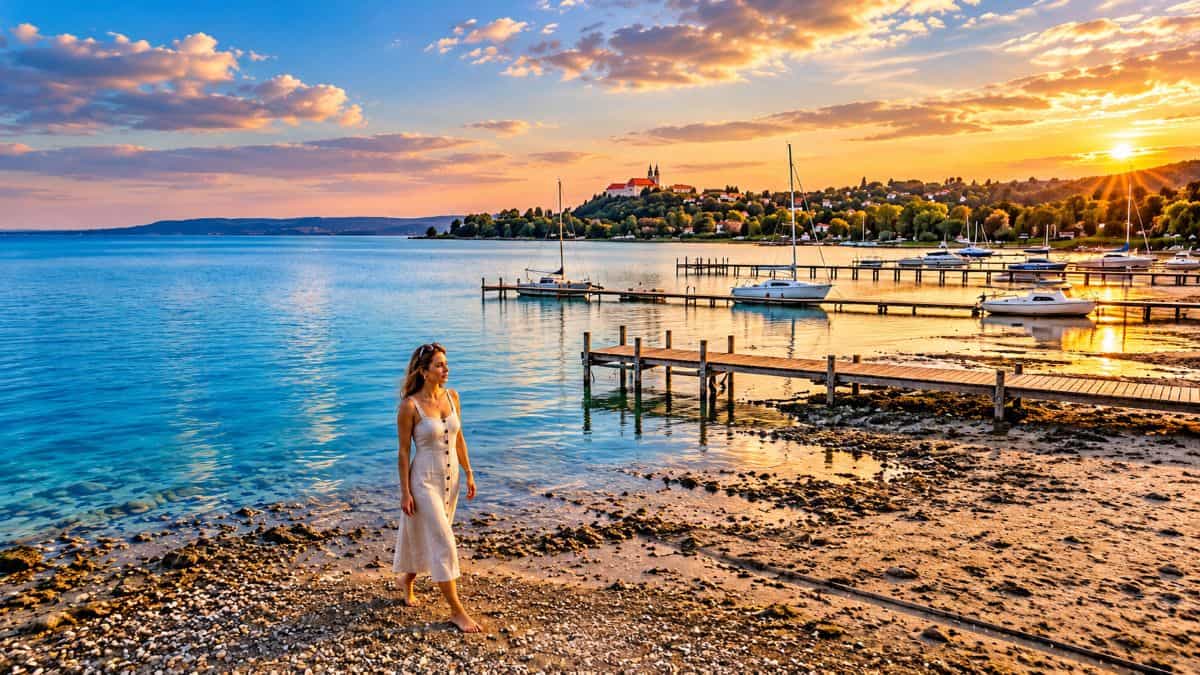
Image generated with Ai
Lake Balaton, affectionately celebrated across the continent as the Hungarian Sea, currently confronts one of its most sobering hydrological developments in modern recorded history. Over recent months, an estimated 250 million cubic metres of freshwater have evaporated or failed to replenish, leaving expansive swathes of the celebrated southern shoreline stranded above water. Wooden sunbathing boardwalks, once surrounded by gentle ripples, now hang awkwardly over mudflats and cracked sediment. For generations of domestic holidaymakers and international travellers from neighbouring Austria, Germany, and Slovakia, this expansive freshwater body has served as the quintessential summer sanctuary, renowned for warm, shallow bathing depths and vibrant sailing regattas.
The abrupt retreat of the water has sent shockwaves through regional hospitality networks, environmental research bodies, and lakeside municipalities. While local tourism boards have long managed seasonal fluctuations, the speed and visibility of this retreat have introduced unprecedented anxieties for hoteliers, mariners, and nature conservationists. Because the southern lakebed slopes exceptionally gently, a drop in water depth of merely thirty or forty centimetres shifts the visible water margin inward by tens of metres. The developing scenario has transformed standard seasonal preparations into urgent round-table discussions between hydrologists, regional planning authorities, and tourism professionals who must now adapt to a landscape where the classic waterfront experience requires recalibration.
Advertisement
Advertisement
The Physical Reality of the Vanishing Water Volume
The numerical magnitude of 250 million cubic metres represents an enormous deficit within a basin that typically holds approximately two billion cubic metres of water across its 590 square kilometres. When such a massive proportion disappears from a relatively shallow water body, the visual and physical consequences manifest almost immediately. The average depth of Lake Balaton hovers at just over three metres, meaning that any substantial volume deficit fundamentally alters the ratio of surface area to depth. The southern towns of Siófok, Balatonlelle, and Fonyód have experienced dramatic landscape alterations, with beaches receding dramatically and shallow sandy shoals turning into dry islands within swimming enclosures.
Tourists visiting the shorelines during recent autumn excursions have documented bizarre scenes where long marina piers end on exposed gravel rather than clear water. Small leisure craft have been caught grounded on submerged sandbars that previously posed no hazard to navigation. Harbour masters across the coastline have issued navigational warnings, advising owners of fixed-keel yachts to monitor draft limits rigorously or relocate their vessels to deeper northern anchorages near Balatonfüred and the Tihany Peninsula. The shift has altered the auditory and sensory atmosphere of the lakeshore, trading gentle lapping waves for wind sweeping across bare sediment.
Advertisement
Advertisement
Meteorological Drivers and Catchment Deficits
Understanding how such a vast volume of water could vanish requires a rigorous examination of the broader Carpathian Basin climate trends over consecutive seasons. The primary feeder of Lake Balaton is the Zala River, which enters at the western tip through the ecologically sensitive Kis-Balaton wetland nature reserve. Over the preceding two years, precipitation across the Zala catchment basin fell significantly below long-term climatic averages, diminishing natural river inflow to fractions of typical seasonal baseline volumes. Without steady inflow from this primary artery, natural equilibrium cannot be preserved against natural thermal losses.
Evaporation rates have surged concurrently due to prolonged, anomalous heatwaves that settled across Central Europe throughout the summer and early autumn. When water temperatures exceed twenty-six degrees Celsius over an exposed surface exceeding nearly six hundred square kilometres, the atmosphere extracts millions of litres per day through direct evaporation. Groundwater recharge rates have likewise collapsed, as regional water tables dropped from extended soil droughts affecting agriculture and forestry across western Hungary. Rather than subterranean springs sustaining the lakebed, dry surrounding strata have absorbed ambient moisture, exacerbating the downward balance sheet.
Advertisement
Advertisement
| Hydrological Metric | Long-Term Average | Current Recorded Status | Primary Impact on Visitors |
| Total Water Volume | 1,900 to 2,100 million m³ | 1,650 to 1,850 million m³ | Reduced swimming depth and navigational clearance |
| Average Lake Depth | 3.2 to 3.4 metres | 2.8 to 2.9 metres | Shoreline displacement up to 40 metres south |
| Primary Inflow (Zala River) | 8 to 10 m³ per second | 2 to 4 m³ per second | Slower water exchange and renewal cycles |
| Seasonal Evaporation Loss | 700 to 800 mm annually | 950 to 1,050 mm annually | Accelerated late-season water table depletion |
| Sio Canal Outflow Status | Regulated drainage open | Fully shuttered and locked | Natural preservation protocol activated |
Operational Ramifications for Hospitality and Holidaymakers
The economic vitality of dozens of lakeside settlements relies heavily upon water-based leisure, family holiday bookings, and nautical recreation. The shallow waters of the southern bank have traditionally catered to families with young children, who valued wading far out into calm water without dropping off into deep trenches. Now, holidaymakers must walk through extensive bands of mud and damp sand before reaching waist-deep water, altering the traditional lakeside promenade experience and prompting local councils to construct temporary footpaths and floating pontoons.
Yachting schools, sailing clubs, and pleasure cruisers have had to alter navigational charts to avoid hull damage, restricting operations primarily to deeper northern zones around the volcanic slopes of Badacsony and the Tihany strait. Municipal authorities have suspended operations on several community boat ramps because trailer access now terminates well short of safe floating depth. At the same time, regional tour operators are working actively to pivot guest itineraries toward vineyard excursions, cycling paths on the Balaton Ring cycleway, and thermal wellness facilities, mitigating over-dependence on direct swimming amenities.
Ecological Stress and Long-Term Basin Management
Beyond the immediate disruption to holidaymakers, environmental biologists and limnological institutions express deep concern regarding the biological resilience of the lake. A diminished water column heats and cools much faster, increasing thermal stress on indigenous fish species such as pike-perch, wild carp, and bream. Furthermore, shallow warmed waters are naturally more vulnerable to accelerated algal blooms if nutrient concentrations concentrate within smaller total volumes of liquid, threatening the crystalline water clarity for which the lake is widely renowned.
The modern management of Lake Balaton is governed by the Sió Canal lock system at Siófok, which historically released excess water into the Danube River network during periods of winter inundation. For an extended duration, these sluice gates have remained completely sealed to retain every possible droplet within the lake basin. Environmental engineers are actively revisiting comprehensive infrastructure proposals, evaluating whether supplementary artificial diversions from neighbouring river systems or redesigned catchment retention basins could stabilise levels against accelerating climatic extremes.
Navigating the Future of Central European Lake Tourism
The collective challenge facing regional authorities extends well beyond managing a single dry season. Holiday travel trends are adapting as travellers demand accurate environmental reporting and resilient recreational infrastructure before booking vacations. Destinations throughout the region are studying how to develop low-impact tourism models that do not strain existing water infrastructure, balancing guest capacity with local ecological limits.
Concerted conservation initiatives, sediment clearing at critical marina entrances, and coordinated cross-border research are now central to preserving the unique charm of this historic region. Travellers visiting Lake Balaton in the coming seasons are encouraged to engage with local educational exhibits, support regional cultural businesses, and experience the varied culinary and geological riches of the surrounding national parks. The current water deficit serves as a powerful reminder of how intimately connected European leisure destinations remain with natural climatic rhythms, urging communities toward proactive preservation and thoughtful exploration.
Advertisement
Advertisement
Frequently Asked Questions
Why is Lake Balaton losing water so quickly?
The lake is experiencing low inflow from the Zala River combined with extreme summer evaporation rates caused by sustained regional heatwaves and depleted groundwater levels.
How much water is currently missing from Lake Balaton?
Approximately 250 million cubic metres of water have disappeared compared to standard seasonal storage baselines across the catchment basin.
Is Lake Balaton still safe for swimming and bathing?
Yes, the water remains clear and clean for bathing, though visitors along the southern shore must walk further across exposed beaches to reach swimming depths.
Advertisement
Advertisement
Are boat tours and sailing still operating on the lake?
Sailing and passenger ferries continue to operate, although routes and harbour entries are strictly monitored, and fixed-keel yachts face draft restrictions in shallow southern marinas.
Where is the water loss most visible to tourists?
The loss is most dramatic along the shallow southern shore between Siófok and Fonyód, where gentle gradients cause shorelines to recede dozens of metres.
Can water be pumped into Lake Balaton from other rivers?
Current infrastructure does not support large-scale artificial river transfers into the lake, though regional planners are actively evaluating technical feasibility for future supply security.
Advertisement
Advertisement
Is the Sió Canal currently releasing water from the lake?
No, the sluice gates at the Sió Canal in Siófok have been locked shut to prevent any outward flow and retain all remaining water volume.
What are local authorities doing to help holidaymakers?
Municipalities are installing extended boarding pontoons, clearing harbour channels, and promoting inland cycling, cultural sights, and wine tourism across the basin.
Will the lake recover its standard water levels naturally?
Recovery depends heavily upon substantial winter snowfall and sustained spring rainfall across the Zala River catchment area to replenish depleted regional aquifers.
Advertisement
Advertisement
How does this water drop affect local wildlife and fish?
Shallow, warm water elevates stress for aquatic life, prompting heightened monitoring by conservationists to prevent oxygen depletion and harmful nutrient accumulation.
Advertisement
