
Faroe Islands Aligns With Denmark And More Beckons Global Travellers As Remote Property Market Surges

Published
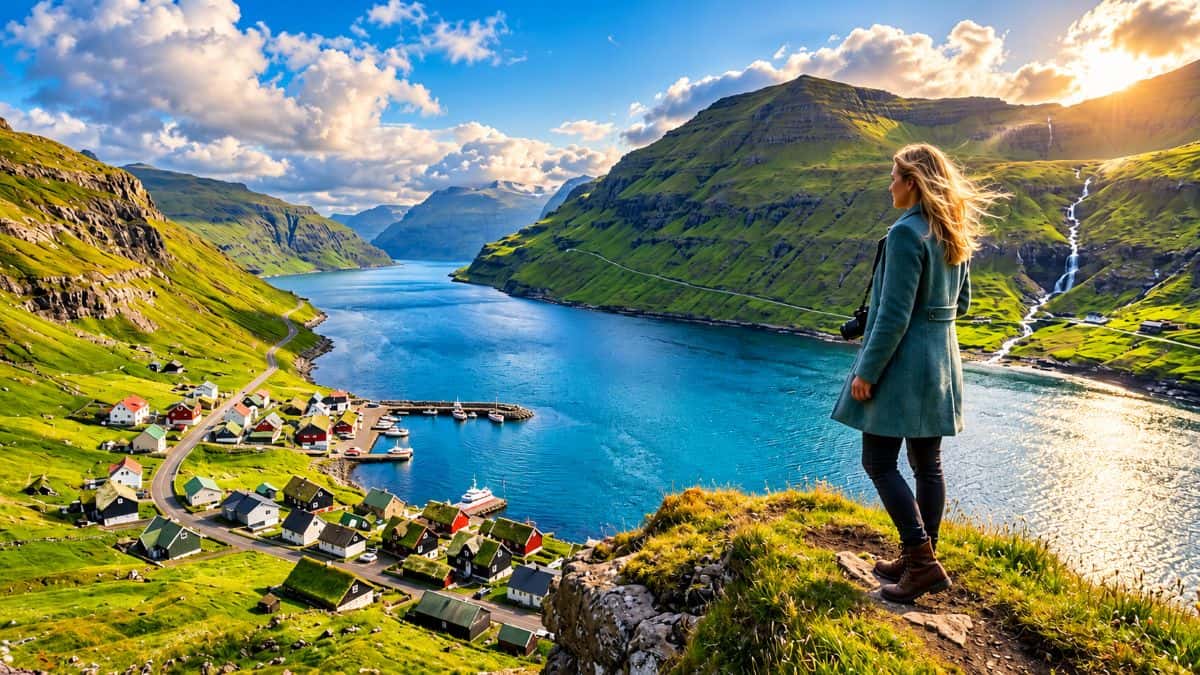
Image generated with Ai
Rising sheer from the slate-grey waters of the North Atlantic Ocean, the Faroe Islands represent an astonishing intersection of untamed wilderness, Nordic sophistication, and profound geographic solitude. Scattered strategically between Iceland and Scotland, this autonomous archipelago within the Kingdom of Denmark has evolved from a quiet haven for adventurous navigators into an irresistible sanctuary for international explorers seeking genuine permanence. The windswept volcanic peaks, cascading waterfalls that empty straight into surging sea swells, and emerald valleys offer a rare sensory reset that frequently captures travellers within hours of arrival. What begins as an invigorating walking tour or photographic voyage often evolves into an intense, life-altering impulse to establish roots amidst the remote beauty of these eighteen islands.
Transforming that initial emotional connection into practical reality, however, requires navigating an extraordinary cultural and logistical landscape. Modern island life seamlessly combines deep-seated community traditions with world-class engineering, including remarkable subsea tunnels that effortlessly link isolated villages to the lively maritime capital of Tórshavn. Yet, purchasing property amidst this dramatic terrain demands patience, substantial capital, and a clear understanding of legal nuances. Because the archipelago remains distinct from the European Union despite its sovereign alignment with the Danish crown, foreign acquisitions entail distinctive property checks and immigration requirements. Navigating this North Atlantic property realm reveals the realities of an increasingly coveted, nature-bound way of life.
Advertisement
Advertisement
The Irresistible Magnetism of the North Atlantic Archipelago
The instantaneous fascination that visitors encounter across the territory is anchored in an elemental sense of scale. Across eighteen inhabited landmasses, dramatic basalt cliffs plunge into tempestuous ocean trenches, while mist rolls across emerald slopes dotted with grazing sheep. In a world characterized by relentless urbanization and digital noise, this quiet environment offers immediate perspective. The stark clarity of the sea air and the dramatic play of light across the fjords create an environment where daily existence feels anchored to the fundamental rhythms of the natural world.
Beyond the raw geology, modern Faroese society provides an unexpectedly high standard of daily infrastructure. Sophisticated culinary establishments, cozy knitwear workshops, contemporary harbour facilities, and innovative architecture coexist alongside grass-roofed timber dwellings that have resisted polar gusts for hundreds of years. The capital city of Tórshavn functions as a vibrant cultural beacon, providing cosmopolitan energy within an intimate harbour settlement. It is precisely this juxtaposition of absolute coastal isolation and modern Nordic efficiency that encourages global visitors to consider extended residency rather than brief weekend itineraries.
Advertisement
Advertisement
Navigating Real Estate Acquisition and the Autonomous Legal Framework
Prospective purchasers drawn to the archipelago quickly discover that buying a home requires navigating a structured, localized market. Because the territory functions as a self-governing entity under the Danish realm, European Union real estate directives do not automatically apply. Local legislation prioritises community stability and prevents speculative purchases, ensuring that settlements do not turn into empty holiday enclaves. Foreign nationals must often seek specific administrative approval, demonstrate legitimate local ties, or fulfill established residency criteria before completing property registrations.
Securing a mortgage presents another practical hurdle, as regional banking institutions maintain prudent lending standards for individuals whose primary income originates overseas. The bidding process for desirable properties can become remarkably competitive, particularly in and around Tórshavn where available housing stock is perpetually limited. International purchasers regularly spend years researching local land registries, consulting local legal advisors, and monitoring public sales before successfully securing a title deed. The purchase represents a significant, long-term commitment that requires deliberate financial preparation and legal diligence.
Advertisement
Advertisement
Key Relocation and Property Indicators Across the Archipelago
| Feature | Details and Parameters |
| Geographic Framework | Eighteen volcanic islands positioned between Iceland, Norway, and Scotland |
| Administrative Governance | Autonomous self-governing territory within the Danish Crown, outside the European Union |
| Administrative Centre | Tórshavn, located on the island of Streymoy |
| Dominant Property Valuation | Four million to six million Danish kroner for metropolitan family homes |
| Primary Spoken Tongue | Faroese, alongside Danish, with fluent English spoken across commerce |
| Subsea Infrastructure | Comprehensive underwater tunnel networks connecting major island landmasses |
| Climate Profile | Oceanic subpolar conditions characterized by fast-moving storms, mist, and mild winters |
| Legal Conveyancing Rule | Property acquisition does not grant automatic residency or unrestricted employment privileges |
Economic Realities and the Cost of Daily Island Existence
Embracing life in the North Atlantic involves adapting to specific economic realities created by geographic isolation. While regional energy generation benefits from expanding wind and hydroelectric initiatives, the territory imports a substantial proportion of consumer goods, building supplies, fresh produce, and specialized machinery. This trade dependency directly influences grocery receipts, home renovation estimates, and dining expenses. Maintaining a wooden dwelling amidst high salt winds, torrential rainfall, and severe winter gales also requires continuous upkeep, demanding high-grade timber and specialized maritime construction materials.
Property prices reflect these structural pressures. In prime urban neighbourhoods, pricing easily rivals that of mainland European capitals, with single-family properties routinely commanding upwards of five million Danish kroner. More remote outposts across the northern or southern extremities offer comparatively lower acquisition values, yet transport logistics, heating outlays, and access to secondary amenities quickly balance the ledger. Prospective settlers must approach regional budgeting through a holistic lens, taking into account vehicle maintenance, maritime ferry timetables, and local contractor availability alongside basic purchase costs.
Advertisement
Advertisement
Cultural Integration Within Close-Knit Coastal Villages
Acquiring the physical keys to a turf-roofed dwelling marks only the starting point of genuine integration into Faroese society. With a total population hovering around fifty-four thousand inhabitants, community trust remains the cornerstone of daily existence. Village survival has historically relied on shared cooperation, whether gathering wandering livestock from exposed crags, clearing collective paths after heavy snowfall, or participating in maritime traditions. Newcomers who immerse themselves in community life find a welcoming, supportive populace eager to share stories and offer assistance during severe storms.
Learning the Faroese language serves as an essential bridge for anyone desiring authentic belonging. While the majority of residents converse effortlessly in English and Danish, the local national language embodies the historical soul, folklore, and poetry of the islands. Demonstrating an earnest commitment to understanding local idioms and regional customs transforms an international property owner from a detached seasonal resident into an appreciated member of the neighbourhood. Engaging with regional sports associations, participating in coastal conservation, and supporting neighborhood charities quickly solidifies lasting relationships across the community.
Embracing the Maritime Climate and North Atlantic Rhythms
Life in the archipelago ultimately requires total surrender to the weather. Clear blue skies can rapidly give way to impenetrable fog, driving rain, and gale-force ocean winds within a matter of minutes. This meteorological volatility dictates transport schedules, outdoor leisure, and daily travel plans, fostering an adaptable, patient mindset among islanders. Winter brings shortened daylight hours that encourage candlelit indoor gatherings and culinary reflection, while the endless twilight of midsummer prompts midnight coastal walks and extended fishing excursions.
This connection to the ocean fosters a profound psychological resilience. The sheer physical majesty of towering headlands like Enniberg, coupled with the tranquility of isolated hamlets such as Saksun and Gjógv, rewards residents with unmatched serenity. Relocating to these shores is rarely a casual property transaction; it is an active decision to adopt a simpler, grounded way of life where the majestic natural world takes centre stage every single day.
Advertisement
Advertisement
Frequently Asked Questions
Can foreign citizens freely purchase residential real estate in the Faroe Islands?
Foreign buyers generally require official administrative authorization from local authorities or must fulfill established residence requirements, as local regulations protect properties from speculative international acquisition and safeguard community housing availability.
Does buying residential property automatically grant residency rights?
Acquiring real estate does not confer automatic residence or employment permits, meaning prospective residents must apply separately through established immigration pathways governing the Danish realm and autonomous Faroese frameworks.
What is the standard price range for family homes near Tórshavn?
Well-located single-family homes around the capital typically range between four million and six million Danish kroner, though high-demand neighbourhoods and unique historical houses can command significantly higher values.
Advertisement
Advertisement
Are the Faroe Islands subject to European Union single market laws?
The archipelago remains outside the European Union despite its constitutional connection to Denmark, maintaining complete control over its own fisheries, taxation, import tariffs, and municipal real estate policies.
What language skills are needed for everyday life on the islands?
English and Danish are spoken across retail, travel, and commercial spheres, but mastering the Faroese language is essential for meaningful community integration and long-term administrative residency.
How does geographic isolation affect daily grocery and utility budgets?
Most manufactured goods, fresh vegetables, and hardware materials arrive by sea freight, leading to higher retail prices, construction costs, and household budgets than on mainland Europe.
Advertisement
Advertisement
What makes road transportation reliable across separate islands?
Modern subsea road tunnels, bridges, and state-subsidised car ferries link the majority of inhabited islands, allowing motorists to commute easily between different regions even in challenging conditions.
How challenging is the property bidding process for international buyers?
Available housing remains limited across urban centres, meaning open bidding rounds frequently generate swift competition among domestic families and international applicants, necessitating patient preparation.
What structural maintenance do traditional timber and turf-roofed houses demand?
The maritime climate exposes external walls to heavy sea salt, high winds, and continuous rain, demanding regular exterior painting, roof drainage inspections, and specialized wood treatments.
Advertisement
Advertisement
What weather conditions should long-term residents expect throughout the year?
The region features an oceanic subpolar climate characterized by mild winter temperatures, cool summers, frequent rain, sudden sea fog, and swift weather changes dictated by North Atlantic storm patterns.
Advertisement
