

Japan’s Hokkaido Travel Gets a Winter Boost as Jeju Air Restores Daily Seoul–Hakodate Flights From December

Published
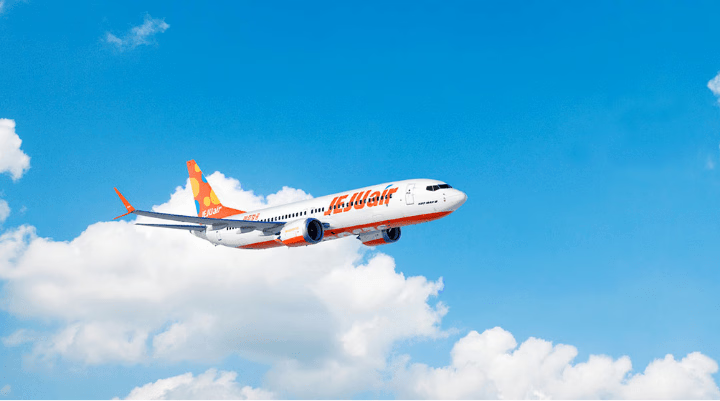
image credit – Jeju Air
Jeju Air is preparing to restore direct flights between Seoul/Incheon International Airport in South Korea and Hakodate Airport in Japan’s northern island of Hokkaido from 1 December 2026 to 2 March 2027. The announced seasonal service will operate one return flight daily using Boeing 737-800 aircraft, reconnecting the two destinations after a suspension in June 2026. The Jeju Air Hakodate–Seoul flights will provide additional winter travel options for South Korean holidaymakers visiting Hokkaido and Japanese passengers heading to Seoul, with scheduled journey times of two hours and 20 minutes eastbound and three hours westbound.
The route’s return is particularly relevant to travellers planning winter holidays in northern Japan, where Hakodate is known for its historic waterfront, seafood, mountain views and seasonal scenery.
Unlike the airline’s earlier service, which operated only several times a week, the announced winter schedule will offer daily departures in both directions.
Advertisement
Advertisement
Jeju Air’s official website also promotes daily Hakodate services from December, supporting the airline’s planned return to the market.
What Changes With Jeju Air’s Hakodate–Seoul Flight Resumption?
Jeju Air will restore direct connectivity between Hakodate and Seoul/Incheon after approximately six months without the service.
Advertisement
Advertisement
The route was originally introduced on 8 June 2025 with two weekly return flights. Frequency subsequently increased to four weekly services in July 2025 before operations were suspended in June 2026.
The new winter timetable represents a substantial frequency increase over the previous operation.
Key Details of the Returning Route
| Flight information | Announced details |
|---|---|
| Airline | Jeju Air |
| Departure market | South Korea and Japan |
| Route | Seoul/Incheon–Hakodate |
| Service restart | 1 December 2026 |
| Scheduled final date | 2 March 2027 |
| Frequency | One return flight daily |
| Aircraft | Boeing 737-800 |
| Seoul-to-Hakodate duration | 2 hours 20 minutes |
| Hakodate-to-Seoul duration | 3 hours |
| Flight numbers | 7C1513 and 7C1514 |
The dates represent the airline’s announced operating period, not a year-round commitment.
Travellers should confirm availability for their selected departure because schedules and aircraft assignments can change.
Jeju Air’s official schedule guidance specifically advises that departure times, arrival times and aircraft models may be amended without advance notice.
What Are the New Jeju Air Flight Timings Between Hakodate and Seoul?
The announced timetable provides afternoon departures in both directions, giving passengers a direct connection between the South Korean capital’s main international gateway and southern Hokkaido.
Advertisement
Advertisement
Daily Flight Schedule From 1 December 2026
| Flight | Route | Departure | Arrival |
|---|---|---|---|
| 7C1513 | Seoul/Incheon → Hakodate | 13:10 | 15:30 |
| 7C1514 | Hakodate → Seoul/Incheon | 16:30 | 19:30 |
All times are local. South Korea and Japan use the same UTC+9 time zone, so no time-zone adjustment is required between the two airports.
The schedule allows passengers to reach Hakodate in the afternoon, potentially leaving time for an evening meal or sightseeing after airport formalities.
For passengers departing Japan, the return flight arrives at Incheon in the evening.
Those planning onward international connections should allow sufficient time for immigration, baggage collection, terminal transfers and any additional security checks.
The published timetable does not guarantee that every onward connection at Incheon will be practical.
Why Is Hakodate an Important Winter Destination for South Korean Tourists?
Hakodate sits on the southern coast of Hokkaido, Japan’s northernmost main island, and offers a different visitor experience from the larger city of Sapporo.
Advertisement
Advertisement
The destination combines historic neighbourhoods, seafood markets, scenic viewpoints and seasonal attractions.
Its relatively compact urban centre can appeal to travellers interested in shorter breaks rather than extended multi-city itineraries.
Mount Hakodate
Famous for panoramic views over the city and its distinctive coastal geography, particularly after sunset.
Goryokaku Park
A historic star-shaped fortification whose grounds offer a distinctive landscape during snowy weather.
Advertisement
Advertisement
Hakodate Morning Market
A popular destination for local seafood and Hokkaido food culture.
Kanemori Red Brick Warehouses
Historic waterfront buildings converted into shopping, dining and leisure spaces.
The daily route provides another means of reaching these attractions without changing planes at a larger Japanese airport.
For South Korean travellers considering Japan’s winter scenery, the direct connection may make Hakodate more practical for a standalone holiday.
Advertisement
Advertisement
However, Jeju Air has not published a passenger demand forecast specifically for this seasonal service.
Why This Matters
The return of daily direct flights could strengthen travel links between South Korea and southern Hokkaido during the winter tourism season.
Compared with the route’s previous four-weekly-flight schedule, a daily operation offers passengers more choice over departure and return dates.
This may be particularly useful for weekend breaks, shorter holidays and independent travel itineraries.
For Hakodate’s tourism businesses, the additional international air connection creates an opportunity to attract more visitors from South Korea. Hotels, restaurants and local attractions could benefit if the new flights generate additional demand.
For Jeju Air, the seasonal service provides another way to serve the Japan–South Korea leisure market.
Advertisement
Advertisement
However, the airline has not announced expected passenger numbers, load factors or tourism revenue associated with the resumed operation.
The increase in flight frequency should therefore be understood as an announced capacity expansion, not evidence of an already achieved increase in visitor arrivals.
What Travellers Should Know
Passengers planning journeys between Seoul and Hakodate should confirm the operating dates and check the airline’s booking conditions before making travel arrangements.
Before Booking
- Operating period: 1 December 2026 to 2 March 2027.
- Flight frequency: One return service daily.
- Aircraft: Boeing 737-800.
- Arrival airport in Japan: Hakodate Airport, Hokkaido.
- Arrival airport in South Korea: Incheon International Airport.
- Baggage: Check the allowance attached to the selected Jeju Air fare.
- Travel documents: Verify Japanese or South Korean entry requirements based on nationality.
- Winter conditions: Allow flexibility for potential weather-related changes.
Jeju Air has not provided a confirmed promotional fare or fixed ticket price in the supplied announcement.
Travellers should verify fares and available seats directly through the airline’s reservation system.
How Can Visitors Explore Hakodate After Arriving?
Hakodate Airport provides access to the city and surrounding destinations in southern Hokkaido.
Advertisement
Advertisement
Visitors can consider exploring the central waterfront, historic districts and Mount Hakodate before continuing to other parts of the island.
However, winter weather can influence local road conditions, sightseeing arrangements and transport schedules.
Passengers planning onward journeys should check available public transport services and allow sufficient time between connections.
Frequently Asked Questions
1. When will Jeju Air resume flights between Seoul and Hakodate?
Jeju Air plans to restart daily flights on 1 December 2026, with the announced seasonal schedule continuing until 2 March 2027.
2. How often will Jeju Air fly between the two cities?
The airline plans one return flight daily, providing seven weekly services in each direction.
3. Which aircraft will operate the route?
Jeju Air has scheduled Boeing 737-800 aircraft.
Advertisement
Advertisement
4. How long does the flight take?
The scheduled journey takes two hours and 20 minutes from Seoul/Incheon to Hakodate and three hours in the opposite direction.
5. Is the route a new service?
No. Jeju Air originally launched the route in June 2025, increased its frequency in July 2025 and suspended operations in June 2026.
Closing Update
As of 8 October 2026, Jeju Air is preparing to restore its direct Seoul/Incheon–Hakodate connection from 1 December, with daily return flights planned through 2 March 2027.
The schedule represents a significant increase from the route’s earlier two-weekly and four-weekly operations.
The returning connection could provide greater flexibility for visitors planning winter holidays in Hokkaido while improving direct access between southern Hokkaido and South Korea.
Travellers should continue checking confirmed flight schedules, ticket availability and entry requirements before making reservations.
Advertisement
