

Scotland’s Machines With Vision Targets $78 Billion Global Rail Maintenance Market with Landmark UK Deal

Published
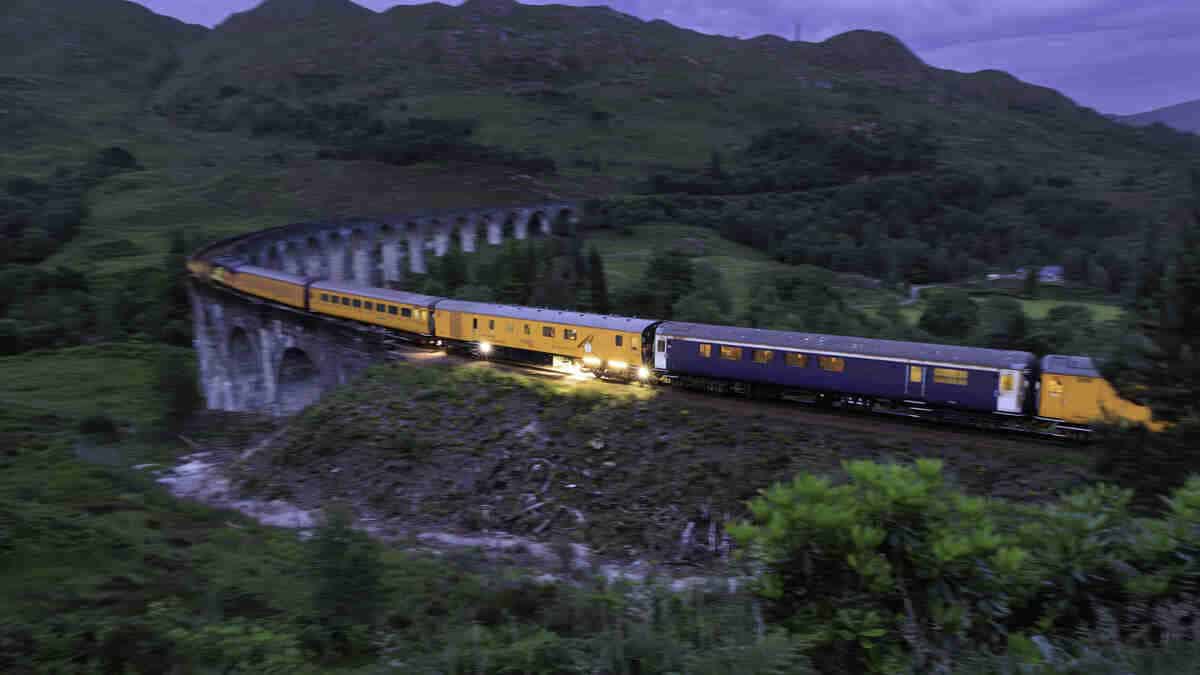
A technology firm from Scotland that specializes in railway technology is gearing up for expansion into international markets following a multi-million pound, multi-year deal with Network Rail. Machines With Vision is launching cutting-edge visual mapping technology that will assist in locating defects in railway tracks to an accuracy of millimeters. The innovation may solve a problem faced by the entire world of rail transport, where mislocation of faults leads to wastage of millions of pounds on maintenance work each year.
Scottish Rail Technology Company Takes a Major Step Towards Global Expansion
Scotland-based Machines With Vision has reached an important milestone in its development after securing a major contract with Network Rail, the organisation responsible for managing much of Britain’s railway infrastructure.
The agreement represents a significant commercial breakthrough for the technology company, which specialises in improving how railway operators identify, locate and manage defects across extensive rail networks.
The company is targeting the global railway maintenance industry, a sector estimated to be worth approximately US$78 billion. Its technology aims to tackle one of the industry’s persistent operational challenges: the difficulty of identifying the exact location of faults discovered during routine railway inspections.
Advertisement
Advertisement
Although modern inspection systems can detect problems along railway tracks, maintenance crews do not always receive sufficiently accurate information about where those problems are located. This can lead to repeated searches, longer repair operations and unnecessary disruption to planned maintenance schedules.
Machines With Vision believes its image-based railway mapping technology can help infrastructure operators overcome these limitations by providing a more precise method of locating defects and guiding workers directly to the areas requiring attention.
Advertisement
Advertisement
Inaccurate Railway Fault Locations Create a US$6 Billion Global Maintenance Challenge
Railway infrastructure maintenance is an essential part of keeping passenger and freight services operating safely and reliably.
However, identifying a defect is only the beginning of the repair process. Maintenance teams must also determine its exact position before they can assess the problem and carry out the necessary work.
Advertisement
Advertisement
According to estimates highlighted by Machines With Vision, inaccurate defect location information contributes to approximately US$6 billion in annual costs across the global railway industry.
These expenses can arise when maintenance teams are sent to the wrong section of track, spend additional time searching for reported faults or must return to the same location because the original problem could not be found.
Such inefficiencies place additional pressure on railway maintenance budgets, particularly for operators responsible for thousands of kilometres of infrastructure.
They can also reduce the amount of productive work completed during limited maintenance periods.
Advertisement
Advertisement
For railway operators facing rising infrastructure costs and increasing demands for operational reliability, improving fault location accuracy could therefore offer significant financial and practical advantages.
Advanced Camera Technology Creates Highly Accurate Digital Maps of Railway Tracks
At the centre of Machines With Vision’s technology is an image-based mapping system designed specifically for railway infrastructure.
The system uses cameras installed beneath inspection trains to capture detailed visual information as the trains travel along railway lines.
These images are processed to create a highly accurate geospatial representation of the track network.
Unlike systems that rely primarily on conventional geographic positioning, the technology uses visual information from the railway environment to establish precise locations.
This approach allows railway operators to associate identified defects with specific positions along the track.
Advertisement
Advertisement
The resulting visual map provides a reference that maintenance teams can use when locating infrastructure problems.
The technology is designed to operate across different railway networks, making it potentially useful for national infrastructure managers, regional railway operators and organisations responsible for specialist rail systems.
By improving the connection between inspection findings and physical track locations, the platform aims to make railway maintenance more predictable, efficient and easier to coordinate.
RailLoc System Introduces Millimetre-Level Precision to Railway Fault Detection
One of the company’s principal innovations is RailLoc, a visual positioning system developed to improve the accuracy of railway infrastructure location data.
RailLoc is designed to connect information collected during railway inspections with highly precise positions along the network.
This allows maintenance teams to identify where a reported defect is situated rather than relying on approximate location references.
Advertisement
Advertisement
Machines With Vision says the technology can provide millimetre-level location accuracy, representing a significant improvement over less precise methods of identifying railway faults.
Such accuracy is particularly valuable when several similar infrastructure components are located close together or when maintenance crews must identify a specific problem within a complex railway environment.
RailLoc can also help create a consistent location reference for information collected during different inspection journeys.
This could allow railway operators to compare observations over time and monitor how particular defects develop.
The ability to associate inspection records with precise physical locations may also support more advanced maintenance planning and automated infrastructure analysis.
Fault Navigator Mobile App Helps Railway Workers Reach Defects Faster
Machines With Vision has developed a mobile application called Fault Navigator to help railway maintenance teams use the location information generated by RailLoc.
Advertisement
Advertisement
The application is intended to guide workers towards faults identified during railway inspections.
Instead of spending valuable time searching along a section of track, maintenance crews can use the digital location information to identify the relevant area more accurately.
This could be particularly useful when maintenance activities must be completed within tightly controlled engineering access periods.
Railway infrastructure work often takes place during scheduled closures or limited periods when trains are not operating.
Every minute spent searching for a defect reduces the time available to inspect, repair or replace the affected component.
By reducing unnecessary searches, Fault Navigator could help maintenance teams make better use of available working hours.
Advertisement
Advertisement
The application also provides a practical connection between sophisticated inspection technology and the workers responsible for carrying out repairs.
Its effectiveness will depend on how accurately the system performs under operational conditions and how successfully it integrates with existing railway maintenance procedures.
Railway Worker Safety Becomes a Central Focus of the New Technology
Beyond the financial implications, inaccurate railway defect locations can create additional safety concerns for maintenance personnel.
Railway tracks are complex working environments where employees may face risks associated with train movements, electrical equipment, uneven surfaces and heavy infrastructure.
When workers cannot locate a reported defect quickly, they may need to spend longer periods searching within the railway corridor.
This can increase unnecessary exposure to potentially hazardous conditions.
Advertisement
Advertisement
Machines With Vision’s technology aims to reduce this problem by helping crews identify the correct location before beginning their maintenance activities.
More accurate positioning information could shorten the time workers need to spend searching for infrastructure faults.
It may also help maintenance planners organise work more effectively by improving their understanding of where repairs are required.
However, precise digital navigation does not replace established railway safety procedures, track access controls or the operational precautions required when working near railway infrastructure.
Instead, the technology is intended to provide an additional layer of information that can support safer and more efficient maintenance operations.
Network Rail Agreement Follows Two Years of Technology Testing
The new commercial agreement follows a two-year pilot programme conducted with Network Rail.
Advertisement
Advertisement
The testing period provided an opportunity to assess the technology’s suitability for railway infrastructure inspection and maintenance activities.
Following this pilot, Machines With Vision secured a multi-million, multi-year contract with the British railway infrastructure organisation.
The agreement marks an important transition from technology evaluation to a longer-term commercial relationship.
For emerging railway technology businesses, securing a contract with an established infrastructure operator can be a significant step towards wider market adoption.
Large railway networks present demanding operating conditions, including extensive track mileage, complex infrastructure and strict safety requirements.
Technology intended for these environments must be capable of supporting practical maintenance operations rather than simply demonstrating technical performance.
Advertisement
Advertisement
The Network Rail agreement gives Machines With Vision a substantial commercial reference as it seeks opportunities with other railway infrastructure operators internationally.
The company has not disclosed the full contract value, detailed deployment schedule or network-wide performance results in the supplied announcement.
Britain’s Railway Infrastructure Could Benefit From More Precise Maintenance Planning
Britain operates one of Europe’s most extensive and heavily used railway systems, with infrastructure requiring continuous monitoring, inspection and renewal.
Maintaining this network involves identifying defects across tracks, switches, crossings and other critical assets.
Inspection trains play an important role in this process by collecting information about infrastructure condition while travelling across the network.
However, the value of inspection data depends partly on whether maintenance teams can translate findings into effective action.
Advertisement
Advertisement
More precise defect positioning could help bridge the gap between identifying an infrastructure problem and carrying out the necessary repair.
This is especially relevant where engineering teams must work within restricted access periods.
Improved location accuracy may help operators reduce repeated visits, allocate maintenance resources more efficiently and prioritise work based on reliable infrastructure information.
It could also support the wider adoption of digital asset management systems, which increasingly depend on accurate and consistent data.
The potential benefits are operational rather than automatic. Actual savings and safety improvements will depend on deployment, workforce training and measured performance.
Digital Railway Mapping Could Accelerate the Shift Towards Predictive Maintenance
The railway industry is increasingly exploring digital technologies that can improve infrastructure monitoring and maintenance decisions.
Advertisement
Advertisement
Traditional maintenance programmes often combine scheduled inspections with repairs carried out after faults have been identified.
More advanced approaches use inspection records, asset condition information and analytical tools to help determine when maintenance may be required.
Accurate location data is an important foundation for these systems.
If inspection findings can be consistently linked to the same physical point along a railway line, operators may be better able to compare changes over time.
This can support the identification of recurring problems and help maintenance planners understand whether particular defects are deteriorating.
Machines With Vision’s image-based mapping approach could contribute to this wider digital transformation.
Advertisement
Advertisement
Its technology is primarily focused on precise location and navigation, rather than independently predicting when railway components will fail.
Nevertheless, improved positioning information could make other digital maintenance systems more useful by ensuring that their observations relate to the correct infrastructure assets.
Machines With Vision Targets Europe, North America and Australasia
Following its Network Rail contract, Machines With Vision is pursuing additional opportunities beyond the United Kingdom.
The company is expanding its work with national railway infrastructure operators across Europe, North America and Australasia.
These markets contain extensive passenger and freight railway networks that require regular inspection and maintenance.
Although infrastructure systems differ between countries, many operators face similar challenges when attempting to locate defects accurately and organise repair work efficiently.
Advertisement
Advertisement
The company’s technology is designed around a problem that is not limited to a particular railway network or national operating model.
This gives Machines With Vision an opportunity to position its products as tools for international railway infrastructure management.
However, expanding into new markets will require the technology to meet local operational requirements, technical standards and safety expectations.
Commercial adoption will also depend on the ability to demonstrate practical improvements in maintenance efficiency.
The Network Rail agreement may strengthen the company’s position in discussions with prospective international customers, although the announcement does not identify additional confirmed contracts or their financial values.
New Investment Round Aims to Support International Business Growth
Alongside its commercial expansion, Machines With Vision has begun a new external investment round.
Advertisement
Advertisement
The fundraising initiative is intended to support the company’s continued international development.
Growing a railway technology business requires investment in several areas, including product development, engineering, commercial operations and customer support.
International expansion may also involve adapting technology to different infrastructure environments and working with railway operators through lengthy evaluation and procurement processes.
Additional capital could help Machines With Vision increase its operational capacity while pursuing opportunities across multiple regions.
The company’s management team brings experience in railway infrastructure, digital mapping, visual search technology and scaling technology businesses.
This combination of technical and commercial expertise is relevant to its efforts to move from specialist technology development towards broader international deployment.
Advertisement
Advertisement
The announcement does not specify the amount being sought through the investment round, the investors involved or a target completion date.
Global Railway Maintenance Industry Faces Growing Pressure to Improve Efficiency
Railway infrastructure operators must balance several competing priorities.
They need to maintain safe operating conditions, support reliable passenger and freight services, manage ageing infrastructure and control maintenance expenditure.
At the same time, railway networks are under pressure to adopt more efficient methods of inspection and asset management.
The global rail maintenance sector, estimated at US$78 billion in the company’s announcement, represents a substantial market for technologies capable of improving operational performance.
The estimated US$6 billion annual cost associated with imprecise defect locations illustrates the potential scale of the problem.
Advertisement
Advertisement
However, this figure represents an industry estimate rather than independently verified savings that any individual technology deployment would necessarily deliver.
For operators, the commercial case for adopting visual positioning systems will depend on measurable reductions in unnecessary maintenance activity, improvements in fault location accuracy and successful integration with existing workflows.
Machines With Vision is seeking to address these requirements through its combination of image-based mapping, precise positioning and mobile navigation.
A New Chapter for Scotland’s Railway Technology Industry
The Network Rail agreement places Machines With Vision among the Scottish technology businesses seeking to develop specialist solutions for international infrastructure markets.
Its approach combines camera-based inspection data with digital mapping and location tools intended for practical use by railway maintenance teams.
The company is attempting to solve a problem that may appear relatively small during an individual repair operation but can create substantial costs when repeated across large railway networks.
Advertisement
Advertisement
Finding a defect more accurately could mean fewer wasted journeys, shorter searches and better use of limited engineering access.
It could also reduce the time railway employees spend unnecessarily exposed to trackside risks.
For Network Rail, the agreement represents an opportunity to apply more precise visual positioning technology within railway maintenance operations.
For Machines With Vision, it provides a foundation for further commercial expansion.
As the company develops relationships with infrastructure operators in Europe, North America and Australasia, the central question will be whether the technology can consistently deliver measurable improvements across different railway environments.
If those benefits are demonstrated at scale, accurate visual positioning could become an increasingly valuable part of modern railway maintenance, helping operators connect digital inspection findings with faster, safer and more targeted repairs.
Advertisement
