
Chengdu, Beijing and Guizhou Drive China’s New Cultural and Rural Tourism Boom

Published
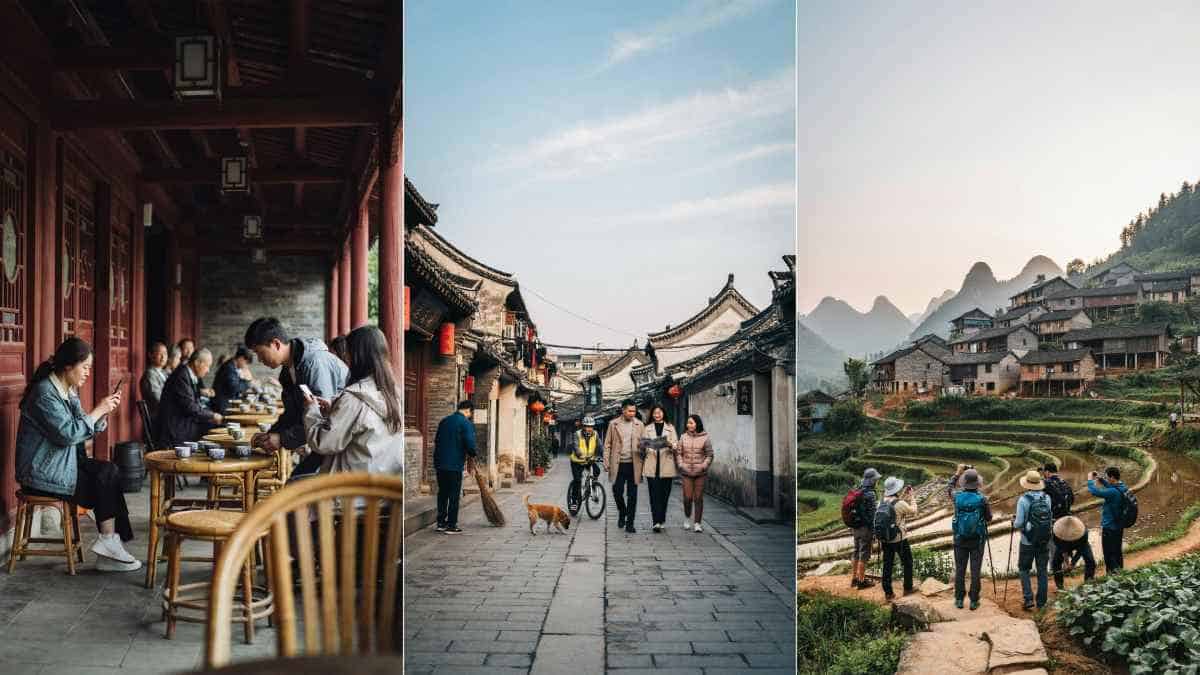
Image generated with Ai
Chengdu, Beijing and Guizhou are drawing tourists through tourism packages centred on living heritage, traditional wellness, rural culture and even manufacturing industries. Visitors to China are now being provided with opportunities to merge traditions with current experiences, including tea houses, morning Tai Chi, village soccer games, and visits that are linked to manufacturing facilities. This trend is providing foreign visitors with greater opportunities to experience China not only through its famous monuments but also through other parts of the country.
Chengdu Turns Teahouse Culture Into a Travel Experience
Chengdu has long been associated with teahouse culture, and the tradition remains an important part of the city’s visitor experience. Local teahouses provide spaces where people drink tea, talk, play games and spend extended periods together, creating a slower form of urban tourism.
For visitors, a Chengdu teahouse can offer an introduction to local social customs that is difficult to capture through conventional sightseeing. Tea preparation, seating arrangements and the relaxed pace of an afternoon visit all form part of the experience.
The city is also closely connected with Sichuan cuisine, giving travellers another route into local culture. Restaurants and food streets provide opportunities to explore dishes known for bold flavours and the characteristic use of Sichuan pepper.
Advertisement
Advertisement
A Chengdu itinerary can therefore combine food, tea and neighbourhood exploration without requiring long journeys between major experiences.
Advertisement
Advertisement
Baduanjin Brings Traditional Wellness Into Travel
Baduanjin, a traditional Chinese exercise routine, is another example of cultural wellness becoming part of the visitor experience. The practice consists of eight movements and is widely practised as a form of traditional exercise.
For travellers interested in wellness tourism, observing or learning such routines provides a cultural dimension that differs from conventional spa-focused travel. The appeal comes from experiencing a practice that remains part of everyday life rather than simply consuming a packaged tourist attraction.
Visitors should distinguish cultural participation from medical treatment. Baduanjin is presented here as a traditional exercise and cultural experience, not as a substitute for professional medical care.
Advertisement
Advertisement
The wider interest in traditional wellness also creates opportunities for visitors to explore Chinese approaches to movement, relaxation and daily routines through guided cultural activities.
Beijing Adds Tai Chi to Urban Travel
Beijing offers another setting where traditional practices remain visible within modern city life. Public parks are important social spaces, and early-morning activities can include exercise, walking and traditional movement practices such as Tai Chi.
Advertisement
Advertisement
For visitors, an early start can provide a different perspective on the capital. Instead of beginning the day at a major monument, travellers can see residents using public spaces as part of their daily routines.
Temple of Heaven Park, Beihai Park and other large green spaces are among the city’s well-known park environments. The combination of landscaped grounds, historic architecture and morning activity creates a distinctive urban experience.
Tai Chi also fits naturally into a broader Beijing itinerary, allowing travellers to combine living culture with the city’s imperial heritage, museums, food markets and historic neighbourhoods.
Guizhou Opens a Rural Route Into China
Guizhou is bringing a different dimension to China’s tourism offer. The southwestern province is known for mountainous landscapes and the cultures of several ethnic minority communities, providing opportunities for visitors to explore villages, traditional architecture, festivals, crafts and regional food.
Rural tourism allows travellers to move beyond major city centres and experience smaller communities. Mountain scenery and village landscapes also create opportunities for hiking, photography and cultural exploration.
Advertisement
Advertisement
One of the province’s most visible tourism phenomena is the Village Super League, a grassroots football competition held in Rongjiang County.
Village Super League Puts Rongjiang on the Map
The Village Super League, widely known as “Cun Chao”, grew into a major cultural and sporting attraction after matches involving local villagers attracted large audiences online. The tournament combines football with local cultural performances, food and community celebrations.
The event’s tourism significance comes from its community character. Rather than being designed solely as a professional sporting spectacle, it is closely linked with local participation and regional identity.
Visitors attending Rongjiang can combine matches with exploration of surrounding villages and Guizhou’s ethnic cultural heritage. The event demonstrates how local traditions and community activities can become tourism attractions without losing their connection to everyday life.
Industrial Tourism Adds a Modern Dimension
China’s tourism offer is also expanding into industrial and manufacturing experiences. The country’s position as a major producer of new-energy vehicles has created interest in smart manufacturing and advanced production.
Advertisement
Advertisement
New-energy vehicle, or NEV, facilities can provide visitors with a closer look at automation, robotics and modern production systems. Industrial tourism gives travellers a different way to understand China’s economic and technological development.
Factory visits remain subject to individual site access, visitor policies and safety requirements. Where public tours are available, they can complement conventional sightseeing with a practical look at contemporary manufacturing.
A Broader China Travel Experience
The emerging tourism mix connects experiences that initially appear very different.
Travellers can combine:
- Chengdu: Teahouses, Sichuan cuisine and cultural wellness.
- Beijing: Parks, Tai Chi and historic landmarks.
- Guizhou: Mountain villages, ethnic heritage and rural travel.
- Rongjiang: Village football, local food and community culture.
- Industrial destinations: Smart manufacturing and NEV production.
This broader perspective allows international tourists more opportunities to experience China through everyday life, local culture, wellness practices, rural festivals and modern business. In the case where tourists plan to visit multiple regions within their trip to China, places like Chengdu, Beijing and Guizhou offer tourists different means of entering the country as the trip takes them from local culture to rural festivals and modern technology.
Advertisement
