
Caracas and La Guaira Strike a Bright New Jazz Note for Venezuela This October

Published
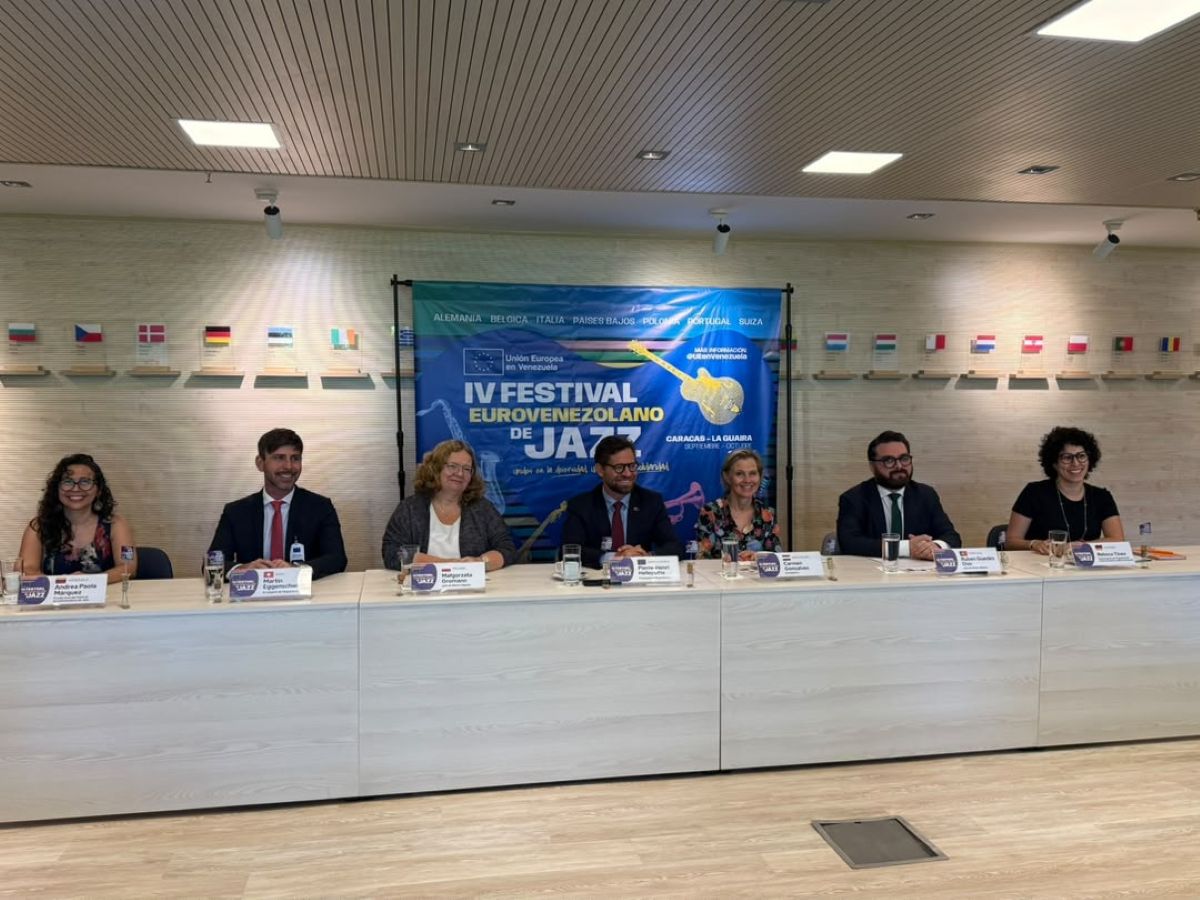
image credit: eeas.europa
Caracas and La Guaira are preparing for the final days of a major international music journey as the fourth Euro-Venezuelan Jazz Festival continues until 4 October 2026. The festival brings artists from eight countries to Venezuela through concerts, masterclasses and live jam sessions. It gives music lovers a bright cultural reason to explore Caracas while also taking jazz to La Guaira for the first time.
The event began on 14 September and has been planned as a three-week celebration of music and cultural exchange. It is organised by the European Union Delegation to Venezuela with support from the embassies and diplomatic representatives of the participating countries. Germany, Belgium, Italy, the Netherlands, Poland, Portugal, Switzerland and Venezuela all form part of the 2026 edition.
The festival carries the message United in diversity, united in solidarity. This message gives the event a wider purpose. It is about more than live music. It aims to bring people together through culture at a difficult time for the country.
Advertisement
Advertisement
A Festival That Brings Europe and Venezuela Together
Jazz has always crossed borders. It can mix old sounds with new ideas. It gives musicians space to listen, respond and create together. The Euro-Venezuelan Jazz Festival uses this freedom to connect European and Venezuelan artists on the same cultural route.
The 2026 edition includes 16 activities. These are seven concerts, five masterclasses and four jam sessions. This broad programme means that the festival does not speak only to ticket-holders. It also creates opportunities for young musicians, students, local performers and people who may be curious about jazz for the first time.
Some concerts are free, although capacity is limited. Others are available at reduced prices. This helps make the programme more open to a wider audience. It also makes the festival a valuable part of the cultural calendar in Caracas, where visitors can experience international music without needing to travel far from the city.
The event uses several well-known cultural spaces. Concert venues include Asociación Cultural Humboldt, Centro Cultural de Arte Moderno, the concert hall at the Central University of Venezuela, Centro Cultural Monte Sacro, Teatro Trasnocho Cultural and Teatro Pedro Elías Gutiérrez in La Guaira.
This multi-venue model is important. It sends visitors into different parts of Caracas. A festival guest may enjoy a concert in one area, stop at a café in another and join a late-night jam session elsewhere. The city becomes part of the music experience.
International Artists Bring Fresh Sounds to Caracas
The performer list shows the festival’s international reach. German drummer and producer Magro will bring a sound that mixes jazz with hip-hop, R&B and electronic music. His style shows how jazz continues to change and connect with younger audiences.
Belgium is represented by singer Mari Bel, who performs alongside United States saxophonist Alex Desrivieres. The Netherlands brings vocalist Osdelly LaCroes. Poland is represented by trumpeter Piotr Schmidt. Portugal’s Sofía Ribeiro will perform with Colombian pianist Juan Andrés Ospina.
Switzerland brings Pink Mountain Sagas, a project led by singer Sarah Buechi with guitarist Franz Hellmüller and double bassist Rafael Jerjen. Their participation adds another layer to the festival’s international sound.
Venezuelan artists remain at the centre of the programme. The line-up includes singers Biella Da Costa, Hanna Kobayashi, Sofía Castillo and Valentina Becerra. Saxophonist Josué Pinto, pianist Jesús Milano, bassist Bernardo Ruiz, drummer Miguel De Vincenzo, guitarist Juan Ángel Esquivel and Samuel Fuentes and Atheneum are also part of the festival.
This balance matters. The event does not bring overseas artists to Venezuela simply to perform and leave. It creates space for local musicians to share stages, ideas and audiences with visiting performers. That exchange can help build new links for Venezuela’s music scene.
Advertisement
Advertisement
La Guaira Adds a New Festival Stage
One of the strongest developments this year is the festival’s move into La Guaira. The coastal state will host a concert at Teatro Pedro Elías Gutiérrez in the 10 de Marzo area on 2 October at 5pm. Artists from Portugal and Germany are set to perform.
This is the first time La Guaira has been included in the festival. The location gives the event a wider national shape. It also brings culture to a community close to areas affected by recent earthquakes in Venezuela.
The festival has placed solidarity at the heart of its work this year. A benefit concert held in Caracas on 26 September brought together the Polish and Swiss delegations to collect school donations for people affected by the earthquakes. The La Guaira concert extends this spirit of support through music.
The decision gives the festival a meaningful travel and community angle. Visitors are not only attending an event. They are seeing how culture can support connection, hope and local recovery.
Advertisement
Advertisement
Music Beyond the Main Stage
The festival is not limited to formal theatres. Its four jam sessions bring musicians and audiences into more relaxed spaces. El Marchante in San Bernardino, Dos Puntos in Los Palos Grandes, Parque Cultural Tiuna El Fuerte in El Valle and Café Noisette in La Carlota are all part of the route.
These sessions are free to attend. They give local musicians a chance to improvise with visiting performers. For travellers, they offer a more direct and social way to experience Caracas after dark.
The five masterclasses also add a learning side to the festival. They take place in spaces including Sala Cabrujas in Chacao, the UCV Faculty of Architecture, Centro de Artes Los Galpones, Tiuna El Fuerte and the Sinfónica Ayacucho headquarters. Participants need to register through the European Union Delegation to Venezuela.
This structure gives the festival a longer life. A concert may end after one evening. A class, shared performance or new musical friendship can continue much longer.
A Greener Cultural Journey for Venezuela
The 2026 Euro-Venezuelan Jazz Festival also aims to reduce waste. Organisers plan to cut single-use plastic by using reusable water containers instead of standard plastic bottles. Coffee will be served in cardboard cups, and recycling points will be available for visitors.
This is a small but important step. Major cultural events can create waste quickly. By adding recycling and reusable options, the festival shows that music gatherings can be more careful with the places that host them.
As the programme reaches its final October days, Caracas and La Guaira offer a compelling cultural journey. The Euro-Venezuelan Jazz Festival brings international sounds, Venezuelan talent, learning, community action and city discovery into one vibrant experience.
Advertisement
Advertisement
Advertisement
