
Exploring Zhangjiajie UNESCO Global Geopark: Geology, Biodiversity, and Sustainable Tourism in China

Published
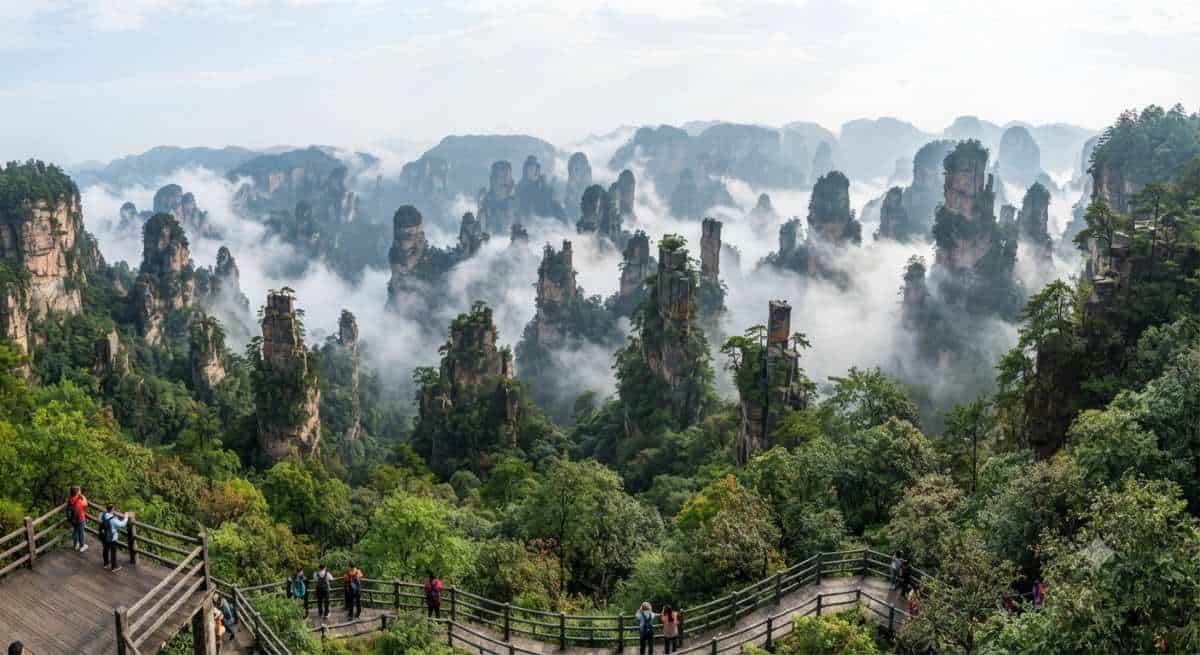
Image generated with Ai
The region known as Zhangjiajie UNESCO Global Geopark is situated within the Wulingyuan District of Zhangjiajie City in northwestern Hunan Province, China. Encompassing a total area of approximately 398 square kilometers, this geographic marvel is internationally celebrated for its rare quartz sandstone peak forest landforms. The genesis of these towering stone pillars is deeply rooted in protracted tectonic evolution and physical erosion, distinguishing the territory from standard karst landscapes found elsewhere.
Geological studies indicate that the park serves as a comprehensive natural textbook, detailing historical crustal movements and regional paleogeography through its multi-tiered topography, deep canyons, and complex cave systems such as Huangling Cave. Furthermore, the terrain acts as an ecological refuge, having escaped complete coverage by continental glaciers during the Quaternary period, which allowed numerous ancient plant species and regional wildlife to thrive undisturbed within a stable subtropical monsoon climate.
Impact on Travellers
Visitors arriving at the protected territory experience a profound connection with raw natural beauty and unique geomorphological configurations. The towering pillars, which frequently exceed heights of 200 meters, create striking visual panoramas that have famously inspired global pop culture media, including cinematic blockbusters. Explorers navigate a well-maintained network of scenic routes, viewing platforms, and walkways designed to facilitate immersion in the lush subtropical vegetation and towering peaks.
Beyond physical exploration, travelers encounter the vibrant cultural heritage of local ethnic minority communities, predominantly the Tujia people, whose traditional stilted architecture, folk dances, and local customs are woven into the visitor experience. Educational signage and guided tours are integrated extensively throughout the zones to foster an appreciation for earth sciences and ecological preservation among all guests.
Advertisement
Advertisement
Industry Insights
The management and operational framework of the designated region reflect modern paradigms in sustainable geotourism and regional development. Tourism professionals analyze the site as a benchmark for balancing high-volume global interest with rigorous conservation mandates.
Advertisement
Advertisement
Local authorities coordinate closely with international scientific bodies to ensure that visitor infrastructure minimizes environmental footprints while maximizing local economic benefits. Capacity management strategies, seasonal visitor controls, and community-based tourism initiatives are continuously refined to protect fragile biological corridors and geological formations. By integrating scientific research with recreational travel, the local industry demonstrates how natural heritage designations can stimulate regional economic vitality without compromising ecological integrity.
Practical Information
Access to the protected area is facilitated through regional transportation hubs, including airports and railway connections linked to major Chinese cities. Tourists typically arrive via Zhangjiajie City before transiting directly to the Wulingyuan scenic entry points. Accommodation options ranging from traditional guesthouses to modern hotels are distributed throughout the surrounding districts, catering to varied traveler preferences.
Visitors are advised to plan itineraries according to seasonal weather patterns, noting that spring and autumn offer optimal conditions for outdoor exploration. Essential amenities, multi-language information centers, and medical assistance stations are operated continuously across all primary scenic sectors to ensure safety and comfort for international and domestic guests alike.
Advertisement
Advertisement
Comparison with Previous Policies or Developments
Initial management approaches for the territory primarily focused on basic mass tourism promotion and localized infrastructure construction following its domestic park establishments. Over subsequent decades, particularly following its formal integration into international heritage networks, management policies underwent a fundamental shift toward holistic ecosystem preservation and strict zoning regulations.
Earlier commercial practices that permitted unrestricted development near sensitive geological boundaries have been replaced by rigorous environmental impact assessments and sustainable carrying-capacity thresholds. Contemporary policies emphasize community inclusion, scientific education, and international cooperation, representing a marked evolution from fragmented local tourism oversight to standardized, globally aligned geopark stewardship.
Advertisement
