
Malaysia Moves Closer to Türkiye in Tourism as Heritage, Stopovers and Muslim-Friendly Travel Take Focus

Published
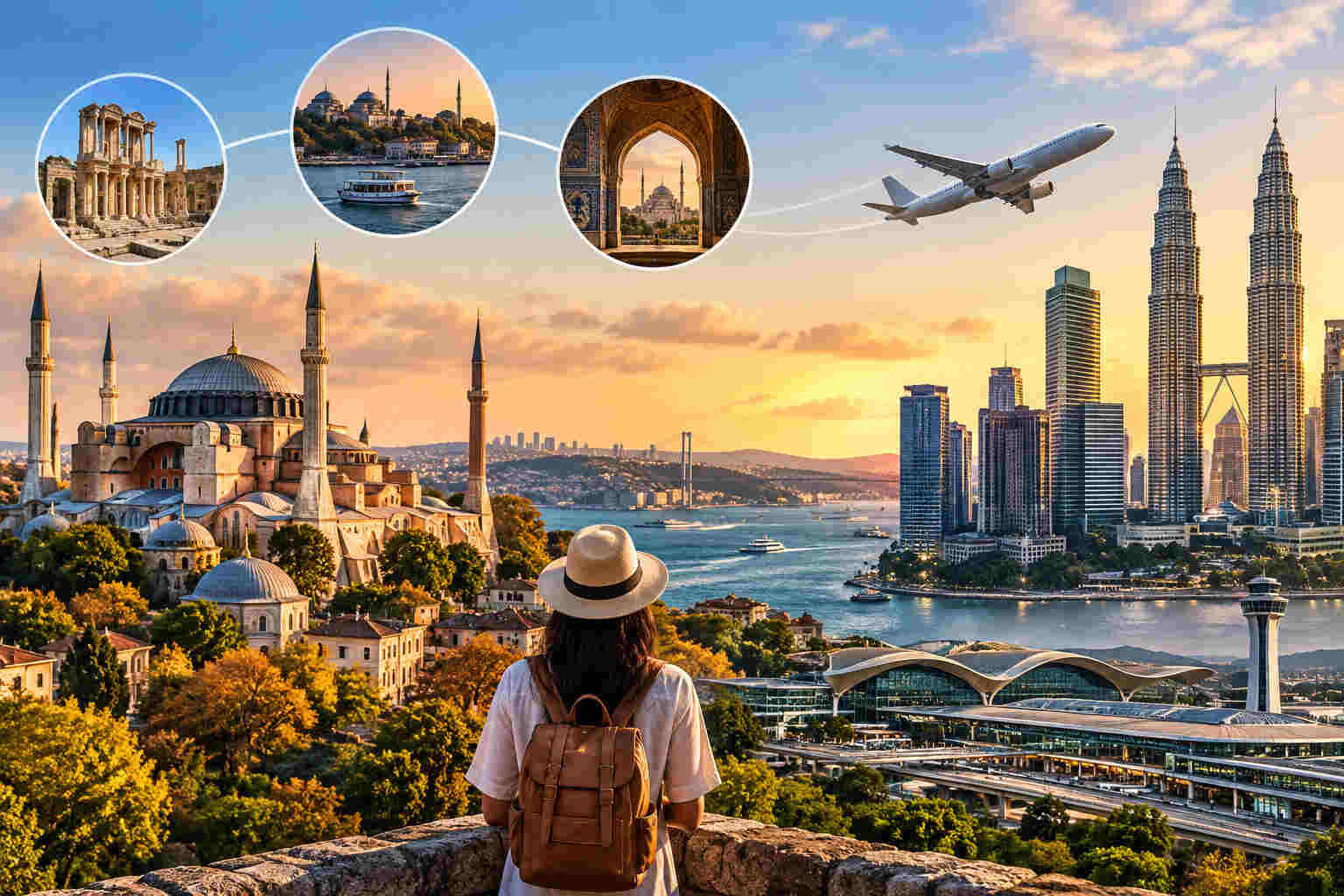
Image generated with Ai
The Malaysia-Türkiye tourism relationship is expanding with the examination of how historical sites, airport transit programs, and Muslim-oriented tourism facilities could be jointly developed for greater tourist growth.
The emerging cooperation reflects a broader shift in tourism strategy. Malaysia is not only looking at ways to attract more international travellers. It is also examining how tourism income can support heritage conservation, how passengers changing flights can be encouraged to explore cities, and how Muslim travellers can receive clearer information about suitable accommodation, services and visitor experiences.
Türkiye has become an important reference point because of its large tourism economy, extensive collection of archaeological and cultural attractions, strong international air connectivity and established position as a destination with significant Islamic heritage.
For Malaysia, the opportunity is especially relevant as the country continues preparations around Visit Malaysia 2026 and seeks to convert rising visitor numbers into longer stays, wider tourism spending and stronger destination awareness.
Advertisement
Advertisement
Türkiye’s Heritage Model Offers Malaysia a New Tourism Reference
One area attracting Malaysian attention is the way Türkiye connects heritage preservation with commercial tourism.
Historic monuments, archaeological areas, museums and culturally important districts can require substantial public investment. Conservation work, security, restoration, visitor management and infrastructure maintenance all carry continuing costs. Malaysia is examining whether stronger tourism activity around heritage locations could help provide additional revenue for their protection.
Advertisement
Advertisement
Türkiye has built a large visitor economy around historic landscapes stretching from Istanbul to Anatolia and the Mediterranean coast. Its tourism offer combines museums, archaeological sites, historic districts, religious monuments and cultural attractions with accommodation, transport, food services and organised tours.
That combination allows heritage to function not only as a cultural asset but also as part of a wider tourism economy.
Advertisement
Advertisement
The model is particularly relevant for Malaysia because the country has its own extensive heritage resources, including historic urban areas, religious landmarks, colonial-era architecture, traditional settlements and culturally significant destinations.
Instead of viewing conservation and commercial tourism as separate issues, a stronger heritage strategy could allow visitor spending to contribute more directly to site maintenance and destination development.
Tourism Revenue Highlights Türkiye’s Strong Visitor Economy
Türkiye’s tourism sector provides a powerful economic example.
The country recorded approximately US$65.23 billion in tourism revenue during 2025, representing annual growth of about 6.8%, according to official statistical data.
Advertisement
Advertisement
Visitor interest in cultural attractions also remained strong. Museums and archaeological sites across the country received close to 65.9 million visits, also reflecting year-on-year growth.
These figures show why heritage tourism is increasingly important to destination planning. Travellers visiting museums, archaeological sites and historic neighbourhoods do not only generate admission revenue. They also spend on hotels, restaurants, local transport, shopping, guides and other tourism services.
Malaysia could potentially apply parts of this approach by building stronger commercial ecosystems around heritage destinations while maintaining conservation safeguards.
The aim would not simply be to increase admission numbers. A successful model would connect historic sites with wider visitor experiences, allowing local communities and tourism businesses to benefit while ensuring that tourism income contributes to preservation.
Malaysia Builds Momentum Ahead of Visit Malaysia 2026
Malaysia enters this discussion from a position of growing international tourism demand.
The country received around 42.2 million international visitors in 2025, compared with approximately 38 million in 2024, according to national tourism data.
Advertisement
Advertisement
That expansion gives Malaysia a larger visitor base from which it can develop new tourism products.
The next challenge is to increase the value created by those arrivals.
Visitor numbers alone do not determine tourism success. Destinations increasingly focus on how long travellers remain, how much they spend, how widely they travel and whether they return.
This is where heritage tourism and transit tourism could become important.
A traveller who enters Malaysia for a short city visit may later return for a longer holiday. A visitor attracted by Kuala Lumpur could subsequently explore heritage destinations, islands, cultural centres or nature attractions elsewhere in the country.
The Visit Malaysia 2026 campaign therefore creates an opportunity to link national marketing with more specialised tourism experiences.
Advertisement
Advertisement
Transit Tourism Could Turn Kuala Lumpur Layovers Into Future Holidays
Malaysia is also examining Türkiye’s approach to transit tourism.
Transit tourism is designed around passengers who have several hours between connecting flights. Instead of remaining inside an airport terminal throughout the layover, qualifying travellers can be offered short city experiences before returning for their onward journey.
Istanbul provides an important example because of its location between Europe, Asia, the Middle East and other major travel markets.
Travellers with sufficiently long connections can experience selected parts of the city before continuing their flights. Such programmes can include urban sightseeing, cultural attractions, waterfront experiences and local dining.
The commercial value of this strategy goes beyond the immediate excursion.
A short transit experience effectively becomes a destination preview.
Advertisement
Advertisement
Travellers may see only a small part of the city, but that brief exposure can create interest in returning later for a longer holiday.
Malaysia sees potential for a similar model around Kuala Lumpur International Airport and the wider Kuala Lumpur metropolitan area.
Passengers with long connections could potentially be offered organised city experiences, depending on immigration requirements, operational conditions and available transit time.
Such visits could introduce travellers to major landmarks, shopping districts, cultural attractions and local experiences while strengthening Kuala Lumpur’s position as more than a connecting point.
Kuala Lumpur Could Benefit From Stronger Stopover Tourism
The geographical relationship between Kuala Lumpur International Airport and the Malaysian capital creates both opportunities and challenges.
Any transit programme would require careful planning because passengers must have sufficient time to leave the airport, complete immigration procedures where necessary, travel into the city, participate in an organised experience and return well before departure.
Advertisement
Advertisement
However, properly designed stopover products could support Malaysia’s tourism objectives.
Airport hubs compete not only on flight schedules but also on passenger experience.
A memorable layover can influence future travel decisions.
Travellers who discover Kuala Lumpur during a transit stop may later return with family members or friends. They may also extend future journeys by adding Malaysia as a stopover destination.
This could generate additional spending for transport operators, attractions, shopping centres, restaurants, accommodation providers and tourism businesses.
It could also help Malaysia convert some connecting passengers into overnight visitors.
Advertisement
Advertisement
Muslim-Friendly Tourism Creates Another Area for Cooperation
While Malaysia is studying Türkiye’s experience in heritage and transit tourism, Malaysia also has expertise that could support Türkiye.
Malaysia has developed a structured approach to Muslim-friendly tourism and hospitality, including standards, research, training programmes and business recognition frameworks.
These systems are intended to help Muslim travellers identify tourism services that meet specific requirements.
Such requirements can include information relating to halal food, prayer facilities, accommodation services and other practical needs that may influence travel decisions.
More than 500 tourism businesses and service providers in Malaysia have been registered through the country’s Muslim-friendly recognition framework.
The network includes approximately 73 hotels, 39 travel agencies, 11 spas and 390 tourist guides.
Advertisement
Advertisement
This creates a visible tourism ecosystem that allows travellers to more easily identify participating services.
For destinations seeking a larger share of the international Muslim travel market, such systems can improve confidence and simplify trip planning.
Türkiye Has Strong Foundations for Muslim Travel Growth
Türkiye already holds major advantages in the Muslim travel market.
The country has a vast Islamic cultural heritage, thousands of mosques, widespread access to halal food, established tourism infrastructure and strong air connections linking Europe, Asia, Africa and the Middle East.
Its historic cities also offer important religious and cultural attractions.
For Muslim travellers, this combination can make Türkiye both culturally familiar and internationally accessible.
Advertisement
Advertisement
However, formal recognition systems can still add value.
Clear information about accommodation, food, prayer facilities and other services can help travellers make decisions before arrival.
Malaysia’s experience in building Muslim-friendly tourism standards could therefore complement Türkiye’s established tourism sector.
Rather than competing directly, the two countries could potentially exchange knowledge in different areas.
Türkiye could share expertise in heritage management, cultural tourism and transit tourism, while Malaysia could contribute experience in structured Muslim-friendly service recognition, training and tourism standards.
Malaysia Targets Stronger Muslim Visitor Growth by 2030
Muslim travellers already represent a major part of Malaysia’s tourism economy.
Advertisement
Advertisement
Malaysia received around 9.7 million Muslim visitors in 2025 and aims to increase that number to approximately 15.2 million by 2030.
Reaching that target would require significant growth across several markets.
It would also require destinations and businesses to provide clear information, reliable tourism services and experiences that meet the expectations of Muslim travellers.
Muslim-friendly tourism should not be understood as a limited niche.
The global Muslim travel market includes families, business travellers, younger tourists, luxury travellers, independent visitors and organised groups.
Their travel decisions can be influenced by the same factors affecting other international travellers, including air connectivity, cost, safety, accommodation quality, attractions and destination reputation.
Advertisement
Advertisement
However, practical services such as halal dining and prayer access can also play an important role.
Malaysia’s strategy attempts to make those services easier to identify while integrating them into mainstream tourism.
Malaysia’s Recognition Framework Expands Beyond Its Borders
Malaysia is also taking its Muslim-friendly tourism recognition system into international markets.
Cooperation has already involved destinations including Russia, Taiwan, Indonesia, South Korea and Brazil.
This international expansion shows how Malaysia is attempting to position itself not only as a Muslim-friendly destination but also as a source of tourism standards and industry expertise.
International cooperation could help create greater consistency in how services for Muslim travellers are communicated.
Advertisement
Advertisement
For travellers, clearer standards can reduce uncertainty.
For tourism businesses, recognised frameworks can provide guidance on how to improve products and services.
For destinations, stronger Muslim-friendly infrastructure can open access to growing international visitor markets.
Türkiye could become another important partner because of the scale of its tourism sector and its strong cultural links with Muslim travellers.
Heritage, Transit and Hospitality Could Shape a Wider Tourism Partnership
The most important feature of the Malaysia-Türkiye tourism discussion is that cooperation extends across several parts of the visitor economy.
Heritage tourism could help Malaysia examine new ways of financing conservation.
Advertisement
Advertisement
Transit tourism could provide a model for turning long airport connections into destination marketing opportunities.
Muslim-friendly tourism could give Türkiye access to Malaysia’s experience in standards, training and service recognition.
Together, these areas could create a more balanced tourism partnership.
Malaysia does not need to copy Türkiye’s tourism model directly. The countries have different geography, infrastructure, visitor markets and heritage systems.
However, proven ideas can be adapted.
A transit programme that works in Istanbul would need to be redesigned around Kuala Lumpur’s airport location and transport conditions. A heritage revenue model would need to comply with Malaysia’s conservation policies and local management structures.
Advertisement
Advertisement
The value lies in understanding which parts of successful tourism systems can be transferred and which need to be localised.
What This Could Mean for Travellers
For international visitors, deeper cooperation could eventually create practical changes.
Travellers passing through Kuala Lumpur could gain more opportunities to explore the city during long layovers.
Visitors to Malaysian heritage destinations could see improved tourism infrastructure and visitor services if new revenue models are introduced.
Muslim travellers visiting Türkiye could gain clearer information about recognised accommodation, tour operators and tourism services.
These developments could also encourage repeat travel between the two countries.
Advertisement
Advertisement
Türkiye remains an important destination for culture, history and faith-related travel, while Malaysia combines urban tourism, islands, food, nature and multicultural heritage.
Improved tourism cooperation could help both destinations market those strengths more effectively.
Tourism Cooperation Moves Beyond Visitor Numbers
The developing relationship between Malaysia and Türkiye demonstrates how modern tourism cooperation is increasingly focused on knowledge exchange rather than simple promotion.
Destinations now compete on how well they manage heritage, connect airports with cities, organise visitor experiences and respond to specialised travel needs.
Malaysia’s interest in Türkiye reflects that changing environment.
The country is examining how historic attractions can become financially sustainable without losing their cultural value, how transit passengers can become future holidaymakers and how international tourism partnerships can strengthen specialised markets.
Advertisement
Advertisement
At the same time, Malaysia’s experience in Muslim-friendly tourism gives it expertise that can be shared internationally.
As Visit Malaysia 2026 gathers momentum and Türkiye continues to benefit from one of the world’s largest visitor economies, cooperation between the two countries could increasingly focus on practical tourism systems rather than promotional campaigns alone.
If those ideas are developed successfully, heritage preservation, airport stopovers and Muslim-friendly travel could become three important pillars of a broader Malaysia-Türkiye tourism relationship.
Advertisement
