
Greece, Montenegro, and Eight European Rivals Storm the 2027 Vacation Race as Budget Travelers Chase Epic Adventures

Published
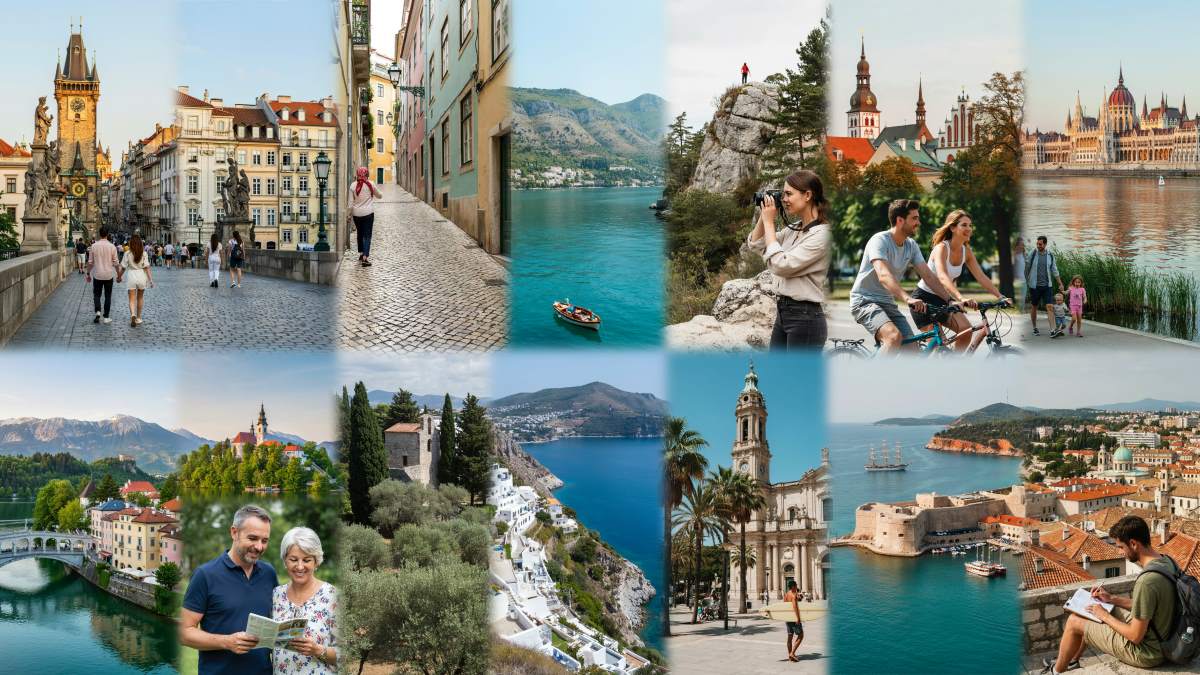
Image generated with Ai
The continent is preparing for a brutal 2027 vacation competition, where Greece and Montenegro will be followed closely by eight other European rivals. Budget tourists are no longer satisfied with cheap hotel rooms. Today, they need great adventures, culture, ease of travel, and better escapes that make each day of the journey special. Growing tourism interest gives prominence to places that have variety. Greece provides history, beautiful coasts, and islands. Montenegro provides the Adriatic Sea combined with mountains, gorges, and adventurous opportunities. Other European countries provide historical cities, natural environments, beaches, bicycle paths and many exciting experiences offered by the region. However, this competition is not only about getting low prices. It is about smart travellers who compare transport, destinations, seasons and experiences before buying anything. This situation gives a lot of advantages to other cities and regions that may become leaders of the 2027 vacation competition. There is some information from official sources that demonstrates growing interest in some European destinations among travellers. The 2027 European vacation competition becomes even more interesting in this case. Travel And Tour World asks its readers not to forget about those places that might become surprising winners of the competition.
Affordable Vacations for 2027 Are Taking a Smarter Turn
Europe in 2027 could offer travellers a simple choice. Spend more on famous hotspots, or travel smarter and discover places that offer more for less. Affordable vacations for 2027 are not only about finding the cheapest room. They are about choosing the right city, season, transport, and experience. Official tourism sources show why this matters. Czechia has strong public transport. Portugal connects major cities by rail. Latvia offers buses and trains across the country. Montenegro promotes hiking, cycling, and other outdoor activities as budget-friendly ways to explore. That creates a bigger travel story. Europe can still feel exciting without every holiday becoming a luxury purchase.
Advertisement
Advertisement
Anup Kumar Keshan, Founder and Editor-in-Chief, Travel And Tour World, said: “Europe’s 2027 travel story will not be defined by the cheapest destination alone. Travellers are becoming smarter about value, choosing efficient transport, lesser-known cities and authentic experiences. Countries offering choice, accessibility and diverse attractions can capture growing demand while helping visitors manage holiday costs.”
Europe Tourism Market Snapshot — 2026 Government Statistics
| European market/region | 2026 period | Tourism indicator | 2026 result | Change |
|---|---|---|---|---|
| European Union | Jan–Jun 2026 | Tourist accommodation overnight stays | 1.321 billion | +1.7% |
| European Union | Jan–Jun 2026 | Share of nights by foreign visitors | 48.9% | — |
| Europe | H1 2026 | International tourist arrivals | — | +5% |
| Greece | H1 2026 | International tourist arrivals | — | +38% |
| Italy | H1 2026 | International tourist arrivals | — | +21% |
| Malta | H1 2026 | International tourist arrivals | 2.13 million | +18.1% |
| Spain | Jan–Jul 2026 | International tourist arrivals | 58.1 million | +4.6% |
| Portugal | Jan–Jun 2026 | Tourism visitors | 15.1 million | — |
| Slovenia | Jan–Jul 2026 | Tourist arrivals | 4.10 million | +6.6% |
| Montenegro | Jan–Jul 2026 | Tourist arrivals | 1.62 million | +7.78% |
| Hungary | Jan–Jul 2026 | Tourist arrivals | 10.80 million | +0.7% |
Leading Countries in the 2027 Affordable-Vacation Article — Latest 2026 Signals
| Country featured in article | Latest 2026 tourism evidence | Key 2026 figure | Why it matters for 2027 |
|---|---|---|---|
| Czechia | Q2 foreign guests | 2.9 million | Strong international city and regional travel base |
| Portugal | Jan–Jun visitors | 15.1 million | Major demand with rail and public-transport options |
| Montenegro | Jan–Jul tourist arrivals | 1.62 million | +7.78% growth and strong outdoor-tourism potential |
| Latvia | Q1 accommodation guests | 447,100 | Baltic city-and-nature positioning |
| Hungary | Jan–Jul accommodation arrivals | 10.80 million | Large tourism market with Budapest and Lake Balaton |
| Slovenia | Jan–Jul tourist arrivals | 4.10 million | +6.6% growth and strong nature/green tourism |
| Greece | H1 international arrivals | — | +38%, Europe’s strongest growth among cited major markets |
| Spain | Jan–Jul international arrivals | 58.1 million | Europe’s major high-volume market, with alternatives beyond hotspots |
| Malta | Jan–Jun inbound tourists | 2.13 million | +18.1% growth and strong short-break potential |
| Croatia | Jan–Jun commercial accommodation arrivals | 13.47 million | Large international tourism market with room for regional alternatives |
Czechia Brings Prague, Brno and Historic Towns Into the Budget Spotlight
Czechia is a strong choice for travellers who want culture without depending on expensive private transport. Prague has an extensive network of metro, trams and buses. The official tourism authority lists short-term tickets and longer passes, giving visitors several ways to manage city travel. The Prague Visitor Pass adds another useful option. It includes unlimited public transport and access or discounts for attractions, museums, galleries and other experiences. But Prague should not be the whole story. Travellers can also look towards Brno, Olomouc, Pilsen and other Czech destinations. A wider itinerary can spread spending while revealing a different side of the country.
Advertisement
Advertisement
Portugal Could Deliver Big Experiences Through Rail, Trams and City Passes
Portugal gives budget-conscious travellers another useful advantage: transport choices. Official tourism information highlights trains connecting Lisbon with Porto and Faro, while local networks make it easier to explore major cities without relying on private cars. Lisbon offers metro, buses and famous trams. The Lisboa Card combines public transport with free entry or discounts at selected monuments, museums and tourist circuits. Porto also offers the Porto Card, which can provide transport benefits alongside discounts at attractions. For active travellers, Portugal adds another advantage. Bikes can be carried free on designated urban and regional trains, subject to space.
Advertisement
Advertisement
Montenegro Turns Mountains, Canyons and the Adriatic Into a Budget Adventure
Montenegro may be one of the most exciting names for travellers searching for value in 2027. Its official tourism organisation has a dedicated budget category. It highlights cycling, hiking, trekking, kayaking, canyoning and rafting among ways to experience the country. That matters because outdoor travel can reduce the need for expensive attraction-heavy itineraries. The country’s small size also makes it easier to imagine combining different landscapes during one trip. The official tourism organisation describes Montenegro as a country that can be crossed by car in an afternoon. Travellers can pair the Adriatic coast with mountain landscapes, national parks and dramatic canyons. Kotor, Herceg Novi, Durmitor and Tara offer very different experiences within one compact destination.
Latvia Offers Riga, Rail Trips and Baltic Nature Without the Usual Rush
Latvia could appeal strongly to travellers who want a European city break followed by nature. Riga provides buses, trams, trolleybuses and minibuses. The official tourism portal also lists rail connections from the capital towards destinations including Sigulda, Cēsis, Liepāja and other parts of the country. There is a clear value argument here. Travellers do not need to remain inside the capital for an entire holiday. Riga can become a starting point for wider exploration. The official tourism authority currently lists a single Riga public-transport ticket at €1.50 and says lunch can cost around €7–10, although these figures should be checked again before making a 2027 price claim.
Hungary Pushes Budapest Beyond the Usual City-Break Formula
Hungary can offer a wider holiday than a simple Budapest visit. The country’s tourism promotion highlights destinations and experiences across the country, while Lake Balaton provides a major alternative to the capital. Balaton is particularly interesting for travellers who want an active holiday. The official tourism organisation promotes cycling around the lake, with the Balaton Cycling Route extending for about 204 kilometres. That creates room for a slower itinerary. Visitors can cycle, stop in lakeside communities and explore attractions rather than paying for a packed schedule of expensive activities. Budapest can then provide the urban part of the journey, while Balaton offers a different setting. Pécs, Eger, Debrecen and other Hungarian destinations can further broaden the itinerary.
Slovenia Is Building a Green, Year-Round Tourism Model for 2027
Slovenia needs a slightly different affordability argument. It should not simply be labelled one of Europe’s cheapest countries. Instead, its official tourism strategy points towards a green, active and year-round tourism model. The Slovenian Government’s Tourism Strategy 2022–2028 focuses on sustainable tourism, accessibility, sustainable mobility and a more balanced tourism offer. The strategy also divides Slovenia into major tourism areas, including Alpine Slovenia, Mediterranean Slovenia, Thermal Pannonian Slovenia and Central Slovenia with Ljubljana. For travellers, that creates choice. Instead of building an expensive holiday around one famous attraction, visitors can combine Ljubljana with outdoor, cultural or thermal experiences. Hiking, walking and regional travel can also become central parts of the trip.
Greece Could Become More Affordable When Travellers Look Beyond the Famous Islands
Greece is a destination where smart planning matters. Santorini and Mykonos may dominate travel dreams, but Greece is much larger than its most famous islands. The official Greek National Tourism Organisation promotes mainland regions, island villages, beaches, mountains, cultural sites, local events and nature activities. Its tourism portal highlights experiences ranging from hiking to village visits and cultural exploration. That gives travellers a powerful alternative. Instead of building a holiday around premium island hotspots, they can explore mainland Greece or less-publicised islands. The Peloponnese, Epirus, Thessaly and Crete can support different styles of travel. A 2027 budget strategy could therefore focus on choosing the destination first and the famous postcard second.
Advertisement
Advertisement
Spain Has a Huge Advantage: Travellers Can Choose From Many Different Regions
Spain is another country where the word “cheap” needs care. Prices vary greatly between cities, seasons and tourist zones. Yet Spain’s huge choice of destinations gives travellers room to build different kinds of holidays. The official tourism portal lists Valencia, Seville, Zaragoza, Salamanca, Santander, Cáceres, Málaga, Bilbao and many other destinations alongside Madrid and Barcelona. That variety matters. Travellers do not need to follow the most expensive route through Spain’s biggest tourist magnets. Salamanca, for example, offers a UNESCO-listed historic centre, its famous university, Plaza Mayor and historic monuments. For 2027, alternative Spanish cities could therefore become a strong choice for travellers seeking culture, food, history and city life without copying the same old itinerary.
Malta Can Turn a Short Mediterranean Escape Into a Bigger Experience
Malta works particularly well for travellers planning a shorter European holiday. The country’s compact size allows visitors to focus on several experiences without building an enormous itinerary. The official tourism organisation promotes Malta, Gozo and Comino alongside beaches, history, culture, diving, food and outdoor activities. That makes Malta interesting for a three-to-five-day break. Travellers can choose a smaller number of experiences and avoid spending heavily on long-distance internal travel. Gozo can add a different pace, while Comino brings a famous Mediterranean setting. Valletta provides history and architecture. The smarter 2027 approach is not to promise that Malta will always be cheap. Instead, travellers can focus on trip length, public transport, accommodation location and planning to control the overall holiday cost.
Croatia Can Offer More Than Dubrovnik and Split
Croatia remains a major European draw, but its most famous coastal cities can dominate travel planning. A budget-minded traveller can instead look at a wider national itinerary. Zagreb offers an urban alternative, while inland regions and destinations away from the busiest coastal centres can create a different holiday rhythm. Travellers can also consider combining city sightseeing with nature and regional experiences. This approach matters because affordability is often about avoiding concentration. A famous destination can become expensive when demand rises sharply. For 2027, Croatia can therefore be positioned around discovery beyond the headline locations. Travellers can explore cities, landscapes, food and cultural experiences while considering less crowded areas and different travel periods. The key is simple: do not assume the most famous Croatian address is the best-value Croatian experience.
Why Public Transport Could Shape Affordable European Vacations in 2027
Transport can quietly consume a large part of a holiday budget. That is why countries with useful public networks deserve attention. In Czechia, Prague has metro, tram, and bus services. Latvia connects Riga with other destinations through buses and rail. Portugal has trains between major cities and extensive urban transport in Lisbon and Porto. This does not mean public transport will always be cheaper than every alternative. It means travellers have more choices. That choice can also change the shape of a holiday. Instead of hiring a car for every day, visitors can use trains, buses, walking and cycling where practical. For 2027, the best budget itineraries may be the ones that treat transport as part of the travel experience rather than simply a cost.
Nature Could Become the Secret Weapon of Budget Travel
Nature offers another powerful way to create a memorable holiday without filling every day with expensive attractions. Montenegro officially promotes hiking, trekking, cycling, kayaking, canyoning and rafting as ways to explore its landscapes. Latvia encourages travellers to use public transport before continuing by bike or on foot through scenic routes and natural areas. Portugal also supports cycling, with official guidance explaining how bicycles can be carried on certain trains and public transport services. This creates a strong 2027 travel idea. A holiday does not need a paid attraction every morning and afternoon. A coastal walk, mountain trail, cycling route or historic neighbourhood can become the main event. Sometimes the best ticket is no ticket at all.
Advertisement
Advertisement
Tourist Passes Could Help Travellers Control Sightseeing Costs
Tourist passes deserve closer attention when planning affordable European vacations in 2027. They do not automatically save money. But they can be useful when travellers already plan to visit several included attractions. The Prague Visitor Pass offers unlimited public transport and access or discounts for a range of attractions and experiences. Portugal offers similar ideas. The Lisboa Card combines public transport with free entry or discounts at selected museums and monuments. Porto also has the Porto Card, which can provide transport and attraction benefits. The trick is to calculate before buying. A traveller who visits only one attraction may gain little. Someone planning several museums, monuments and journeys could find the pass more useful.
Smaller Cities Could Challenge Europe’s Most Expensive Tourist Hotspots
The biggest names are not always the only names worth visiting. That may become one of the biggest lessons for budget travel Europe 2027. Spain’s official tourism portal, for example, promotes Salamanca, Zaragoza, Cáceres and Santander alongside Madrid and Barcelona. Hungary offers destinations beyond Budapest. Slovenia promotes several tourism regions rather than one single centre. Latvia encourages visitors to travel beyond Riga. This wider choice can change the economics of a trip. Travellers can compare accommodation, transport and activities across destinations before booking. It also creates a better travel story. Instead of seeing only the place everyone photographs, visitors can discover the places that locals and repeat travellers may value for their slower pace and regional character.
Shoulder-Season Travel Could Make the Biggest Difference
Timing can matter as much as destination choice. A country may feel affordable at one time of year and far less affordable during its busiest travel period. Travellers planning for 2027 should therefore compare several dates before committing. Spring and autumn can offer alternatives to the busiest summer period in many European destinations, although weather, local events and operating schedules vary by place. The official Slovenian tourism strategy is particularly relevant here because it sets a goal of developing a year-round tourism offering. The same thinking can be applied elsewhere. Instead of asking, “Which country is cheapest?”
A Smarter 2027 European Holiday Starts With the Destination, Not the Hotel
Travellers often begin with accommodation. A better strategy can begin with the whole journey. First, select a destination that offers the experiences you want. Then check transport links. Next, compare accommodation in the centre with options slightly outside the busiest tourist zone. Countries such as Latvia, Czechia and Portugal demonstrate how public transport can support independent exploration. Then build the itinerary around experiences that do not require constant spending. Walking tours, public spaces, nature, beaches, historic streets and cycling can give a trip texture without creating a long list of admission fees. For 2027, the strongest budget traveller may not be the person who spends the least. It may be the person who knows exactly where their money creates the most memorable experience.
Affordable European Vacations in 2027 Could Be About Travelling Better, Not Simply Spending Less
The European holiday map is much bigger than its most famous postcards. Prague, Lisbon, Kotor, Riga, Budapest, Ljubljana, Athens, Valencia, Valletta and Zagreb can all lead to very different journeys. The strongest budget strategy is not to chase an imaginary list of the ten “cheapest” countries. It is to combine sensible transport, carefully chosen destinations, outdoor experiences, shorter journeys and better travel dates. Official tourism information already points towards that wider approach. Public transport, regional destinations, cycling, hiking, cultural attractions and year-round tourism all create more ways to shape a holiday.
Greece, Montenegro and Europe Prepare for a Fierce 2027 Vacation Showdown
The year 2027 is shaping up to be one of discovery for Europe’s travel industry. The Greek islands, Montenegro and a further eight destinations are all set to draw budget travelers through a combination of culture, nature, adventure and responsible tourism. But value does not equate to the cheapest option. Rather, visitors can get the best value for money by selecting alternate cities, transportation, outdoor activities and travel windows. As demand increases, these destinations could prove crucial for the future of travel in Europe. So, before you make any plans for your next holiday, look at your options. Find out more about the story and the destinations here.
Advertisement
