
Asia Travel Disrupted amid Typhoon Champi as Sanghai, Hong Kong and More Airports Face 1,090 Cancellations and 4,878 Delays

Published
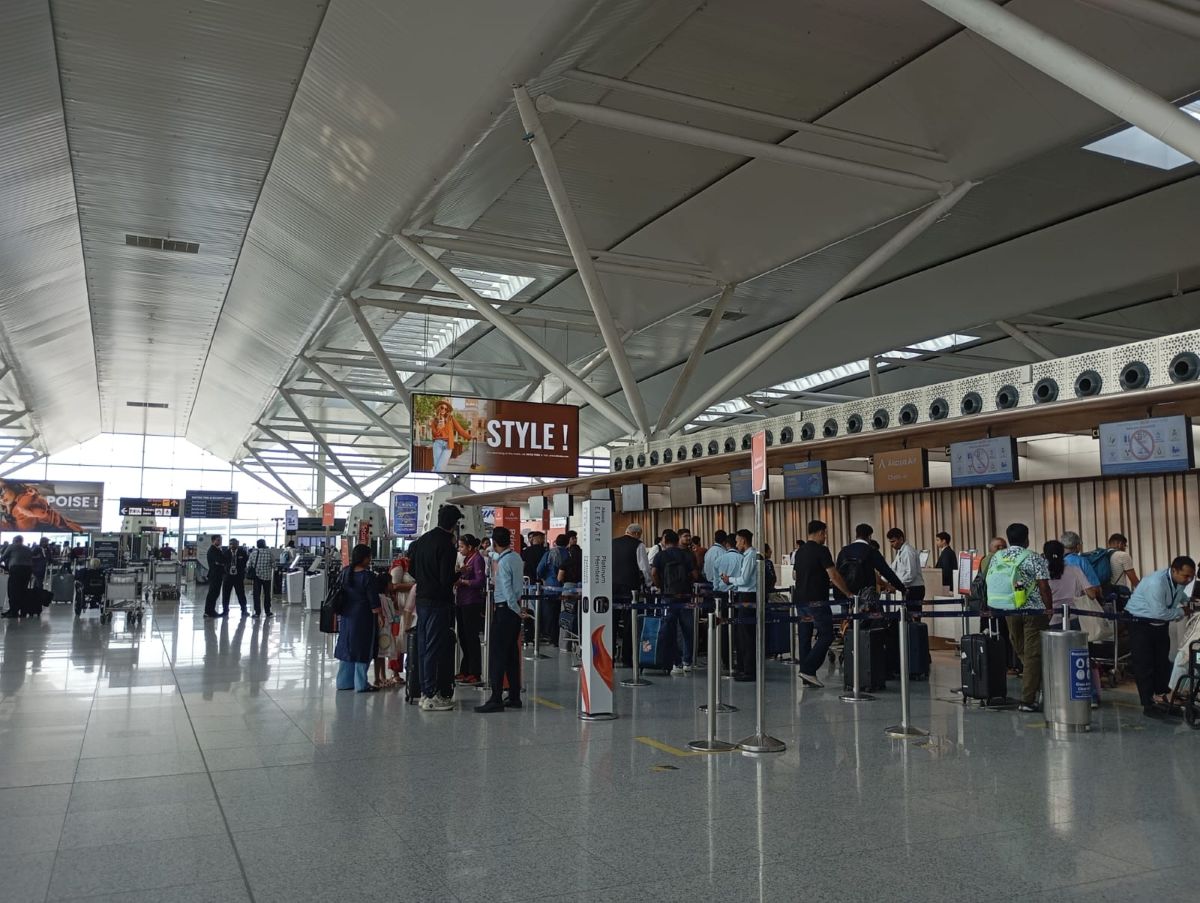
Travel throughout Asia is severely disrupted by Typhoon Champi; major airports in Shanghai, Hong Kong, and other places record 1,090 cancelations and 4,878 delays, putting thousands of travelers in the dark. Airlines in China, Taiwan, and Japan have been forced to cancel services and modify timetables due to strong winds, heavy rainfall, and hazardous weather. Major aviation hubs are facing additional operational difficulties as a result of the storm’s disruption of regional aircraft connections. Furthermore, several Middle Eastern routes have been impacted by Saudi Arabia’s security worries, putting further strain on global travel networks. Passengers consequently have to deal with missing connections, extended wait periods, and unforeseen itinerary modifications. As a result, passengers face missed connections, longer waiting times and unexpected itinerary changes. However, not every disruption stems from the typhoon, as separate operational restrictions continue to affect flights across the wider region.
Major Reasons Behind Today’s Flight Disruptions across Asia
1. Typhoon Champi Threatens Shanghai, Ningbo and Eastern China
China Eastern Airlines issued an updated operational advisory on 23 October at 22:30, warning that Typhoon Champi would affect flights on 24 October at Shanghai Pudong, Ningbo, Taizhou, Hefei and Taipei airports.
Shanghai’s meteorological authorities also forecast heavy rain and strong winds from Friday evening into Saturday, with coastal areas particularly exposed. These conditions can restrict aircraft movements, disrupt arrival and departure schedules and require airlines to adjust operations.
Advertisement
Advertisement
2. Taiwan Faces Extensive Flight Suspensions as Storm Conditions Persist
Taiwan experienced major aviation disruption on 23 October as Champi approached the island. Reuters reported that Taiwan had cancelled hundreds of domestic and international services, with strong winds, torrential rainfall and coastal hazards forcing widespread precautionary measures.
Advertisement
Advertisement
Airlines continued adjusting their schedules for 24 October. China Airlines warned that flights serving Taiwan airports through midday Saturday could be brought forward, delayed or cancelled. EVA Air announced cancellations affecting Taoyuan and Songshan, while AirAsia confirmed disruptions to Taipei and Kaohsiung services on 23–24 October.
The storm also affected international connections between Taiwan and Japan, Indonesia, Vietnam, South Korea and other Asian destinations.
3. Japan’s Okinawa Islands Face Typhoon-Related Cancellations
Japan’s southern island airports are among the clearest examples of confirmed storm-related disruption.
All Nippon Airways reported that all its flights to and from Miyako and Ishigaki had been cancelled on 23 October, with some cancellations continuing on 24 October. The airline also identified Naha as an affected airport.
Japan Airlines issued a separate warning covering Okinawa, Miyako, Ishigaki, Tokunoshima and several other southwestern island airports.
Advertisement
Advertisement
These official advisories help explain the unusually high cancellation figures at Naha, Ishigaki, Miyako and Tokunoshima in your dataset.
4. Hong Kong Flights Disrupted by Taiwan Route Cancellations
Hong Kong’s aviation network has experienced knock-on disruption from the typhoon, particularly on routes connecting the city with Taiwan.
HK Express confirmed cancellations on Hong Kong–Taipei and Hong Kong–Kaohsiung services for 23 October. It also deferred selected Taichung and Kaohsiung flights to 24 October.
5. Saudi Arabian Security Concerns Affect Middle East and India Flights
A separate disruption is affecting flights between Saudi Arabia, the UAE and India.
Advertisement
Advertisement
Reports dated 22–23 October link cancellations to regional security concerns following an attack at King Fahd International Airport in Dammam. Airlines have suspended or reduced selected services serving Dammam, Riyadh, Jeddah and Madinah.
IndiGo reportedly extended its Riyadh cancellations until 31 October and suspended services to Jeddah, Dammam and Madinah until 27 October. This provides a documented explanation for some India–Saudi Arabia route cancellations, but not for all delays at Indian airports.
Asia Airport Disruptions: Shanghai and Taiwan Record the Highest Cancellations
China Faces Heavy Flight Disruption Across Major Aviation Hubs
Shanghai Pudong International Airport recorded 150 cancellations and 317 delays, the highest cancellation figure in the dataset. Shanghai Hongqiao followed with 37 cancellations and 208 delays.
Elsewhere, Ningbo Lishe reported 42 cancellations and 25 delays, while Guangzhou Baiyun registered 14 cancellations and 187 delays. Hangzhou Xiaoshan recorded 14 cancellations and 108 delays.
Beijing Capital experienced 10 cancellations and 163 delays, compared with 12 cancellations and 114 delays at Beijing Daxing. Shenzhen Bao’an reported six cancellations and 170 delays.
These figures show that disruption extends beyond Shanghai into several of China’s busiest aviation centres.
Advertisement
Advertisement
Taiwan, Hong Kong and Japan Experience Significant Cancellations
Taiwan Taoyuan International Airport recorded 104 cancellations and 67 delays. Kaohsiung International reported 19 cancellations and 16 delays, while Taipei Songshan registered 17 cancellations and three delays.
Hong Kong International Airport experienced 31 cancellations and 151 delays.
Japan’s Naha Airport recorded 70 cancellations and 31 delays. Ishigaki registered 23 cancellations without any reported delays, while Miyako recorded 22 cancellations and no delays.
Tokyo Haneda experienced 18 cancellations and 199 delays. Narita reported 10 cancellations and 99 delays, while Kansai recorded 11 cancellations and 57 delays.
The figures highlight substantial disruption affecting both international connections and domestic island services.
Airlines Affected across Asia
Chinese and Taiwanese Airlines Face Operational Pressure
China Eastern Airlines recorded 176 cancellations, representing 7% of its flights, alongside 373 delays, equivalent to 15%.
Advertisement
Advertisement
Spring Airlines reported 52 cancellations (8%) and 73 delays (12%). Air China recorded 27 cancellations (1%) and 168 delays (9%).
China Southern Airlines experienced 16 cancellations (0% when rounded) and 277 delays (12%). Shanghai Airlines registered 14 cancellations (4%) and 71 delays (21%).
China Express Airlines recorded five cancellations (1%) and 157 delays (37%).
Among Taiwanese carriers, EVA Air reported 33 cancellations (13%) and 12 delays (4%). China Airlines recorded eight cancellations (3%) and 51 delays (24%).
Japanese, Indian and Southeast Asian Airlines Also Report Disruptions across Asia
Japan Transocean Air recorded 30 cancellations (36%) and four delays (4%). Skymark reported 26 cancellations (12%) and 14 delays (6%).
Japan Airlines registered 13 cancellations (1%) and 107 delays (13%), while ANA Wings recorded 14 cancellations (4%) and 27 delays (7%).
Advertisement
Advertisement
In India, Akasa Air reported 29 cancellations (11%) and 13 delays (5%). SpiceJet recorded 15 cancellations (15%) and 45 delays (46%).
IndiGo registered only three cancellations (0% when rounded), but reported 315 delays (14%).
Vietnam Airlines recorded five cancellations (1%) and 112 delays (28%). Cathay Pacific reported 16 cancellations (3%) and 64 delays (15%), while Korean Air recorded three cancellations (0% when rounded) and 114 delays (27%).
What Affected Passengers Can Do Now
- Passengers travelling through affected airports in Asia should check their flight status directly with their airline before leaving for the terminal.
- Travellers whose flights have been cancelled should contact their airline to explore rebooking, refunds or alternative connections, subject to applicable rules and ticket conditions.
- Those facing lengthy delays should monitor airline notifications, preserve booking confirmations and retain receipts for necessary expenses.
- Passengers connecting through Shanghai, Taipei, Hong Kong, Tokyo or other affected hubs should also verify onward services before beginning their journeys.
Data Verification Notice
The flight disruption data presented in this report was carefully compiled by our editorial team using real-time aviation records captured on 23 October 2026 at 3:08 pm US Eastern Time (24 October 2026 at 4:08 am Japan Standard Time, GMT+9).
Primary Sources: FlightAware and local correspondents.
Editorial Verification Process: All reported figures underwent independent review and cross-verification by our editorial desk. Timestamped records, aviation data logs and flight-tracking snapshots have been preserved in our internal archives to maintain historical accuracy, accountability and editorial transparency.
Advertisement
Advertisement
Important Note: Real-time flight-tracking statistics reflect continuously changing airline operations and air traffic conditions. Consequently, minor differences may arise between the figures published in this report and those displayed by individual airlines, airport information systems or departure gates.
Explore our previous reports on travel disruptions across Asia. Click here to read the full article.
Advertisement
Verified by Rana Pratap
