
Nashville and Denver Emerge Alongside Many US Cities in America’s International Flight Growth Race

Published
America’s international aviation network is entering a more distributed phase. Austin, Nashville, Denver, Raleigh-Durham, Tampa, Charlotte, Orlando, Portland, Salt Lake City and San Diego are strengthening direct overseas and cross-border links. Meanwhile, New York, Los Angeles, Miami, Chicago and Atlanta still command enormous international volumes.
The shift is therefore not a collapse of traditional gateways. Instead, international flight growth is giving more US cities direct access to global markets without requiring every traveller to connect through a handful of coastal hubs. US Department of Transportation data shows the scale remains concentrated, yet airport-level schedules reveal a widening network beyond the established giants.
A New Layer Of American Connectivity
The strongest evidence comes from the breadth of markets now served directly. Denver’s current international network spans Europe, Asia, Canada, the Caribbean, Central America and Mexico, with 35 international destinations after the addition of Querétaro.
Salt Lake City offers another revealing example. Its June 2026 schedule listed 14 international destinations, including Amsterdam, Seoul, London, Paris, Lima and Mexico City. In August, the airport recorded 106 weekly international departures across its listed services.
Advertisement
Advertisement
Nashville, meanwhile, has built a distinctly tourism-led international portfolio. Its September 2026 schedule includes London, Dublin, Reykjavík, Calgary, Vancouver, Toronto, Cancún, Punta Cana and other overseas or cross-border markets.
These networks matter because they change the traveller’s starting point. A holiday or business trip can increasingly start at a local airport rather than with a domestic positioning flight to New York, Chicago, Atlanta or Los Angeles.
Advertisement
Advertisement
The Old Gateways Still Set The Scale
The decentralisation story needs an important qualification. The traditional American gateways remain extraordinarily powerful, particularly when measured by international passengers rather than route additions.
The US Department of Transportation continues to identify New York, Los Angeles and Miami among the leading US international gateway markets. Its year-ended March 2025 figures placed JFK, LAX, Miami, San Francisco and Newark among the five largest domestic scheduled passenger gateways for international traffic.
The concentration becomes even clearer in airport operations. BTS data shows the top 20 US airports accounted for 79.1% of international departures in 2025, while Miami alone recorded 101,033 international departures.
| Aviation measure | What the latest data shows |
|---|---|
| International departures from top 20 US airports, 2025 | 79.1% of US total |
| International departures at Miami, 2025 | 101,033 |
| Total nonstop flights from US airports, 2025 | 9.95 million |
| Orlando nonstop flights, 2025 | 419,114 |
| Top 20 share of all nonstop US flights | 47.8% |
The implication is significant. The new gateways are not replacing the giants. They are widening the number of cities capable of participating directly in international travel.
Why The Secondary Gateway Label No Longer Fits
Calling every non-coastal airport a “secondary gateway” increasingly obscures the reality. Denver, for instance, is a major aviation centre in its own right and recorded 82.4 million passengers in 2025, according to Airports Council International data.
Orlando also demonstrates how a tourism-led airport can develop exceptional scale. BTS recorded 419,114 nonstop flights at Orlando in 2025, up 10.6% from the previous year. That makes the airport a powerful international tourism engine rather than merely a feeder for another US gateway.
Advertisement
Advertisement
Austin illustrates another model. The city’s aviation performance data recorded 97 nonstop destinations in 2023 and 100 in 2024, before 88 were recorded for fiscal 2025. Its 2026 network includes Amsterdam, Frankfurt, London, Mexico City, Monterrey, Toronto, Panama City and other international markets.
The terminology should therefore shift from “secondary airport” towards emerging global gateway, where the evidence supports it.
Three Models Are Driving Expansion
Not every growing airport follows the same commercial formula. The current network reveals at least three distinct models.
Denver represents the inland mega-gateway. Its geography places it between major population centres, while United Airlines and other carriers give it substantial network depth. Its international map now stretches across Europe, Asia, Mexico, Central America and the Caribbean.
Nashville represents the tourism-and-events gateway. Its international services connect a globally recognised leisure destination with Europe, Canada, Mexico, Iceland and the Caribbean. The airport’s route portfolio shows how visitor demand can support direct overseas service.
Raleigh-Durham represents the knowledge-economy gateway. Its corporate, research and technology base creates a different demand profile from Orlando or Nashville. Its emerging Mexico connectivity also demonstrates how international routes can broaden beyond traditional European markets.
Advertisement
Advertisement
These distinctions matter because route growth alone does not reveal why airlines choose a city. Passenger demand, corporate activity, tourism, airline hubs and geographic position all produce different international networks.
Route Diversity Matters More Than Route Count
A simple destination tally can mislead travellers and industry observers. One airport may offer numerous seasonal Caribbean routes, while another may maintain daily services to several continents.
That makes network diversity a more useful measure.
| City | International network character | Key strength |
|---|---|---|
| Austin | Europe, Latin America, Canada | Business and technology |
| Nashville | Europe, Canada, Caribbean, Mexico | Tourism and events |
| Denver | Europe, Asia, Latin America, Caribbean | Inland hub |
| Raleigh-Durham | Europe, Canada, Latin America | Research and corporate demand |
| Tampa | Caribbean, Latin America, Europe | Leisure and population growth |
| Charlotte | Europe, Caribbean, Latin America | Airline hub |
| Orlando | Caribbean, Latin America, Europe | Tourism |
| Portland | Canada, Europe, Asia | Pacific Northwest |
| Salt Lake City | Europe, Asia, Latin America | Airline hub |
| San Diego | Mexico, Europe, Canada | Border economy |
Denver currently provides perhaps the clearest example of breadth. Its published network includes Tokyo, eight Canadian destinations, five Caribbean destinations, five Central American destinations, eight European markets and nine Mexican destinations.
Foreign Airlines Are A Stronger Signal
A city becomes more internationally established when foreign airlines see enough demand to operate their own services. This can indicate stronger local demand rather than simply connecting passengers through a US carrier’s hub.
Austin provides a useful illustration. Its 2026 international roster includes KLM, Lufthansa, British Airways, Air Canada, Aeromexico, Viva and Copa alongside US carriers.
Advertisement
Advertisement
Salt Lake City also demonstrates how foreign and partnership networks can deepen a market. Its August international schedule included KLM, WestJet, Aeromexico and Volaris alongside Delta and SkyWest-operated services.
For travellers, this competition can create more choice. For airports, it creates an additional measure of international credibility. For airlines, it provides evidence that local demand can sustain routes beyond traditional hub structures.
Denver Shows How Fast The Map Can Change
Denver provides perhaps the most compelling case study in the entire comparison. In February 2026, Volaris announced year-round twice-weekly service to Querétaro from June. That route became the ninth nonstop Mexican destination from Denver and lifted its international destination total to 35, the highest in airport history.
The network has continued to evolve. Denver’s current route list includes London, Paris, Frankfurt, Munich, Rome, Dublin, Reykjavík and Istanbul, alongside Tokyo and a broad Latin American network.
This matters to travellers because the airport now offers multiple geographic pathways without requiring an east- or west-coast connection. It also demonstrates why international flight growth should be measured by network breadth and frequency, not simply by one-off route announcements.
Nashville Turns Tourism Into Air Connectivity
Nashville’s evolution is especially relevant to travel businesses. The city has translated its cultural profile into a surprisingly broad international schedule.
Advertisement
Advertisement
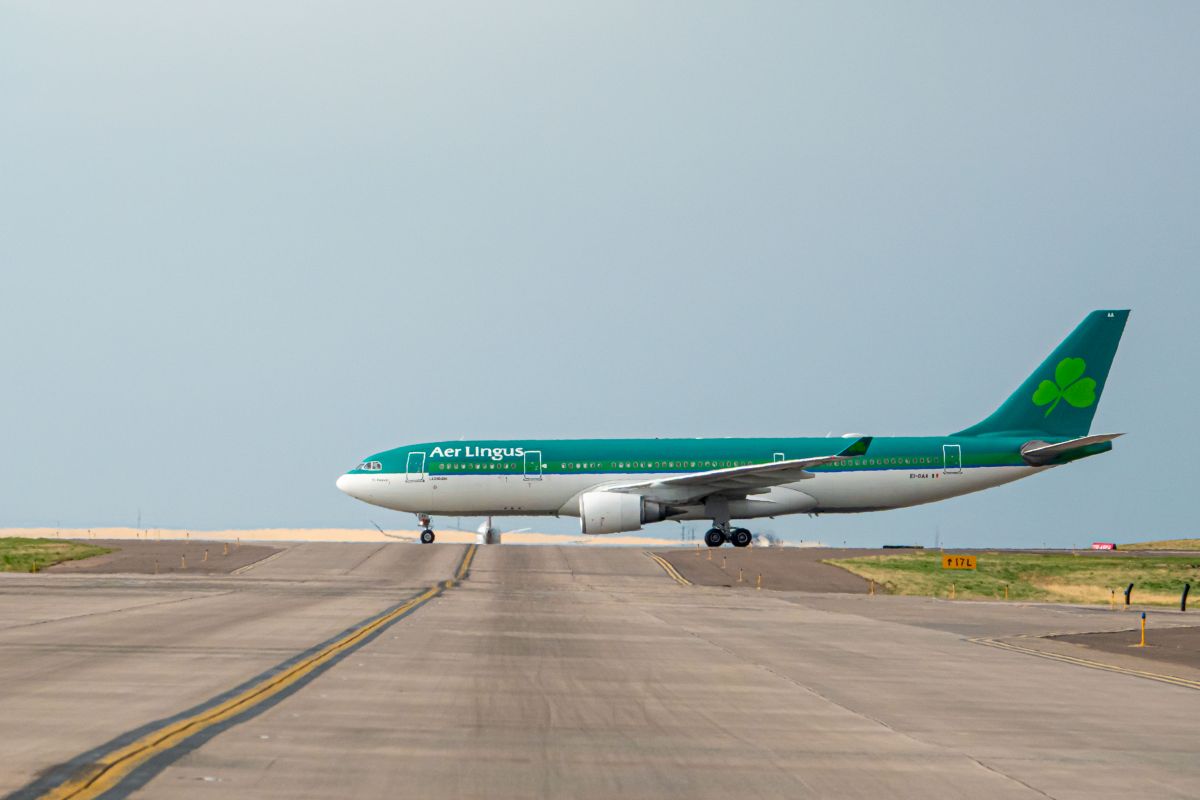
Its September 2026 airport data lists British Airways to London, Aer Lingus to Dublin and Icelandair to Reykjavík. Canada receives several links, while Mexico and Caribbean markets provide additional leisure capacity.
The network is also continuing to develop. Volaris is scheduled to launch Nashville–Guadalajara service in October 2026, adding another Mexico connection to an airport whose international network already extends well beyond North America.
For travellers, the lesson is practical. A city’s tourism popularity can increasingly produce direct international access, reducing the need to build an itinerary around a major connecting hub.
Salt Lake City Builds A Transcontinental Web
Salt Lake City illustrates a different form of network development. Its June 2026 international schedule included Amsterdam, Calgary, Cancún, Edmonton, Guadalajara, Seoul, Lima, London, Los Cabos, Mexico City, Paris, Puerto Vallarta, Toronto and Vancouver.
Its August schedule recorded 106 weekly international departures across the listed markets. Delta accounted for 64 of those departures, while SkyWest-operated services accounted for 28. KLM, WestJet and Volaris also appeared in the schedule.
That combination shows how an airline hub can manufacture international reach. Local demand matters, but network economics can make a strategically located airport much more powerful.
Advertisement
Advertisement
San Diego Shows The Border Advantage
San Diego offers another distinctive model because its international network benefits from geography as well as tourism.
The airport reported 87 nonstop destinations in spring and summer 2026, its highest total in history. Airlines increased nonstop service by more than 10% year on year, while seven international flights were expanded or resumed.
In September 2026, Alaska Airlines announced seasonal San Diego–Loreto service. The route will begin in December and become San Diego’s 12th international destination.
For tourism businesses, the lesson is clear. Border proximity can create a powerful international market, particularly when combined with a large metropolitan population and established leisure demand.
Austin Reveals The Demand Challenge
Austin’s network shows both the opportunity and the limits of the new model. The airport’s international portfolio includes Amsterdam, Frankfurt, London, Mexico City, Monterrey, Panama City and Toronto.
Yet airport planning data also identifies international markets without nonstop service that generate substantial passenger demand. Paris, Seoul, Tokyo, Rome, San José, Dublin, São Paulo, Madrid and Barcelona appear among the markets without nonstop service in the cited traffic analysis.
Advertisement
Advertisement
That creates an important industry signal. Airlines do not add routes simply because passengers want them. They need sufficient demand, aircraft availability, airport capacity, competitive economics and confidence that the route can survive beyond its launch period.
What The Shift Means For Travellers
The practical advantage is straightforward. Travellers in growing metropolitan areas can increasingly begin international journeys closer to home.
A direct flight can remove a domestic positioning segment, reduce connection risk and simplify baggage handling. It can also open new weekend and short-break possibilities when schedules provide sufficient frequency.
However, travellers should distinguish between year-round service and seasonal service. Nashville, for example, explicitly marks several international routes as seasonal, while Denver’s Querétaro service operates twice weekly year-round.
| What travellers should check | Why it matters |
|---|---|
| Year-round or seasonal | Availability can change sharply by season |
| Weekly frequency | More departures provide greater itinerary flexibility |
| Operating carrier | The marketing airline may differ from the operator |
| Nonstop versus connecting | A direct route can materially reduce journey complexity |
| Airport choice | Some metropolitan areas have multiple airports |
| Route start date | Newly announced services can change before launch |
The US Department of Transportation also warns that international gateway statistics can include connecting passengers. Therefore, passenger totals do not necessarily represent travellers whose final destination begins or ends at that airport.
The Data Needs A More Careful Reading
The strongest research approach combines passenger volumes, departures, seats, destinations and airline participation. DOT’s international statistics are based on T-100 segment reports and provide data on passengers, departures, seats and freight.
Advertisement
Advertisement
That methodology matters because international connectivity is not synonymous with international passenger volume. A major hub can generate huge traffic partly because passengers connect onward, while a smaller airport can have a meaningful direct market with fewer total passengers.
The fairest comparison therefore considers both scale and momentum. New York may remain vastly larger, but a fast-growing secondary market can still reveal where the next generation of international travel demand is forming.
The Tourism Map Is Becoming More Distributed
The emerging pattern is now difficult to ignore. Denver is expanding its continental reach, Nashville is converting tourism demand into overseas connectivity, Austin is attracting multiple foreign carriers, Salt Lake City is using hub economics to reach distant markets, and San Diego is leveraging its border position.
At the same time, New York, Los Angeles, Miami, Chicago and Atlanta remain indispensable pillars of US international aviation. Their scale, airline networks and global connections continue to give them advantages that emerging gateways cannot immediately replicate.
The more significant development is therefore not replacement. It is diversification.
A Wider Choice For The Next Journey
America’s aviation geography is becoming less concentrated at the traveller level, even while the biggest gateways retain their dominance at the system level. International flight growth is creating a wider collection of cities where overseas journeys can begin directly.
Advertisement
Advertisement
For travellers, that can mean fewer connections and more itinerary choices. For hotels, tourism boards and destination marketers, it creates new source markets. For airlines, it creates opportunities to capture demand before passengers migrate through established hubs.
The long-term question is whether today’s emerging gateways can sustain their new routes. If they can, the next American tourism map will not simply connect more cities to the world. It will give more cities the power to shape where international travellers go next.
Advertisement
