
How Is Cambodia’s Remarkable Flavor Boom Completely Redefining The Country’s Modern Travel Scene?

Published
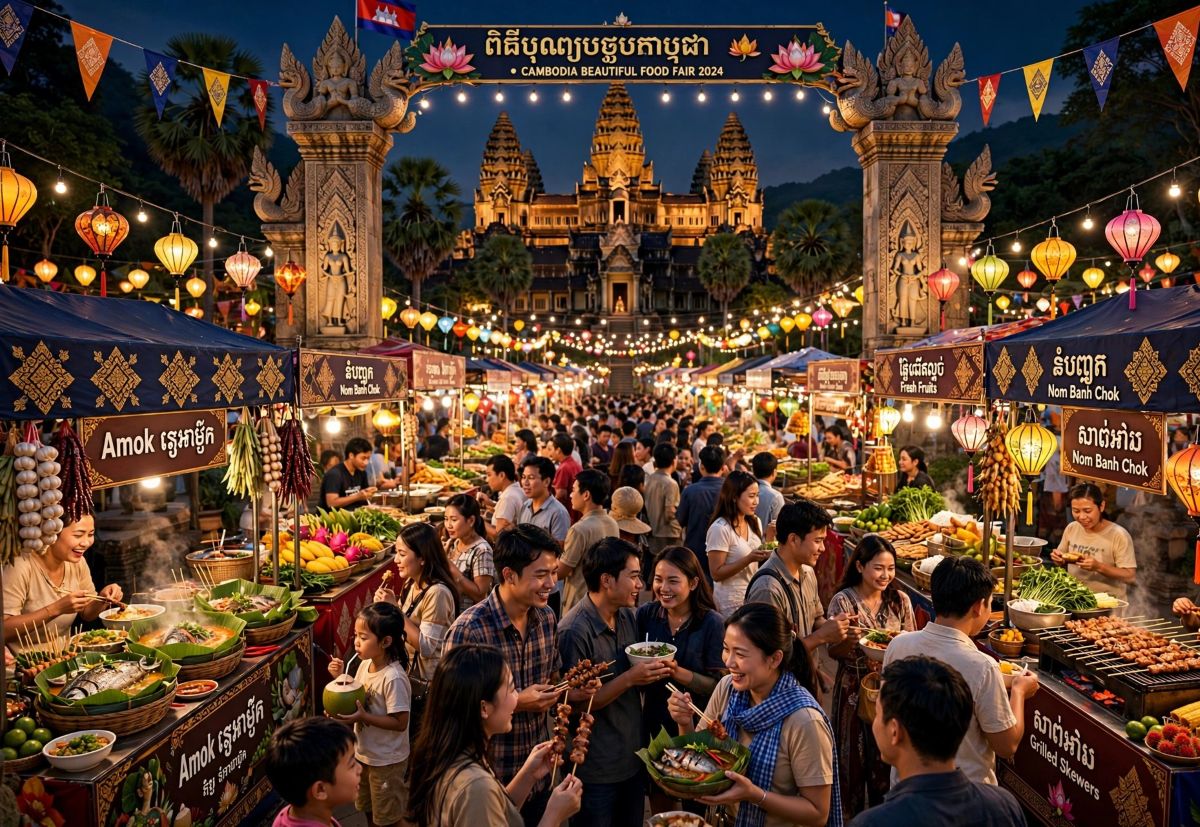
Lemongrass, ginger, and sriracha, would rather draw diners from all corners of the world to these restaurants. For many travelers, not so long time ago, the Kingdom of Cambodia, after photographic trips was a quick stop en route to the rest of Southeast Asia. However, currently there is an intense and concentrated cooking revolution going on in the Cambodian clay hearth kitchens. The Cambodian communities and farming enthusiasts in Cambodia are choosing to feature their food heritage as the backbone of their traveling heritage. It goes deeper than just food, it’s an emotional connection with people and land. Travelers can now spend time chewing each bite on Battambang’s street food and enjoy the Phnom Penh night market as well as the Pepper farms of Kampot. Most of the eateries around the country pay tribute to the past with proper Khmer food cooking. Every bowl of Samlor Korko and Amok steamed fish is a reflection of the people’s warmth and determination.
How Authentic Khmer Gastronomy Transformed The Kingdom Into Asia’s Ultimate Food Destination
Advertisement
Advertisement
Why has local cuisine suddenly become the defining reason to visit Cambodia? The Kingdom of Cambodia has fundamentally re-engineered its national tourism model to showcase its rich, authentic culinary heritage to the world.
In recent years, the Kingdom of Cambodia has fundamentally re-engineered its national tourism model from a quick stopover into a deep, sensory exploration. Historically viewed as a single-stop destination for visitors exploring the ancient monuments of Siem Reap, the country has successfully elevated its distinct Khmer culinary heritage into a central economic engine. Through targeted policy initiatives, sustainable agricultural integration, and prestigious regional recognitions, local food has evolved from a secondary travel consideration into the primary motivation for international journeys across this vibrant Southeast Asian nation.
Advertisement
Advertisement
Official government records confirm that culinary travel is profoundly reshaping how global explorers experience Cambodia. By showcasing regional delicacies, heritage recipes, and sustainable farming practices, the nation attracts higher-yielding travelers who stay longer and spend more directly within local communities. This analytical news report examines the macroeconomic indicators, official policy frameworks, unique regional food hubs, and changing source market dynamics that underpin Cambodia’s rapidly growing culinary tourism landscape.
How Are Macroeconomic Trends and Tourism Indicators Reshaping International Visitor Dynamics Across Phnom Penh and Rural Cambodia?
Advertisement
Advertisement
International arrival records published by the Ministry of Tourism and the Ministry of Economy and Finance show that Cambodia welcomed 5,569,752 international visitors in 2025. Although overall visitor volume reflected a 16.9 per cent year-on-year drop due to geopolitical developments along the northwestern border, core performance metrics showed marked structural resilience. Tourism yields per visitor saw a notable increase, with travelers staying an average of 7.0 days and maintaining a national hotel occupancy rate of 78 per cent across primary urban centers like Phnom Penh.
Air arrivals expanded significantly to 2,857,716 visitors, marking a 19.2 per cent year-on-year growth that was greatly accelerated by expanded international operations at the state-of-the-art Techo International Airport serving Phnom Penh. Furthermore, internal tourist movements reached record levels, recording 23.7 million domestic trips alongside 3.4 million foreign intra-provincial journeys across the country. These metrics highlight a clear shift away from brief temple tours toward extended, multi-province itineraries driven by experiential travel, rural exploration, and local culinary discovery.
Advertisement
Advertisement
What Official Policy Frameworks and Government Directives Are Driving the Rapid Expansion of Food Tourism from Siem Reap to Coastal Kep?
The Royal Government of Cambodia has formally established culinary heritage as a fundamental pillar for economic diversification and cultural preservation under its long-term strategic directives through the Council for the Development of Cambodia. To reduce tourist concentration around the world-famous Angkor Archaeological Park in Siem Reap, the Ministry of Tourism deployed dedicated food tourism campaigns alongside the national Green Season initiative. These institutional programs systematically distribute travel spending into secondary cities and rural agrarian communities, effectively turning local food markets, family-run kitchens, and roadside food stalls into vital economic catalysts.
Simultaneously, the Cambodian Investment Board designated Agri-Food and Tourism as joint priority sectors for national economic development. This strategic regulatory alignment channels direct capital investment into agro-tourism enterprises, eco-lodges, organic farming co-operatives, and high-end culinary training facilities across the country. By integrating agricultural supply chains directly with hospitality providers, Cambodia guarantees that food tourism dollars directly support local farmers, coastal fishermen, and small-scale food producers across provinces like Battambang, Kampot, and Kep.
How Have Regional Culinary Destinations in Battambang, Siem Reap, and Kampot Become Primary Travel Highlights for Food Enthusiasts?
Advertisement
Advertisement
Battambang leads the national gastronomic push following its prestigious designation as Cambodia’s first UNESCO Creative City of Gastronomy. Widely celebrated as the rice bowl of Cambodia, the province leverages iconic regional specialties such as award-winning Phka Rumduol Jasmine Rice, artisanal Prahok fermented fish paste, Nem sour fish cakes, and Kralan sticky rice roasted inside bamboo. Visitors travel to Battambang specifically to explore rural cooking circuits, sample centuries-old family recipes, and experience slow-paced agro-tourism along the tranquil Sangkae River.
In Siem Reap, culinary revival initiatives spearheaded by the Ministry of Culture and Fine Arts showcase restored royal court recipes, including traditional Fish Amok steamed curry fish soufflé in banana leaves and Samlor Korko savory botanical herbal stew. Specialized food tours divert visitors away from standard monument routes toward organic farm-to-table experiences in Phnom Kulen and surrounding rural villages. Meanwhile, coastal and riverine regions including Kampot, Kep, and Koh Kong attract culinary travelers through protected Geographical Indication products, where world-renowned Kampot Pepper drives direct agro-tourism visits to pepper plantations paired with fresh Kep seafood along the Gulf of Thailand.
Which Key Regional and International Source Markets Are Fueling the Global Demand for Authentic Khmer Gastronomy?
Intra-ASEAN neighbors and broader East Asian nations constitute the main demographic driving Cambodia’s rapid food tourism growth according to official Ministry data. Inbound visitors from Vietnam reached 1,220,000, while China generated 1,201,681 visitors representing a impressive 41.5 per cent year-on-year rebound, alongside Thailand which contributed 1,020,000 arrivals. Travelers from these regional markets demonstrate an exceptionally high demand for authentic culinary experiences, short-haul weekend food getaways, and immersive street food discovery across urban night markets.
Beyond regional neighbors, long-haul origin markets generate high-spending, culture-focused travelers who actively prioritize food heritage tours during extended visits to Southeast Asia. Inbound visitor numbers from the United States reached 185,688, followed by South Korea with 145,497, France with 123,035, and the United Kingdom with 116,660 arrivals. These long-haul travelers spend significantly more on guided cooking masterclasses, luxury river cruises, and specialized farm visits across key hubs like Phnom Penh, Siem Reap, Battambang, and Kampot.
What Strategic Government Directives Are Bridging the Gap Between Rural Farmers and Fine Dining Hotels in Phnom Penh?
Advertisement
Advertisement
To maximize the internal economic benefits of visitor dining and prevent financial leakage to foreign supply channels, the Cambodian government implemented a comprehensive inter-ministerial strategy linking regional agriculture with upscale urban hospitality. Formalized through an official Memorandum of Understanding between Minister of Tourism H.E. Huot Hak and Minister of Agriculture H.E. Dith Tina, this institutional framework mandates the development of four strategic Green Belts surrounding key urban centers. The strategic mandate ensures that primary tourist hotels source 100 percent of their fresh produce, poultry, and aquatic stock directly from domestic smallholders rather than international distributors. This initiative operates alongside a thriving national agricultural economy whose total exports reached $5 billion, bolstered by non-rice crops such as cashew, cassava, pepper, and specialty fruits. By integrating regional farming communities directly into high-end culinary supply chains, the policy successfully captures luxury tourist spending at the local level and enhances rural livelihoods.
How Has the Bakong Digital Payment Revolution Transformed Local Street Food Markets Across Siem Reap and Battambang?
The rapid evolution of domestic financial technology has fundamentally altered how international visitors interact with informal dining markets, removing traditional transactional barriers in rural and urban spaces. Central to this transformation is the Bakong real-time payment network, overseen by the National Bank of Cambodia, which processed an unprecedented 1.325 billion digital transactions in 2025. Through strategic cross-border integrations, the network now accepts foreign QR payment architectures including India’s UPI, Thailand’s PromptPay, and Vietnam’s VietQR. This interoperability enabled over 22,000 Indian arrivals and millions of regional visitors to purchase dishes from small-scale street vendors and night market stalls seamlessly, bypassing currency conversion fees and physical cash constraints. By democratizing electronic payments across informal food networks in historical centers like Siem Reap and Battambang, digital financial infrastructure directly channels foreign expenditure into the hands of micro-entrepreneurs and independent food vendors.
Why Are Tonle Sap’s Ancient Rice-Fish Production Systems Essential to the Survival of Traditional Khmer Dishes?
The preservation of traditional Cambodian cuisine is inextricably linked to the ecological health of the nation’s ancient agricultural and aquatic ecosystems. The Tonle Sap Lake functions as the biological engine of the country’s food landscape, yielding more than 500,000 metric tonnes of fresh fish each year and supplying 80 percent of the total animal protein consumed in the national diet. This aquatic bounty operates in tandem with widespread grain production, which recorded harvests exceeding 5.2 million tonnes of paddy rice and 600,000 tonnes of milled rice in 2025. To safeguard these natural resources, state protections like Sub-Decree No. 184 enforce Community Fish Refuges across the Tonle Sap Biosphere Reserve. Key cultural exports and culinary staples, including fermented fish paste (prahok) and steam-cooked fish curry (trey amok), rely entirely upon this protected biodiversity. The continued viability of traditional Khmer dining experiences is therefore directly reliant on active environmental conservation across regional wetlands.
How Have Protected Geographical Indication Products Transformed Rural Estates into World-Class Culinary Destinations?
Advertisement
Advertisement
Regional agricultural products possessing certified Geographical Indication status have become primary catalysts for rural tourism growth, turning traditional farming regions into specialized travel destinations. Premium Kampot Pepper, cultivated across protected estates in Kampot and Kep, regularly drives direct visitation to more than 20 certified plantations where travelers engage in farm-to-table tasting tours. Similarly, protected assets such as Kampong Speu Palm Sugar and Koh Kong Mud Crab have established regional culinary trails that draw food enthusiasts deep into agricultural provinces. Complementing these specialty items is Phka Rumduol Jasmine Rice, an award-winning grain variety that anchors immersive tasting itineraries through major agrarian zones in Battambang and Pursat. By establishing strict quality standards and global recognition for regional specialties, local agricultural hubs successfully convert raw harvest yields into experiential travel products that stimulate rural economies.
How Is Cambodia Using Global Culinary Diplomacy and Award-Winning Gastronomy Books to Attract High-Yielding Travelers?
The Ministry of Foreign Affairs and International Cooperation has utilized culinary cultural diplomacy as a strategic soft-power vehicle to elevate the nation’s international profile and stimulate long-haul visitation. At the center of this promotional push is “The Taste of Angkor” official cookbook series, which achieved international acclaim by earning the prestigious “Best of the Best” Special Award of the Jury at global culinary publishing summits. Cambodian diplomatic missions around the world leverage these publications and hosted gastronomic events to engage foreign markets, targeting high-spending demographics across Western nations. These targeted cultural initiatives contributed significantly to driving inbound travel from major long-haul source markets, including 185,688 arrivals from the United States, 123,035 from France, and 116,660 from the United Kingdom. By positioning authentic regional recipes as cultural assets, diplomatic efforts effectively translate global culinary interest into actual tourist foot traffic.
Where Are International Tourists Spending Their Dining Dollars Between Historic Night Markets and High-End Dining Rooms?
An examination of spending dynamics across the national food and beverage sector reveals a clear balance between structured full-service establishments and informal dining markets. Full-service and luxury dining venues account for 53.68 percent of total foodservice market value, benefiting from travelers seeking curated interpretations of traditional dishes in formal settings. Conversely, independent vendors, street stalls, and open-air night markets capture 75.62 percent of overall market engagement, reflecting strong traveler preference for authentic, localized eating experiences. On-site consumption remains the dominant transactional format, with dine-in operations generating 56.88 percent of overall industry revenue. Simultaneously, modern delivery platforms and cloud kitchen models are expanding rapidly at a compound annual growth rate between 9.07 percent and 11.23 percent. This dual market structure illustrates that while high-end venues command significant capital, informal vendors remain central to the day-to-day tourist experience.
What Infrastructure Improvements Are Connecting Inbound Travelers directly to Remote Eco-Culinary Destinations?
Advertisement
Advertisement
Large-scale transportation developments and regional environmental planning have greatly simplified traveler access to remote agricultural provinces and coastal eco-culinary destinations. The inauguration and expansion of Techo International Airport provided a major boost to international connectivity, processing 2,857,716 air passengers for a 19.2 percent year-over-year increase. On the ground, targeted regional frameworks such as the Phnom Kulen Eco-Tourism Masterplan work to protect historic natural sites while integrating local organic culinary stops into tourist itineraries. Furthering this trend, the Ministry of Environment’s development of the Te Teuk Pus Thermal Springs in Kampong Speu seamlessly combines indigenous cooking traditions with eco-wellness travel. By reducing physical travel friction and expanding destination offerings, national infrastructure upgrades allow culinary travelers to explore remote agricultural regions beyond traditional urban centers
The Final Verdict
There is more to Cambodian cuisine than profit. It is an opportunity for the Cambodian people to express their pride and hospitality, as their way of life is about having a big family and hosting guests, and their food is BY FAR the best way to showcase this. Pride in their food is present from Battambang all the way down to Siem Reap and to Phnom Penh. Cambodian guests no longer care to admire old architecture and leave for other countries. Instead, they eat the low stools and enjoy the silence of the traditional Samlor Korko.
The daily offerings of a traditional Cambodian restaurant pull customers in to see the peoples’ silent and strong nature. Cambodia’s coastal cuisine and farms bring a following of mouthwatering ingredients with a dash of lemongrass and salt pepper. At the heart of traveling brings people to experience Cambodia’s warm cuisine and exquisite culinary culture. It offers so much more than what is seen.
Frequently Asked Questions
What makes Cambodian food tourism unique compared to neighboring destinations?
Advertisement
Advertisement
Cambodia offers an unfiltered, farm-to-table culinary heritage rooted in biodiversity, ancient court traditions, and fresh regional ingredients like Kampot pepper and Phka Rumduol Jasmine Rice.
Why is Battambang considered the food capital of Cambodia?
Battambang holds the title of UNESCO Creative City of Gastronomy due to its rich agricultural output, traditional street food culture, and historical food production techniques like artisanal Prahok and Kralan.
Which official government bodies manage food tourism in Cambodia?
The Ministry of Tourism, the Ministry of Economy and Finance, and the Council for the Development of Cambodia co-ordinate policy, infrastructure investment, and promotional campaigns.
Advertisement
