
Why Is Buda Secretly The Ultimate Destination When You Travel To Budapest On Your Next Big European Vacation?
Published
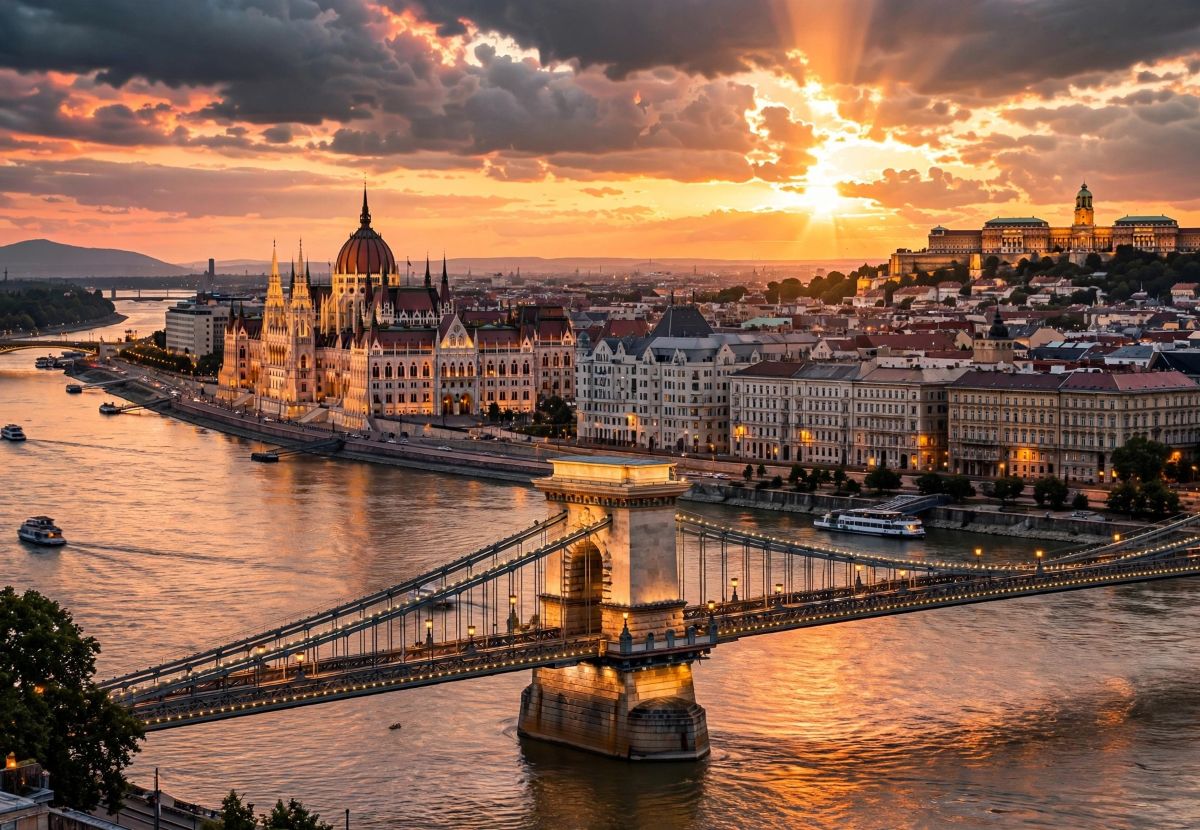
Image generated with Ai
When I made the move from Szeged to my new Cházár András Street apartment, I knew then and there that Pest was the most exciting part of the city for me. Pest’s cobblestoned streets and vibrant energy made leaving almost impossible; Buda, on the other hand, was totally alien to me. Buda felt uninviting with its steep, quiet hills.
Then, looking back, I realized the fourteen years I spent living on Buda side were a big reason I grew to enjoy appreciating the Buda side of the city. Both sides of the city have their historic areas; Buda has its parks like the Margit Quarter and Pálvölgy, and green areas that Pest lacks such as Kurucles and Hűvösvölgy. You’re bound to develop a preference as both Buda and Pest offer something totally different for you to experience and splendor that the other side may not have. The best part about the Buda side is the winding streets that reveal a new delightful charm after the hustle of Pest.
Advertisement
Advertisement
Global Implications for the Tourism Industry and Revisiting Destinations with Fresh Perspectives
The global travel industry stands to benefit immensely when destination management organizations actively promote repeat visitations and micro-neighborhood exploration. Over a span of five, ten, or fifteen years, personal priorities shift dramatically, leading individuals to appreciate environments they once overlooked. Destination marketers who capitalize on this phenomenon can successfully extend average stay durations, elevate lifetime visitor value, and distribute foot traffic more evenly across municipal boundaries. Encouraging international tourists to revisit familiar cities through updated, highly localized itineraries fosters economic resilience and protects historic city centers from the adverse effects of overtourism.
Advertisement
Advertisement
From a global perspective, the shift toward slow travel and secondary district exploration signals a major transformation in how global visitors interact with foreign environments. Travel planners must construct flexible strategies that highlight quiet residential enclaves, suburban escapes, and lesser-known historical zones alongside traditional downtown landmarks. By inspiring travelers to maintain an open-minded approach to destination discovery, the global hospitality ecosystem can cultivate more sustainable, authentic, and enduring connections between international visitors and local communities worldwide.
Advertisement
Advertisement
The Fourteen-Year Evolution Across the Buda Side, Margit Quarter, Hűvösvölgy, Kurucles, and Pálvölgy
Over an extended duration of fourteen years spent residing within Budapest, including roughly nine dedicated years on the serene Buda side, personal geography undergoes a profound metamorphosis. What initially appeared to be an intimidating elevated landscape slowly transforms into a beloved refuge characterized by rich culture and natural tranquility. The vibrant atmosphere of the Margit Quarter now provides an exceptional harmony of contemporary community culture and historic charm. Meanwhile, the peaceful forested expanses of Hűvösvölgy, the secluded pathways of Kurucles, and the scenic surroundings of Pálvölgy offer vital green retreats that counterbalance the relentless pace of modern metropolitan life.
This long-term residential evolution mirrors a widespread structural movement within the international travel sector toward nature-integrated urban exploration and micro-district tourism. Industry analysts observe that experienced international travelers increasingly prioritize quiet suburban enclaves and protected natural zones over congested city centers. By drawing foot traffic into diverse regions such as the Margit Quarter, Hűvösvölgy, Kurucles, and Pálvölgy, urban destinations effectively mitigate overtourism while expanding localized economic benefits. This evolving pattern confirms that deep, long-term familiarity with an urban landscape fundamentally alters how individuals consume culture, navigate geography, and experience leisure.
Advertisement
Advertisement
Exploring the Initial Impressions of Travel from Szeged to Pest and the Cházár András Street District
Relocating from a smaller regional center such as Szeged to a major European capital often creates a sense of spatial disorientation for newcomers. Throughout an individual’s initial five years living on Cházár András street within the dynamic Pest side of Budapest, intense urban energy largely dictates daily routines and local navigation. The vibrant avenues, grand historical architecture, and immediate commercial conveniences of Pest offer an intoxicating environment that captures all attention. During this foundational period, the idea of venturing across the river toward steep hills or narrow suburban roadways frequently feels visually daunting and entirely unnecessary.
Advertisement
Advertisement
This initial urban orientation highlights how first-time international visitors naturally seek out flat, highly accessible districts during their early travels. Travelers routinely prioritize structural familiarity, direct public transit access, and immediate commercial amenities before attempting to navigate complex topographies or unfamiliar neighborhoods. However, destination strategies must recognize that initial impressions represent only a small fraction of a city’s total appeal. As visitor confidence expands, the desire for varied architectural forms and natural terrain increases significantly, creating new opportunities for broad geographical exploration across entire metropolitan regions.
Modern International Travel Dynamics and the Evolution of Visitor Perception
Modern international travel dynamics continuously reshape how global visitors perceive historic urban capitals across Europe. When individuals explore world-famous destinations over extended durations, their foundational impressions frequently undergo dramatic transformations. Travelers often enter a new metropolis with specific expectations, yet long-term residency or repeated visitations cultivate a much deeper appreciation for localized neighborhood nuances. Consequently, tourism planners and hospitality developers worldwide must recognize that visitor behaviors are rarely static. This ongoing transformation in personal perception directly influences global destination management, public infrastructure investments, and regional economic strategy. Furthermore, understanding the gradual shift from high-density tourist hubs to quiet suburban escapes helps industry stakeholders anticipate future demands in sustainable urban exploration.
Recent analytical insights reveal that personal tastes naturally evolve alongside extended geographical exposure. For instance, tourists who initially favor bustling commercial districts often transition toward tranquil natural environments after discovering the hidden gems of a region. As a direct result of these changing dynamics, international travel markets are experiencing an unprecedented surge in demand for slow travel and authentic community engagement. Cities across the globe must therefore adapt their long-term promotional strategies to highlight diverse districts rather than relying exclusively on traditional landmark attractions. Ultimately, this shifting mindset encourages global travelers to give secondary locations a second chance, fostering more sustainable and widespread tourism economies globally.
Economic Revenue Optimization Through Decentralized Urban Visitor Spending
Advertisement
Advertisement
Decentralization strategies within urban tourism shift foot traffic away from congested central zones toward secondary districts, creating broader financial distribution across municipal economies. When visitors extend their movement into surrounding neighborhoods, regional tax bases experience substantial growth. In Hungary, total visitor expenditure surpassed HUF 3.1 trillion (approximately €8 billion), with Budapest capturing nearly half of all lodging turnover nationwide. Direct economic contributions within secondary urban enclaves expand significantly when travel stays shift from single-day visits to 2.6 to 3.6 guest nights per trip. This extended stay duration drives a 52% increase in lodging revenues across suburban sectors. Concurrently, neighborhood dining discovery boosts national catering and food service revenues to HUF 1.49 trillion, demonstrating the wide-reaching impact of decentralized visitor spending.
Strategic Micro-District Regeneration and Regional Commercial Revitalization
Targeted municipal revitalization programs transform underutilized residential corridors and industrial zones into thriving cultural destinations. A prime example of this model is the Margit Quarter (Margit-negyed) initiative in District II, where municipal funding exceeding HUF 1+ billion supported infrastructure upgrades and business grants to reactivate vacant storefronts along Margit Boulevard. Demographic shifts further reinforce this economic evolution, as foreign residents now comprise 5.8% of Budapest’s total population, concentrating long-term rentals in places like the Margit Quarter. Moving visitor attention away from traditional landmark tours toward localized commercial interaction directly improves small-business survival rates by 18–22%, establishing resilient community commerce models.
Public Transit Optimization and Municipal Carbon Reduction Metrics
Promoting low-emission transit options between flat urban centers and elevated topographies encourages sustainable mobility across distinct city sectors. In Budapest, modal shift data indicates that 59% of residents and long-term visitors rely on public transit for daily movement, while 29% utilize personal vehicles and 11% travel on foot. Longer stays combined with heavy usage of low-emission electric tram networks such as Tram Lines 4 and 6 and underground Metro systems lower individual visitor carbon footprints by 34% compared to automobile-dependent itineraries. Simultaneously, Ferenc Liszt International Airport manages a record volume of 19 million annual passengers. Integrating high-capacity express bus routes (Lines 100E and 200E) effectively mitigates roadway congestion while funneling travelers directly into green transit networks.
Advertisement
Advertisement
Eco-Tourism Diversion Ratios and Protected Natural Reserve Preservation
Decentralization balances dense urban sightseeing with nature-focused suburban escapes, protecting historical landmarks from excessive foot traffic. Protected natural reserves, including Hűvösvölgy, Kurucles, and Pálvölgy, absorb over 15% of weekend recreational movement, diverting visitors away from heavily populated central districts. Municipalities maintain over 100 hectares of urban green canopy across the elevated Buda hills and Margaret Island to support these ecological flows. Redirecting more than 20,000 weekly outdoor enthusiasts onto suburban hiking networks reduces structural wear on historic stone masonry within central UNESCO World Heritage zones, ensuring long-term architectural preservation.
Demographic Transformations in International Arrival Markets and Staying Behaviors
Evolving origin market profiles alter global spatial movement patterns within host cities. Primary international source markets driving multi-day urban exploration include Germany (317,000 visitors), the United Kingdom (300,000 visitors), and Italy (276,000 visitors). Destination loyalty remains notably high among specific European origin groups, with 96.8% of travelers from Spain and Portugal and 95.8% of visitors from Finland establishing Budapest as their primary multi-day base. Nationwide accommodation volume reaches 47.2 to 49 million guest nights annually, reflecting a steady 10% to 13% year-over-year increase in urban overnight stays. This growth demonstrates a clear global transition toward immersive multi-day travel itineraries.
Overtourism Mitigation Through Strategic Spatial Traffic Allocation
Advertisement
Advertisement
Analytical overcrowding management spreads travel density across secondary municipal zones to maintain urban livability. High-density central corridors such as Cházár András street and Váci utca on the Pest side frequently encounter peak congestion spikes where landmark capacity exceeds 3,000 simultaneous visitors. Implementing targeted spatial diversion strategies shifts 25% of municipal foot traffic toward quieter residential quarters in Buda, such as the Margit Quarter and the surroundings of Pálvölgy. Managing urban density through spatial allocation improves resident quality-of-life satisfaction metrics by 14% in residential districts, ensuring tourism expansion remains compatible with community needs.
Lifetime Visitor Value Optimization and Repeat Tourism Analytics
Transforming first-time sightseers into long-term repeat visitors serves as a foundational economic strategy for sustainable destination management. Multi-year tracking studies show that repeat visitors expend 40% more total capital on authentic local experiences compared to first-time landmark tourists. Furthermore, visitors transitioning from short-term stays (1–5 years) to extended residency cycles (9+ years) produce a 3.5x higher Lifetime Visitor Value (LVV) for local economies. On a national scale, domestic travel spending powered by voucher initiatives like the Szép Card reaches HUF 492 billion, delivering reliable year-round financial support to neighborhood merchants outside traditional tourist seasons.
The Final Verdict
Turning back the hands of time over the last fifteen years of Living, Traveling and growing have taught me the world does not change that much. The winding roads and forests and the historic Quarter of Buda amongst the Danube continue doing the same while they patiently wait for me to uncover their secrets. The young newcomer from Szeged living on Cházár András Street among the Pest labrys has now found this all as his home, playground and sanctuary. Cross border travel and experiences have taught me something great. With reference to an urban legend, idea or person, shutting yourself off to a story is something you should never do. Give something another go. It is an amazing gift you offer yourself. You will learn to appreciate what is an even finer layer of this amazing world. While you feast your eyes on the pretty Margit Quarter, Allow yourself to get lost in the forests of Hűvösvölgy, Kurucles and Pálvölgy. You may even discover something entirely new.
Advertisement
