

Saudi Arabia Travel Warning Puts Riyadh Flights Under Fresh Scrutiny

Updated
Published
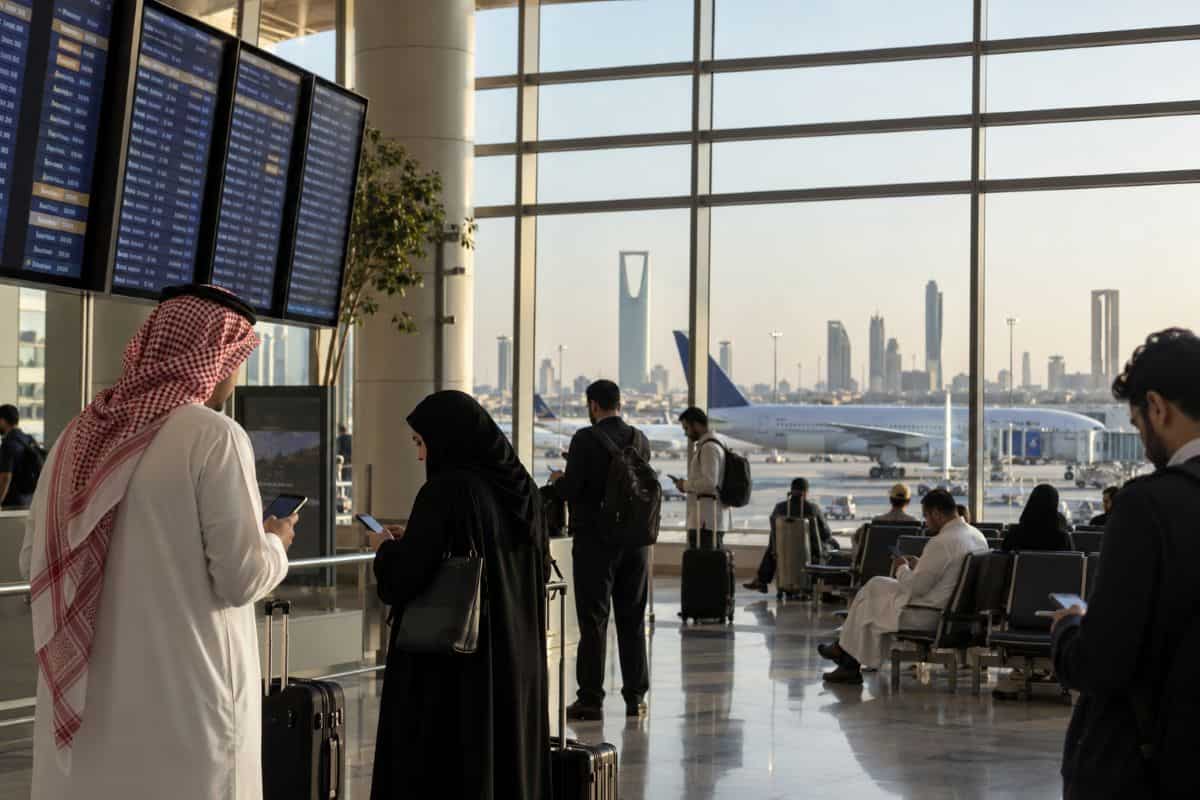
The travel advisory of Saudi Arabia is giving a new angle to the issue with the Riyadh flights as the recent attacks have occurred at the King Khalid International Airport in Saudi Arabia. At least three Saudi citizens lost their lives while it was declared that the airport and its aircraft have been targeted in the attacks. Yet, there are some aspects which are unknown. The type of the aircraft attacked by the terrorists, as well as the number of those hurt, has not been made public yet. In addition, there is no updated information about the number of cancelled flights.
What happened at Riyadh airport?
Two attacks targeted facilities at King Khalid International Airport and an aircraft belonging to Saudia on 8 October, according to a statement from Saudi Arabia’s General Authority of Civil Aviation (GACA), reported by the Saudi Press Agency the next day.
The UAE Ministry of Foreign Affairs said the attacks killed three Saudi nationals and injured other civilians. Qatar’s foreign ministry also condemned the attacks and attributed them to Yemen’s Houthi group. These are official statements from the two governments. Any attribution should remain clearly linked to its source.
The deaths followed earlier attacks on Abha and King Khalid airports. A UAE statement issued on 8 October said those earlier incidents killed three people: Moroccan, Algerian and Sudanese nationals. These were separate events. Their victims must not be added to, or confused with, the three Saudi nationals reported killed in the 8 October Riyadh attacks.
Advertisement
Advertisement
This distinction matters because reports published close together can blur separate dates and casualty figures. The GACA statement places the latest Riyadh attacks on 8 October. The UAE statement about the three foreign nationals refers to the earlier airport attacks. A clear timeline helps readers understand what happened without mixing the incidents.
The official material reviewed for this article does not confirm the aircraft’s model or registration. It also does not provide an exact injury total for the latest Riyadh attacks. Those details should not be presented as settled facts without further official confirmation.
Advertisement
Advertisement
What exactly does the UK travel warning cover?
The Foreign, Commonwealth & Development Office (FCDO) advises against all but essential travel to Riyadh province. Its advice also covers Aseer, Najran and Jizan provinces, as well as Taif city and Taif International Airport. For the area within 10 kilometres of the Yemen border, the advice is against all travel.
The difference between these warnings is important. “All but essential travel” means travellers must decide whether their journey is essential in their own circumstances. The FCDO gives urgent family or business commitments as examples. It does not say that every business trip is essential.
The warning also does not cover every part of Saudi Arabia in the same way. The FCDO identifies specific regions and locations. Travellers should check the latest page for the place they plan to visit, rather than relying on a headline that says simply “Saudi Arabia”.
The FCDO page was marked current on 10 October and showed an update dated 9 October. Its latest-update note referred to information about travelling to the airport. The page also advises British nationals in the Middle East to prepare for possible flight cancellations, short-notice airspace closures and other travel disruption.
Why should passengers check their whole route?
A traveller may be heading to a destination outside Saudi Arabia but still need to pass through Riyadh. The FCDO tells travellers to check whether their route includes an airport or area covered by its advice. It also says passengers should check that their booking is confirmed and confirm their flight status before travelling to the airport.
That makes the full itinerary important. Travellers should look at every airport on their booking, including connection points. They should contact their airline or travel agent if a journey passes through Riyadh and ask whether the flight is operating, whether the connection has changed and what help is available if a delay makes them miss the next flight.
Advertisement
Advertisement
A flight appearing in a booking system does not answer every question. The airline decides whether to operate a service. The FCDO provides advice for travellers. An insurer applies the terms of its policy. These are separate decisions, so passengers should check each one.
The FCDO says people should monitor local and international updates because airports and airspace can close at short notice. It also advises travellers to keep plans under review, check that their documents are up to date and follow instructions from local authorities.
Could a delayed connection create a visa problem?
A change to a connection may affect whether a traveller needs permission to enter Saudi Arabia. The FCDO’s entry guidance is written for people travelling on a British citizen passport. It says a transit visa may be needed if a passenger has to pass through immigration, leaves Saudi Arabia on a separate ticket, or has more than 12 hours between flights. It tells travellers to check with their airline or travel agency.
This does not mean every passenger with a long delay needs a visa. The answer depends on the journey and the passenger’s circumstances. But a cancelled flight or a new ticket may change the original plan. Passengers should ask before accepting a replacement route that involves entering the country or leaving the airport.
The same FCDO page says British visitors need a visa to visit Saudi Arabia and that an electronic travel authorisation does not include health insurance. That information is specific to British passport holders. People travelling on another passport should check the rules for their nationality.
What does the aviation warning say?
The European Union Aviation Safety Agency (EASA) revised its Saudi Arabia airspace bulletin on 9 October. The bulletin advises covered airline operators not to use specified parts of Saudi airspace at any altitude. It says operators should use caution elsewhere in the Jeddah Flight Information Region and keep their risk assessments and contingency plans up to date. The bulletin is valid until 16 November unless EASA reviews it earlier.
Advertisement
Advertisement
EASA says recent attacks have reached deeper into Saudi Arabia, including the Riyadh area. It describes risks to aircraft on the ground and during take-off and landing. It also identifies possible risks from air-defence activity, overflying missiles or drones, interception activity and falling debris.
This is aviation guidance for operators. It is not a travel advisory for individual passengers, and its review date is not a promise that flights will return to normal on a set day. Airlines make operational decisions based on the conditions and the instructions they receive. Passengers should rely on their airline for their specific flight status and check government advice for their own journey.
What should passengers do if their flight is cancelled?
Passengers should first contact the airline or travel provider that sold or operates the flight. They should ask for the available choices and keep written confirmation of any changes. When UK passenger-rights rules apply, airlines must offer passengers whose flights are cancelled a choice of a refund, a replacement flight at the earliest opportunity, or a later replacement flight subject to availability.
Those choices are different. A refund returns eligible ticket costs. Rerouting means travelling on another flight. Care can cover needs while a passenger waits, such as meals, communication and a hotel for an overnight delay where the rules apply.
Passengers should think carefully before selecting a refund if they still want to travel. Choosing a refund generally means the traveller cannot then claim rerouting or care under the same cancellation choice. Passengers should also keep itemised receipts for reasonable costs if they have to make their own arrangements.
Fixed compensation is a separate issue. Security risks may count as extraordinary circumstances, which can affect whether compensation is payable. Each case depends on its own facts. This does not automatically remove every other right a passenger may have, such as a refund or rerouting where the rules apply.
Advertisement
Advertisement
UK passenger rights do not apply to every flight in the same way. The operating airline and route matter. For example, UK261 can cover a flight from the UK to Saudi Arabia operated by a UK or non-UK airline. A flight from Saudi Arabia to the UK may be covered when operated by a UK or EU airline, while the same route on a non-UK and non-EU airline is generally outside UK261. Connecting journeys can require a closer check.
What if the flight is part of a package holiday?
People who booked a package holiday should contact the tour operator as well as the airline. Government guidance says package customers may have a right to a full refund if unavoidable and extraordinary circumstances at the destination significantly affect the holiday or travel to it. The Competition and Markets Authority says FCDO advice against travel is strong evidence that such circumstances may apply.
That does not guarantee that every booking can be cancelled for a refund. The effect of the situation, the destination and the booking terms all matter. Travellers should ask the company to explain its offer in writing and check what parts of the trip are covered.
The FCDO says travel companies may take its advice into account, but travellers and providers must discuss changes and refunds directly. The government does not decide when an individual flight or holiday can go ahead.
Could travel insurance be affected?
The FCDO warns that insurance could be invalidated if someone travels against its advice. Government guidance also says many policies do not cover high-risk destinations where the FCDO advises against all travel or all but essential travel. Travellers should read their policy and contact their insurer before making decisions.
Insurance wording differs. A warning does not automatically cancel every policy. Only the insurer can decide whether a specific claim is accepted. Travellers should check that their policy covers every place on the itinerary, including transit countries.
Advertisement
Advertisement
Passengers should ask whether their policy covers a Riyadh connection, a new route, a longer stay or cancellation after a change in travel advice. They should contact the provider first about refunds or changes, as insurers usually expect travellers to do so before making a claim.
What remains unconfirmed?
The travel advisory of Saudi Arabia is giving a new angle to the issue with the Riyadh flights as the recent attacks have occurred at the King Khalid International Airport in Saudi Arabia. At least three Saudi citizens lost their lives while it was declared that the airport and its aircraft have been targeted in the attacks. Yet, there are some aspects which are unknown. The type of the aircraft attacked by the terrorists, as well as the number of those hurt, has not been made public yet. In addition, there is no updated information about the number of cancelled flights.
Advertisement
