

South Korea Aligns With Other Countries in Boosting Osaka Tourism but China Drop Pushes Total Visitors Down Amid Tensions

Published
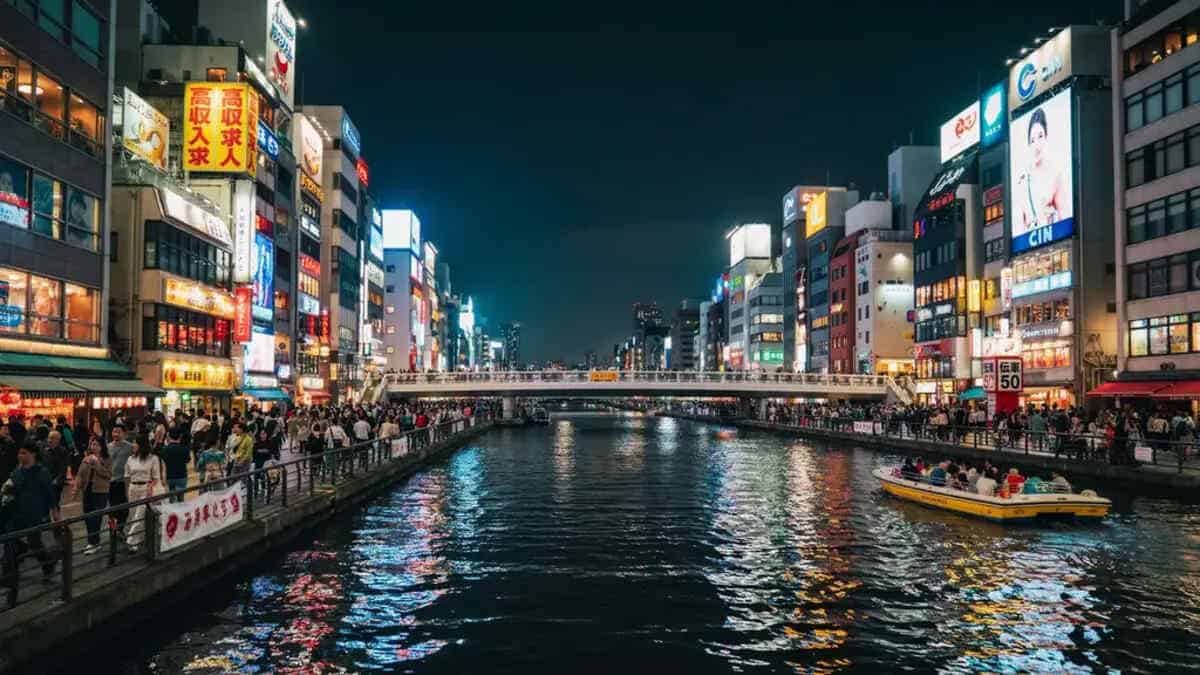
South Korea and other markets are offsetting the reduced number of Chinese tourists in Osaka, Japan. Osaka is benefiting from an increase in tourism from South Korea and other international markets. However, the influx of Chinese visitors is down significantly, which has had a major impact on the number of foreign tourists in general. According to the report, although the number of international visitors to Osaka was at its highest level from several countries, the total number of foreign tourists dropped by 9.6 percent in August 2026 compared to the same period last year. This is an illustration of how much the demand from the Chinese market drives the number of visitors to the city.
The development presents a complex picture for one of Japan’s most important urban tourism destinations. Osaka continues to benefit from its strategic location, strong transport connections, and proximity to major attractions. However, the scale of the Chinese tourism decline has been large enough to outweigh the gains delivered by other global markets.
Osaka Tourism Faces a Surprising Decline Despite Strong Global Travel Demand
Normally, Osaka would be expected to benefit heavily from the continuing international interest in traveling to Japan. The city is widely included in international itineraries because it offers easy access to surrounding destinations while providing a major urban tourism experience of its own.
As Japan’s third-largest city, Osaka is situated close to Kyoto, making it possible for international travelers to visit historic temples and cultural attractions during the day before returning to Osaka for accommodation, dining, and entertainment. The city is also located on the popular Sanyo Shinkansen railway corridor, strengthening its role in multi-destination trips through Japan. Osaka can therefore be added relatively easily to wider itineraries covering several of the country’s best-known locations.
Advertisement
Advertisement
Despite these advantages, Osaka recorded fewer overall international visitors during August 2026 than during the same month in 2025. The decline appears particularly notable because demand was not weak across the board; in fact, several countries delivered some of their strongest tourism numbers on record for Osaka.
| Key Osaka Tourism Indicator | August 2026 Situation |
| Overall foreign visitor change | Down 9.6% year-over-year |
| Mainland China visitor change | Down 59% year-over-year |
| Mainland Chinese visitors | Around 254,000 |
| Visitors excluding China | Up 26.7% |
| South Korea | Record August visitor numbers |
| United States | Record August visitor numbers |
| Taiwan | Record August visitor numbers |
| France | Record August visitor numbers |
| Hong Kong | Record August visitor numbers |
| Indonesia | Record August visitor numbers |
| Russia | Record August visitor numbers |
| Italy | Highest visitor level recorded in any month |
| Spain | Highest visitor level recorded in any month |
South Korea and Other Countries Strengthen Osaka’s International Tourism Base
One of the most encouraging developments has been the performance of South Korea alongside several other international source markets. During August 2026, Osaka received more visitors than during any previous August from South Korea, the United States, Taiwan, France, Hong Kong, Indonesia, and Russia.
Advertisement
Advertisement
Visitors from Italy and Spain performed even more strongly, reaching their highest tourism levels recorded during any month, not just August. These results demonstrate that demand for Osaka remains robust across a broad range of countries.
South Korea is particularly important because short-haul Asian tourism continues to provide Osaka with a large potential visitor market. Travelers from nearby destinations can access Japan comparatively easily, allowing Osaka to serve as both a final destination and a base for traveling around western Japan. Demand from the United States and European markets provides another vital layer of diversification. Travelers from longer-haul markets frequently combine Osaka with several Japanese destinations, supporting hotels, rail services, attractions, and entertainment venues. However, even these strong gains were not enough to prevent the overall decline.
Advertisement
Advertisement
China’s 59% Visitor Collapse Changes Osaka’s Tourism Picture
The most significant factor behind Osaka’s falling international visitor total was mainland China. Chinese tourist numbers declined by approximately 59% compared with August 2025.
Despite the decline, around 254,000 travelers from mainland China still visited Osaka during August 2026. While this remains a substantial number, it is dramatically below the level recorded one year earlier. The sheer size of the Chinese market meant that such a large reduction created a powerful downward drag on the city’s overall tourism statistics.
This dynamic becomes especially clear when China is separated from other international markets. Visitors from all foreign countries other than China increased by approximately 26.7% during August. In other words, Osaka was experiencing substantial growth across the rest of its international tourism market while simultaneously facing an exceptionally large contraction from China. That difference explains why Osaka could achieve multiple visitor records and still finish the month with an overall decline of 9.6%.
The figures show that Osaka’s tourism challenge is not simply falling international demand. It is largely a question of how quickly other markets can compensate for the loss of Chinese visitor volumes.
Advertisement
Advertisement
Political Tensions Are Affecting Travel Demand Between China and Japan
The reduction in Chinese tourism has been directly associated with a warning issued by the Chinese government advising its citizens against traveling to Japan. Presenting Japan as an unsafe destination for Chinese travelers, the warning emerged during a period of heightened political tension involving Japan, China, and Taiwan. The travel caution was issued after comments were made in Japan regarding possible assistance to Taiwan if the island were to face military action from China.
Political disagreements can often extend beyond diplomacy and affect aviation, consumer confidence, and wider economic activity. In this case, tourism has become heavily exposed to deteriorating political relations.
International travel behavior does not always change immediately following an advisory. Many international holidays are arranged well in advance, with flights, hotels, rail passes, and tours booked weeks or months prior to departure. As a result, travelers who had already completed their bookings likely continued with their trips even after concerns were raised. The larger impact has instead been felt gradually as fewer new reservations were made, explaining why the reduction in Chinese visitor numbers has become increasingly visible over time.
Osaka Remains Well Positioned on Japan’s Popular Tourism Routes
Even with the decline from China, Osaka retains several structural advantages that support international tourism. Its location makes the city especially useful for visitors building multi-city Japan itineraries. With Kyoto easily reachable, visitors can seamlessly combine traditional Japanese heritage with Osaka’s energetic urban atmosphere.
The Sanyo Shinkansen further strengthens Osaka’s accessibility, allowing travelers to continue west toward other major destinations. This connectivity has helped Osaka become an essential component of Japan’s most widely traveled tourism routes. Rather than functioning solely as a standalone destination, Osaka serves as a transport hub, an accommodation base, and a rich urban experience within longer Japanese holidays. This positioning will become increasingly valuable as tourism demand geographically diversifies.
Strong Autumn Hotel Reservations Offer a Positive Outlook
The August decline does not necessarily indicate that Osaka’s tourism sector is entering a prolonged downturn. Hotel reservation trends for October and November 2026 are reportedly stronger than bookings recorded for the same period in 2025.
Advertisement
Advertisement
Particularly encouraging demand is being seen across premium-priced hotels. This suggests that travelers with higher spending capacity continue to show strong interest in Osaka, even as overall visitor demographics are reshaped. Higher-value tourism is highly significant because the economic impact of travel is not determined solely by arrival numbers. Travelers staying at premium accommodations, eating at high-end establishments, and purchasing luxury experiences can generate considerably greater tourism revenue than short-stay or lower-spending visitors. Attracting these demographics could help Osaka limit the economic impact of lower visitor volumes from China.
Nightlife, Culture, Sports, and Luxury Travel Could Unlock Further Growth
Osaka has immediate opportunities to strengthen tourism beyond the classic attractions for which it is already known. Visitor surveys indicate that greater awareness could be built around the city’s nightlife, traditional culture, sports, and luxury leisure experiences. Developing these areas will be vital as Osaka attempts to attract a broader mix of international visitors.
Night-time tourism encourages travelers to remain in the city after daytime sightseeing, increasing spending on entertainment and hospitality. Leaning into traditional culture can help Osaka compete for visitors seeking deeper Japanese experiences rather than just major sightseeing landmarks. Furthermore, sports tourism creates reliable travel demand around events, while luxury leisure attracts high-yield visitors.
Promoting these sectors can help Osaka differentiate itself from nearby destinations. Rather than being viewed simply as a convenient accommodation base for visiting Kyoto, Osaka can increasingly market itself as a standalone destination where travelers are encouraged to spend additional nights.
Osaka Tourism Is Being Reshaped Rather Than Simply Declining
Osaka’s August 2026 tourism numbers reveal a market undergoing an important transition. A 9.6% decline in total international visitors is significant, but the headline figure obscures the considerable strength being recorded elsewhere.
South Korea, the United States, Taiwan, France, Hong Kong, Indonesia, and Russia all delivered record August visitor numbers. Italy and Spain reached record monthly levels, and international visitors excluding China increased by a remarkable 26.7%. The central weakness was mainland China, where arrivals fell by 59%—a reduction large enough to cancel out much of the global growth.
Advertisement
Advertisement
For Osaka, this creates both a challenge and an opportunity. China remains a vital source of tourism demand, and uncertainty surrounding future visitor recovery will likely continue while political tensions remain unresolved. However, rapid growth from South Korea and other international markets proves that Osaka continues to hold massive global appeal.
With autumn hotel reservations running ahead of last year and premium accommodations seeing strong interest, the outlook remains much more resilient than the August headline suggests. The next phase of Osaka’s tourism strategy will likely be defined by aggressive diversification. By building stronger demand across Europe, the Americas, and the rest of Asia, Osaka is actively reshaping its market distribution to become less dependent on any single source country.
South Korea and other markets are helping Osaka’s tourism due to Chinese arrivals in decline. However, a 59% drop in visitors from mainland China outweighed gains elsewhere, resulting in a 9.6% decrease in Osaka’s overall foreign arrivals in August 2026.
The figures may have decreased, however, the interest for Osaka from overseas has not disappeared. Rather, the distribution of Osaka’s tourism market has changed, as the following data shows.
Advertisement
