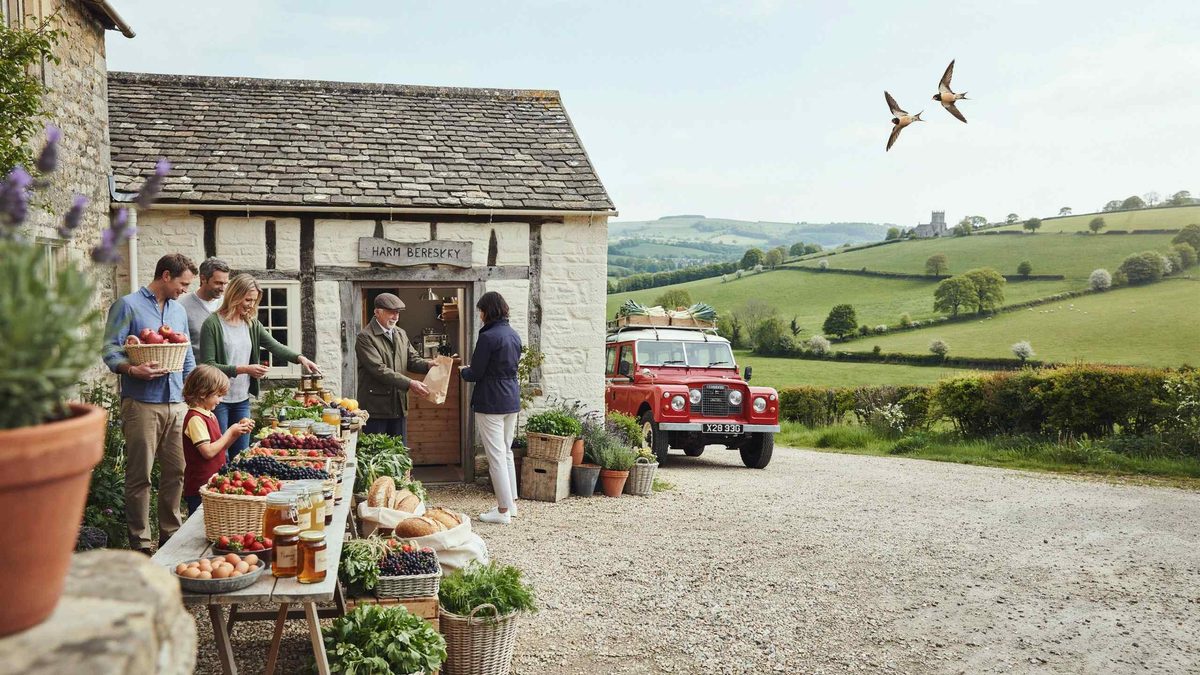
Image generated with Ai
Farm shops in England are rapidly becoming the major rural tourist experience as visitors seek authentic food and countryside experience that is out of traditional tourism routes in 2026. Throughout England, ranging from Cotswolds to Isle of Wight, there is an increasing number of tourists visiting the best farm attractions offering shopping, culinary and historical experience. Considering the importance of agri-food industry in UK (£162.3 billion to GDP and 4.1 million employment) these rural enterprises become an essential part of rural tourism development in England. One thing about the farm shops in England that most people don’t know is that these places become tourist attractions.
The success of farm shops in England is determined by one important shift in the tourists’ behavior. Today, the visitors require experiences and information about their origin, contact with the producer and taste the products.
The key to the success of England’s farm shops is in nothing related to food shopping. It is in slow travel, countryside exploration and storytelling.
Visitors plan their trip itinerary including the visit to farm shops in the same way as the visit to castles, gardens and historic villages.
Advertisement
Advertisement
Farm shops have quietly transformed from small agricultural outlets into powerful rural visitor attractions.
Many travellers once viewed them as quick stops for fresh vegetables, homemade jams or local meat. Today, leading farm shops offer restaurants, bakeries, gardens, wine experiences, seasonal events and lifestyle products.
This transformation matches a wider demand for authentic rural tourism. Official UK rural economy research highlights the importance of tourism in countryside communities, with thousands of tourism-related businesses supporting rural employment.
The attraction is simple.
Advertisement
Advertisement
Visitors do not only want to purchase a product. They want a story behind the product.
A loaf of bread from a farm bakery represents local grain. A cheese selection represents regional producers. A bottle of cider represents landscape and tradition.
This emotional connection gives farm shops a strong advantage over ordinary retail.
The UK food system itself demonstrates the scale of this opportunity. Government statistics show that food and drink retail generated £44.1 billion in gross value added in 2024, while catering contributed £46.1 billion.
Farm shops sit directly inside this growing experience economy.
They combine agriculture, hospitality and tourism into one destination.
Many people still believe farm shops are only for local residents searching for fresh produce.
That perception is changing.
The most successful farm shops are attracting international visitors, weekend travellers and families looking for unique countryside experiences.
What others get wrong is assuming these destinations compete only with supermarkets.
They are actually competing with attractions.
A visitor travelling through Gloucestershire may choose a farm shop visit instead of another museum. A family exploring Devon may add a farm restaurant to their holiday itinerary. A couple visiting the Cotswolds may plan their route around luxury rural experiences.
The new competition is not between shops.
It is between experiences.
England’s leading farm shops succeed because they offer something digital platforms cannot fully replace — physical connection.
Visitors can taste products, walk through landscapes, speak with producers and experience local identity.
This is why farm shops are becoming valuable travel stops.
Located in Gloucestershire, Daylesford Organic has become one of England’s most recognisable farm shop destinations.
The attraction combines organic farming with a premium lifestyle experience.
Visitors find fresh produce, bakery products, homeware, cafés and seasonal offerings across a large countryside setting.
Its appeal reflects a growing trend: travellers increasingly seek places where shopping becomes part of a wider experience.
Daylesford represents the evolution of the traditional farm shop.
It presents farming as a lifestyle.
Instead of simply buying food, visitors explore a carefully designed rural environment connected with sustainability, craftsmanship and local production.
For travellers exploring the Cotswolds, the destination fits naturally into a wider itinerary including villages, gardens and countryside walks.
The farm shop has become part of the destination itself.
West Oxfordshire’s Diddly Squat Farm Shop represents a completely different model.
Owned by television personality Jeremy Clarkson, the farm shop gained worldwide attention through the Amazon Prime series “Clarkson’s Farm”.
Its success shows the power of storytelling in modern tourism.
The shop attracts visitors not only because of products such as farm-made goods and merchandise, but because travellers want to experience a location they have seen on screen.
This creates a new type of tourism: entertainment-driven rural travel.
The Diddly Squat example demonstrates how media exposure can transform an ordinary agricultural location into a recognised visitor destination.
The lesson for rural tourism operators is clear.
A strong story can become as valuable as the product itself.
| Farm Shop | Location | Unique Travel Appeal |
|---|---|---|
| Daylesford Organic | Gloucestershire | Luxury countryside food and lifestyle experience |
| Diddly Squat Farm Shop | West Oxfordshire | Celebrity farm tourism attraction |
| Alder Carr | Suffolk | Local cheeses, deli products and farm traditions |
| Strawberry Fields Farm Shop | Devon | Fresh produce, restaurant and family experience |
| Hinchliffe’s Farm Shop | West Yorkshire | Historic farm-to-table destination |
| Doddington Hall Farm Shop | Lincolnshire | Estate heritage and local produce |
| The Garlic Farm | Isle of Wight | Specialist garlic products and rural discovery |
| Farm Shop Somerset | Somerset | Vineyard, orchard and farm experiences |
| Farm Shop London | London | West Country produce in an urban setting |
| Chatsworth Estate Farm Shop | Derbyshire | Estate-based local food tourism |
Food tourism is expanding because travellers want deeper connections with destinations.
A city break may introduce visitors to architecture and museums. A countryside journey introduces them to landscapes, farming and communities.
Farm shops offer all three.
They connect visitors with:
This trend is particularly important as travellers search for sustainable experiences.
Government food data shows that 58% of UK domestic food consumption came from UK production in 2025 based on farm-gate value measurements.
This growing interest in local supply chains supports the popularity of farm-to-table experiences.
Travellers increasingly want to understand the journey behind their food.
The biggest opportunity is not shopping.
It is route creation.
Farm shops can become anchors for rural tourism circuits.
A traveller visiting Gloucestershire can combine:
A Derbyshire journey can combine:
An Isle of Wight trip can combine:
This creates longer stays and greater visitor spending.
The farm shop becomes the first reason to visit and the gateway to discovering the surrounding region.
England’s farm shops represent a wider story about rural economic resilience.
Small businesses are increasingly important in countryside communities.
The rural economy contains a significant share of UK businesses, and rural areas depend heavily on sectors including agriculture and tourism.
Farm shops create multiple income streams:
This business model allows farms to diversify beyond traditional agricultural income.
For visitors, this means more authentic experiences.
For rural communities, it means stronger local economies.
Visitors planning an England farm shop route should consider several factors.
Spring and autumn often provide the strongest countryside experiences.
Visitors can enjoy seasonal produce, changing landscapes and local events.
The best farm shop journeys are not single stops.
They work as part of a countryside itinerary.
Many rural destinations operate differently from traditional retail locations.
Planning ahead helps avoid disappointment.
Many leading farm shops offer:
From a travel analytics perspective, England’s farm shop movement represents the meeting point of three powerful trends:
Experience tourism: Visitors increasingly value activities over simple sightseeing.
Local authenticity: Travellers want genuine connections with communities.
Slow travel: More visitors are choosing meaningful journeys rather than rushed itineraries.
The data supports the opportunity.
The UK food and tourism ecosystem already represents a major economic force. The agri-food sector contributes billions to the national economy, while rural tourism supports thousands of businesses.
Farm shops sit at the centre of this opportunity because they combine agriculture, hospitality and destination marketing.
They are not replacing traditional attractions.
They are creating a new category.
The country’s farm shops reveal an interesting trend in how tourists move around.
For not only does the future tourist look for the landmarks that have become famous.
But he or she also looks for the story behind the destination.
He or she is searching for information about the people who produced their food and the significance of the destination.
It will be the ones who will profit the most from this because they will understand the importance of the emotional attachment.
While the next step in countryside tourism will consist of attractions such as castles, beaches and historic towns, there is still much more to follow.
The farm shops of England indicate that even the countryside could prove to be a tourist destination.
Such tourist destinations give the opportunity to tourists who want to experience real England.
Advertisement
Tags: British food tourism, Cotswolds travel, countryside experiences, England farm shops, UK rural tourism
Advertisement
Advertisement











Wednesday, September 2, 2026

Wednesday, September 2, 2026
Wednesday, September 2, 2026
Wednesday, September 2, 2026

Wednesday, September 2, 2026

Tuesday, September 1, 2026

Wednesday, September 2, 2026

Wednesday, September 2, 2026