
How Does Every Single Johnston County Foodie Adventure Generate Unbelievable Economic Success For Local Travel Destinations?

Published
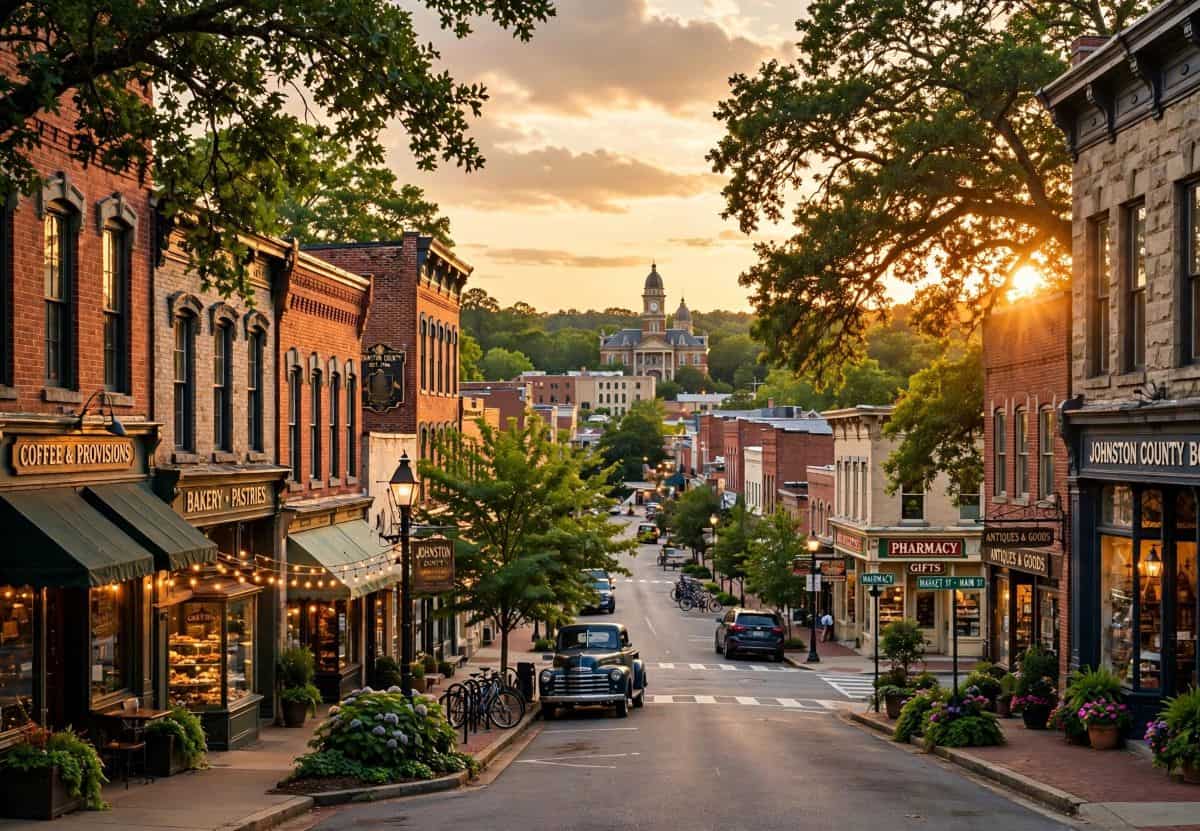
Image generated with Ai
There is a special sense of joy in seeing a community you hold dear grow and develop. Watching travelers come off a highway to enjoy North Carolina Barbecue or sip local craft beer pulls more than just a momentary hard earned dollar. That is an investment into a community. When visitors spending a total of $337.3 million in Johnston County in 2025 (a 7.2% increase from 2024) occurred, the numbers didn’t tell the whole story. It was about our neighbors, the farmers, the bakers, and the local restaurants who make JoCo their home at great personal cost. With food and beverage sales leading the way at $119.49 million, every meal served became a celebration of our heritage. The visitor dollars preserved the JoCo way of life and reduced the tax burden. That strengthened the pull of the warm southern hospitality on a global scale and secured 2,180 jobs. When folks travel, they are not only purchasing a meal or a hotel, they are coming home to our place. That makes all the difference.
Understanding the Surge in Regional Hospitality and Economic Expansion in Johnston County
The economic footprint of visitor spending in Johnston County reached an impressive $337.3 million throughout 2025, which marked a 7.2% rise over the total recorded in 2024. This notable expansion highlighted a growing global movement where travelers actively seek out authentic regional destinations rather than traditional, overcrowded tourist centers. Sector analysts noted that direct hospitality employment grew by 5.3%, providing 2,180 jobs to residents across JoCo. This steady increase in employment demonstrated that regional tourism serves as an effective mechanism for job creation, sustainable business growth, and long-term economic stability within suburban and rural landscapes.
A detailed examination of visitor spending patterns revealed that dining and beverage services represented the single largest economic contributor in Johnston County, generating $119.49 million in 2025. Travelers consistently favored authentic, locally rooted culinary choices ranging from famous regional barbecue pits and farm tours to craft breweries, artisanal bakeries, and boutique wineries. The financial influx generated by these food-focused excursions extended beyond restaurant cash registers, providing vital municipal tax revenue, stimulating supply chains, and supporting surrounding agrarian communities across JoCo.
Advertisement
Advertisement
Analyzing the Global Shifts in Traveler Behavior and Secondary Destination Appeal
Advertisement
Advertisement
The impressive performance of Johnston County reflects a profound structural transformation within the international travel industry. Modern global tourists are increasingly departing from standard itineraries, preferring immersive journeys centered around regional identity, culinary heritage, and unique local history. As international travelers reallocate their vacation budgets toward rich cultural and food experiences, secondary and tertiary markets are gaining unprecedented visibility. This evolving preference alters international transit flows, reshaping how airlines, regional transport authorities, and tour organizers design future travel routes to accommodate decentralizing tourist crowds.
Moreover, the preference for regional hidden gems provides small-scale business owners, independent farmers, and local artisans direct access to international capital streams. When global visitors patronize localized markets, agricultural operations, and independent dining establishments, money circulates directly within the destination’s home economy. This influx of capital incentivizes regional infrastructure investments, elevates service delivery standards, and builds resilient local economies capable of weathering broader macroeconomic fluctuations. The success seen in JoCo underscores how strong regional character combined with targeted culinary promotion can successfully capture the interest of the global travel market.
Long-Term Community Benefits and Infrastructure Investments Across JoCo
Tourism expenditures in Johnston County yield significant societal benefits that extend far beyond the immediate hospitality industry. Revenues generated from visitor activities fund critical municipal services, public park maintenance, emergency response infrastructure, and regional road improvements. By relying on visitor dollars to fund public projects, local authorities can enhance municipal services without placing an unnecessary tax burden on permanent residents. Consequently, every dollar spent at a local restaurant or agricultural festival contributes directly to maintaining a high quality of life for families residing in JoCo.
Additionally, the expansion of the regional hospitality sector creates diverse career opportunities for local workers, spanning culinary management, agricultural tourism coordination, event production, and customer relations. As employment options expand, the community retains talented young professionals who might otherwise relocate to larger urban areas. This cycle of local reinvestment ensures that Johnston County maintains economic vitality, cultural depth, and long-term resilience, serving as a blueprint for community-led tourism growth worldwide.
Advertisement
Advertisement
Sustainable Community Investment and Economic Resilience Across JoCo
Financial analysis confirmed that traveler spending throughout Johnston County yielded widespread economic benefits that supported long-term community development. By reaching $337.3 million in 2025, the travel sector delivered a vital economic boost that reinforced the financial health of local municipalities. Officials noted that the 7.2% annual expenditure growth rate directly correlated with rising tax revenues, which local governments utilized to enhance public services, improve infrastructure, and support local educational initiatives.
Furthermore, the expansion of direct tourism jobs to 2,180 positions across JoCo represented a 5.3% increase in regional employment opportunities. Observers pointed out that visitor spending in key categories such as the $119.49 million spent on food and beverages established a reliable revenue foundation for independent restaurant owners, local farmers, and small business operators throughout Johnston County. This economic interdependence demonstrated how targeted regional tourism fosters long-term financial stability and community resilience.
Record Financial Growth and Employment Expansion in Johnston County
Reports documented that total visitor spending in Johnston County escalated to $337.3 million in 2025, establishing a new benchmark for regional economic performance with a 7.2% increase over 2024. Sector analysts observed that this surge in spending directly stimulated job creation, driving a 5.3% expansion in hospitality personnel to reach 2,180 jobs across JoCo. The food and beverage sector proved to be the central catalyst for this growth, generating $119.49 million as visitors eagerly explored local barbecue establishments, agritourism venues, bakeries, craft breweries, and wineries.
Advertisement
Advertisement
Economic observers concluded that the financial influx generated by leisure travelers yielded extensive advantages across the entire region. The money spent by visitors provided direct financial support to independent business owners, elevated local municipal tax bases, and created new employment opportunities across Johnston County. Ultimately, these figures affirmed that localized culinary attractions and authentic community experiences serve as powerful engines for sustainable economic growth and job creation.
Global Travel Dynamics and the Expanding Role of Local Food Experiences in Johnston County
Industry studies indicated that the continuous economic expansion in Johnston County mirrored broader international travel trends, where global visitors increasingly prioritize authentic local cuisine over traditional sightseeing. The $337.3 million spent by visitors in 2025 reflected a 7.2% rise over 2024 figures, driven largely by international and domestic tourists seeking genuine regional flavors. Analysts highlighted that direct hospitality positions grew by 5.3% to support 2,180 jobs throughout JoCo, illustrating the strong connection between specialized culinary appeal and employment growth.
The food and beverage category generated $119.49 million, demonstrating that authentic agricultural experiences, traditional barbecue, local bakeries, craft breweries, and wineries act as primary magnets for modern travelers. This shift in visitor behavior influences global travel patterns as international tour operators adjust itineraries to include distinctive regional destinations alongside major metropolitan centers. Ultimately, the sustained success of Johnston County illustrates how regional heritage and culinary excellence can attract international travelers, distribute economic benefits to local communities, and enhance the global appeal of secondary destinations.
Analyzing the $924,110 Daily Economic Inflow Across Johnston County Businesses
Advertisement
Advertisement
Economic data indicates that traveler commerce generates approximately $924,110 per day in direct expenditures across Johnston County. This substantial daily financial stream flows directly into local commercial ecosystems, sustaining a broad spectrum of independent operations including lodging facilities, retail stores, recreational venues, and dining establishments. The constant injection of non-resident capital provides immediate liquidity to frontline merchants throughout JoCo, enabling small businesses to maintain steady inventory cycles, upgrade operational facilities, and sustain year-round staffing levels despite broader macroeconomic fluctuations.
Beyond individual merchant balances, this continuous daily capital inflow activates a powerful multiplier effect across the regional supply chain. Local service providers ranging from food distributors and agricultural producers to utility companies and maintenance contractors benefit indirectly as primary hospitality businesses reinvest their daily revenues locally. Consequently, the $924,110 daily spend does not merely support tourist-facing storefronts; it stabilizes the foundational commerce of the entire county, converting transient visitor interest into sustained regional economic resilience.
Evaluating Municipal Tax Offsets and the $97 Annual Household Relief Mechanism
Traveler spending throughout Johnston County produced $13.98 million in state tax revenue alongside $10.65 million in direct local tax collections during 2025. These non-resident tax contributions fund vital public infrastructure initiatives, roadway maintenance projects, emergency response services, and municipal enhancements without requiring additional financial contributions from permanent community members. The strategic capture of visitor taxes ensures that public services expand in tandem with regional growth while preserving local fiscal stability.
The practical benefit of this tax structure translates into tangible financial relief for local property owners across JoCo. Financial assessments reveal that visitor-generated tax revenues reduce the overall tax obligation for permanent residents by approximately $97 per household annually. By leveraging traveler capital to offset municipal operating costs, local governance maintains high-quality public amenities and civic infrastructure while actively insulating long-term homeowners and families from escalating local tax pressures.
Advertisement
Advertisement
The $70 Million Lodging Sector Expansion and Regional Overnight Stay Transformation
Visitor spending within the lodging and hospitality sector reached $70 million across Johnston County in 2025, representing a fundamental evolution in how travelers interact with the area. Historically viewed primarily as a convenient transit corridor along major interstate routes, the region has successfully transitioned into a primary overnight travel destination. Key expansion projects, including modern hotel accommodations in Benson and Smithfield, have expanded local room capacity and elevated regional hospitality standards to accommodate diverse traveler segments.
This strategic expansion in lodging infrastructure directly extends the average duration of visitor stays, which significantly increases total yield per traveler. Overnight guests spend substantially more across all commercial categories including evening dining, entertainment, and retail—compared to day-trip commuters. As municipal planners and private developers continue investing in high-quality accommodations across JoCo, the area secures a larger share of extended multi-day travel itineraries, strengthening its position as a preferred overnight hub.
Comparing Regional Performance: How Johnston County Outpaced Wake, Durham, and Orange Counties
Comparative performance reports across North Carolina’s Research Triangle region highlight Johnston County’s leading 7.2% annual expenditure growth rate. This impressive performance surpassed neighboring metropolitan markets, including Wake County at 2.4%, Durham County at 0.9%, and Orange County, which recorded a 0.5% contraction over the same reporting cycle. These metrics demonstrate a dynamic market shift where secondary and suburban markets capture an increasingly larger share of regional tourism growth.
Advertisement
Advertisement
The divergence in growth trajectories emphasizes evolving consumer preferences among contemporary travelers, who frequently seek accessible, authentic destinations away from heavily congested urban centers. By offering unique agricultural tours, historical sites, and renowned culinary experiences, Johnston County effectively differentiates itself within the competitive Triangle market. This strategic positioning allows JoCo to capture high-value leisure travel, outperforming traditional metropolitan hubs and establishing a highly competitive regional footprint.
Quantifying Labor Income and the $89.51 Million Personal Payroll Contribution
The direct expansion of the hospitality workforce to 2,180 positions yielded $89.51 million in total personal payroll across Johnston County in 2025. This substantial wage contribution illustrates that tourism growth generates meaningful financial return for local workers, providing competitive compensation across diverse employment tiers. Positions span essential service roles, supervisory personnel, culinary specialists, agricultural tour managers, and executive hospitality directors throughout the region.
This $89.51 million payroll injection significantly enhances local household purchasing power, driving secondary economic activity across housing, retail, healthcare, and education sectors within JoCo. As workers spend their wages locally, hospitality growth reinforces broader regional employment stability. The sector continues to offer viable career mobility, skills training, and stable livelihoods, proving that destination marketing serves as a direct driver of long-term workforce development.
Commercial Infrastructure Development and the Transformative Impact of Eastfield Crossing
Advertisement
Advertisement
Large-scale commercial developments, such as the multi-use Eastfield Crossing project in Selma, represent a key structural catalyst for economic expansion in Johnston County. These master-planned commercial hubs combine retail outlets, dining venues, hotel accommodations, and logistics spaces within single accessible complexes along major transportation arteries. By expanding regional commercial capacity, such developments attract high volumes of highway travelers and regional shoppers, converting transit traffic into sustained local revenue.
The alignment of private commercial capital with public destination planning creates a self-reinforcing economic ecosystem across JoCo. High-visibility developments elevate the physical profile of Selma and surrounding areas, attracting national brands alongside regional merchants. This expanded commercial footprint increases overall visitor capacity, encourages longer visitor stays, and generates substantial local sales tax collections, ensuring that commercial infrastructure keeps pace with escalating tourism demand.
The Dedicated Room Occupancy Tax Framework and Self-Sustaining Destination Marketing
Destination marketing initiatives across Johnston County operate under a fully self-sustaining financial framework powered 100% by visitor-paid room occupancy tax collections. Under this structured fiscal model, transient lodging taxes paid exclusively by overnight guests fund all promotional campaigns, tourism development grants, and regional marketing operations. Consequently, the promotion of local tourism requires $0 in property tax contributions from permanent county residents.
This self-funding mechanism creates a sustainable economic feedback loop that protects public funds while driving continuous commercial growth. As effective destination marketing attracts more overnight guests to JoCo, room occupancy tax revenues naturally increase, providing expanded funding for subsequent marketing initiatives. Local taxpayers benefit from continuous economic growth, job creation, and elevated municipal tax collections without bearing any direct financial risk for promotional expenditures.
Advertisement
Advertisement
Johnston County’s Contribution to North Carolina’s Record $37.2 Billion Tourism Economy
North Carolina recorded an all-time high of $37.2 billion in statewide visitor expenditure during 2025, an industry surge that supported 230,997 direct jobs across all 100 counties. Within this vast economic framework, Johnston County’s $337.3 million contribution represents an important structural engine driving statewide hospitality success. Regional achievements within secondary markets collectively reinforce North Carolina’s status as a top-tier national travel destination.
The strong economic performance recorded across JoCo illustrates how localized assets such as regional barbecue, agritourism, and craft beverage trails feed into the broader state travel narrative. By continuously expanding its visitor base and elevating average expenditure metrics, Johnston County strengthens the overall competitiveness of North Carolina’s Southeast and Triangle regional travel networks. This synergy ensures that local growth directly fuels statewide economic momentum for years to come.
The Final Verdict
If you take a moment to look, you’ll find that tourism in Johnston County isn’t about numbers at all. It’s about a local family continuing to operate their farm. It’s about the first time fine line cook or chef. It’s about the primary streets keeping the lights on. When a traveler decides to check out JoCo to have some of the local barbecue, have some of the locally made drinks, or have a night stay in Smithfield or Benson, they are supporting our community. This rapidly growing economy is not something to be taken for granted. It shows that having authenticity and real friendliness draws good things to a real community. As our region of North Carolina makes it’s way to the rest of the world’s focus, visitor spending not only makes for a good investment in roads and has a positive impact on our neighbor’s taxes, but it is a way to preserve our heritage and leave our children something better at home. And this is in fact the most true of all. Having Johnston County tourism is a way to help our community grow.
Advertisement
