
Suva and More Fiji Bus Users Gain Fare Stability as Temporary Increase of Over Twenty Two Per Cent Ends After Government Absorbs Added Costs

Published
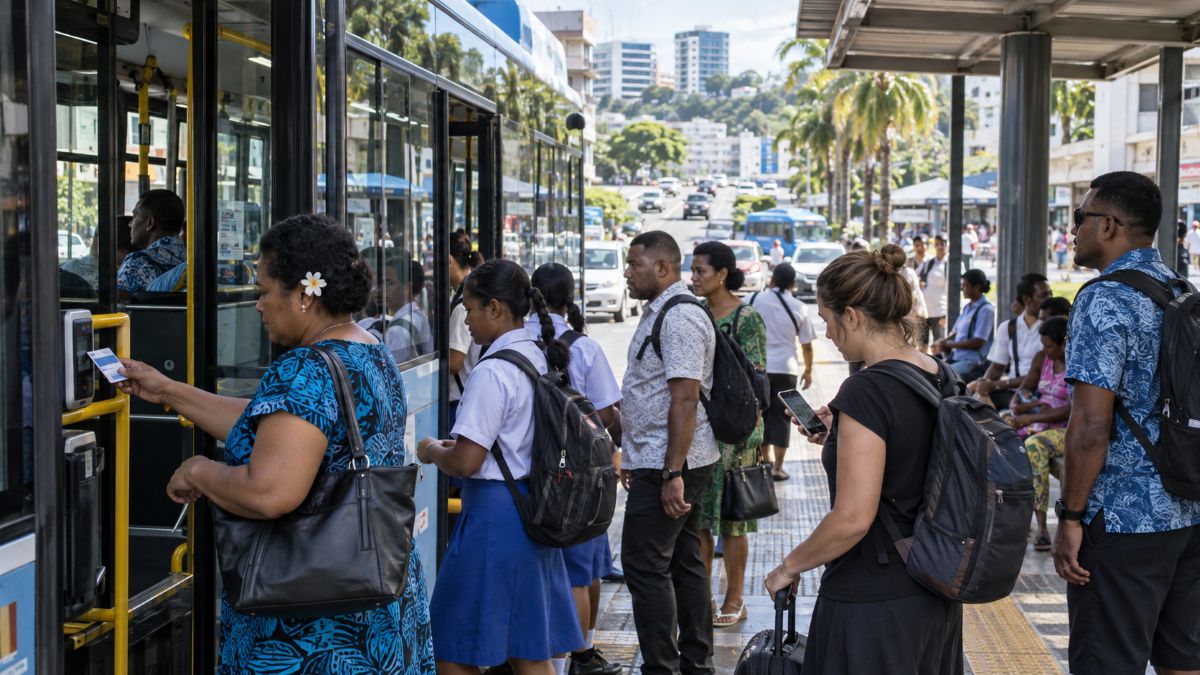
Image generated with Ai
Suva and More Fiji Bus Users Gain Fare Stability as Temporary Increase of Over Twenty Two Per Cent Ends After Government Absorbs Added Costs. Suva and more Fiji bus users now gain fare stability after a temporary increase of over twenty two per cent ends. Government support absorbs the added costs, protecting passengers from higher regulated fares. The change matters because base fares have returned across Viti Levu and Vanua Levu. Therefore, travellers and commuters face more predictable bus costs. The measure also shows how Government support helped keep services affordable during a period of higher fuel and operating expenses.
Fiji Bus Fare Policy at a Glance
| Item | Official information |
|---|---|
| Regulator | Fijian Competition and Consumer Commission |
| Temporary increase | 22.5% per fare stage |
| Started | 26 May 2026 |
| Ended | 31 August 2026 |
| Geographic scope | Viti Levu, Vanua Levu and Taveuni bus networks |
| Approx. bus users | 350,000 people |
| Passenger impact during increase | Government absorbed additional cost |
| Existing subsidy | 10% bus-fare subsidy |
| Initial additional fiscal cost | About FJ$2 million per month |
| Example Stage 1 fare | FJ$1.02 to FJ$1.25 |
| Viti Levu from 1 Sep | Base fares restored |
| Vanua Levu from 1 Sep | Base fares restored |
| Taveuni from 1 Sep | Separate revised fare structure |
The official system is organised around island bus networks rather than a fixed list of cities. This means the temporary adjustment affected a wide area rather than only Suva.
Suva Was Part of a Much Wider National Measure
The 22.5% fare adjustment applied across Fiji’s regulated bus system covering Viti Levu, Vanua Levu and Taveuni.
Suva sits on Viti Levu and was therefore included within the wider regulated fare structure. However, the policy was not designed as a Suva-only increase.
Advertisement
Advertisement
The official material does not publish a reliable number of cities affected. The stronger and more accurate measure is the number of people using buses nationally.
Advertisement
Advertisement
Government statements indicate that around 350,000 Fijians rely on bus transport.
Why the Temporary Bus Fares Increased
The Fijian Competition and Consumer Commission introduced the temporary 22.5% adjustment after operating costs came under pressure from higher fuel prices and global supply disruptions.
The increase was applied per fare stage.
For example, an official Stage 1 fare moved from FJ$1.02 to FJ$1.25 under the temporary adjustment.
The purpose was to support bus operators while keeping services running during a period of higher operating costs.
Advertisement
Advertisement
Government Stepped In to Protect Passengers
Although FCCC approved the higher regulatory fares, the Fiji Government decided passengers should not have to carry the additional cost.
The Government absorbed the difference and paid support to operators through subsidy arrangements.
This meant the fare increase existed at the regulatory level, but passengers using supported electronic bus cards were protected from paying the additional amount directly.
Different Bus Cards Received Different Support
Government support was linked to Fiji’s electronic bus-card system.
| Bus card | Main users | Official treatment |
|---|---|---|
| Red card | Adult passengers | Government covered additional fare cost |
| Yellow card | Students | Additional adjustment covered through subsidy arrangements |
| Blue card | Eligible students | Fully subsidised |
| Purple card | Social-welfare recipients | Account support added for fare adjustment |
| Green card | Social-welfare recipients | Account support added for fare adjustment |
The Ministry of Finance states that blue cards are provided to eligible students from households meeting the income requirement, with their bus travel fully subsidised.
Advertisement
Advertisement
Social-welfare users on purple and green cards also received extra support during the temporary fare period.
Around 350,000 Bus Users Were Covered
The scale of the measure is better understood through passenger numbers rather than city counts.
The Government told Parliament that about 350,000 people in Fiji depend on buses.
The policy therefore had broad importance across major population centres, smaller towns and communities served by the regulated bus network.
The Government initially estimated that absorbing the 22.5% increase would cost around FJ$2 million per month.
Advertisement
Advertisement
A later Ministry of Finance notice put the wider annual subsidy arrangement, including existing support, at around FJ$40 million.
Why the Temporary Increase Ended on 31 August
FCCC introduced the increase as an interim response to higher fuel prices.
By August, fuel-price conditions had improved.
As a result, the temporary adjustment ended on 31 August 2026.
From 1 September, the position changed across the main island networks.
Advertisement
Advertisement
| Area | Position from 1 September 2026 |
|---|---|
| Viti Levu | Base fares restored |
| Vanua Levu | Base fares restored |
| Taveuni | New island-specific fare structure introduced |
What the Change Means for Suva Travellers
For people using public buses around Suva and the wider Suva–Nausori area, the main point is simple: the temporary 22.5% increase is no longer active.
Base fares returned across Viti Levu from 1 September.
That makes the September position very different from the situation between late May and the end of August, when Government subsidies were used to protect passengers from paying the higher regulated fare.
Fiji’s Bus Policy Shows the Scale of Public Transport Dependence
The temporary fare adjustment affected the national bus system across Viti Levu, Vanua Levu and Taveuni and covered roughly 350,000 bus users.
The Government’s decision to absorb the added cost helped protect passengers while operators faced higher fuel and operating expenses.
Advertisement
Advertisement
With base fares restored across Viti Levu and Vanua Levu from 1 September, the temporary measure has now ended. For Suva passengers and travellers, that means normal regulated fares have returned, while Taveuni now follows a separately revised fare structure.
Suva and More Fiji Bus Users Gain Fare Stability as Temporary Increase of Over Twenty Two Per Cent Ends After Government Absorbs Added Costs. The answer is simple. Suva and more Fiji bus users gain fare stability because the temporary increase of over twenty two per cent has ended. Government support absorbed the added costs while fuel and operating pressures were high. Now, base fares have returned across Viti Levu and Vanua Levu, giving travellers clearer costs. The policy protected passengers during the temporary adjustment and allowed operators to receive support without shifting the full burden onto people using buses.
Advertisement
