
Mumbai Airport’s 30% International Flight Shift to Navi Mumbai Delayed Until 2027

Published
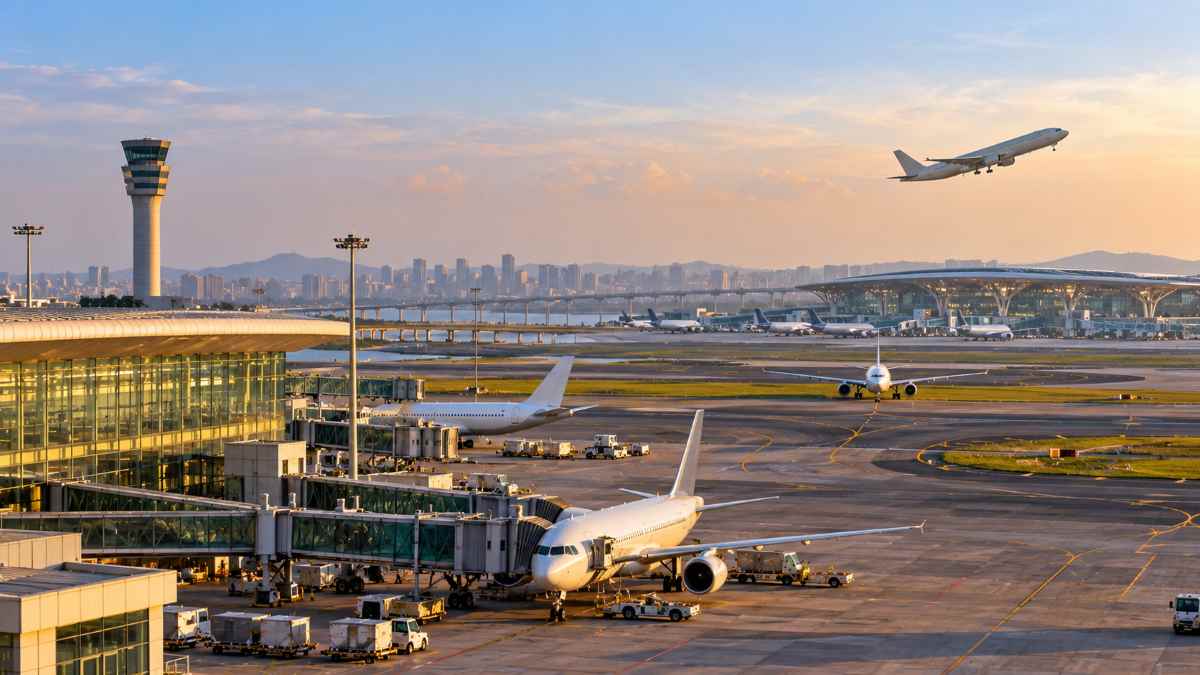 Image generated with Ai
The move by the city of Mumbai to relocate one-third of its international flights from CSMIA to NMIA has now been put on hold until March 2027, owing to the opposition of airlines and interference by the Ministry of Civil Aviation. Initially, it was planned that the transfer would start in October 2026 prior to the development of Terminal 1 at CSMIA. This would have helped in reducing the international departures at CSMIA Terminal 2 so that the domestic flights could be relocated to that space after redevelopment. The plan entailed relocation of about 265 of 770 international departures per week at CSMIA Terminal 2. The authority managing the airport had approached the airlines to either move their operations to NMIA or temporarily discontinue their operations. But due to concerns related to the short implementation period and readiness, airlines have raised doubts about the feasibility of this plan. After deliberations with the airlines, the transfer has been delayed till March 2027, which is the summer schedule for aviation.
Terminal 1 Redevelopment Drives the Reshuffle
The proposed traffic redistribution is closely connected to the redevelopment of CSMIA’s ageing Terminal 1, which primarily handles domestic passengers.
Advertisement
Advertisement
The first phase of the project involves the northern section of Terminal 1B, with demolition work initially scheduled to begin on 15 January 2027. The affected section handles approximately five million passengers annually.
To maintain airport operations during construction, the airport operator planned to move part of the domestic passenger traffic towards Terminal 2. Since Terminal 2 also handles international services, reducing some international operations became part of the proposed capacity-management arrangement.
Advertisement
Advertisement
The redevelopment is expected to increase Terminal 1’s annual passenger capacity from approximately 15 million to 20 million once completed. The broader project is expected to continue through the coming years, with the new terminal targeted for commissioning around 2029-30.
The airport operator has argued that the redevelopment is necessary to address infrastructure requirements while preparing Mumbai for future passenger growth.
Advertisement
Advertisement
Why Navi Mumbai International Airport Is Central to the Plan
NMIA provides an additional aviation facility for the Mumbai Metropolitan Region, which has historically depended heavily on CSMIA for domestic and international connectivity.
The new airport began commercial domestic operations in December 2025 and subsequently started international services in July 2026. Its opening gives airlines and airport authorities another facility to consider as passenger demand increases and construction work affects capacity at the existing airport.
The proposed international transfer was expected to involve around five million passengers annually. Business Standard previously reported that NMIA had the capacity to handle approximately six million international passengers annually, meaning the proposed transfer could bring a substantial portion of that capacity into use.
The longer-term objective is to develop a dual-airport system in which both Mumbai and Navi Mumbai handle significant passenger volumes. However, the distribution of airline operations will depend on infrastructure readiness, airline requirements and the final transition framework.
Airlines Raise Concerns Over Forced Relocation
The proposed transfer encountered resistance from international and domestic carriers, particularly over the prospect of changing established flight schedules at short notice.
Airlines typically plan aircraft deployment, crew rosters, maintenance arrangements, passenger connections and ticket sales months. Moving services between two airports can require substantial operational adjustments, particularly for carriers operating connecting international and domestic flights.
Advertisement
Advertisement
The International Air Transport Association (IATA) also raised objections to the proposed approach. The global airline body questioned the lack of adequate consultation and called for any transfer to be voluntary, commercially viable and supported by a comprehensive operational readiness process.
Its concerns included ground handling, aircraft maintenance, catering, cargo facilities, crew accommodation and passenger connectivity at NMIA. IATA also sought greater clarity on how existing airport slots would be treated during the transition.
The concerns were significant for international airlines whose passengers may rely on connections through Mumbai. Splitting operations between two airports could complicate transfers, increase ground-handling requirements and add costs for airlines.
The Ministry of Civil Aviation subsequently intervened, calling for further discussions between the airport operator and affected carriers.
March 2027 Becomes the New Transition Target
Following discussions on 13 October, Adani Airports decided to defer the partial transfer of international operations until the summer schedule beginning in March 2027.
A joint working group is expected to work on an implementation plan for the redevelopment and traffic redistribution. Airport representatives have also indicated that airlines will receive further discussions and coordination before the revised transition begins.
Advertisement
Advertisement
The postponement gives carriers additional time to assess the implications for their networks, aircraft utilisation and passenger bookings. It also allows airport authorities to address concerns about operational capacity and the arrangements required to handle international services at NMIA.
For travellers, the immediate message is to avoid assuming that international flights have already moved to Navi Mumbai. The proposed transfer remains a future operational change, and passengers should rely on their airline’s confirmed departure-airport and terminal information when planning journeys.
Mumbai’s Two-Airport Strategy Takes Shape
NMIA’s development is critical in terms of meeting future aviation capabilities in Mumbai. With increased passenger traffic, the two-airport scenario is likely to afford more space for both domestic and international flights. But the latest delay indicates that the expansion of infrastructure does not mean an automatic transition of flights from one airport to another. It will be crucial to coordinate efforts between airport authorities, regulators, airlines, and ground service providers. Right now, the task is to ensure a compromise between the redevelopment of CSMIA and the needs of airlines. The new 2027 deadline allows some leeway, but much depends on the result of the talks.
Advertisement
