
United Kingdom Sees Major Railway Works Reshape Southampton and Portsmouth as Travel Routes Face Disruption

Published
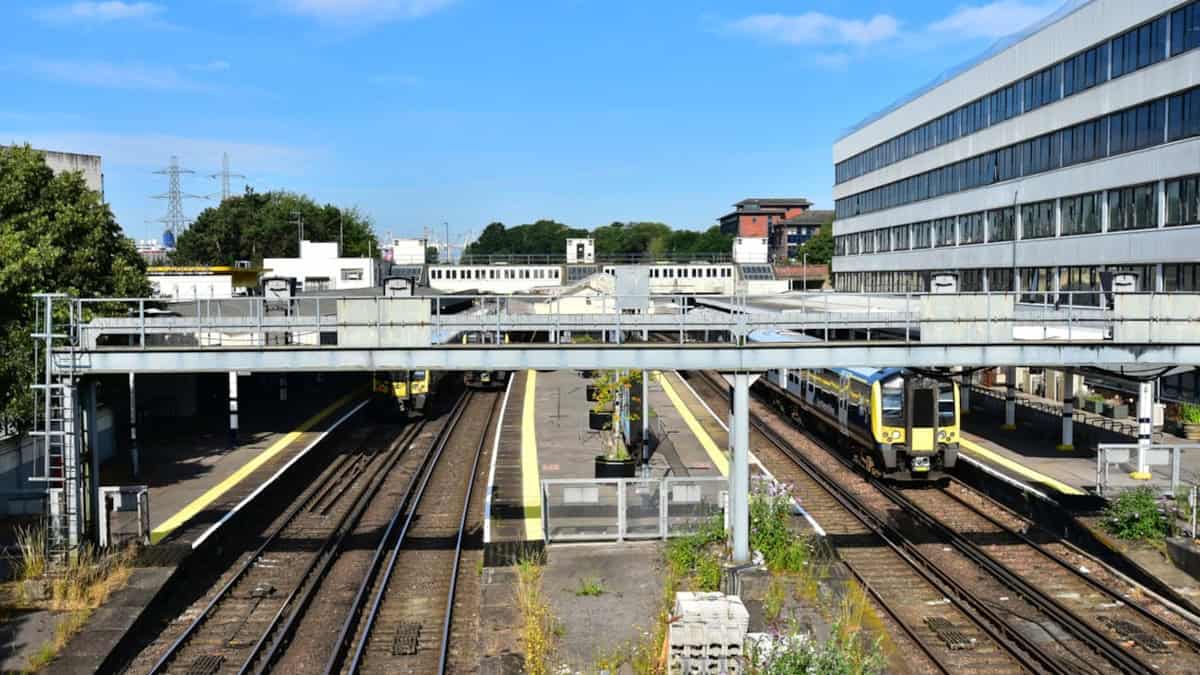
Rail travellers using Southampton and Portsmouth face a considerably broader disruption window than the headline 24–25 October Southampton Central closure suggests. All lines around Southampton Central will close that weekend, disrupting four train operators and replacing multiple journeys with buses. The pressure then shifts east from 26–30 October during the £120 million Havant re-signalling programme, before further changes return on 31 October and 1 November. Taken together, official schedules reveal a nine-day sequence of changing rail conditions across one of southern England’s most important tourism, cruise and intercity transport corridors.
Southampton Rail Closure Is Only the First Stage of a Bigger Travel Problem
Travellers planning around 24 and 25 October 2026 need to look beyond the two-day Southampton Central closure.
According to South Western Railway, every railway line in the Southampton Central area will be closed throughout that weekend for maintenance. The impact reaches considerably farther than Southampton itself because the station sits on routes linking London Waterloo, Winchester, Bournemouth, Weymouth, Portsmouth, Salisbury and other destinations. CrossCountry, Great Western Railway and Southern services are also affected.
The more significant travel story emerges when the engineering calendar is viewed as one continuous operating period.
Advertisement
Advertisement
Network Rail confirms that rail travel around the Portsmouth Direct and south-coast corridor will face different restrictions from Saturday 24 October until Sunday 1 November. The largest intervention comes between Monday 26 and Friday 30 October during the Havant re-signalling blockade. Further changes follow during the weekend of 31 October and 1 November.
That produces a nine-day sequence in which passengers cannot assume the same route, interchange or replacement transport arrangement will apply from one day to the next.
Advertisement
Advertisement
For travel sellers, tour operators and independent visitors, that distinction matters. A passenger travelling on 24 October faces a different network from someone travelling on 27 October or 1 November.
What Changes on 24 October Around Southampton Central
Saturday 24 October brings the most substantial disruption directly around Southampton.
Advertisement
Advertisement
South Western Railway says its London Waterloo–Weymouth operation will be revised. One hourly service will additionally call at Eastleigh before terminating at Southampton Airport Parkway, while another hourly service will terminate at Eastleigh after additionally calling at Shawford.
Stopping trains between Winchester and Southampton Central will not operate.
Southampton Central–Portsmouth stopping trains will also be suspended, although a revised railway service will operate between Fareham and Portsmouth.
The Salisbury–Romsey service that normally runs through Southampton Central will operate only between Salisbury and Romsey. Brockenhurst–Lymington trains will also be withdrawn.
Advertisement
Advertisement
Replacement buses will connect several points, including Southampton Central with Bournemouth, Fareham and Romsey, as well as Eastleigh with Southampton Central and Bournemouth.
Saturday 24 October Network Changes
| Corridor | Officially confirmed change | Practical implication |
|---|---|---|
| London Waterloo–Weymouth | Revised, with services terminating at Southampton Airport Parkway or Eastleigh | Through rail journeys towards Dorset require changed connections |
| Winchester–Southampton Central | Stopping service suspended | Passengers need alternative routing |
| Southampton Central–Portsmouth | Stopping trains suspended | Replacement road travel is required across part of the corridor |
| Southampton Central–Bournemouth | Replacement buses provided | Longer journey and luggage handling should be considered |
| Southampton Central–Fareham | Replacement buses | Rail continuity towards Portsmouth is broken at Southampton |
| Salisbury–Romsey via Southampton | Service operates Salisbury–Romsey only | Southampton is removed from the through working |
| Brockenhurst–Lymington | Train service suspended | Replacement buses operate |
Southampton Airport Parkway Becomes a Critical Temporary Railhead
One of the most useful traveller-facing details is the temporary importance of Southampton Airport Parkway.
During both days of the Southampton works, long-distance services that would normally continue south-west are curtailed around Eastleigh and Southampton Airport Parkway. On Sunday 25 October, London Waterloo–Weymouth services will additionally call at Eastleigh and terminate at Southampton Airport Parkway.
That effectively shifts part of the interchange burden away from Southampton Central.
This matters because passengers who usually think of Southampton Central as the natural gateway for the city, port and onward south-coast journeys may instead encounter rail-to-road transfers farther north.
The operational effect is a temporary fragmentation of the normal railway. Rather than one through journey, passengers may face a train, an interchange, a replacement road vehicle and another train.
Advertisement
Advertisement
For travellers carrying substantial luggage, families and customers requiring assistance, that is more significant than a conventional timetable change.
Sunday 25 October Creates a Second Layer of Disruption Towards Portsmouth
Sunday adds another complication.
South Western Railway confirms that the railway between Guildford and Petersfield will also close on 25 October. London Waterloo–Portsmouth services using the Guildford route will terminate at Guildford, with replacement buses operating between Guildford and Petersfield via Haslemere. A revised train service will continue between Petersfield and Portsmouth.
At the same time, Southampton Central remains affected by the separate weekend closure.
This means travellers heading towards the south coast cannot simply assume Portsmouth provides an uncomplicated alternative to Southampton, or vice versa.
Network Rail separately confirms replacement buses between Havant and Southampton Central on both 24 and 25 October, while additional buses run between Guildford and Petersfield on the Sunday.
Advertisement
Advertisement
That makes 25 October particularly important for itinerary planning, because two strategically significant rail approaches are affected on the same day.
Nine-Day South Coast Rail Calendar Travellers Should Understand
The disruption does not end when Southampton Central’s weekend closure finishes.
| Date | Main rail intervention | Key traveller consequence |
|---|---|---|
| 24 October | Southampton Central area closure | Extensive bus substitution and curtailed London services |
| 25 October | Southampton closure plus Guildford–Petersfield works | Simultaneous pressure on Southampton and Portsmouth approaches |
| 26–30 October | Main Havant re-signalling blockade | London–Portsmouth and Southern coastal routes substantially altered |
| 31 October | Further Portsmouth Direct and Brockenhurst changes | Alternative buses remain necessary on affected corridors |
| 1 November | Further Guildford–Havant and Southampton-area works | Network changes continue before the normal pattern is restored |
Network Rail states that the biggest changes will occur during the five-day blockade from 26 to 30 October.
During that period, South Western Railway services from London Waterloo towards Portsmouth Harbour via the Portsmouth Direct Line will terminate at Petersfield.
Replacement buses will operate between Petersfield and Portsmouth Harbour.
Southern services will terminate at Chichester, with replacement buses operating between Chichester and Portsmouth Harbour and between Chichester and Southampton Central.
Advertisement
Advertisement
There is an important distinction. South Western Railway states that its Southampton Central–Portsmouth stopping service is scheduled to continue through to Portsmouth Harbour between 26 and 30 October. Therefore, this should not be presented as a continuous nine-day closure of the Southampton–Portsmouth railway. Instead, it is a nine-day sequence of different engineering restrictions across the wider corridor.
That distinction is critical for accurate travel journalism.
£120 Million Havant Programme Explains Why Disruption Continues
The weekday disruption is tied to a much larger infrastructure programme.
According to Network Rail, the Havant work forms part of a £120 million re-signalling programme and represents the next phase of the Portsmouth Direct Upgrade.
The project will replace ageing signalling and interlocking equipment and transfer railway control from Havant Area Signalling Centre to the Basingstoke Regional Operational Centre.
Work during the October blockade includes installation of 61 axle counters, 23 Automatic Warning System components and nine Train Protection and Warning System components.
Advertisement
Advertisement
Engineers will also refurbish cable routes, install fibre and power cabling, install new signalling equipment and undertake testing.
Additional infrastructure projects will be completed while the railway is unavailable.
At Fishbourne, Network Rail plans to replace rails, sleepers and ballast. Havant station’s existing pedestrian footbridge will be removed using cranes, while track, third-rail, level-crossing, signalling and other maintenance will take place elsewhere along the corridor.
The scale of the programme explains why travellers face several different operating patterns rather than a single weekend closure.
Why Southampton’s Railway Matters Far Beyond Daily Commuting
Southampton Central is not simply a commuter station.
According to Southampton City Council, a £5.5 million interchange improvement programme completed in 2024 was designed to strengthen the station as a gateway for visitors, commuters and cruise passengers.
Advertisement
Advertisement
The project added improved onward transport connections and a dedicated cruise-passenger waiting lounge.
The Department for Transport’s latest official international sea-passenger statistics reinforce the transport significance of Southampton.
The UK recorded 3.1 million international cruise passengers in 2025. Approximately 2.6 million, or 86 per cent, passed through Southampton. Portsmouth handled approximately 61,000 passengers starting or ending international cruise journeys during the same year.
Those figures do not mean every cruise passenger uses rail. They do, however, demonstrate why reliable surface access around Southampton has disproportionate importance to the British visitor economy.
The disruption therefore needs to be understood as a railway capacity and connectivity issue with implications for tourism distribution, rather than simply as local track maintenance.
Portsmouth Also Faces Live Visitor Demand During the Disruption
Portsmouth adds another relevant tourism dimension.
Advertisement
Advertisement
Portsmouth International Port’s official 2026 schedule lists Spirit of Adventure arriving at 07:00 and departing at 17:00 on 25 October. The port classifies the movement as a call rather than a passenger turnaround.
That distinction matters. It would be inaccurate to suggest thousands of embarking cruise passengers necessarily need rail connections that day.
However, the scheduled port call confirms that Portsmouth remains an active visitor destination while the Guildford–Petersfield railway is disrupted and while the Southampton engineering programme affects wider south-coast connectivity.
Tourism transport planners therefore need to examine rail engineering against actual visitor activity rather than treating engineering weekends as isolated railway events.
Replacement Buses Introduce Different Luggage and Accessibility Rules
Passengers should also understand that a replacement bus is not operationally identical to a train.
According to National Rail, non-folding bicycles cannot be carried on rail-replacement buses or coaches. Folding bicycles may be accepted only when space is available and at the driver’s discretion.
Advertisement
Advertisement
Replacement buses typically provide limited dedicated luggage space. Coaches may offer greater luggage capacity, but vehicle type can vary.
For passengers requiring accessible transport, the railway may provide buses, coaches, taxis or minibuses depending on individual requirements and vehicle availability. Assistance dogs are permitted.
These details are particularly relevant around Southampton because passengers connecting with cruises may carry larger luggage than ordinary day travellers.
Agents should therefore avoid treating replacement-bus connections as exact substitutes for the train originally shown in an itinerary.
Why This Railway Angle Matters for the Travel Trade
The information gain from combining the official schedules is significant.
Viewed separately, the 24–25 October Southampton notice appears to describe a conventional engineering weekend.
Advertisement
Advertisement
Viewed across the complete infrastructure calendar, it becomes a rolling nine-day transport-management issue.
The affected geography also changes through the period.
Southampton Central is the principal pressure point first. Guildford and Petersfield become crucial on 25 October. Havant, Chichester and Portsmouth then dominate from 26–30 October. Haslemere, Guildford and Southampton return to the disruption map during the final weekend.
This changing geography creates a higher planning risk than a static closure because travellers cannot safely reuse advice issued for another date.
For travel businesses, the key operational lesson is simple: the date of travel determines the correct contingency plan.
Critical Actions for Travel Agents and Tour Operators
- Recheck every itinerary by individual date. Advice valid for 24 October may be wrong on 27 October or 1 November.
- Build additional transfer time into fixed departures. Cruise, flight and ferry connections should not depend on tight rail-to-road interchanges.
- Watch Southampton Airport Parkway and Eastleigh. Both become important interchange points during the Southampton closure.
- Treat Sunday 25 October as a higher-complexity travel day. Southampton Central and Guildford–Petersfield restrictions overlap.
- Flag replacement-bus baggage limitations. Large cruise luggage may be less straightforward than on normal trains.
- Identify passengers requiring accessible travel early. Alternative accessible transport may need to be arranged depending on available replacement vehicles.
- Do not describe the whole period as one continuous closure. The affected sections and operating patterns change through the nine days.
- Recheck 31 October and 1 November separately. Additional engineering means disruption continues after the main Havant blockade.
South Coast Railway Investment Will Keep Reshaping Travel Planning
The 24 October closure should therefore be viewed as the opening phase of a much broader transport period, not an isolated Southampton event.
Advertisement
Advertisement
Network Rail’s £120 million Havant signalling investment is designed to modernise infrastructure that supports one of southern England’s important intercity and coastal rail systems. Moving control to Basingstoke, replacing ageing equipment and completing associated track work should strengthen the railway’s long-term operational capability.
The immediate trade-off is complexity for travellers between Southampton, Portsmouth, London and the wider south coast.
For international visitors, cruise passengers, domestic tourists and travel businesses, the most important development is therefore not simply that Southampton Central closes on 24 and 25 October.
It is that the closure begins a nine-day period in which the geography of rail disruption keeps moving.
That is the detail travellers need to understand before they build a fixed connection around Britain’s south-coast railway at the end of October 2026.
Advertisement
