

West Virginia Welcomes Remarkable Financial Milestones As Luxury Small Ship Cruise Travel Supercharges Historic Port City Tourism Networks

Published
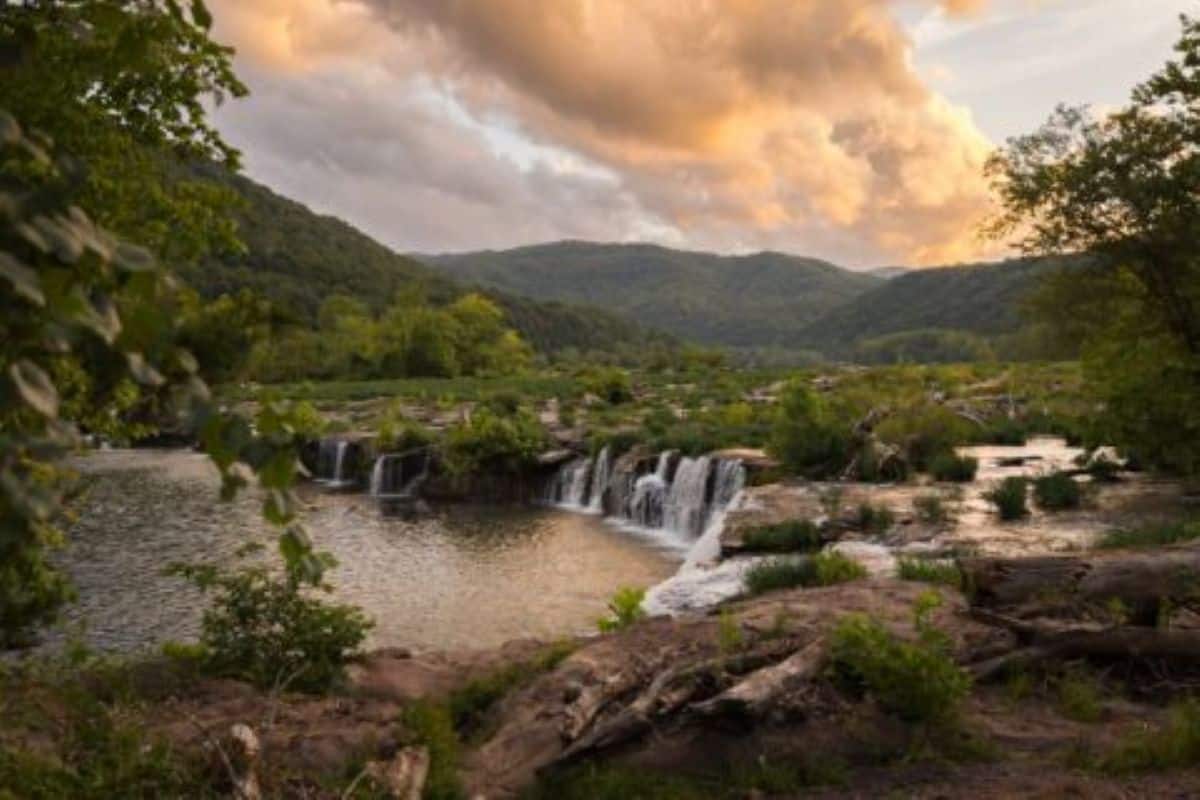
There is magic in waking up to the mist rising off the Ohio River, where ancient hills hold centuries of raw, breathing history. If you think you know West Virginia get ready to have your mind completely turned down. This rugged beautiful mountain state is going through a tourism renaissance breaking records with a stunning $9.4 billion economic impact and welcoming 78.4 million people who are completely captivated. From historic ghost walks to monsters river towns are coming back, to life. Get your coffee because you are about to learn how small river ports are becoming maritime empires.
How Is Wheeling Transforming Its Industrial Legacy Into a Booming River Cruise Port Hub?
Advertisement
Advertisement
Situated along the historic upper Ohio River, Wheeling acts as a major northern gateway for West Virginia. Wheeling’s rich industrial heritage, Victorian architecture, and accessibility via the Ohio River make it an ideal docking and excursion point for small cruise vessels exploring the upper Ohio Valley.
Data from municipal reporting indicates that Wheeling anchors an active regional workforce supporting health care, retail trade, and hospitality. This robust infrastructure ensures that visitor influxes from maritime tourism efficiently convert into local tax and retail revenue earnings across Ohio County.
Advertisement
Advertisement
Why Is Huntington Rapidly Emerging as the Ultimate Mid-Ohio River Cruising Destination?
Positioned along the southern banks of the Ohio River near the tri-state border, Huntington is a bustling regional hub. Home to Marshall University and significant cultural assets, Huntington presents a compelling blend of educational tourism, outdoor recreation, and river heritage.
Advertisement
Advertisement
Stable household income environments and strong employment concentrations in accommodation, food services, and educational services define the local economy. Visitor expenditures directly support regional hospitality small businesses, driving localized economic growth across Cabell and Wayne counties.
What Makes Moundsville an Essential Archaeological Stop for Small-Ship River Explorers?
Located just south of Wheeling along the Ohio River, Moundsville is historically and culturally renowned for its ancient Native American heritage. Key attractions like the Grave Creek Mound Archaeological Complex and the historic West Virginia Penitentiary draw thousands of heritage tourists annually.
Moundsville benefits from regional manufacturing and energy sectors, providing a stable industrial backbone while leveraging heritage tourism to diversify its municipal revenue base. Local lodging, dining, and interpretive center ticket sales benefit heavily from heritage-driven day-trippers exploring Marshall County.
How Does Point Pleasant Leverage Its Confluence Waters to Spark Massive Maritime Tourism Earnings?
Located strategically at the dramatic confluence of the Ohio River and the Kanawha River, Point Pleasant holds a unique geographic footprint. Famous globally for the legend of the Mothman and historically significant as the site of the 1774 Battle of Point Pleasant, the city is a natural port-of-call for riverboats.
Advertisement
Advertisement
Operating as a tight-knit community with a dedicated tourism framework, tourism acts as an economic multiplier in Mason County. Visitor spending on retail, dining, festival admissions, and heritage sites directly spikes local revenue earnings for small businesses.
How Do Statewide Tourism Metrics and Direct Visitor Spending Multipliers Fuel Regional Growth Across West Virginia’s River Corridors?
West Virginia’s tourism economy has achieved an unprecedented economic milestone, generating a record $9.4 billion in economic impact while welcoming roughly 78.4 million visitors. Official state tracking data reveals that this massive influx is heavily supported by direct traveler spending, with food and beverage allocations accounting for $1.8 billion and recreation and entertainment totaling $1.6 billion.
Retail trade, transportation, and overnight lodging collectively surpass $3 billion, proving that regional river corridors act as vital financial arteries. These robust monetary metrics clearly demonstrate that historic river destinations capture high-yield economic returns because tourist expenditures multiply dynamically across multiple commercial sectors rather than remaining restricted to traditional hospitality lodging.
What Specific Demographic Trends and Discretionary Spending Habits Make Small-Ship River Cruisers Vital for Local Commerce?
Global river cruise markets are expanding rapidly, driven largely by core demographic segments aged 46 to 55 years old who account for 27.6 percent of total market demand. Affluent mature travelers aged 41 to 60 represent over 35 percent of active participants, bringing substantial disposable incomes and high daily budgets to local port economies.
Advertisement
Advertisement
Overnight visitors in the region spend an average of $140 per person daily, displaying significantly greater daily discretionary budgets than traditional highway drive-by motorists. Small-ship cruisers consistently execute high-value point-of-sale transactions at independent artisan shops, historic cultural venues, and local dining establishments across participating river communities.
In What Ways Are Local Municipalities Investing in Waterfront Docking Infrastructure to Accommodate Expanding Small Cruise Fleets?
Strategic capital investments—including nearly $20 million channeled into state parks and riverfront revitalization frameworks—are successfully transforming aging industrial banks into modern maritime docking zones. Municipalities situated along the Ohio and Kanawha rivers are upgrading pedestrian boardwalks and secure mooring facilities to safely handle passenger discharges ranging from 100 to 250 guests per vessel.
Modernising this essential riverfront infrastructure ensures that commercial small cruise lines can reliably schedule multi-port itineraries, seamlessly integrating river ports into official commercial navigation networks. Local municipal leaders continue to prioritize these structural enhancements to maximize long-term maritime commerce.
How Do Cultural Attractions and Archaeological Sites Leverage Maritime Tourism to Increase Annual Visitor Footfall and Ticket Sales?
Cultural attractions such as the Grave Creek Mound Archaeological Complex in Moundsville and the historic West Virginia Penitentiary draw tens of thousands of specialized cultural tourists annually. Historic sites and interpretive heritage tours experience an average seasonal footfall surge of 15 to 20 percent whenever coordinated riverboat excursions dock nearby.
Advertisement
Advertisement
Merging ancient archaeological heritage with structured river cruise shore excursions effectively converts brief daytime port stops into lucrative, ticketed educational tourism experiences that directly benefit municipal cultural preservation funds. Visitor feedback indicates high satisfaction with these integrated heritage offerings.
What Impact Do Maritime Visitor Influxes Have on Local Hospitality Employment and Small Business Workforce Retention?
Statewide tourism data confirms that continuous visitor activity sustains over 54,000 jobs, generating more than $1.8 billion in total employee compensation and close to $887 million in state and local tax revenues. In micro-economies like Wheeling—which is anchored by an active regional workforce of 58,000 to 59,000 nonfarm positions—hospitality and retail sectors experience direct seasonal employment boosts.
The steady influx of maritime travelers acts as a reliable labor stabilizer, ensuring that small family-owned restaurants, bed-and-breakfasts, and specialty retail storefronts retain full-time staff year-round. Workforce retention metrics in these river cities consistently outperform statewide averages due to steady seasonal tourism demand.
Why Is the Geographic Confluence of Major Navigable Waterways Crucial for Designing Multi-Stop River Cruise Packages?
The strategic intersection of the Ohio River and the Kanawha River at Point Pleasant creates a powerful dual-river corridor advantage utilized by inland maritime operators. Small cruise itineraries featuring multi-stop regional tours experience a 12.3 percent compound annual growth rate across the broader North American experiential travel sector.
Advertisement
Advertisement
Confluence geographies allow boutique cruise lines to offer diverse, multi-destination vacation packages without requiring long transit times between ports, thereby increasing overall passenger satisfaction and repeat bookings. Regional tourism planners actively market these unique hydrological junctions to attract premium cruise operators.
How Are River Communities Balancing Rapid Tourism Growth With Sustainable Ecotourism and Environmental Conservation Measures?
With global river cruising scaling toward a projected multi-billion-dollar valuation, strict environmental compliance standards mandate rigorous waste management and emissions reductions across operating vessels. Local parks and recreation departments report that over 30 percent of river tourists actively participate in guided outdoor recreation, greenway hiking, or nature conservation events during their port calls.
Integrating these sustainability protocols preserves pristine valley ecosystems, ensuring that long-term tourism expansion safeguards the natural river landscapes that attract visitors initially. Municipalities collaborate closely with environmental agencies to monitor water quality and habitat preservation.
What Role Do Official Civic Portals and Data Analytics Play in Optimizing Visitor Conversion and Regional Destination Marketing?
Utilizing advanced tourism analytics and official reporting platforms such as the WV Checkbook and local CVB portals like Visit Point Pleasant WV, destination marketing organizations track precise visitor origin data. Digital marketing campaigns coordinated by the West Virginia Department of Tourism successfully outperform national growth benchmarks, driving a continuous upward trajectory in out-of-state visitor volume.
Advertisement
Advertisement
Data-driven governance enables municipal leaders to allocate promotional budgets efficiently, targeting high-value demographic cohorts most likely to book small-ship river cruises. Continuous performance tracking ensures maximum return on investment for all regional marketing initiatives.
The Final Verdict
Standing on the edge of the Ohio River as another beautiful riverboat moves by you can really sense the history of West Virginia. Powered by a $9.4 billion boost, in the economy and 78.4 million people coming to visit this amazing change shows that when people remember their tough industrial past and welcome modern river trips something special happens. In the end these amazing mountain towns didn’t just fix their docks—they held onto something and made sure they have a bright powerful future for many years to come.
Frequently Asked Questions
What is the total economic impact of tourism in West Virginia?
West Virginia’s tourism economy achieved a record economic impact of $9.4 billion, welcoming roughly 78.4 million visitors.
Advertisement
Advertisement
Why are small cruises vital for Wheeling and Huntington?
Small cruises bring demographically affluent travelers with high daily discretionary spend patterns, boosting small businesses and local tax revenues.
Which river confluence defines Point Pleasant’s tourism appeal?
Point Pleasant sits at the dramatic confluence of the Ohio River and the Kanawha River, driving heavy visitation via heritage sites and the annual Mothman Festival.
Advertisement
