
Panama Advances New Cleaner Maritime Tourism Across Bocas del Toro and Its Islands

Published
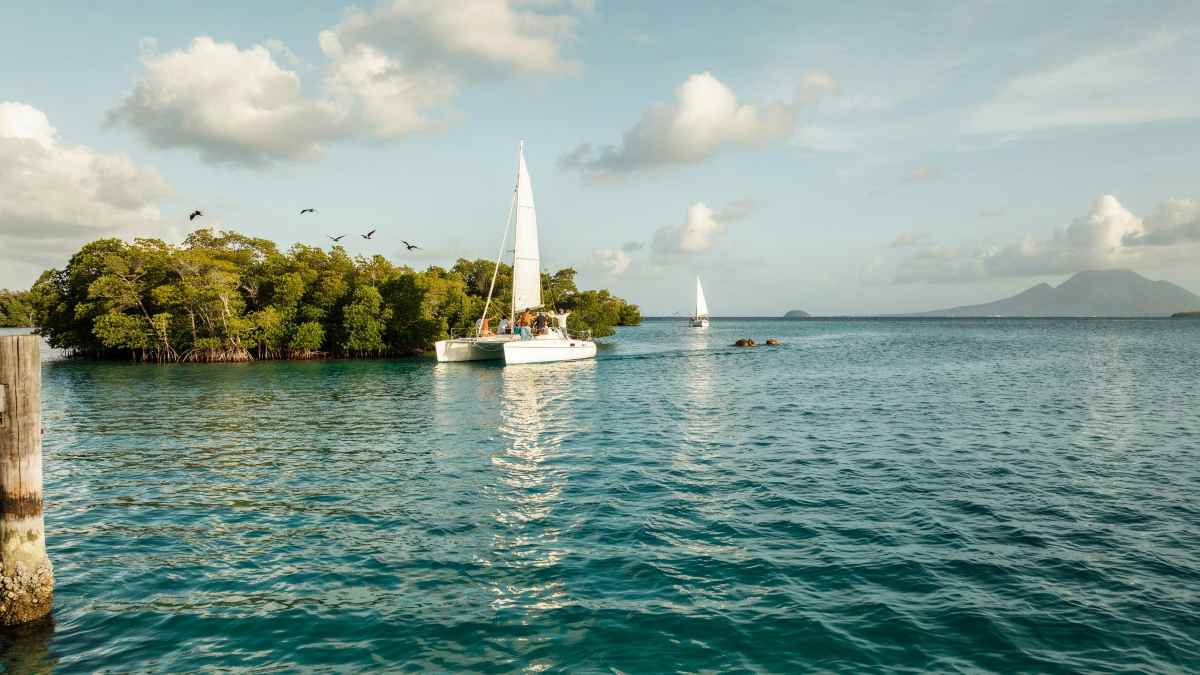
Image generated with Ai
Panama is on its way to a more sustainable maritime environment as the government of the country is developing a national strategy to lower the emissions of the shipping industry and develop the infrastructure that will serve the needs of the islands and their tourists. One of the key tourist destinations in the country, the Bocas del Toro area of Panama, is included in the bigger picture of the maritime development in Panama. However, at present, there are no facts about the adoption of the AMP rule prohibiting the use of two-stroke engines in the protected waters of Bocas del Toro and Guna Yala, and starting the AMP subsidy program for the installation of solar-electric and biofuel engine conversion kits in community tour boats.
Panama Builds A Maritime Decarbonisation Roadmap
The AMP announced in September 2025 that Panama was developing a national plan for maritime-sector decarbonisation in line with the International Maritime Organization’s objectives.
The plan is intended to establish an appropriate regulatory framework and create conditions for investment in alternative marine fuels and cleaner technologies. The authority said the work was being supported by technical assistance from the European Union.
This places Panama within a wider international movement towards lower-emission maritime transport. For a country whose economy and geography are closely linked to the sea, the issue extends well beyond large commercial ships.
Advertisement
Advertisement
Passenger boats, tourism vessels, ferries and smaller craft also form an important part of the transport network serving coastal and island communities.
Advertisement
Advertisement
Bocas Del Toro Takes Centre Stage
Bocas del Toro is particularly relevant because maritime transport is central to movement between its islands.
Isla Colón, Bastimentos, Carenero and other islands depend heavily on boat connections, carrying residents, workers, visitors and supplies. AMP figures cited in a 2026 infrastructure project show that maritime transport is used daily by hundreds of people across the archipelago.
The authority is also rebuilding the Fiscal Wharf at Almirante, a key mainland gateway to the islands.
Advertisement
Advertisement
The proposed project is designed to improve maritime connectivity, operational efficiency and tourism access, while supporting communities that rely on the port for mobility, commerce and tourism.
Port Investment Is Moving Ahead
In April 2026, AMP announced a nationwide maintenance programme covering 24 minor ports and 16 docking facilities, backed by a B/.2 million budget.
Advertisement
Advertisement
The programme includes facilities in Bocas del Toro, with technical teams working at Isla Colón, Isla Popa and Cayo de Agua during the first quarter of the year.
The work is significant for tourism because smaller maritime facilities are often the first and last point of contact for visitors travelling to island destinations.
Reliable docks can reduce operational disruptions, improve passenger movement and provide safer access for residents and tourists alike.
No Confirmed Two-Stroke Ban Yet
The specific claim concerning a ban on high-polluting two-stroke outboards in protected marine sanctuaries needs to be treated cautiously.
Current AMP material confirms Panama’s interest in clean maritime fuels and technologies. A 2024 AMP circular, for example, established that vessels powered by certain clean fuels in accordance with international safety requirements may operate in Panama’s terminals and waters under the authority’s jurisdiction.
Advertisement
Advertisement
That is different from a blanket prohibition on two-stroke engines in Bocas del Toro or Guna Yala.
There is also no verified AMP announcement confirming subsidies specifically for solar-electric or biofuel repowering kits for licensed community tourism vessels.
Biofuels Are Part Of A Wider National Conversation
Panama is nevertheless developing a broader biofuel policy.
In March 2026, the National Assembly reported that a bill supporting the use of anhydrous bioethanol in gasoline had advanced to a second debate. The proposal would establish a 10% bioethanol blend, although implementation has faced regulatory and supply considerations.
This policy concerns road fuels rather than passenger boats, so it should not be confused with a marine biofuel corridor.
Advertisement
Advertisement
Still, the development shows that alternative fuels are becoming part of Panama’s wider energy and transport policy discussion.
What Cleaner Island Transport Could Mean For Tourism
For destinations such as Bocas del Toro and Guna Yala, the long-term opportunity is closely connected to the way visitors move between mainland gateways, islands, beaches and marine attractions.
Cleaner propulsion could eventually reduce emissions from high-frequency passenger services, while improved docking infrastructure could make island travel more predictable.
Any future transition would also need to consider the realities of small community operators. Boats are not simply tourist vehicles in these regions; they can be essential transport for residents, businesses and supplies.
That makes affordability, safety, fuel availability, maintenance and technical support important factors in any eventual shift towards lower-emission propulsion.
Bocas Del Toro’s Maritime Network Continues To Evolve
However, the inquiry into the accident of the passenger boat near Cayo Zapatilla in February 2026 revealed the significance of safety measures in one of the most visited tourist areas of Panama. In this context, AMP noted that the boat utilized was a passenger one and that it possessed an outboard motor and recommended reducing speed while navigating in areas with anchorage and recreation and following maritime markings. Therefore, while Panama starts implementing its decarbonization strategy, environmental efficiency and safety of passengers will continue being interlinked. Apparently, the fact is the process of transition rather than the fuel switching for the archipelago itself. In this case, Panama establishes the necessary legislation for decarbonization of the maritime sector and construction of ports and docking infrastructure. Such an approach is essential for Bocas del Toro since Panama strives to introduce innovations in the field of maritime transportation without damaging the local communities.
Advertisement
