

New Zealand Partners With Solomon Islands, Vanuatu And More To Boost Pacific Island Travel Through Luxury Cruises What Travellers Need to Know Before Booking

Updated
Published
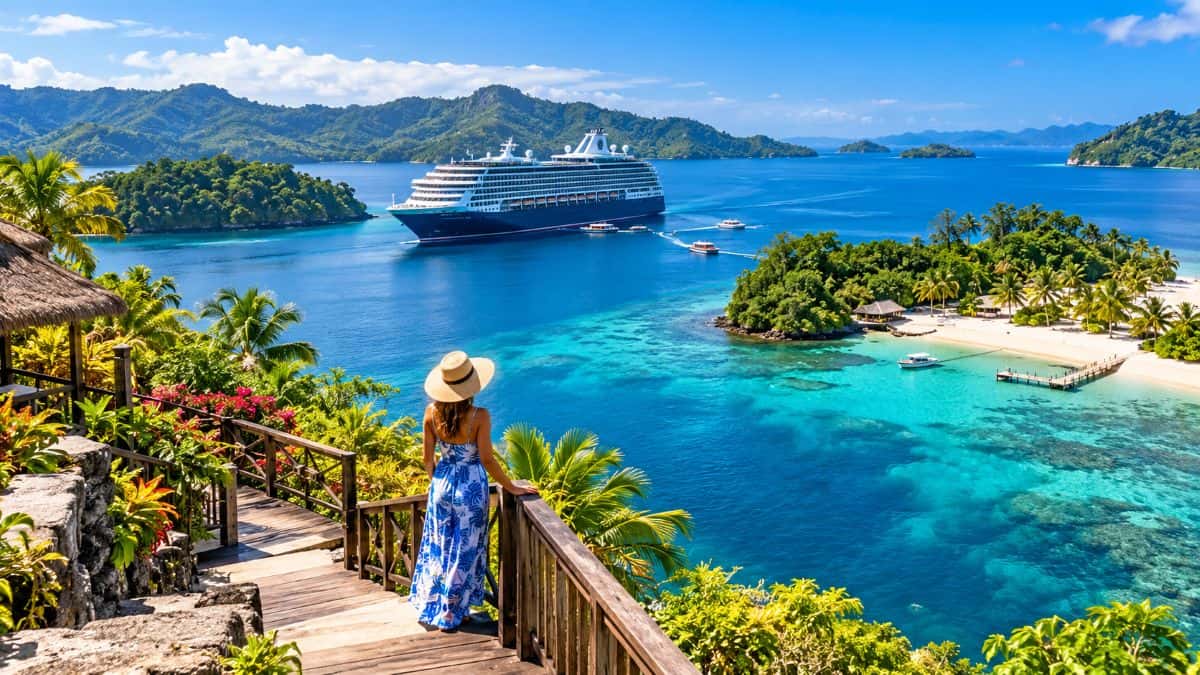
A 13-night expedition cruise from Auckland to Honiara is set to offer travellers an opportunity to explore the natural landscapes, cultural traditions and historical landmarks of the South Pacific. Scheduled for 21 March to 3 April 2027, the voyage aboard SH Minerva will visit destinations across New Caledonia, Vanuatu and the Solomon Islands, combining coastal exploration with encounters with distinctive island communities.
The itinerary places particular emphasis on experiences beyond conventional beach holidays. Volcanic environments, rainforest trails, traditional craftsmanship, local customs and Second World War heritage form part of the journey, illustrating the region’s diverse tourism appeal. For travellers seeking a more immersive Pacific Island experience, the expedition offers a combination of natural discovery, cultural learning and historical exploration. This story reveals everything you need to know as a traveller.
Advertisement
Advertisement
Auckland To Honiara Itinerary Connects Three Pacific Island Destinations
The voyage begins in Auckland, New Zealand, and concludes in Honiara, the capital of the Solomon Islands, on Guadalcanal. Its 13-night duration provides an opportunity to experience several island environments within one itinerary, reducing the need for separate international travel arrangements between destinations.
| Cruise Detail | Information |
|---|---|
| Vessel | SH Minerva |
| Departure | Auckland, New Zealand |
| Arrival | Honiara, Guadalcanal, Solomon Islands |
| Duration | 13 nights |
| Travel dates | 21 March to 3 April 2027 |
| Destinations | New Caledonia, Vanuatu and Solomon Islands |
| Main experiences | Nature walks, swimming, snorkelling, cultural heritage and historical exploration |
The itinerary combines leisure with educational opportunities, particularly for visitors interested in Melanesian societies and the region’s complex colonial history. Shore excursions can provide a closer understanding of local environments, although activities and access depend on the vessel’s confirmed schedule, weather conditions and local operating arrangements.
Advertisement
Advertisement
South Pacific Tourism Organisation Alignment with the Pacific Sustainable Tourism Policy Framework 2030
The 13-night expedition cruise aboard SH Minerva, operating from Auckland to Honiara between 21 March and 3 April 2027, can be examined through the regional cooperation objectives of the Pacific Sustainable Tourism Policy Framework 2030. By connecting New Caledonia, Vanuatu and the Solomon Islands in a single itinerary, the voyage illustrates how multi-destination tourism can encourage travellers to explore the wider Pacific rather than concentrate spending and visitor attention in one destination. This approach is relevant to the South Pacific Tourism Organisation (SPTO) and its regional tourism coordination role.
The initiative also provides an opportunity to consider how shared tourism promotion, cultural heritage interpretation and community engagement can contribute to sustainable regional development. Volcanic landscapes, rainforest trails, traditional craftsmanship, local customs and Second World War heritage offer complementary experiences across participating destinations. Rather than positioning Pacific Island nations as competitors for the same visitors, this model presents their distinctive attractions as interconnected elements of a broader regional tourism offering. Its contribution to the framework would depend on practical implementation, including local economic benefits, environmental safeguards, meaningful community participation and cooperation among tourism stakeholders.
Advertisement
Advertisement
Alignment with the Pacific Sustainable Tourism Policy Framework 2030
| Strategic area | Application to the SH Minerva expedition cruise | Regional tourism benefit |
|---|---|---|
| Regional cooperation | Connects New Caledonia, Vanuatu and the Solomon Islands through a single 13-night itinerary. | Encourages collaboration between Pacific Island destinations rather than zero-sum competition. |
| Multi-destination tourism | Combines coastal exploration, volcanic landscapes, rainforest trails and historical attractions. | Promotes the South Pacific as a connected tourism region with diverse experiences. |
| Cultural preservation | Introduces travellers to traditional craftsmanship, local customs and distinctive island cultures. | Creates opportunities to support cultural heritage preservation and community-led tourism. |
| Sustainable tourism development | Provides an opportunity to incorporate environmental safeguards and responsible visitor management. | Supports efforts to balance tourism activity with the protection of natural resources. |
| Community participation | Offers potential opportunities for local guides, artisans, cultural practitioners and tourism businesses to participate. | Can help retain tourism spending within destination communities, depending on how excursions and procurement are organised. |
| Heritage tourism | Includes opportunities to explore Second World War landmarks alongside natural and cultural attractions. | Diversifies the regional tourism offer beyond conventional beach holidays. |
| Shared destination promotion | Presents the participating islands as complementary destinations within one expedition. | Can strengthen regional visibility and encourage interest in lesser-known Pacific destinations. |
| Monitoring and accountability | Could assess local economic benefits, community satisfaction, environmental impacts and visitor engagement. | Helps determine whether expedition tourism contributes to sustainable and inclusive regional development. |
New Caledonia Offers Pine Forests, Penal History And Vanilla Heritage
New Caledonia introduces travellers to a distinctive combination of coastal scenery, forest landscapes and cultural history. The Isle of Pines, known for its striking pine trees and clear waters, is among the region’s recognisable destinations. Around Kuto Bay, historical remains associated with a nineteenth-century penal colony provide a reminder that the island’s past extends beyond its contemporary reputation as a tropical holiday destination.
The juxtaposition of historical sites and natural attractions offers visitors a broader perspective on the island. Beaches and forest walks provide opportunities for outdoor recreation, while surviving traces of the penal period add historical context to the landscape. Responsible tourism requires visitors to respect protected areas and heritage sites, following local guidance when exploring sensitive locations.
Lifou, part of New Caledonia’s Loyalty Islands, offers another perspective on island life. Vanilla cultivation remains associated with the island’s agricultural identity, while Melanesian traditions continue to shape community practices and cultural expression. Visitors may gain insight into local livelihoods and the relationship between agriculture, heritage and tourism.
Cruise Industry Metrics: CLIA Australasia Reports
Cruise Lines International Association (CLIA) Australasia reports provide valuable insights into cruise passenger demand, regional travel patterns and the economic contribution of cruise tourism. These indicators offer a useful context for examining the potential significance of the 13-night SH Minerva expedition from Auckland to Honiara, scheduled for 21 March to 3 April 2027.
| Cruise industry metric | Reported figure | Relevance to the South Pacific expedition |
|---|---|---|
| Australian ocean cruise passengers in 2025 | 1.45 million | Reflects strong demand for cruise holidays in the Australian source market. |
| Annual growth in Australian cruise passengers | 9.5% | Indicates an increase in cruise participation compared with the previous year. |
| Australian passengers cruising in Australia, New Zealand and the South Pacific | 1.16 million | Highlights the importance of the wider regional cruise market. |
| Growth in regional cruise travel among Australians | 8% | Demonstrates continued interest in destinations across the region. |
| Average duration of Australian ocean cruises | 7.5 days | Provides a benchmark for comparing shorter cruises with the 13-night expedition. |
| International visitors cruising in Australia, New Zealand and the South Pacific | 241,000 | Illustrates international demand for cruise experiences across the region. |
| Global ocean cruise passengers in 2025 | 37.2 million | Places the expedition within the broader international cruise industry. |
| Australian cruise tourism economic output in 2024–25 | A$7.32 billion | Demonstrates the economic significance of cruise tourism and its associated supply chains in Australia. |
Implications for South Pacific Tourism Cooperation
The cruise industry indicators provide a useful foundation for assessing opportunities to strengthen tourism cooperation between New Caledonia, Vanuatu and the Solomon Islands. By connecting several destinations within one itinerary, the SH Minerva expedition could encourage travellers to experience the region’s diverse landscapes, cultural traditions and historical attractions as part of a broader South Pacific journey.
The voyage also presents opportunities to expand locally delivered excursions, support traditional artisans, engage community guides and generate business for local tourism operators. Such activities could help distribute visitor spending across participating destinations rather than concentrating tourism benefits in a single location.
Advertisement
Advertisement
From a regional policy perspective, these opportunities align with the wider ambition of promoting collaboration, sustainable tourism development and complementary destination experiences. However, the actual benefits would depend on local procurement, community participation, environmental safeguards and the proportion of visitor expenditure retained within island economies.
The reported industry figures describe broader cruise tourism trends and should not be interpreted as forecasts for the SH Minerva voyage. Assessing its specific contribution would require information about passenger spending, port expenditure, local employment, excursion participation and environmental impacts.
Vanuatu Combines Volcanic Landscapes With Living Traditions
Vanuatu brings geological diversity and cultural experiences into the itinerary. Port Vila, the country’s capital, reflects Melanesian heritage alongside historical influences associated with the former Anglo-French administration of the New Hebrides. Its cultural landscape illustrates how colonial history and local traditions have shaped the modern nation.
Ambrym presents a markedly different environment. Black-sand beaches, rainforest and volcanic terrain create opportunities for nature-focused exploration. The island is associated with the volcanoes Marum and Benbow, while traditional sand drawings preserve cultural knowledge through intricate patterns created using continuous lines. These drawings are more than decorative expressions; they can communicate stories, social knowledge and customary practices.
Champagne Beach offers another distinctive natural attraction. Its pale sand and clear water contrast with the surrounding volcanic geography, while reported bubbling effects in the shallows can occur under particular conditions. Visitors should follow local advice on swimming and coastal safety, as sea conditions can change.
Pentecost Island adds further cultural depth through kastom, a term commonly used for customary traditions and practices in Vanuatu. Community ceremonies and cultural expressions remain important elements of island identity. Any visitor participation should be arranged respectfully, with attention to local permissions, photography guidelines and community expectations.
Advertisement
Advertisement
Solomon Islands Reveal Traditional Exchange And Craftsmanship
As the journey progresses towards the Solomon Islands, the itinerary introduces cultural traditions associated with Nendo and Santa Ana. Nendo, part of Temotu Province, is linked to the heritage of tevau, or red feather money. Traditionally made using scarlet honeyeater feathers, this form of valuable cultural wealth played a role in significant exchanges and social relationships.
The tradition provides insight into economic systems that differ from modern cash-based transactions. Its significance also highlights the importance of safeguarding traditional knowledge and understanding cultural objects within their original social contexts. Visitors should rely on knowledgeable local guides when learning about such practices rather than treating cultural heritage solely as a tourist attraction.
Santa Ana is recognised for musical traditions, dance and woodcarving. Distinctive carved objects, including ceremonial bowls, reflect the skills of local artisans and the importance of craftsmanship in cultural expression. Where opportunities arise to meet craftspeople, tourism spending can support local livelihoods, provided commercial arrangements are transparent and respectful.
These encounters can help travellers understand how artistic practices, customary exchange and community identity remain connected across the Pacific. They also underline the value of cultural tourism that prioritises local perspectives rather than presenting island communities through simplified stereotypes.
Guadalcanal Connects Pacific Travel With Second World War History
The final destination, Honiara, provides access to Guadalcanal, an island with a significant place in the history of the Second World War. Between 1942 and 1943, the Guadalcanal campaign became one of the major military confrontations in the Pacific theatre. The conflict affected the island’s population and landscape, leaving a legacy remembered through memorials, historical locations and surviving wartime traces.
For visitors, these sites offer an opportunity to examine the human consequences of the conflict and the strategic importance of the South Pacific during the war. Historical visits can complement the cruise’s natural and cultural experiences, broadening the journey beyond conventional leisure tourism.
Advertisement
Advertisement
Responsible historical tourism involves treating memorials and battlefield locations with sensitivity. Visitors should respect commemorative spaces, follow guidance from local authorities and seek reliable historical interpretation. Such practices help ensure that tourism contributes to remembrance and understanding rather than reducing wartime heritage to a sightseeing activity.
Honiara’s role as the national capital also provides a contemporary perspective on the Solomon Islands. The destination connects the region’s historical past with present-day urban life, public institutions and local communities.
Expedition Cruising Creates Opportunities For Nature-Based Tourism
The itinerary reflects the appeal of expedition cruising for travellers interested in multiple destinations, outdoor activities and cultural discovery. Hiking, nature walks, swimming and snorkelling can complement visits to historical landmarks and traditional communities, creating a varied travel experience within a single voyage.
However, expedition travel also requires flexibility. Weather, sea conditions, local regulations and operational considerations can influence shore landings and excursion schedules. Travellers should confirm the final itinerary, accessibility requirements and activity availability before departure, particularly when planning specific experiences.
Environmental responsibility is equally important. Marine ecosystems, forests and volcanic landscapes can be vulnerable to poorly managed visitor activity. Following local guidance, avoiding disturbance to wildlife, minimising waste and respecting community restrictions can help reduce the environmental and cultural pressures associated with tourism.
The voyage’s principal attraction lies in the variety of experiences available across the three countries. From New Caledonia’s forested islands to Vanuatu’s volcanic terrain and the Solomon Islands’ historical landmarks, the route presents the South Pacific as a region of distinct landscapes and enduring cultural traditions.
Advertisement
Advertisement
What Travellers Should Know Before Booking
Travellers considering the Auckland-to-Honiara voyage should review the confirmed departure arrangements, port schedule and excursion details before making commitments. The advertised dates run from 21 March to 3 April 2027, but individual activities may depend on operational conditions and local availability.
Travel documentation deserves particular attention because the voyage crosses international borders. Passport validity, visa requirements and entry conditions can differ by nationality and destination. Passengers should verify the applicable rules with the relevant authorities and ensure that any required documents are arranged well before departure.
Packing should reflect the tropical climate and the range of activities planned. Lightweight clothing, comfortable walking shoes, sun protection and suitable swimwear may be useful, while insect protection and rainwear can help during outdoor excursions. Travellers should also consider their personal mobility needs when assessing expedition landings and nature walks.
Ultimately, the voyage offers a route through three culturally and geographically varied Pacific Island destinations. Its combination of natural environments, traditional practices and wartime history provides a broader perspective on regional tourism while giving travellers opportunities to engage with the islands beyond their beaches.
Frequently Asked Questions
1. What is the Auckland-to-Honiara cruise itinerary?
The 13-night voyage aboard SH Minerva is scheduled to travel from Auckland, New Zealand, to Honiara in the Solomon Islands, exploring destinations across New Caledonia, Vanuatu and the Solomon Islands.
Advertisement
Advertisement
2. When is the Pacific Islands cruise scheduled?
The advertised travel dates are 21 March to 3 April 2027.
3. Which ship operates the voyage?
The expedition is scheduled aboard SH Minerva.
4. Which countries feature in the itinerary?
The itinerary features New Caledonia, Vanuatu and the Solomon Islands, with Auckland serving as the departure point in New Zealand.
Advertisement
Advertisement
5. What activities can travellers experience during the cruise?
Potential experiences include nature walks, hiking, swimming, snorkelling, cultural exploration and visits to historical landmarks, subject to the confirmed excursion programme.
6. What makes the Isle of Pines distinctive?
The Isle of Pines is known for its coastal scenery and pine forests, as well as historical remains associated with a nineteenth-century penal colony near Kuto Bay.
7. What cultural experiences are associated with Vanuatu?
Vanuatu offers opportunities to learn about Melanesian heritage, traditional sand drawings on Ambrym and kastom practices associated with communities such as those on Pentecost Island.
Advertisement
Advertisement
8. Why is Nendo culturally significant?
Nendo is associated with tevau, or red feather money, a traditional form of cultural wealth historically used in significant exchanges.
9. What historical attractions can visitors explore on Guadalcanal?
Guadalcanal contains memorials and surviving traces associated with the Second World War campaign fought on the island between 1942 and 1943.
10. What should passengers check before travelling?
Passengers should confirm the final itinerary, passport validity, visa and entry requirements, excursion availability, travel insurance and any health or accessibility considerations before departure.
Advertisement
