
Ambubachi Mela and the Kamakhya Temple: All You Need To Know

Updated
Published
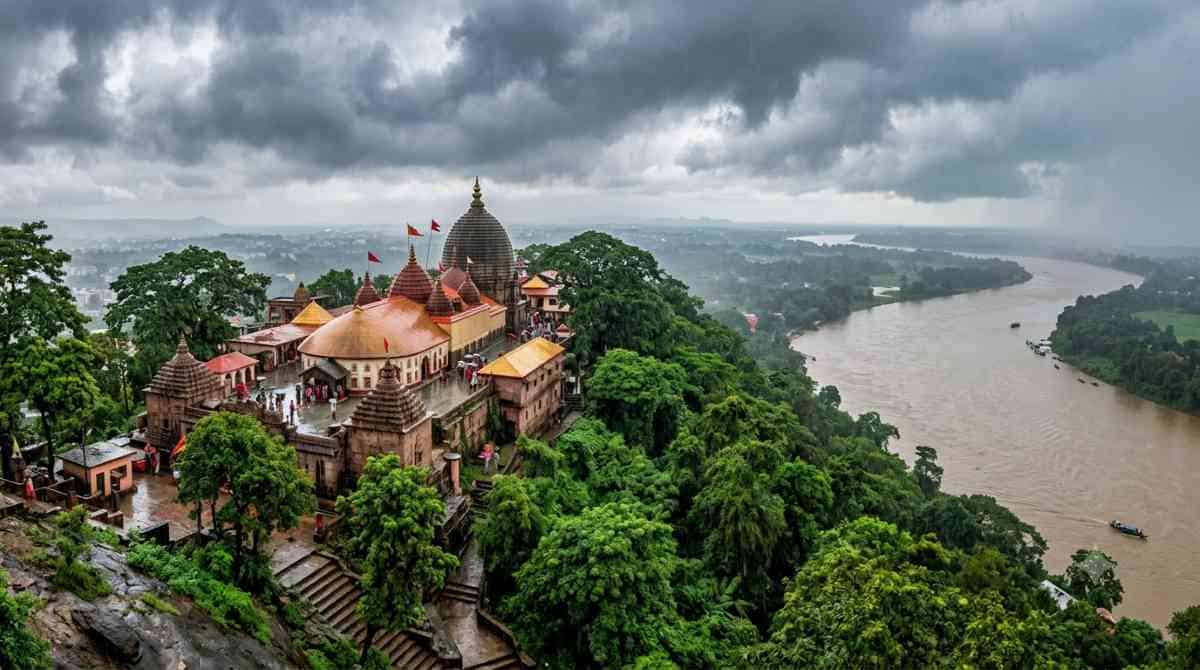
The Kamakhya Temple is a site of profound spiritual significance. It is nestled atop the Nilachal Hill in Guwahati, Assam. Each year, as the monsoon season approaches, the Brahmaputra River undergoes a transformation. The waters are observed to take on a distinct reddish hue. This event is inextricably linked to the Ambubachi Mela. It is a time when the Divine Mother is believed to undergo her annual menstrual cycle. This period is a celebration of fertility and the natural rhythms of life. Thousands of pilgrims are drawn to this historic Shakti Peetha.
The Mystery of the Crimson Brahmaputra River
The phenomenon of the Brahmaputra River turning red is discussed with profound awe by locals and visitors alike. According to long-standing tradition, this remarkable change occurs due to the annual menstruation of the presiding deity.
For three sacred days, the Kamakhya Temple doors remain firmly closed to the public. Regular worship is entirely suspended during this period. It is deeply believed that the Goddess requires absolute rest within the sanctum during this time.
While faith provides a meaningful spiritual explanation for this event, various scientific theories are also frequently presented by researchers to explain the coloration.
Advertisement
Advertisement
The interplay between the Brahmaputra River and the local ecosystem is often analyzed during the Ambubachi Mela. Several factors are cited by experts to explain the change in water quality:
- Some experts suggest that high concentrations of iron-rich sediments cause the distinct red color.
- Heavy monsoon rains are known to wash these massive mineral deposits into the Brahmaputra River basin.
- Others point to the possibility of natural algae blooms occurring specifically during the peak of the monsoon season.
- The presence of cinnabar, a naturally occurring red mineral, within the surrounding soil is another common scientific theory.
Despite these diverse and sometimes conflicting explanations, the Ambubachi Mela remains a deeply symbolic and transformative time.
Advertisement
Advertisement
The period continues to draw thousands of pilgrims to the Kamakhya Temple, where the cycle is viewed as a powerful reflection of nature’s own life-giving processes.
Whether the cause is geological or mystical, the occurrence serves to heighten the spiritual atmosphere of the entire region. This convergence of natural mystery and religious devotion ensures that the Kamakhya Temple remains one of the most enigmatic pilgrimage sites in the world.
Significance of the Ambubachi Mela at the Kamakhya Temple
The Ambubachi Mela is recognized as one of the most powerful spiritual events in India. It is a period defined by quiet contemplation. Inner reflection is highly valued during this time. The honoring of the divine feminine is the primary focus.
Unlike other festivals, the essence of the Ambubachi Mela lies in silence. Many religious events involve grand processions. This festival encourages a step back from external rituals.
- All agricultural activities are ceased during these days.
- The temple sanctum is closed as an act of respect.
- Meditation and chanting fill the Kamakhya Temple precincts.
- Spiritual discourse emphasizes the Shakti Tattva.
This belief states that the creative force of the universe is feminine. For many, this is a reminder of the importance of rest. It highlights the necessity of renewal in the tapestry of human existence.
The Cultural Heritage of the Kamakhya Temple and Ambubachi Mela
The Kamakhya Temple is an architectural and spiritual marvel. A traditional idol is absent from the main sanctum. Instead, worshippers venerate a yoni-shaped stone. This stone is believed to be the womb of the universe. The site is the most sacred of the 51 Shakti Peethas. This status is derived from ancient mythological accounts.
Advertisement
Advertisement
The site serves as a vital anchor for Tantric traditions. The intersection of Shiva and Shakti is celebrated with fervor.
- The temple reopens on the fourth day of the Ambubachi Mela.
- This transition is marked by immense joy.
- Devotees receive the rakta vastra.
- This is a sacred red cloth infused with divine blessings.
- Pilgrims cherish this prasad as a symbol of protection.
A Sanctuary for Spiritual Seekers
Beyond the mystery of the red Brahmaputra River, the Kamakhya Temple offers a sanctuary. It is a place for those seeking to connect with nature. The integration of the temple with the Nilachal Hill is unique. It creates an environment conducive to deep, meditative practices. The Ambubachi Mela provides a lens into the sanctity of bodily functions. It strips away societal taboos. It replaces them with a sense of divine reverence.
As the monsoon rain nourishes the earth, the festival serves as a reminder. It connects the cosmic with the earthly. It embraces the entirety of the human experience. It ranges from the necessity of rest to the celebration of life-giving power.
Whether approached through mythology or science, the experience is impactful. The energy at the Kamakhya Temple during the Ambubachi Mela is undeniable. It leaves a lasting impression on the spirit. It remains an enduring testament to the cultural identity of North East India. It honors the timeless dedication to the Divine Mother. Every visitor finds a moment of peace within these ancient walls. The legacy of this sacred site continues to thrive through the ages. The Brahmaputra River continues to witness this divine cycle annually.
Advertisement
