
Greece Leads Europe as Tourists Flood Its Most Popular Islands Far Beyond Local Population Levels

Updated
Published
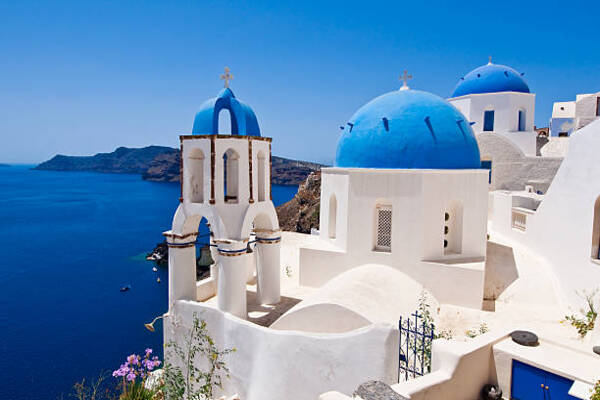
Image generated with Ai
Greece leads Europe as tourists flood its most popular islands, pushing visitor activity far beyond local population levels. Greece leads Europe again as tourists flood popular islands and reshape local population levels through intense seasonal demand. Meanwhile, travellers planning Greece holidays should understand how quickly these destinations become busy. Therefore, timing, accommodation and transport choices matter more than ever. Travel And Tour World urges readers to read the entire story for essential travel guidance, verified tourism figures and practical planning insights. As tourists continue exploring Greece, popular islands remain attractive, yet travellers can choose smarter seasons and quieter experiences abroad.
Most Tourist-Dense Destinations of Europe: 10 Regions Where Visitor Pressure Is Reshaping Travel
Europe’s tourism boom is increasingly concentrated in a handful of regions. Eurostat data shows that the EU recorded more than 3 billion tourist-accommodation nights in 2024, up 2.7% from 2023. Tourism intensity reached 6,725 nights per 1,000 inhabitants, compared with 6,556 in 2023.
The strongest pressure is concentrated in Mediterranean islands, Adriatic coastal areas and Alpine destinations. Seven EU regions exceeded 50,000 tourist nights per 1,000 residents in 2024.
1. Southern Aegean, Greece
The Southern Aegean is Europe’s strongest example of tourism intensity. Eurostat recorded 126,817 tourist nights per 1,000 inhabitants in 2024, equivalent to about 127 accommodation nights for every resident. The region generated approximately 41.5 million accommodation nights, up from about 39 million in 2023. Its 2024 tourism intensity increased by roughly 8.1% year on year.
Advertisement
Advertisement
The region includes major Greek island destinations such as Rhodes, Kos, Mykonos and Santorini. The seasonal pattern is extreme, with July and August accounting for a substantial proportion of annual demand. Greece nationally recorded 41.6% of tourism nights in July and August in 2025, demonstrating how strongly summer concentrates tourism.
Advertisement
Advertisement
2. Ionian Islands, Greece
The Ionian Islands are another exceptionally tourism-intensive Greek region. Eurostat data puts the region among the seven EU regions exceeding 50,000 nights per 1,000 inhabitants. The region recorded approximately 20.5 million accommodation nights in 2024.
Corfu, Zakynthos, Kefalonia and other islands attract substantial international demand. Foreign visitors account for more than 90% of accommodation nights across Greece’s major island tourism regions, making international travel patterns particularly important for local tourism economies.
3. Crete, Greece
Crete is the third Greek region in the exceptionally high tourism-intensity group. It recorded approximately 34.5 million tourist accommodation nights in 2024.
Advertisement
Advertisement
Crete also demonstrates why total visitor volume and tourism density are different measures. Its population and geographical size are considerably greater than some smaller islands, yet its accommodation demand remains exceptionally strong.
The island’s tourism activity is also becoming more extended beyond traditional summer travel, giving visitors opportunities to consider spring and autumn trips.
Advertisement
Advertisement
4. Jadranska Hrvatska, Croatia
Croatia’s Jadranska Hrvatska, covering its Adriatic coastal tourism zone, is one of Europe’s largest tourism markets by volume and one of its most seasonal.
The region recorded approximately 88.4 million accommodation nights in 2024.
Eurostat recorded 54.5% of Croatia’s entire 2025 tourism nights in July and August, the highest national concentration in the EU. In 2022, Jadranska Hrvatska had already recorded 60.2% of annual tourism nights in those two months.
5. Illes Balears, Spain
Spain’s Balearic Islands are another major tourism-pressure region. Mallorca, Ibiza, Menorca and Formentera form one of Europe’s most internationally recognised island tourism clusters.
In 2023, the Balearics recorded around 61.7 million foreign tourist nights, while Eurostat’s 2024 regional statistics continued to place the region among Europe’s most tourism-intensive areas.
Advertisement
Advertisement
Foreign visitors accounted for about 90.2% of accommodation nights in the Balearics in 2024.
6. South Tyrol, Italy
Italy’s Provincia Autonoma di Bolzano/Bozen, commonly known as South Tyrol, is unusual because it combines mountain tourism with strong year-round demand.
It was among the seven EU regions exceeding 50,000 tourist nights per 1,000 residents in 2024.
Unlike many Mediterranean islands, Alpine destinations can distribute demand between winter skiing and summer hiking, although seasonal peaks remain important.
7. Tyrol, Austria
Austria’s Tyrol is another major tourism-intensive Alpine region. It attracts winter sports visitors, summer hikers and nature-focused travellers.
Advertisement
Advertisement
Eurostat places Tyrol among the seven EU regions exceeding 50,000 tourist nights per 1,000 inhabitants in 2024.
For travellers, this creates a different pattern from Mediterranean destinations. Instead of one dominant beach season, demand is divided between winter and summer tourism.
8. Algarve, Portugal
Portugal’s Algarve is one of Europe’s most important coastal holiday markets and appeared among the regions with exceptionally high tourism intensity in the 2024 Eurostat comparison.
Its appeal comes from beaches, golf, coastal resorts and warm-weather tourism. Travellers looking for lower pressure can consider spring or autumn rather than concentrating trips around the European summer peak.
9. Canary Islands, Spain
The Canary Islands demonstrate that high tourism volume does not always mean extreme seasonal concentration.
Advertisement
Advertisement
Eurostat recorded around 99.5 million accommodation nights in Canarias in 2024, making it the EU’s largest regional tourism market by this measure.
The region’s tourism season is comparatively spread out. Eurostat reported that only about 20% of tourism nights were concentrated in its two busiest months in 2022, considerably below many Mediterranean coastal regions.
10. Salzburg, Austria
Salzburg completes this group of major tourism-intensive European regions. It benefits from cultural tourism, Alpine scenery, winter sports and summer travel.
Eurostat’s 2024 analysis places Salzburg among the seven regions where tourism intensity exceeded 50,000 nights per 1,000 inhabitants.
Its combination of urban attractions and mountain tourism also creates a broader travel season than some island destinations.
Advertisement
Advertisement
Five-Year Tourism Recovery: 2020–2024
The five-year period tells an important story. COVID-19 caused an unprecedented collapse in European accommodation demand.
Between 2019 and 2020, EU tourist accommodation nights fell 50.5%. Island regions suffered particularly severe declines because many depend heavily on international air travel. The Balearic Islands recorded an 88.8% fall.
By 2023, European tourism had recovered beyond pre-pandemic levels. In 2024, the EU exceeded 3 billion accommodation nights for the first time.
Five-Year Data Snapshot
| Year | EU tourism situation | Key verified statistic |
|---|---|---|
| 2020 | Pandemic collapse | EU nights fell 50.5% from 2019 |
| 2021 | Recovery began | 43% of EU tourism nights occurred in July-August |
| 2022 | Strong reopening | 34% of nights occurred in July-August |
| 2023 | Recovery surpassed pre-pandemic levels | Jadranska Hrvatska reached 60.2% in July-August |
| 2024 | Record EU tourism | More than 3 billion nights |
| 2025 | New record | 3.08 billion EU accommodation nights |
Monthly Tourism Pattern: What Travellers Should Expect
The most reliable official regional monthly comparison comes from Eurostat’s tour_occ_nin2m dataset. It confirms that August is the highest month in most EU regions, while July is frequently the second-largest month.
| Month | Typical pattern in Europe’s tourist-dense regions | Traveller implication |
|---|---|---|
| January | Low in Mediterranean islands | Quieter travel |
| February | Low to moderate | Good for cities and Alpine destinations |
| March | Gradual recovery | Shoulder-season opportunities |
| April | Increasing demand | Better availability |
| May | Strong growth | Often favourable for sightseeing |
| June | High demand | Beaches become busier |
| July | Very high | Major peak period |
| August | Usually highest | Maximum crowd pressure |
| September | Demand begins easing | Strong shoulder-season option |
| October | Lower in many islands | Good value potential |
| November | Low in summer resorts | Quiet travel |
| December | Mixed | Christmas and city tourism raise demand |
Eurostat reported that in 2022, August was the busiest month in 170 of 242 EU NUTS 2 regions, while July led in 62 regions. In 2021, July and August together represented 43% of EU tourism nights.
Advertisement
Advertisement
Tourism Volume Versus Tourism Density
| Region | Country | 2024 accommodation nights / tourism-volume indicator | Tourism-intensity status |
|---|---|---|---|
| Southern Aegean | Greece | ~41.5m | 126,817 per 1,000 residents |
| Ionian Islands | Greece | ~20.5m | >50,000 per 1,000 |
| Crete | Greece | ~34.5m | >50,000 per 1,000 |
| Jadranska Hrvatska | Croatia | ~88.4m | >50,000 per 1,000 |
| Illes Balears | Spain | Major high-volume region | >50,000 per 1,000 |
| South Tyrol | Italy | High Alpine demand | >50,000 per 1,000 |
| Tyrol | Austria | High Alpine demand | >50,000 per 1,000 |
| Algarve | Portugal | High coastal demand | >50,000 per 1,000 |
| Canarias | Spain | ~99.5m | High tourism intensity |
| Salzburg | Austria | High Alpine/cultural demand | >50,000 per 1,000 |
What the Data Means for Travellers
The figures do not mean visitors should avoid these destinations. They show where timing matters most.
The smartest strategy is to move beyond July and August where possible. Travelling in May, June, September or October can reduce exposure to the strongest seasonal pressure.
The data also reveals an important distinction. Canarias can attract enormous visitor volumes while remaining less seasonal than several Mediterranean competitors. Croatia and Greece, meanwhile, experience much stronger concentration around the summer peak.
For international travellers, the lesson is simple: Europe’s most famous destinations remain highly attractive, but when you visit can be almost as important as where you visit.
Primary Official Data Sources
Eurostat’s regional tourism database is the principal source for accommodation nights by NUTS 2 region and monthly seasonality.
Advertisement
Advertisement
Greece’s Bank of Greece statistics provide additional national and regional tourism information. In 2024, Greece recorded 35.95 million inbound travellers, while visits to individual Greek regions totalled 39.35 million, because travellers can visit multiple regions during one trip.
The latest Bank of Greece figures also show that Greece’s international demand continued rising in 2025, with 37.98 million inbound visitors, up 5.6% from 2024.
These statistics make one trend unmistakable: Europe’s tourism recovery has not simply returned. It has created record visitor volumes concentrated in particular regions and months, making smarter timing and responsible destination choices increasingly important for travellers.
Conclusion
Greece continues to lead Europe as tourists flood its most popular islands, creating extraordinary visitor pressure compared with local population levels. The figures highlight how strongly tourism concentrates in destinations such as the Southern Aegean, Ionian Islands and Crete.
However, this does not mean travellers should avoid Greece. Instead, visitors can plan more thoughtfully by considering shoulder-season holidays, quieter islands and locally focused experiences. Choosing less crowded periods can also provide better opportunities to explore Greece beyond its busiest attractions.
For global travellers, the message is clear. Greece remains an exceptional destination, but smarter timing can create a more comfortable and responsible holiday while supporting local communities.
Advertisement
