
Kokanee Salmon Transform Idaho Into an Unmissable Autumn Wildlife Destination

Published
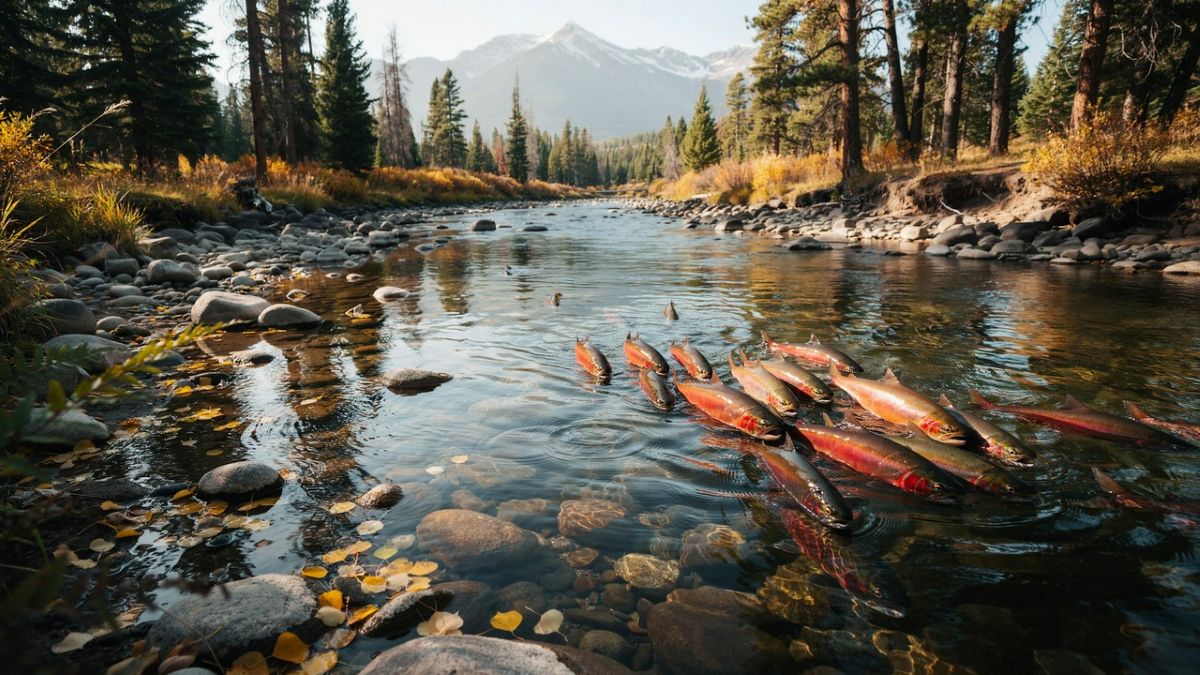
Image generated with Ai
Autumn in Idaho brings a surprise to quiet lakes and mountain streams. Kokanee salmon begin a final journey. They leave deep lake water and swim towards gravel beds in rivers and creeks. Their bodies change colour. The silver-blue fish turn bright red. Their heads turn greenish. This makes them easy to see in clear water.
Kokanee are landlocked sockeye salmon. They live their full lives in freshwater. They do not travel to the ocean. They grow in lakes and reservoirs for two to four years. Then they move to streams or lake shorelines to spawn. The female lays eggs in small nests in gravel. These nests are called redds. The fish die after spawning. Their life ends, but their role in nature continues.
Their bodies bring nutrients into streams. These nutrients help algae and insects grow. Small fish then feed on the insects. Bigger fish and birds feed on the smaller fish. One salmon run can support many kinds of life. This is why Idaho’s kokanee story is much bigger than fishing.
Trestle Creek Offers Idaho’s Clearest Viewing Experience
Trestle Creek, near Lake Pend Oreille in northern Idaho, is one of the best places to see the run. It gives visitors a close look at a powerful natural event. The run usually becomes visible from late September into early October.
A small car park and interpretive site sit near Trestle Creek Road, around a quarter-mile from Highway 200. Visitors can stand near the creek and watch red kokanee move through the water. The stream can look alive with colour. The rushing water, cool air and red fish create a memorable autumn scene.
Trestle Creek is closed to fishing. This protects spawning fish and the gravel beds where they lay eggs. Visitors should stay out of the water. They should not step on the gravel. A single careless step can damage eggs hidden below the surface. The best way to enjoy the run is to watch quietly from the bank.
Lake Pend Oreille also shows why kokanee matter to Idaho’s lakes. Kokanee support rainbow trout, bull trout and cutthroat trout. Fish and Game staff collect adult kokanee in the fall and use their eggs in hatchery work. Millions of young kokanee are later released into Granite Creek to help support the lake population.
Boise’s Mountain Streams Bring the Run Closer to the City
The Boise area gives travellers another way to see kokanee. The fish in this region are early spawners. They begin moving into streams from late August and through September.
Mores Creek, Grimes Creek, the Middle Fork Boise River, the South Fork Boise River and the Deadwood River are important places in this seasonal story. These streams connect to the famous reservoir system of Lucky Peak, Arrowrock and Anderson Ranch.
This area gives visitors an easy city-to-mountains travel idea. Boise can be the base. A short drive can lead to cool forests, rivers and colourful fish. It makes autumn wildlife viewing more open to families, road trippers and first-time nature visitors.
Anderson Ranch Reservoir is also an important kokanee location in 2026. Idaho Fish and Game expects good catch rates for medium-sized kokanee this year. Stronger groups of fish from recent years have improved numbers in the reservoir. But the viewing experience depends on where the mature fish move to spawn. Travellers should always check local conditions before planning a special journey.
Payette Lake Shows a Fight to Protect Kokanee
Payette Lake near McCall gives the kokanee run a deeper conservation story. The lake has seen big changes over many years. Kokanee numbers grew high in some periods and dropped sharply in others.
The problem became serious when lake trout numbers increased. Young lake trout ate many kokanee. Kokanee numbers then fell. Idaho Fish and Game started a programme to reduce smaller lake trout while protecting large trophy fish. It also increased kokanee stocking.
The work has helped the kokanee population recover. But the fishery still changes from year to year. In 2026, kokanee numbers are lower than in some recent years. Yet the fish are very large. Reports have shown kokanee longer than 20 inches. This shows an important truth about nature. Fewer fish can sometimes mean more food for each fish. They grow bigger when there is less competition.
The North Fork Payette River is central to this work. Fish and Game uses a fish weir on the spawning grounds. About half of returning fish move upstream to spawn naturally. Staff collect eggs from the remaining fish for hatchery rearing. This protects wild spawning while helping create future fish stocks.
Advertisement
Advertisement
Lake Coeur d’Alene Extends the Wildlife Season
At Lake Coeur d’Alene, the kokanee run becomes part of a larger wildlife show. As kokanee spawn, bald eagles arrive to feed. This links autumn salmon watching with winter eagle watching.
Wolf Lodge Bay is a key area. Visitors may watch eagles from Higgins Point, Mineral Ridge Boat Ramp and the Mineral Ridge Trailhead. Eagle viewing is strongest from November to February. On some days, many birds gather around the bay.
This creates a longer travel season for northern Idaho. First, visitors can look for spawning kokanee. Then they can return as colder weather brings bald eagles. The same lake becomes a changing wildlife destination across several months.
Visitors must give eagles plenty of space. Binoculars are important. People should never walk close to birds. They should park safely and never stop in traffic. Respect keeps wildlife safe and gives other visitors a better experience.
Idaho’s Kokanee Run Is a Delicate Natural Cycle
Idaho’s kokanee populations do not stay the same each year. They can rise and fall. When too many fish live in one lake, they compete for plankton. They may stay small. When numbers drop, fish may grow larger. Weather, water conditions, predators, spawning success and stocking all affect the result.
Idaho Fish and Game has added a new tool to help. In 2026, it released about one million young kokanee raised through its first captive broodstock programme. The aim is to make fish stocking more reliable when wild adult numbers fall.
Idaho’s kokanee run is a striking autumn event. It brings colour to cold streams. It feeds birds and fish. It gives travellers a reason to look beyond leaves and mountain views. In Idaho, autumn lakes do not simply grow quiet. They come alive with one final burst of red.
Advertisement
