
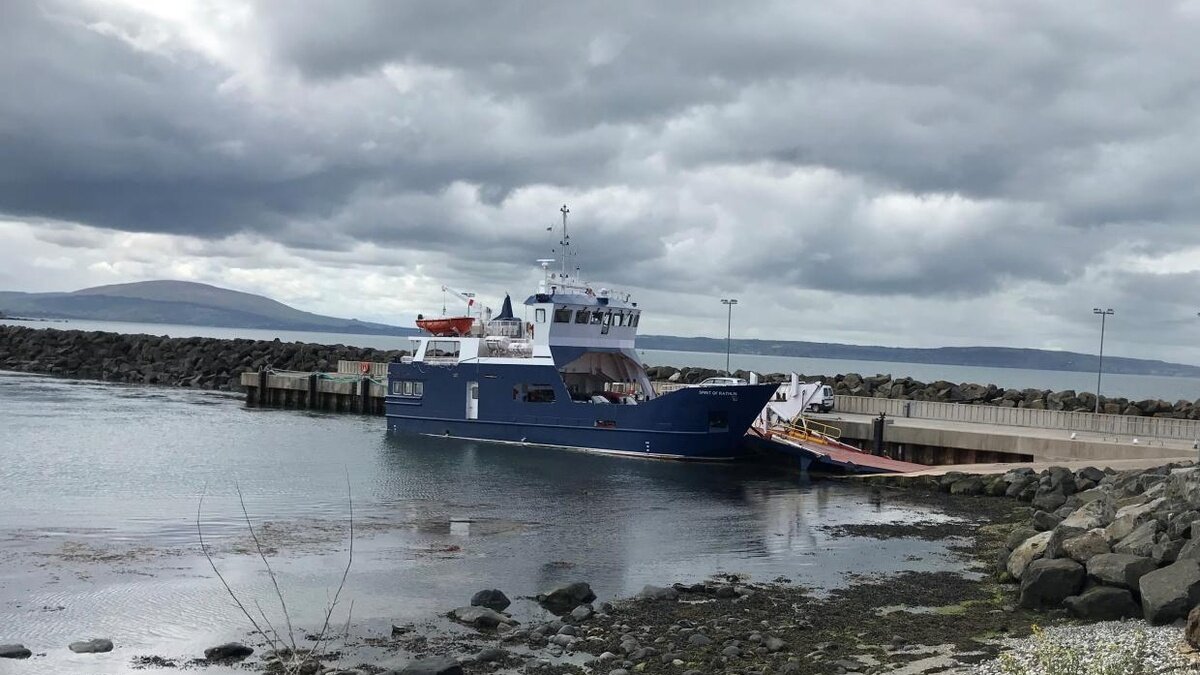
Image Credit : Department for Infrastructure, Northern Ireland
Rathlin Island’s summer transport window enters its final 26 days on 5 September. The Department for Infrastructure-supported ferry continues year-round, but its enhanced summer timetable ends on 30 September, including the additional weekend morning return crossing introduced partly for hospitality staffing and tourism. A separate passenger operator launched for summer 2026 also publishes sailings only through 30 September. For travellers, October capacity and departure times therefore cannot safely be inferred from September schedules. Pre-booking, vessel-specific luggage rules, restricted vehicle access and seasonal attraction availability now become critical planning considerations.
Advertisement
The important travel development on Rathlin Island is not simply that a summer timetable has an expiry date. What makes 30 September 2026 strategically significant is that several layers of seasonal visitor infrastructure converge on the same point.
According to the Northern Ireland Department for Infrastructure, the principal Rathlin Island ferry summer timetable operates from 3 April until 30 September 2026. It contains an additional weekend return crossing, departing Rathlin at 08:30 and Ballycastle at 09:30, which was retained after community consultation identified a requirement for earlier weekend access for hospitality workers. The Department also associated the additional connectivity with support for island tourism.
Advertisement
Advertisement
Crucially, the ferry itself does not cease operating after September. Department for Infrastructure records establish that the publicly supported Ballycastle–Rathlin service operates every day of the year. The change is therefore one of frequency, seasonal scheduling and available travel choice, rather than loss of the island’s lifeline connection.
That distinction matters for travel agents. Describing 30 September as the end of Rathlin ferry operations would be inaccurate. Describing it as the end of the enhanced summer access regime is both accurate and commercially important.
The strongest new travel angle comes from a development that was not part of the original March government timetable announcement.
The Rathlin Development and Community Association’s visitor information confirms that a new Rathlin Ferry Service began operating in summer 2026, using the passenger-only Glad Tidings VI. The community organisation lists it separately from Rathlin Ferry, which operates the Kintra II and Spirit of Rathlin.
The new operator’s own published 2026 summer timetable runs from 1 May to 30 September. It advertises departures from Rathlin at 09:00 and 16:45, with Ballycastle departures at 09:45 and 17:30. Rathlin’s community visitor portal identifies Glad Tidings VI as a 70-passenger fast ferry with an approximately 25-minute journey time.
This creates a two-layer seasonal transition.Rathlin access component Published 2026 arrangement 30 September significance Travel-trade implication DfI-supported Rathlin Ferry Year-round service with enhanced summer timetable from 3 April Summer timetable expires Autumn departure patterns must be reconfirmed Extra weekend morning return 08:30 Rathlin departure and 09:30 Ballycastle departure Seasonal enhancement ends Less timetable flexibility may affect weekend staffing and visitors Rathlin Ferry Service Ltd Separate summer passenger service from 1 May Published summer operation runs only through 30 September Supplemental summer choice cannot be assumed in October Glad Tidings VI 70-passenger fast ferry Summer timetable boundary applies Group capacity should be reconfirmed for later trips Island businesses and facilities Several operate seasonally Availability varies outside peak season Packages need attraction and hospitality checks before sale
The result is effectively a seasonal capacity reset, rather than a single timetable alteration.
Department for Infrastructure operational statistics provide unusually useful context for understanding why timetables matter to this island economy.
The Department recorded 240 scheduled sailings in March 2026, followed by 470 in April, when the summer schedule began. That represents an increase of almost 96 per cent in scheduled movements between those two months.
The figure remained at 470 in May, rose to 480 in June and reached 554 scheduled sailings in July. July therefore had more than twice as many scheduled sailings as March. August and September figures had not yet been populated on the Department’s public 2026 table when checked on 5 September.Month Scheduled Rathlin sailings 2026 Missed sailings recorded DfI reported availability January 211 54 100% February 241 58 100% March 240 102 100% April 470 44 100% May 470 26 100% June 480 2 100% July 554 4 100% August Not yet published Not yet published Not yet published September Not yet published Not yet published Not yet published
The apparent difference between missed sailings and 100 per cent availability needs explanation. The Department states that its availability percentage excludes cancellations caused by circumstances outside the operator’s or Department’s control, including weather. In other words, the statistics demonstrate strong operator-controlled availability while simultaneously reminding travellers that marine weather remains a genuine operational variable.
Historical data underline the seasonal issue without providing a forecast for 2026. In September 2025, 479 sailings were scheduled; in October, the number fell to 295, a reduction of about 38 per cent. November recorded 266 and December 223. Those figures should not be treated as the confirmed 2026 winter timetable, but they demonstrate how strongly ferry supply has historically contracted after the summer period.
As of 5 September 2026, the principal Rathlin Ferry timetable page displays the Summer 2026 Timetable, explicitly valid through 30 September. The page does not presently provide a published October 2026 departure pattern alongside it.
That creates an immediate booking consideration for autumn travel.
A tour operator preparing an October itinerary should therefore not copy a September sailing into a package, transfer manifest or timed attraction programme unless the post-September crossing has been confirmed.
This is particularly important because several daily travel decisions depend on the specific vessel allocated.
The Kintra II takes approximately 30 minutes but does not accommodate luggage. The Spirit of Rathlin takes around 40 minutes and can accommodate larger luggage, up to 10 bicycles and two wheelchairs. The operator also states that sailings remain subject to the skipper’s discretion and weather or other operating conditions.
For overnight travellers, cyclists, accessible-tour groups and passengers carrying larger bags, the issue is therefore not simply whether a ferry departs. The vessel and departure combination determines whether that sailing is suitable.
Northern Ireland’s official nidirect guidance says passengers should pre-book Rathlin ferry tickets to confirm availability and reserve space. Current government-listed fares are £8.40 for an adult single and £16.80 return, while children aged five to 15 are listed at £4.20 single and £8.40 return.
The ferry operator states that bookings may be accepted on the day if capacity remains and they are made at least 30 minutes before departure. For the trade, however, same-day availability should be treated as contingency rather than itinerary design.
Vehicle access is substantially more restrictive than many first-time visitors may expect.
According to the operator, vehicles are permitted where passengers are undertaking pre-arranged work, hold the relevant disabled Blue Badge, or are staying on Rathlin for six or more nights and possess the required vehicle permit.
That makes the standard leisure model predominantly a foot-passenger journey through Ballycastle, with parking, luggage and onward island movement needing to be considered separately.
Ballycastle Harbour is therefore not merely an embarkation point. Causeway Coast and Glens Borough Council’s 2026–2036 harbour strategy identifies the harbour infrastructure as supporting the essential Rathlin service and notes passenger-flow interactions between vehicles, pedestrians, the ferry check-in infrastructure and the slip area.
For geographically accurate travel publishing, Belfast should be treated as the associated city gateway rather than the ferry port itself.
Official Causeway Coast and Glens visitor information directs motorists travelling from Belfast north towards Ballymena and then towards Ballycastle, where signs lead travellers to the Rathlin ferry. The ferry terminal itself is located at Bayview Road, Ballycastle, County Antrim.
This is why Ballycastle is unavoidable in itinerary planning even though it is a town rather than a city.
The island lies only a short ferry journey from Ballycastle and is promoted by Tourism Northern Ireland as Northern Ireland’s only inhabited offshore island, with walking, wildlife, lighthouse and coastal experiences central to its visitor proposition.
Transport availability does not automatically mean every summer attraction remains available.
The RSPB Rathlin Island opening calendar shows the nature reserve visitor operation closed during September 2026, while its facility information states that the West Light Seabird Centre typically closes at the end of August or early September.
That materially changes how September Rathlin trips should be marketed.
The island should not automatically be sold as a September extension of the peak puffin-season product. Rathlin’s official community tourism organisation instead promotes autumn and winter around quieter walking, coastal scenery, dark skies, seals, wildlife and the experience of visiting the island outside its busiest period.
For travel businesses, this creates an opportunity to reposition September as a rural and slow-tourism shoulder season, but only if product descriptions accurately distinguish available experiences from peak wildlife-season attractions.
Rathlin’s connectivity issue sits inside a wider Northern Ireland tourism economy that is growing.
According to the Northern Ireland Statistics and Research Agency, Northern Ireland recorded about 5.1 million overnight trips in 2025, generating £1.2 billion in spending and 15 million visitor nights. Overnight trips and expenditure were each nine per cent higher than in 2024.
Tourism NI reports that approximately 70 per cent of overnight trips in 2025 occurred outside Belfast, demonstrating why access to regional and rural destinations matters to the wider tourism strategy.
For the Causeway Coast and Glens, the latest detailed council strategy cites 2024 tourism performance of approximately 1.1 million overnight trips, 3.2 million nights and £210.4 million in spending, accounting for about 19 per cent of Northern Ireland tourism expenditure.
Rathlin is only one component of that regional economy, so those district numbers cannot be attributed directly to the island. They nevertheless show the commercial environment in which reliable Ballycastle connectivity operates.
The council’s own rural assessment goes further, explicitly identifying reliable Ballycastle–Rathlin ferry connectivity as a rural need and linking harbour infrastructure with rural businesses, tourism, employment, transport, economic development and access to services.
That gives the September timetable transition significance beyond timetable minutiae. Ferry frequency influences when visitors can arrive, how workers reach hospitality businesses, whether tours can run to fixed timings and how confidently accommodation providers can convert shoulder-season demand.
Rathlin Island illustrates a structural challenge faced by small-island destinations: transport is part of the tourism product itself.
The ferry timetable does more than move visitors across the Sea of Moyle. It determines arrival windows, hospitality staffing options, luggage capacity, accessible travel, the viability of timed excursions and the length of a practical day trip.
In 2026, that relationship is especially visible because Rathlin has enjoyed both an enhanced government-supported summer pattern and an additional passenger operator. Both published summer arrangements reach the same 30 September boundary. Meanwhile, official historical sailing data show how sharply service volumes can change between peak and off-peak months.
For the United Kingdom travel trade, the lesson extends beyond Northern Ireland. Rural and island destinations cannot be packaged solely around attractions and accommodation. Transport seasonality must be treated as destination infrastructure.
Rathlin remains accessible beyond September. The commercial challenge is ensuring that travellers understand exactly how that access changes, what remains open and what must be reserved before they begin an autumn journey through Belfast and Ballycastle.
Advertisement
Tags: Ballycastle Travel, northern ireland tourism, Rathlin Ferry, Rathlin Island, UK Island Tourism
Advertisement
Advertisement













Saturday, September 5, 2026

Saturday, September 5, 2026

Saturday, September 5, 2026

Saturday, September 5, 2026

Saturday, September 5, 2026

Saturday, September 5, 2026

Saturday, September 5, 2026

Saturday, September 5, 2026



