

Air Serbia Turns Retired Uniforms into Travel Pillows Through its Sustainable Social Inclusion Project

Published
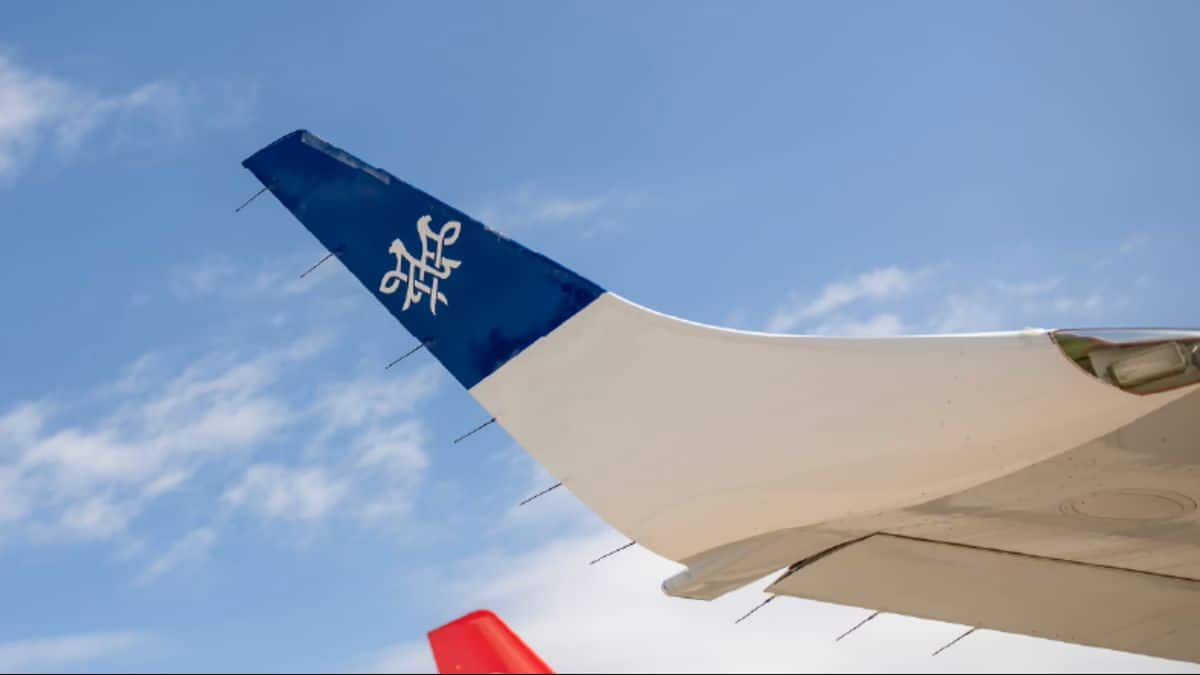
Air Serbia has been giving its discarded uniforms a new life by manufacturing travel pillows from the used uniforms as part of a social inclusion effort to recycle its former uniforms into usable products rather than discarding them as wastage. Travel pillows have been made as part of the “Uniforms Given a New Purpose” project, which has been designed in partnership with Child’s Heart – a humanitarian organisation of Serbia.
The product was announced on 12 August 2026 and comes after other products like toiletry bags, laptop bags and tote bags made from the uniforms. It also highlights the process through which individual parts and even scraps of the former uniforms are able to circulate within the community in the form of useful products. The initiative is not just environmentally conscious but is also socially inclusive. Individuals with developmental disabilities from Child’s Heart are engaged in making such products from the uniforms. The recycling strategy also aligns itself with the circular economy policy agenda of Serbia for 2026.
Advertisement
Advertisement
How Did Old Air Serbia Uniforms Become Travel Accessories?
The new travel pillow was created from material originally used for Air Serbia employee skirts, giving textiles that had reached the end of their operational life a completely different role. What makes the latest product particularly relevant to the project’s sustainability objectives is the way its filling has been sourced. Material left over from former uniform vests, which had already been used during the manufacture of laptop bags, was retained and used inside the pillows rather than being discarded. That process effectively creates another stage of reuse. A uniform first serves its original purpose for airline personnel. The material can then become another product, while smaller remnants generated during that conversion can potentially be reused again.
For an airline initiative of this size, the project is not positioned as a solution to the broader textile-waste challenge. However, it provides a practical example of circular design, where businesses consider the potential value of materials beyond their first intended function. The approach is also highly visible because the resulting products maintain a direct connection with the airline’s history and passenger journey.
Advertisement
Advertisement
Why Is Air Serbia Trying to Use Even the Smallest Material Remnants?
The project increasingly focuses on extracting as much usable value as possible from each retired garment. Creating bags from old uniforms already prevented selected textiles from immediately becoming waste. Using the remaining vest material as travel-pillow filling takes the concept further by finding a role for material that might otherwise have been left after production. Air Serbia describes the initiative as part of its effort to incorporate sustainability principles into everyday business activities, with responsible resource management forming one of the central objectives.
This matters because textile reuse is most effective when organisations look beyond simply producing one replacement item. Designing around offcuts and residual material can improve overall resource efficiency and extend the working life of existing fabric. The project consequently illustrates a simple circular-economy principle: materials do not necessarily lose all value once their original purpose ends. Through design and careful planning, an airline skirt can become a travel accessory, while material remaining from another item can become part of that accessory rather than waste.
Advertisement
Advertisement
What Makes the Partnership With Child’s Heart More Than a Recycling Project?
The environmental component is only one part of the Uniforms Given a New Purpose initiative. The collaboration between Air Serbia and Child’s Heart was formally established in March 2026, with the partnership designed around both circular-economy principles and empowerment of people with developmental disabilities. Members engaged through the organisation participate in creating products from retired pilot and cabin-crew uniforms. This gives the programme an important social dimension because production activity is tied to skills, participation, inclusion and employment opportunities.
That approach corresponds with Serbia’s broader policy focus on improving economic participation for people with disabilities. The Serbian Government’s Employment Strategy Action Plan for 2024–2026 specifically includes measures intended to encourage the employment of people with disabilities. Serbia also adopted a Strategy for Improving the Position of Persons with Disabilities for 2025–2030, together with an implementation action plan covering 2025–2027. The national framework is intended to strengthen social and economic participation and create conditions for more equal involvement in society. The Air Serbia project therefore sits at the intersection of corporate sustainability and social inclusion, rather than functioning solely as a material-recycling campaign.
How Has the Uniforms Given a New Purpose Project Expanded in 2026?
The travel pillow represents another stage in a programme that has developed relatively quickly since the partnership was formalised. When Air Serbia and Child’s Heart announced their cooperation in March, the plan involved converting used pilot and cabin-crew uniforms into products such as toiletry bags, handbags and pet clothing. The initiative was designed to give retired fabrics additional value while supporting members of the humanitarian organisation. Subsequent production expanded to include laptop bags and tote bags, while the August travel pillow demonstrated how the project could continue evolving around the material available.
The initiative also received external recognition in April 2026, when Air Serbia announced that Uniforms Given a New Purpose had received the Diplomacy & Commerce Award 2026 for socially responsible campaigning. While an award does not itself measure environmental impact, the recognition highlights the programme’s unusual combination of aviation branding, resource reuse and community participation.The project has now developed beyond an initial concept into a growing collection of practical objects, each retaining material that once formed part of Air Serbia’s working uniforms.
Why Does Circular Design Matter to Serbia’s Wider Sustainability Strategy?
The airline initiative also arrives during a period when Serbia is strengthening its national circular-economy framework. On 23 April 2026, the Serbian Government adopted the Circular Economy Development Programme for 2026–2030, alongside an action plan covering 2026–2027. The programme is intended to support a transition away from the traditional linear model of taking resources, producing goods and ultimately disposing of them. The Ministry of Environmental Protection has linked the new framework with more efficient resource use, reduced waste, knowledge, innovation and greater economic competitiveness.
Air Serbia’s uniform project operates on a much smaller scale than national waste-management policy, but its underlying logic is closely aligned. Instead of regarding a retired uniform as having reached the absolute end of its lifecycle, the material is treated as an existing resource that can enter another production cycle. This type of thinking is increasingly important across the travel and aviation industries, where companies are examining everything from onboard products and food waste to uniforms, packaging and aircraft materials as part of wider sustainability strategies.
Advertisement
Advertisement
Could Airline Uniforms Become a More Visible Part of Sustainable Aviation?
Uniform replacement is a routine part of airline operations. Designs change, garments wear out and employees require new clothing over time. The question for airlines is what happens to those textiles once they can no longer fulfil their original function. Air Serbia’s approach shows one possible answer. Instead of simply disposing of selected garments, their distinctive fabrics can be redesigned into durable travel-related products.
There is also a symbolic advantage. A pillow made from a former airline uniform remains connected to travel. The material may no longer be worn by a crew member, but it continues its lifecycle as an object associated with journeys. The project does not disclose figures for the total amount of textile material diverted from waste, so its environmental impact should not be overstated. Its significance currently lies more clearly in demonstrating a repeatable reuse process and linking it with a social initiative. That distinction is important for credible sustainability reporting. The programme demonstrates action and resource efficiency, but its wider environmental scale would require quantitative data to assess fully.
Why Does the Social Element Strengthen the Project’s Impact?
Sustainability programmes can often focus heavily on carbon, waste or materials while overlooking the human component. Here, the partnership places people with developmental disabilities directly within the production process. That gives the products a second layer of value. The project seeks not only to lengthen the lifespan of textiles but also to strengthen participation, inclusion and opportunities for meaningful work.
Serbia’s current policy framework identifies this type of economic participation as an important national objective. The country’s 2024–2026 employment action plan includes targeted measures for people with disabilities, while the 2025–2030 disability strategy focuses on improving their overall social and economic position. Corporate programmes cannot replace public employment policy, but partnerships with specialised organisations can contribute at a practical level. For Air Serbia, working with Child’s Heart allows a sustainability programme that might otherwise focus purely on discarded textiles to support a broader social purpose.
Air Serbia Finds a New Journey for Materials That Once Flew the World
Indeed, the travel pillow shows the development from the initiative of recycling uniforms to using all components of the used textiles from Air Serbia’s uniforms. In this case, old skirts become an exterior of the travel pillow. Moreover, vest remains become pillow stuffing. Earlier fabrics were made into toiletry bags, laptop bags, tote bags and other products.
This is quite a simple idea with a number of interrelated goals to achieve: decrease of the textile waste, prolongation of the life cycle of the materials, promotion of the circular thinking and social inclusiveness. Finally, this idea coincides with national policy of the country on the development of circular economy and inclusion of people with disabilities. Thus, we may conclude that the corporate initiative has a certain policy context now. For the aviation sphere, the message is quite clear. Sustainable development does not always mean the large technological innovations. It sometimes means a reconsideration of a certain company asset which seemed to be useless.
Advertisement
Advertisement
Image Source: Air Serbia
Advertisement
