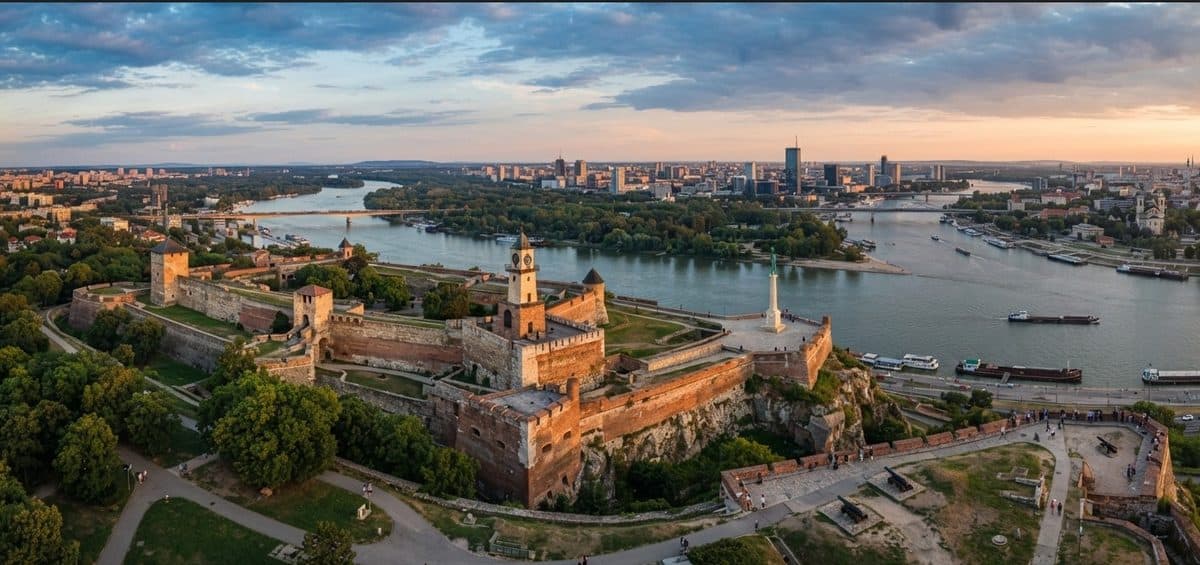
Image generated with Ai
For Indian globetrotters, Western Europe has often been synonymous with steep expenses and complicated logistics. However, as of September 2026, the travel landscape is shifting dramatically. Verified reports confirm that the cheapest European destinations for Indian travellers now lie in the breathtaking Balkans. Cities like Tirana in Albania, Belgrade in Serbia, and Sofia in Bulgaria offer unparalleled cultural richness without the exorbitant price tags. Remarkably, a comprehensive trip to any of these capitals, encompassing flights, accommodation, food, and visa fees, can be comfortably executed within a strict ₹1,10,000 budget. This emerging trend represents a monumental shift in international tourism economics.
The global travel ecosystem has witnessed a fundamental transformation over the past decade, but the most striking evolution as of 2026 is the rapid diversification of Indian outbound tourism. Historically, the quintessential European holiday for an Indian tourist revolved around Western hubs such as Paris, Rome, Zurich, and Amsterdam. While these destinations remain iconic, they have become increasingly exclusionary due to inflationary pressures, skyrocketing accommodation costs, and highly congested visa processing systems.
Advertisement
Consequently, Indian travellers are seeking alternatives that offer authentic European experiences—complete with medieval architecture, rich culinary heritage, and continental climates—without the severe financial strain. Official statistics from the UN Tourism organisation (formerly UNWTO) and various national tourism boards highlight a massive pivot towards Eastern and Southeastern Europe. The Balkan peninsula, in particular, has emerged as the premier choice. The primary catalysts for this shift are highly favourable exchange rates, simplified or well-structured visa regimes, and the introduction of strategic low-cost aviation routes connecting the Indian subcontinent to the Balkans via Middle Eastern transit hubs.
Verified reports as of late 2026 identify three specific capitals that perfectly align with the financial realities of the middle-class Indian traveller: Tirana in Albania, Belgrade in Serbia, and Sofia in Bulgaria. These cities are not merely budget alternatives; they are vibrant, historically profound, and rapidly modernising European capitals. They represent the absolute best value in the current international tourism market, allowing travellers to experience the charm of Europe while strictly adhering to a budget that previously seemed impossible.
Advertisement
Advertisement
Claiming that a European holiday can be executed for under ₹1,10,000 (roughly £1,000 or €1,200) requires a meticulous breakdown of expenses. This budget is not a theoretical estimation; it is a highly practical financial blueprint based on the current economic realities of 2026. The budget encompasses a standard 6-night, 7-day itinerary tailored for a single adult traveller.
To comprehend how the ₹1,10,000 limit is maintained, one must categorise the expenditure into four primary pillars: flights, visas and insurance, accommodation, and daily living costs.
This brings the total estimated expenditure to roughly ₹87,000 to ₹1,10,000, leaving a comfortable buffer for emergency funds or minor shopping. This formula effectively solidifies these capitals as the cheapest European destinations for Indian travellers.
The secret to maintaining a budget Europe trip from India lies in mastering the aviation routes. Traditional full-service carriers flying into major European hubs like Frankfurt or London often charge exorbitant fares, pushing the flight component alone beyond ₹70,000. However, the aviation landscape in 2026 has been revolutionised by the integration of Gulf-based low-cost carriers.
Advertisement
Advertisement
For travellers heading to Tirana, Belgrade, or Sofia, the most economical route involves flying from India to a transit hub in the United Arab Emirates or Qatar. Airlines such as IndiGo, Air India Express, and SpiceJet offer highly affordable sectors to Dubai, Abu Dhabi, or Sharjah. From these Middle Eastern hubs, European ultra-low-cost carriers like Wizz Air and Ryanair operate direct flights to the Balkans.
For instance, the Abu Dhabi (AUH) to Tirana (TIA) route operated by Wizz Air has been a game-changer, frequently offering return fares for under ₹15,000 if booked a few months in advance. When combined with an India-to-Abu Dhabi return ticket costing approximately ₹30,000, the total airfare is kept well within the ₹45,000 to ₹50,000 threshold.
Simultaneously, legacy carriers have recognised the growing demand for Eastern Europe. Airlines like Turkish Airlines (via Istanbul), Qatar Airways (via Doha), and LOT Polish Airlines (via Warsaw) frequently run promotional campaigns targeting the Indian demographic. Code-sharing agreements between Indian domestic airlines and European carriers have further streamlined baggage transfers and single-ticket bookings, making the journey seamless while preserving the budget.
Tirana, the vibrant capital of Albania, has emerged from its isolationist past to become one of the most colourful, welcoming, and cost-effective cities in Europe. Nestled between the Dajti Mountain and the coastal plains, Tirana offers a unique blend of Ottoman, Fascist Italian, and Soviet-era architecture, beautifully contrasted by a booming modern cafe culture.
Albania’s approach to Indian tourists is highly pragmatic. The Albania eVisa for Indian citizens has been fully digitalised through the official governmental portal, e-Albania. As of 2026, the Type C Short-Stay Tourist Visa fee is officially pegged at approximately €50 (roughly ₹4,500).
The application process is entirely paperless. Indian applicants must upload a scan of their passport, a digital photograph, proof of accommodation, return flight tickets, and bank statements demonstrating sufficient funds (typically €50 per day of stay). Processing times usually range between 5 to 10 working days. Importantly, Indian citizens holding a valid, multiple-entry Schengen, US, or UK visa that has been previously used are exempt from the eVisa requirement and can enter Albania visa-free for short stays.
The local currency is the Albanian Lek (ALL). The exchange rate heavily favours the Indian Rupee, making everyday purchases remarkably cheap.
A traveller can easily experience the very best of Tirana on a strict daily allowance of ₹2,500 (excluding accommodation), making it an undisputed champion of budget European travel.
Belgrade, perched strategically at the confluence of the Sava and Danube rivers, is one of Europe’s oldest cities. It is a city of immense historical resilience, renowned for its imposing fortresses, brutalist architecture, and arguably the most dynamic nightlife in Eastern Europe. For Indian tourists, Belgrade offers a raw, authentic European experience that remains largely untouched by the homogenisation of mass tourism.
It is crucial to note the policy shifts regarding Serbian immigration. Until December 2022, Serbia maintained a visa-free regime for Indian nationals. However, to align with European Union visa policies and combat illegal migration, the Serbian government rescinded this policy in January 2023.
As of 2026, the Serbia visa requirements for Indian passport holders stipulate that travellers must apply for a Type C short-stay visa prior to arrival. The application is processed through the Embassy of the Republic of Serbia in New Delhi. The visa fee is approximately €60 (around ₹5,400). The required documentation mirrors standard European procedures: financial proof, travel insurance, flight itineraries, and accommodation confirmations. Alternatively, Indian citizens possessing a valid visa or residence permit from the UK, US, or Schengen Area can enter Serbia without a national visa for up to 90 days within a 180-day period.
The official currency is the Serbian Dinar (RSD). Serbia’s economy provides excellent value for the Indian Rupee.
Even with the reintroduction of visa fees, Belgrade comfortably fits within the ₹1,10,000 budget, providing an incredibly rich cultural itinerary.
Sofia, the capital of Bulgaria, stands at the crossroads of European and Middle Eastern history. It is a city where Roman ruins sit beside Ottoman mosques, topped by the gleaming golden domes of Orthodox cathedrals. Sofia is unique in this list because, as of March 2024, Bulgaria became a partial member of the Schengen Area (covering air and sea borders). This geopolitical shift has significant implications for Indian travellers.
Because of its integration into the Schengen zone, Indian tourists must now apply for a standard Schengen visa to enter Bulgaria via air. The Bulgaria Schengen visa fees are governed by standard EU regulations, set at €90 (approximately ₹8,100) for adults. Applications are processed through VFS Global centres across India on behalf of the Bulgarian diplomatic missions.
While the visa fee is higher than Albania’s or Serbia’s, securing a Bulgarian Schengen visa offers a massive strategic advantage: it grants the traveller access to the rest of the 29-country Schengen Area. For tourists planning to expand their Eastern Europe itinerary in the future, obtaining a Bulgarian Schengen visa establishes excellent travel history within the EU system.
Bulgaria continues to use the Bulgarian Lev (BGN), which is pegged to the Euro. Despite its Schengen status, Sofia remains startlingly affordable compared to its Western European counterparts.
Sofia perfectly balances the prestige of a Schengen destination with the financial accessibility required to keep the total trip cost beneath ₹1,10,000.
The influx of Indian tourists to these Eastern European destinations is not entirely accidental; it is the result of deliberate policy alignments and bilateral tourism initiatives. Governments in the Balkans have officially recognised the immense economic potential of the burgeoning Indian middle class.
Ministries of Tourism in Albania, Serbia, and Bulgaria have actively participated in major Indian travel expos, such as SATTE (South Asian Travel and Tourism Exchange) in New Delhi. Official government announcements throughout 2025 and 2026 have highlighted a commitment to streamlining visa processing for Indian nationals. Albania’s fully digitalised e-Visa system is a direct result of government policies aimed at reducing bureaucratic friction for high-yield tourist demographics outside the EU.
Furthermore, bilateral civil aviation agreements between India and these nations have been expanded. The Indian Ministry of Civil Aviation has been actively renegotiating air bubble and transit agreements, ensuring that capacity constraints do not artificially inflate flight prices to Eastern Europe.
From a public policy standpoint, safety remains a primary concern for international tourists. Official data from the OECD and European safety indices consistently rank cities like Sofia, Tirana, and Belgrade as exceptionally safe for tourists, with low rates of violent crime. Local governments have invested heavily in tourist police infrastructure and multi-lingual public signage. For Indian travellers, who often travel in family units or as solo female backpackers, this high level of verifiable public safety significantly enhances the appeal of these destinations.
The economic implications of this tourism corridor are profound. The travel industry has rapidly adapted to serve the cheapest Europe tour packages from India, resulting in a mutually beneficial economic boom.
Airlines have recognised that the India-to-Balkans route is one of the fastest-growing aviation sectors. Middle Eastern carriers have deliberately synced their schedules to allow for seamless 2-to-3 hour layovers for flights originating in India and terminating in Tirana, Belgrade, or Sofia. This eliminates the need for expensive transit hotel stays, further protecting the traveller’s budget.
Additionally, Indian carriers like Air India have expanded their European footprint, offering competitive fares to major hubs from which travellers can easily take cheap regional flights or cross-border trains into the Balkans.
Within the destinations themselves, the hospitality sector is adapting to Indian preferences. Major hotel chains and independent operators in Belgrade and Sofia are increasingly offering vegetarian and vegan breakfast options—a direct response to the dietary preferences of a significant portion of the Indian tourist market. Local destination management companies (DMCs) now regularly offer tailored, budget-friendly day trips that cater specifically to English-speaking Indian tourists, focusing on high-value, culturally immersive experiences rather than expensive, commercialised tourist traps.
For Albania, Serbia, and Bulgaria, attracting Indian tourists yields excellent economic dividends. While Indian travellers are highly budget-conscious regarding flights and accommodation, they are known to spend robustly on local experiences, souvenirs, and dining. This macroeconomic injection directly supports local small and medium-sized enterprises (SMEs)—such as family-run restaurants, independent tour guides, and local artisans.
Official statistics from the respective national statistical institutes indicate a double-digit year-on-year growth in tourism revenue generated from South Asian visitors as of 2026. This revenue is vital for the continued infrastructural development of these developing European economies, proving that budget tourism can still generate substantial macroeconomic benefits for the host nations.
The shift towards these budget-friendly capitals is heavily corroborated by global travel authorities. According to recent 2026 reports released by UN Tourism, the diversification of outbound destinations is a natural evolution of the Indian market.
“The Indian outbound market is no longer monolithic. We are observing a sophisticated segment of travellers who prioritise authentic cultural immersion and economic value over traditional luxury,” notes a 2026 UN Tourism regional analysis report.
Similarly, statements from the Bulgarian Ministry of Tourism have welcomed the influx of Indian visitors post-Schengen integration. Official press releases highlight that “Bulgaria’s entry into the Schengen zone has not diminished our commitment to remaining an accessible, high-value destination for our growing visitor base from India and South Asia.” These official postures confirm that the governments involved are actively working to maintain the affordability and accessibility of their countries.
As we look toward 2027 and beyond, the trajectory for Indian travel to the Balkans is exceptionally positive. While inflationary pressures are a global reality, the foundational economic disparities between Western and Eastern Europe ensure that Tirana, Belgrade, and Sofia will maintain their status as the cheapest European destinations for Indian travellers for the foreseeable future.
To guarantee that the ₹1,10,000 budget holds firm, travellers must adopt a strategic approach:
By adhering to these principles, the dream of exploring the historical depth, culinary brilliance, and architectural beauty of Europe remains well within the grasp of the Indian middle class. The Balkans do not represent a compromise; they represent a smarter, more authentic, and vastly more economical way to experience the European continent.
Advertisement
Tags: Albania eVisa for Indian citizens, budget Europe trip from India, budget travel 2026, Bulgaria Schengen visa fees, cheapest European destinations for Indian travellers
Advertisement
Advertisement











Wednesday, September 2, 2026

Wednesday, September 2, 2026

Wednesday, September 2, 2026

Wednesday, September 2, 2026

Wednesday, September 2, 2026
Tuesday, September 1, 2026

Wednesday, September 2, 2026

Wednesday, September 2, 2026