
Flights Cancelled Throughout Asia As 4,147 Delays And 247 Cancellations Disrupt Air Travel In Tokyo And 25 Major Airports

Published
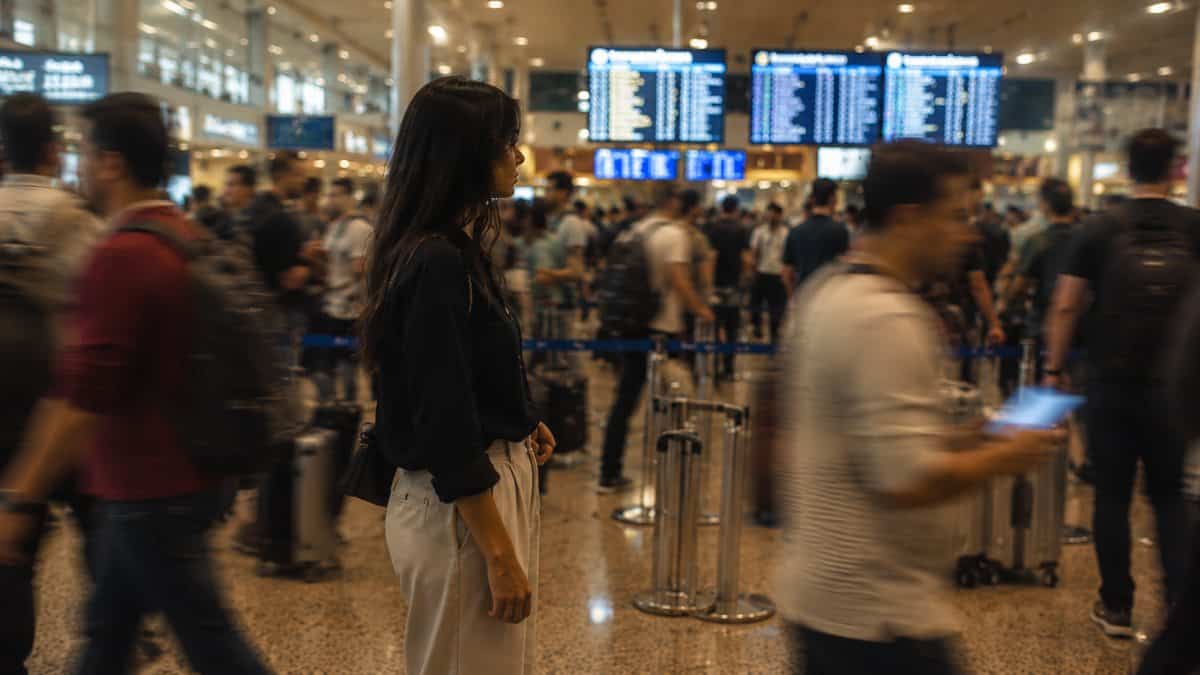
Image generated with Ai
Asia is seeing widespread flight cancellations today, with 4,147 delays and 247 cancellations across Japan, Thailand, Indonesia, India, China, Hong Kong, UAE, Qatar, and Saudi Arabia. The heaviest airline disruption is concentrated among China Eastern, Air China, Emirates, Thai Airways, All Nippon, Qatar Airways, IndiGo, Air India, Saudia, and SpiceJet.
Major hubs affected include Beijing Capital, Hong Kong, Shanghai Hongqiao, Tokyo Haneda, New Chitose, Bangkok Suvarnabhumi, Jakarta Soekarno-Hatta, Mumbai, Delhi, Dubai, Jeddah, and others.
- China Eastern faced the highest delay count at 529, followed by Air China with 217.
- Saudia recorded the highest cancellation count at 84.
- Emirates recorded 203 delays across Dubai, Bangkok, Mumbai, and Delhi.
- FlyDubai recorded 185 delays, primarily at Dubai.
- Tokyo Haneda recorded 283 delays and 7 cancellations.
- Dubai recorded 447 delays, while Sharjah recorded 77 delays and 7 cancellations.
- Riyadh recorded 141 delays and 26 cancellations, while Jeddah recorded 161 delays and 20 cancellations.
Most Impacted Asian Airports
Tokyo Haneda
Tokyo Haneda recorded 283 delays and 7 cancellations. All Nippon accounted for 116 delays and Japan Airlines for 79, while Air Do recorded 15 delays and 6 cancellations.
Advertisement
Advertisement
Bangkok Suvarnabhumi
Bangkok Suvarnabhumi saw 281 delays and 4 cancellations. Thai Airways recorded 55 delays and 4 cancellations, while Bangkok, Thai Vietjet Air, Emirates, and VietJet Air also faced delays.
Dubai
Dubai recorded 447 delays and 4 cancellations, making it one of the region’s busiest disruption points. Emirates accounted for 185 delays and FlyDubai for 174, while IndiGo, Air India Express, Gulf Air, Saudia, and Airblue also experienced delays.
Advertisement
Advertisement
Guangzhou Baiyun
Guangzhou Baiyun recorded 346 delays and 4 cancellations. It had the highest airport-level delay count among the Chinese airports included here, indicating substantial operational disruption despite relatively few cancellations.
Advertisement
Advertisement
Jakarta Soekarno-Hatta
Jakarta Soekarno-Hatta recorded 229 delays and 20 cancellations. Batik Air had 47 delays and 13 cancellations, while Garuda Indonesia, Citilink, Pelita Air Service, and Lion Air also reported disruptions.
Delhi
Delhi recorded 221 delays and 22 cancellations. Air India accounted for 67 delays and 6 cancellations, while IndiGo recorded 64 delays and 1 cancellation and SpiceJet recorded 25 delays and 11 cancellations.
Hong Kong
Hong Kong recorded 227 delays and 6 cancellations. The airport also registered 21 delays involving flights within, into, or out of the United States.
Advertisement
Advertisement
Beijing Capital
Beijing Capital recorded 180 delays and 13 cancellations. It also recorded one delay involving flights within, into, or out of the United States.
Jeddah
Jeddah recorded 161 delays and 20 cancellations. Saudia had 31 delays and 16 cancellations, while flyadeal recorded 22 delays and 3 cancellations.
Advertisement
Advertisement
Airlines Most Affected by Flight Cancellations and Delays In Asia
China Eastern
China Eastern recorded 529 delays and 13 cancellations, the highest airline-level delay count.
Air China
Air China recorded 217 delays and 13 cancellations, placing it second for delays and among the airlines with the highest cancellation counts.
Emirates
Emirates recorded 203 delays across the affected airports: 185 at Dubai, 10 at Bangkok, 4 at Mumbai, and 4 at Delhi.
All Nippon
All Nippon recorded 140 delays, with 116 at Tokyo Haneda and another 24 at New Chitose.
IndiGo
IndiGo recorded 108 delays across Dubai, Mumbai, and Delhi, with 64 at Delhi alone.
Advertisement
Advertisement
Saudia
Saudia recorded 84 cancellations, the highest cancellation count among the airline-level figures. Its cancellations were spread across Najran, Gizan, Abha, Riyadh, and Jeddah.
What Should Passengers Facing Flight Cancellations Do?
- Check the airline’s latest flight status before leaving for the airport.
- Contact the airline promptly to ask about rebooking or alternative services.
- Keep boarding passes, booking confirmations, and cancellation notifications available.
- Ask whether the airline offers a refund, rebooking, or travel-credit option under the applicable fare conditions.
- If rebooked, confirm the new departure time and airport before travelling.
- Allow additional time for check-in, security, baggage handling, and possible queues.
- Avoid relying on older flight-status information shared on social media or third-party platforms.
Why Are Flights Being Cancelled Across Asia?
Several factors may be contributing to the disruption, with operational pressures overlapping with weather and geopolitical risks.
In China, temporary airspace restrictions or military activity can sometimes affect civilian flight operations, potentially leading to delays, rerouting, or cancellations.
In the Gulf, Saudi Arabia-Houthi tensions could add another layer of uncertainty for aviation. The United Nations has warned of a growing risk of renewed large-scale conflict in Yemen, while recent Houthi attacks have targeted areas including Jizan and Abha.
Overview of Asia Flight Cancellations
The current flight disruptions in Asia stretch from major Chinese aviation hubs to Japan, South and Southeast Asia, and the Gulf. China Eastern and Air China are recording particularly high delay counts, while Emirates, FlyDubai, All Nippon, Qatar Airways, IndiGo, and Air India are also seeing substantial disruption.
Advertisement
Advertisement
The concentration at major hubs is especially notable. Guangzhou, Shenzhen, Beijing, and Shanghai are experiencing substantial delays in China, while Tokyo remains heavily affected in Japan. In India, Delhi and Mumbai are seeing significant delays and cancellations. In the Gulf, Dubai, Riyadh, Jeddah, Abha, Gizan, and Najran are experiencing varying levels of disruption.
For travelers connecting through these hubs, disruption at one airport can create knock-on effects elsewhere as aircraft, crews, and passengers are moved through interconnected schedules. With geopolitical tensions, and airspace restrictions developing at the same time, travelers across China, Japan, India, Southeast Asia, and the Gulf may continue to face changing flight schedules.
The data has been extensively curated by our editorial team using real-time aviation figures recorded on 19 August 2026 at 4:26 pm ET USA ( August 20 1:56 am IST)
Primary Source: FlightAware.
Verification Protocol: All statistics have been independently reviewed and cross-checked by our human editorial desk. Timestamped records, data logs and feed snapshots are securely archived internally to support historical accuracy and editorial transparency.
Note: Real-time flight-tracking figures reflect active airspace and operational data. Minor variations may occur when compared with information displayed at individual airport terminals or airline departure gates.
Travellers are advised to check directly with their respective airlines and airports for the latest flight status, schedule changes and operational updates.
Advertisement
