
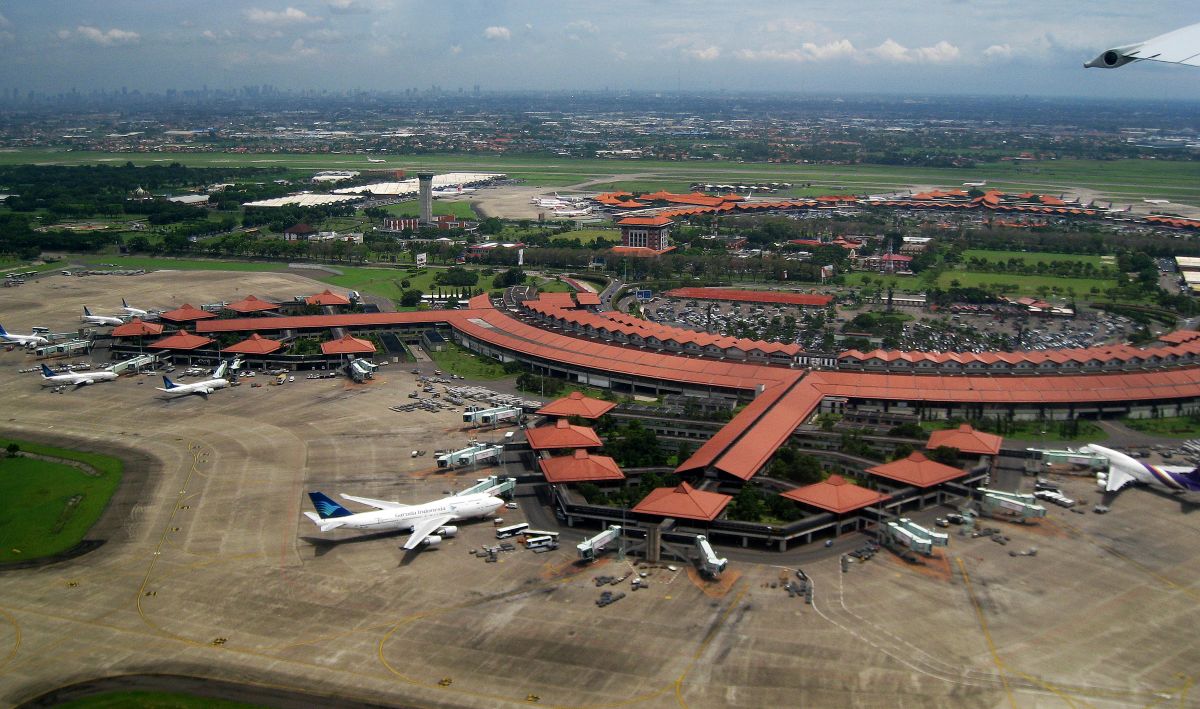
The tourist destination of Indonesia, Krakatau, is currently causing disruption to tourism after its recent eruption caused hundreds of aircraft to cancel their flights and volcanic ash to shutter many airports. All flights were suspended at Jakarta’s Soekarno – Hatta International Airport when volcanic ash extended into airport boundaries early on Sunday. The government stated that at least 209 flights were impacted. Many of the disrupted flights were international. The volcanic activities resumed on Friday and quickly escalated overnight. BMKG reported volcanic ash at 20,000 feet above Java while ash level was reported to be at 50,000 feet for Sumatra. Four different aviation authorities stated that four airports were closed temporarily. Schools and fishermen were also disrupted. The disruption of travelling by sea and the disruption to air travel have created a very active and ongoing safety threat in western Indonesia.
The immediate concern for travellers is the movement of volcanic ash through busy Indonesian airspace. Soekarno-Hatta International Airport extended a scheduled operational suspension on Sunday morning because of ash contamination. The extension followed an earlier halt that had been due to end at 5.30am local time.
Indonesia’s Transport Ministry reported that 209 flights had been affected. The figure included several international services, highlighting the disruption’s significance for inbound and outbound tourism.
The situation remains fluid because volcanic ash does not stay above one location. Wind direction and altitude can shift rapidly, creating different risks for aircraft operating across several flight corridors.
Advertisement
Advertisement
BMKG said its satellite analysis on Sunday morning identified two volcanic ash distribution clusters. They stretched across Banten, Jakarta, West Java and towards Bengkulu. Higher-altitude ash also moved towards areas around Lampung, the southern Sunda Strait and the Indian Ocean.
That spread matters beyond Jakarta. Travellers connecting through western Indonesia can face delays even when their final destination sits far from the volcano.
Airlines may therefore alter departure times, aircraft routings or operating airports. In some cases, passengers can also experience knock-on delays later in the day.
The disruption has not been limited to Soekarno-Hatta. BMKG confirmed that official NOTAMs issued by AirNav Indonesia recorded temporary operational closures at four airports on 6 September.
Advertisement
Advertisement
| Airport | Location | Travel significance | Current risk driver |
|---|---|---|---|
| Soekarno-Hatta International Airport | Tangerang, Banten | Indonesia’s principal Jakarta gateway | Volcanic ash |
| Halim Perdanakusuma Airport | Jakarta | Domestic and selected regional connectivity | Volcanic ash |
| Radin Inten II Airport | Lampung | Gateway for southern Sumatra | Ash movement |
| Budiarto Airport | Tangerang, Banten | Aviation and training operations | Ash conditions |
The closures occurred at different times rather than representing a blanket shutdown of all four airports simultaneously. That distinction is important for travellers interpreting social-media reports about Indonesian airport closures.
AirNav Indonesia operates the country’s aviation information system and publishes NOTAMs, which provide operational information affecting flight safety. Its aeronautical information service includes NOTAM and volcanic-ash-related information.
For passengers, that means airline notifications remain more useful than static airport schedules during an eruption.
Volcanic ash presents a particularly serious problem for aviation because its danger is not always visible from the ground. Fine ash particles can enter aircraft engines and create operational hazards.
BMKG reported ash movement at 20,000 feet towards the east and material reaching 50,000 feet towards the west. The agency has issued repeated aviation weather warnings as conditions evolved.
By Sunday, BMKG said it had issued 50 SIGMETs since the initial eruption. A SIGMET provides significant meteorological information relevant to aviation safety.
The first warning followed the initial eruption on 4 September at 11.23pm local time. Since then, meteorological authorities have maintained continuous monitoring of the atmosphere around the volcano.
This explains why airport operations can change quickly. An airport may remain open while an individual route becomes unsuitable. Conversely, an airport can temporarily suspend operations while authorities assess whether ash is moving away.
For travel companies, the disruption creates a network-management problem rather than a simple airport closure. Aircraft rotations, crew positioning and connecting passengers can all be affected.
Indonesia’s geological authorities have placed Anak Krakatau at Level III, or Siaga, since 2 July 2026. The volcano has remained active through a sequence of Strombolian eruptions.
Badan Geologi reported that renewed eruptive activity continued into 5 September. At 11.07pm local time, the volcano entered a period of continuous eruption accompanied by rumbling sounds.
Observers reported a persistent red glow associated with lava-fountain activity. Authorities said the phenomenon can occur during sustained eruptive phases and may produce lava flows.
The official assessment also provides an important reassurance. The rebuilt volcanic edifice remains relatively small after the 2018 collapse.
Badan Geologi said it currently does not pose a scale of collapse capable of triggering a tsunami. Nevertheless, authorities continue to monitor changes in the volcano’s morphology and activity.
That distinction matters for tourism messaging. The present disruption primarily concerns volcanic ash, lava, incandescent rocks and associated hazards.
It does not mean that all coastal areas around Java and Sumatra face an imminent tsunami.
The immediate aviation disruption could become more significant if ash emissions continue. Jakarta serves as a major international gateway for Indonesia, while the surrounding region supports extensive domestic tourism.
Flight disruption can quickly affect hotels, meetings, tours and onward transport. A delayed international arrival can also cause missed domestic connections.
Travel operators may need to hold rooms for delayed passengers. They may also face last-minute itinerary changes when flights move to alternative airports.
The coastal economy around the Sunda Strait faces another set of consequences. Local media reported that fishermen cancelled trips as eruptive activity continued.
Schools also cancelled activities after residents reported eye irritation from ash. These effects demonstrate how volcanic events can move rapidly from an aviation issue into a broader destination-management challenge.
For tourism businesses, accurate communication therefore becomes crucial. Overstating the danger can create unnecessary cancellations. Understating the risk can expose visitors to avoidable hazards.
Travellers in western Indonesia should treat flight schedules as dynamic information rather than fixed commitments.
Passengers flying through Jakarta should check their airline before travelling to the airport. They should also allow additional time for possible rerouting or airport procedures.
Those with connecting itineraries face a greater risk. A delayed international flight can affect a separate domestic ticket booked on another carrier.
Travel insurance terms should also be reviewed before making expensive changes. Policies vary considerably in how they treat volcanic eruptions, ash disruption and airline cancellations.
Travellers staying in Banten or Lampung should monitor official volcanic and weather updates. They should avoid restricted areas around Anak Krakatau.
Badan Geologi currently prohibits residents, visitors and climbers from entering within a 3km radius of the volcano’s activity centre. Authorities also warn about lava, incandescent rocks, heavy ashfall and other eruptive hazards.
| Traveller concern | Recommended response |
|---|---|
| Flight from Jakarta | Check airline status before leaving for the airport |
| International connection | Allow additional connection time |
| Domestic connection | Avoid tight self-transfer itineraries |
| Airport closure | Follow airline instructions rather than travelling independently |
| Ashfall | Reduce outdoor activity and protect eyes and respiratory passages |
| Coastal stay | Follow local authority instructions |
| Visit near Anak Krakatau | Stay outside the official 3km exclusion zone |
| Travel updates | Use BMKG, Badan Geologi and airline information |
BMKG has moved to continuous monitoring of the eruption’s atmospheric and maritime effects. Its teams are analysing satellite imagery, meteorological information and aviation conditions around the Sunda Strait.
The agency said it had identified no abnormal sea-level signal through its network of 20 tsunami gauges around the Sunda Strait as of 7am Sunday. It also reported a low probability of a tsunami at that time, while observed sea conditions remained around one metre.
This monitoring framework is particularly important because Anak Krakatau has a complicated recent history.
The volcano emerged from the area formerly occupied by Krakatau after the catastrophic 1883 eruption. That historic eruption produced enormous tsunamis and caused more than 36,000 deaths.
In December 2018, a partial collapse of Anak Krakatau triggered another tsunami. The disaster killed hundreds of people along the coasts of Java and Sumatra.
The current geological assessment differs materially from that 2018 event. Authorities say the present volcanic structure is still relatively small and does not currently indicate a comparable collapse threat.
The aviation industry treats volcanic ash as a serious operational hazard. Aircraft cannot simply fly through an ash plume because particles can damage engines and other components.
Consequently, airlines and air navigation authorities must constantly assess plume location, altitude and movement.
The present episode illustrates the value of Indonesia’s coordinated warning system. BMKG provides meteorological and volcanic-ash information, while AirNav Indonesia distributes operational aviation information.
Airport authorities and airlines then make decisions based on those inputs.
This layered system also explains why travellers can receive changing information within hours. An airport reopening does not guarantee that every flight will operate normally.
Aircraft may still require revised routes. Crews can be displaced by earlier cancellations. Gates and aircraft can remain occupied by delayed services.
Therefore, the operational recovery can take longer than the physical movement of ash itself.
Indonesia remains one of the world’s most volcanically active countries. Its location along the Pacific Ring of Fire creates exceptional geological diversity.
That geology also supports a major tourism proposition. Volcanoes, crater landscapes and volcanic cultures attract visitors across the archipelago.
However, volcanic tourism depends on clear exclusion zones and credible communication. The current Anak Krakatau restrictions demonstrate that distinction.
Visitors can continue travelling in much of Indonesia while avoiding an active hazard zone. A volcano eruption should not automatically translate into a nationwide travel warning.
For international tourism businesses, precision is therefore essential. Advisories should identify affected airports, regions and transport corridors rather than treating an entire country as inaccessible.
The 2018 Anak Krakatau tsunami remains central to the way authorities approach current activity. That event demonstrated that volcanic instability can create maritime hazards even without a conventional earthquake-triggered tsunami.
Since then, Indonesia has strengthened monitoring and public-warning capabilities around vulnerable coastal regions.
The current response includes atmospheric surveillance alongside ocean monitoring. That broader approach is particularly relevant because the present disruption began with aviation impacts.
The contrast between 2018 and 2026 is also significant. Authorities are now closely tracking volcanic morphology and sea-level conditions while communicating risk through multiple government channels.
For travellers, the practical lesson is straightforward. Official warnings should take precedence over viral footage or unverified social-media claims.
The next stage will depend heavily on the eruption’s intensity and ash trajectory. Airport restrictions can be lifted when conditions become safe, but they can also return if ash spreads again.
Travellers should therefore avoid assuming that a temporary reopening represents a permanent resolution.
Airlines will continue assessing individual routes. Some flights may operate normally while others face delays, cancellations or diversions.
The most reliable strategy is to check the latest airline notification before departure. Travellers should also monitor airport and government updates when ash conditions change.
The broader tourism picture remains more stable than the dramatic airport disruption suggests. The restrictions are concentrated around affected aviation and volcanic-risk areas.
For now, Indonesia’s travel network is dealing with a highly localised but potentially fast-moving disruption. The priority remains keeping aircraft away from hazardous ash while protecting communities around the Sunda Strait.
As the eruption continues, the most important factor for travellers will be the direction and altitude of the ash plume. Government monitoring, aviation notices and airline decisions will determine how quickly normal schedules return.
The episode also reinforces a wider lesson for Indonesia’s tourism industry. Volcanic resilience depends on rapid information, precise warnings and flexible travel planning. Those principles will remain essential as the country manages tourism alongside its powerful geological landscape.
The Anak Krakatau eruption has released volcanic ash into surrounding airspace, prompting temporary flight suspensions at Jakarta-area airports. The ash can create serious risks for aircraft engines and visibility.
Indonesia’s Transport Ministry reported that 209 flights, including several international services, were affected by the disruption.
Travel to Jakarta may still be possible, but passengers should check their airline and airport status before departure. Flight schedules can change rapidly as volcanic ash shifts with wind conditions.
Temporary closures have affected Soekarno-Hatta International Airport, Halim Perdanakusuma Airport, Radin Inten II Airport and Budiarto Airport at different times.
Authorities have reported no imminent tsunami threat from the current activity. However, travellers near the Sunda Strait should follow official warnings and avoid restricted areas around Anak Krakatau.
Advertisement
Tags: Anak Krakatau eruption, indonesia volcano, Jakarta flights, Soekarno-Hatta Airport, volcanic ash
Advertisement
Advertisement













Sunday, September 6, 2026

Sunday, September 6, 2026

Sunday, September 6, 2026

Sunday, September 6, 2026

Saturday, September 5, 2026

Saturday, September 5, 2026

Sunday, September 6, 2026

Sunday, September 6, 2026



