
Morocco Rebuilds High Atlas Tourism With Village Stays

Published
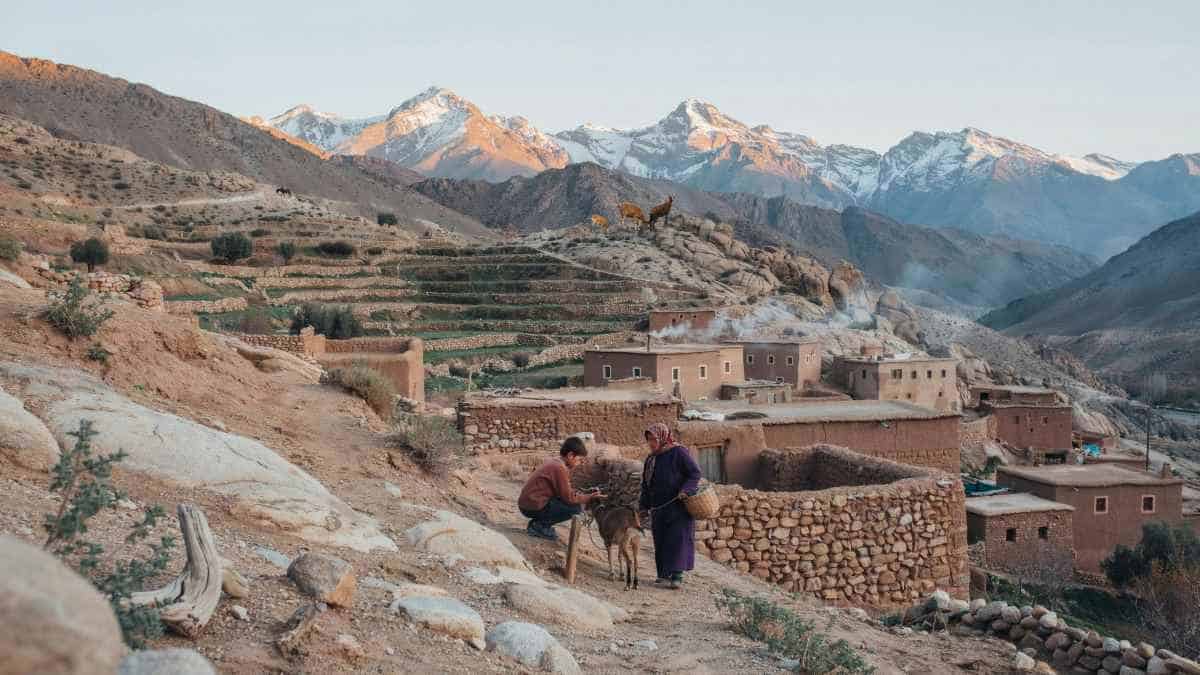
Image generated with Ai
The High Atlas Mountains in Morocco are set to experience the next wave of tourism development, where the development of luxury eco-lodges and restored village accommodations brings travellers closer to the local mountains and villages, Amazigh culture, and their traditional landscapes. Tourism development that is set to take place in September 2026 takes into account the reconstruction efforts carried out in various mountain communities after the earthquake that took place in 2023 in Al Haouz. Hospitality facilities will be developed in the renovated stone villages, allowing travellers to spend time in mountain areas through local business development, farming, and conservation efforts.
Tourism returns to the High Atlas
The High Atlas stretches across central Morocco and provides some of the country’s most dramatic mountain scenery.
Villages built into valleys and slopes are surrounded by peaks, terraced fields, walnut trees and narrow mountain paths. The region has long attracted trekkers, climbers and travellers interested in rural Moroccan culture.
The earthquake of September 2023 caused extensive damage across several communities in the High Atlas, affecting homes, roads, schools and tourism businesses.
Advertisement
Advertisement
Reconstruction has since become closely connected with the recovery of local economies. Tourism provides one route for bringing visitors and spending back into mountain communities, particularly where accommodation, guiding, food production and handicrafts are locally operated.
Advertisement
Advertisement
Restored stone hamlets become accommodation
The new eco-lodge model places hospitality within existing village environments rather than creating entirely separate resort compounds.
Traditional stone construction, local materials and mountain architecture provide the visual character of many properties. Interiors can offer contemporary comfort while retaining connections with the surrounding villages.
For travellers, this creates a different experience from staying in a conventional hotel in Marrakech or a large resort elsewhere in Morocco.
Advertisement
Advertisement
Mornings can begin with views across mountain valleys, followed by guided walks through agricultural terraces or visits to nearby villages. Evenings can centre on locally prepared meals and views of the mountains rather than nightlife or large-scale entertainment.
Amazigh culture shapes the visitor experience
The High Atlas is home to Amazigh communities, whose traditions, languages, crafts and agricultural practices form an important part of the region’s identity.
Advertisement
Advertisement
Tourism businesses are increasingly working with local cooperatives and community organisations to incorporate these traditions into visitor experiences.
Travellers may encounter locally produced textiles, pottery, food and agricultural products, while village visits can introduce visitors to traditional building methods and everyday mountain life.
Food is another important part of the experience. Meals can feature locally sourced vegetables, grains, olive oil, fruit, nuts and traditional dishes prepared using ingredients produced within the surrounding valleys.
These experiences give visitors a closer connection with the communities in which they are staying.
Trekking remains the main attraction
The High Atlas is particularly suited to walking holidays.
Advertisement
Advertisement
Routes range from relatively gentle village hikes to demanding mountain treks. Mount Toubkal, North Africa’s highest peak, remains one of the region’s best-known trekking destinations.
Villages around the Toubkal National Park provide starting points for mountain routes, while valleys elsewhere in the High Atlas offer quieter alternatives for visitors looking for shorter walks.
The growth of village-based accommodation allows travellers to spend several nights in the mountains instead of treating the region as a single-day excursion.
This can also spread tourism spending across guides, drivers, guesthouses, restaurants, artisans and agricultural producers.
Terraced agriculture becomes part of tourism
The traditional agricultural landscape is another important element of the new tourism model.
Advertisement
Advertisement
Terraces allow farming communities to cultivate steep mountain slopes, with crops and orchards forming distinctive patterns across the valleys. Water management is particularly important in a region where agriculture depends on limited mountain water resources.
Tourism initiatives linked to local cooperatives are supporting efforts to maintain these landscapes and traditional farming practices.
For visitors, the terraces are more than scenery. Guided walks can explain how mountain communities manage fields, irrigation channels and orchards, connecting the landscape with the livelihoods that have shaped it over generations.
Conservation enters the luxury market
The latest eco-lodge developments also place greater emphasis on environmental performance.
Properties are being designed around lower-impact operations, including energy efficiency, local sourcing, water management and reduced waste. Some projects are also linking guest spending with watershed protection and agricultural preservation.
Advertisement
Advertisement
The focus is particularly relevant in the High Atlas, where water availability, soil health and forest management influence both communities and tourism.
Luxury therefore increasingly comes through location, privacy, architecture and access to nature rather than simply through larger facilities.
Marrakech becomes the gateway
For international travellers, Marrakech remains the principal gateway to the High Atlas.
A city stay can be combined with several nights in a mountain village, allowing visitors to experience Morocco’s historic urban culture before travelling into the countryside.
The contrast is considerable. Marrakech offers medinas, palaces, gardens, restaurants and busy souks, while the High Atlas provides hiking trails, mountain villages, open valleys and slower-paced rural experiences.
Advertisement
Advertisement
This combination also makes the mountain retreats suitable for travellers seeking a longer Moroccan itinerary rather than a standalone adventure holiday.
A new chapter for mountain tourism
With the development of the renovated village lodges, the High Atlas has received a tourism model that is deeply rooted in the idea of community regeneration and sustainability. Tourists will be able to stay in mountain villages, travel through terraces, learn about the Amazigh culture and admire the most beautiful sites of Morocco. With the development of the tourism sector, the economic tale of the High Atlas is increasingly incorporating tourism into its narrative. The new wave of eco-lodges is making local communities, agriculture, and natural resources an integral part of the tourist experience.
Advertisement
