
New York Unveils $1 Billion Sustainable Future Programme to Cut Energy Costs and Expand Clean Power

Updated
Published
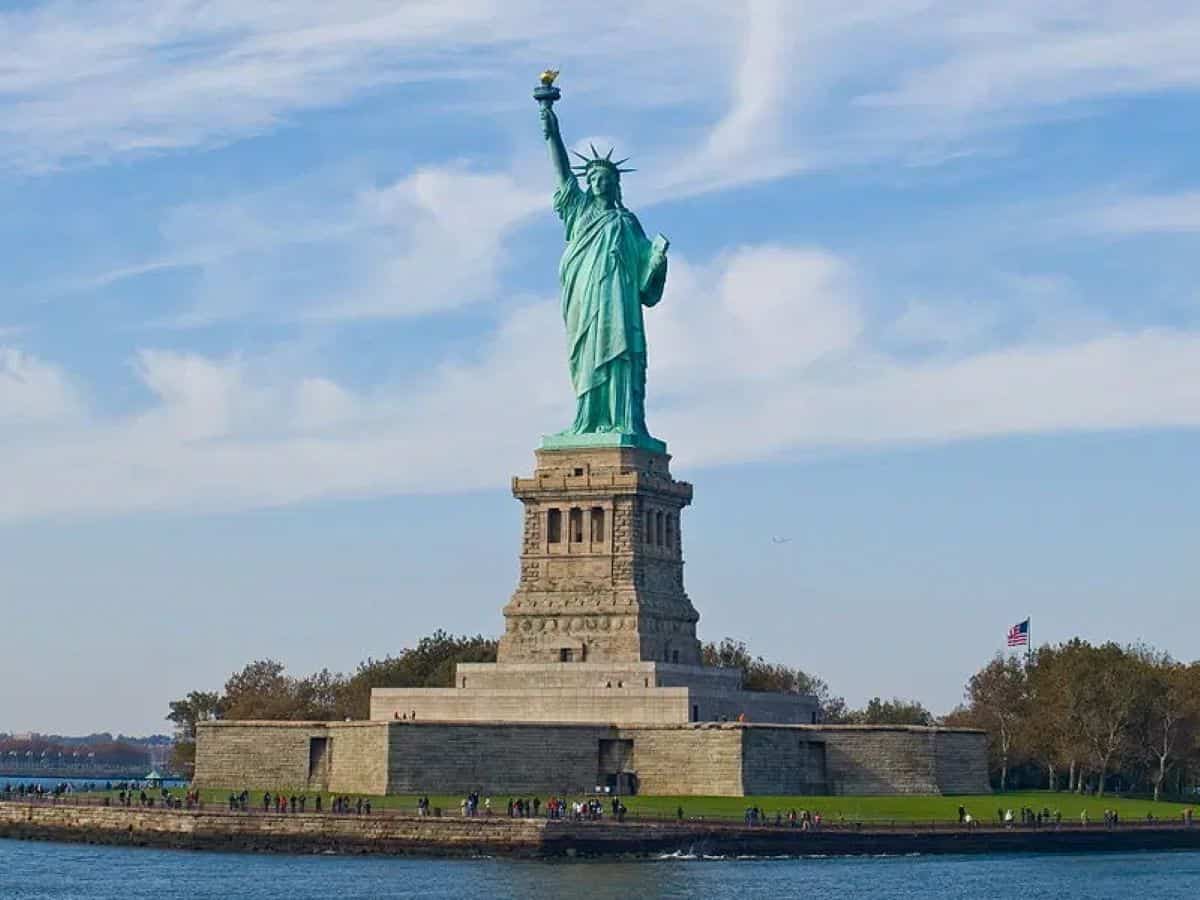
Image generated with Ai
New York has expanded its Sustainable Future Programme with a major $1 billion funding package designed to reduce energy costs, strengthen renewable power and modernise infrastructure. The programme arrives as electricity demand rises, driven by manufacturing, electrification and artificial intelligence. Governor Kathy Hochul has also introduced the CHARGE agenda and an Energy Infrastructure Development Plan to reshape long-term energy planning. Together, these initiatives target households, schools, housing, farms, public lands and renewable energy projects. The funding includes support for heat pumps, solar power, thermal energy networks, energy efficiency, recycling, agriculture and public infrastructure. The programme therefore connects affordability with New York’s broader clean-energy transition.
New York is expanding its clean-energy investment at a moment when the state is facing a significant change in electricity demand. Governor Kathy Hochul has announced the second phase of the Sustainable Future Programme, backed by nearly $1 billion, while simultaneously launching the CHARGE agenda and an Energy Infrastructure Development Plan.
Advertisement
Advertisement
The combined approach puts household affordability, building efficiency, renewable generation and long-term grid planning at the centre of New York’s energy strategy. The state says the investment will help families reduce heating costs, improve air quality in schools, support renewable energy and strengthen infrastructure.
The announcement also reflects a wider challenge facing energy systems: electricity consumption is increasing as manufacturing expands, buildings become more electrified and artificial intelligence drives new demand.
Advertisement
Advertisement
Why is New York increasing its clean-energy investment?
The Sustainable Future Programme is designed to make the energy transition more affordable while supporting infrastructure capable of meeting future demand. The latest allocation matches the largest climate-action investment in New York State’s history, according to the announcement.
Advertisement
Advertisement
The funding is divided across several areas, with building decarbonisation and energy-cost savings receiving $500 million, affordable renewable energy receiving $300 million, and additional funding supporting methane reduction, agriculture, forestry, recycling, public lands and community infrastructure.
This structure means the programme extends beyond electricity generation. It addresses the buildings where people live and work, schools, farms, public spaces and the infrastructure needed to support a lower-emissions energy system.
How will the programme help households reduce heating costs?
One of the largest elements is the $150 million EmPower+ Programme, which provides home energy assessments, efficiency improvements and heat-pump installations at no cost to eligible low- and moderate-income New Yorkers.
Another $150 million is allocated to the Affordable Green Transition to Housing programme. This includes $40 million to address federal funding gaps in the Weatherization Assistance Programme, $10 million for all-electric multifamily housing and $100 million for the Clean Energy Initiative.
The initiative also includes funding for NYCHA and Mitchell-Lama homes. For households, the practical objective is to improve energy efficiency and reduce heating and cooling expenses over time while supporting the transition away from fossil-fuel-dependent building systems.
Advertisement
Advertisement
What does the plan mean for schools and public buildings?
Schools are another major focus of the investment. The Clean Green Schools Programme receives $50 million to modernise resource-limited public school facilities, reduce carbon emissions and improve indoor air quality.
The programme also provides $150 million for thermal energy network projects. These utility-scale systems are intended to help neighbourhoods transition towards clean heating and cooling, including space heating and hot-water requirements.
This has implications beyond climate targets. More efficient buildings can reduce energy consumption, while improved indoor air quality can directly affect the environments used by students and teachers.
The approach therefore links infrastructure investment with building performance and public-service facilities rather than treating clean energy as a standalone electricity-sector issue.
How much funding is going towards renewable energy?
New York is allocating $300 million towards affordable renewable energy under the latest programme.
Advertisement
Advertisement
The NY-Sun Programme receives $200 million to expand solar incentives for single-family homes, multifamily buildings, businesses and local authorities. The stated aim is to increase clean-energy generation while helping reduce electricity bills.
A further $100 million is allocated to NYPA Renewables, enabling the New York Power Authority to finance public renewable-energy projects.
This investment is significant because the programme combines distributed solar with public-sector renewable development. It therefore supports clean-energy generation at different scales, from individual properties and buildings to larger public projects.
What role will agriculture, recycling and public land play?
The Sustainable Future Programme also extends into environmental resilience and land management.
New York is allocating $25 million for municipal recycling and food-waste initiatives, including food donation and municipal composting. Another $25 million is earmarked for climate-resilient agriculture and urban forestry, supporting soil-health measures and methane-reduction technologies for farms.
Advertisement
Advertisement
An additional $12.5 million is intended to expand urban tree cover and restore state forests.
The programme also commits $25 million to parks, public lands and community management. This includes land acquisition for state forests and parks, alongside repairs to public campgrounds, trails, pools and recreational facilities.
Consequently, the programme connects energy policy with wider environmental and community infrastructure.
Why is New York introducing a new energy infrastructure plan?
The Energy Infrastructure Development Plan is intended to change how New York plans for future energy demand.
The state says electricity demand is experiencing an unprecedented increase because of manufacturing, electrification and the expansion of artificial intelligence. The EIDP is intended to create a coordinated planning framework that aligns infrastructure investment with economic growth.
Advertisement
Advertisement
Under the plan, the New York State Energy Planning Board will conduct comprehensive planning and develop a clearer strategy for meeting future energy requirements.
The process begins this year as part of the State Energy Plan. An interim plan is expected in 2027, while the first comprehensive EIDP is scheduled for completion by December 2029.
How will the new infrastructure strategy support the grid?
The proposed framework will consider several infrastructure options rather than relying on one technology or one type of generation.
The plan includes neighbourhood-scale alternatives, distributed solar and energy storage, alongside new clean generation and large-scale transmission. The stated objective is to maintain a continuous electricity supply while progressing towards a zero-emissions grid and controlling costs.
This approach is particularly relevant as electricity demand becomes more complex. Large industrial facilities, electrified buildings, renewable generation and data-intensive technologies can all affect when and where electricity infrastructure is required.
Advertisement
Advertisement
By coordinating generation, transmission, storage and local alternatives, New York intends to develop a long-term infrastructure strategy rather than addressing individual energy needs through isolated projects.
What is the CHARGE agenda and why does it matter?
The CHARGE agenda provides the broader policy framework around the new investment.
CHARGE stands for Clean, Highly Affordable, Reliable, Grid Expansion. The framework contains five main areas: reducing costs, demanding accountability from energy companies and data centres, expanding large-scale clean energy, modernising the power grid and creating a clean economy.
The agenda includes a one-time $1 billion energy rebate programme for more than 8 million New Yorkers. It also includes measures aimed at increasing accountability among utilities and addressing the energy requirements of large data centres.
New York says data-centre developers will be required either to provide their own energy sources or pay higher rates to cover substantial energy demand, with the stated intention of protecting ordinary consumers from those costs.
Advertisement
Advertisement
How does artificial intelligence affect New York’s energy strategy?
Artificial intelligence is becoming an important factor in the state’s infrastructure planning because data centres can require substantial and continuous electricity supplies.
The state has therefore included data-centre demand within the CHARGE agenda while placing new emphasis on energy infrastructure planning. The announcement says manufacturing, electrification and rapid AI expansion are contributing to the state’s growing electricity requirements.
New York has also established what the announcement describes as a statewide moratorium on new hyperscale data centres while regulations are developed around their energy, environmental and grid impacts.
The broader significance is that technology investment is increasingly becoming an infrastructure-planning issue. New electricity demand can require generation, transmission, storage and potentially local infrastructure upgrades.
What does the programme mean for New York’s travel and tourism infrastructure?
Although the announcement is primarily an energy and climate initiative, parts of the investment have a direct connection with destinations and visitor infrastructure.
Advertisement
Advertisement
Funding for parks, public lands, campgrounds, trails, pools and recreational facilities can support the physical infrastructure used by visitors and local communities. Improved public facilities can strengthen the usability and resilience of outdoor recreation assets.
The investment in urban forestry, environmental management and cleaner infrastructure also contributes to the wider sustainability profile of destinations.
For the travel industry, the relevance is therefore indirect but important. Tourism depends on functioning transport, accommodation, public spaces, recreation facilities and reliable utilities. Long-term infrastructure planning can influence the operating environment in which these sectors function.
The programme does not, however, provide a tourism-specific funding allocation in the material announcing the investment.
What happens next with New York’s energy plan?
Implementation will unfold over several years rather than through a single funding cycle.
Advertisement
Advertisement
The Sustainable Future Programme provides immediate funding across buildings, housing, schools, renewable energy, agriculture, recycling, forestry and public infrastructure. Meanwhile, the EIDP establishes a longer planning horizon.
An interim infrastructure plan is expected in 2027, followed by the first comprehensive plan in December 2029. The state says subsequent EIDP plans will become part of its continuing energy-planning process.
This timeline indicates that New York is attempting to combine immediate household and infrastructure investment with longer-term system planning. The outcome will depend on implementation, project delivery, demand growth, infrastructure development and the ability to maintain affordability and reliability as the energy system changes.
For travel, business and local communities, the most visible effects are likely to emerge through improved public facilities, building efficiency, renewable-energy deployment and infrastructure resilience rather than through a dedicated tourism programme.
What is the wider significance for sustainable travel and destinations?
The New York announcement illustrates how energy policy increasingly intersects with the wider travel and tourism economy.
Advertisement
Advertisement
Hotels, attractions, restaurants, airports, transport systems and public recreation facilities all depend on reliable energy and infrastructure. At the same time, destinations are facing increasing pressure to reduce emissions, improve resilience and manage operating costs.
New York’s approach combines household energy efficiency, renewable generation, grid development and public-land investment. While the programme is not a tourism strategy, its infrastructure priorities can affect the conditions under which tourism businesses and visitor destinations operate.
For international travel markets, such programmes also demonstrate how major destinations are integrating sustainability into broader economic and infrastructure planning rather than limiting climate action to tourism-specific initiatives.
The next major milestones will be the implementation of funded programmes and the development of the interim and comprehensive EIDP plans. These stages will provide clearer evidence of how the strategy translates from policy into infrastructure and measurable outcomes.
Cause: New York faces rising electricity demand as manufacturing expands, buildings become more electrified and artificial intelligence increases demand from data centres. Answer: The state is responding with nearly $1 billion for the Sustainable Future Programme, alongside the CHARGE agenda and a new Energy Infrastructure Development Plan. Reason: The combined strategy seeks to reduce household energy costs, expand renewable generation, improve schools and housing, strengthen public infrastructure and prepare the grid for future demand. It also addresses agriculture, recycling, forestry and public lands. The long-term objective is to coordinate investment while maintaining electricity reliability, affordability and progress towards a lower-emissions energy system/
Advertisement
Advertisement
New York’s latest energy investment represents a broad infrastructure programme rather than a single clean-energy project. The $1 billion Sustainable Future Programme covers household efficiency, heat pumps, affordable housing, schools, thermal energy networks, solar power, public renewables, agriculture, recycling, forestry and recreational infrastructure. At the same time, the CHARGE agenda establishes a wider framework focused on affordability, accountability, renewable development, grid modernisation and clean-economy jobs. The Energy Infrastructure Development Plan adds a long-term planning mechanism as electricity demand changes because of manufacturing, electrification and artificial intelligence. For the travel industry, the programme’s relevance is primarily through public facilities, destination infrastructure, energy reliability and sustainability. New York’s approach will take years to implement, with an interim infrastructure plan expected in 2027 and the first comprehensive plan due by December 2029. The programme therefore provides an evolving framework for understanding how energy policy could influence communities, businesses and destinations across the state.
“New York’s expanded Sustainable Future Programme demonstrates how energy investment can connect affordability, infrastructure development and long-term sustainability. The focus on cleaner buildings, renewable energy, schools, public lands and stronger infrastructure is particularly relevant as destinations and communities face changing energy requirements. From a travel industry perspective, reliable infrastructure and well-maintained public facilities remain essential foundations for tourism growth. The inclusion of parks, campgrounds, trails and recreational facilities also highlights the connection between environmental investment and visitor experiences. The new Energy Infrastructure Development Plan adds another important dimension by looking beyond immediate projects towards long-term energy planning. As New York responds to rising demand from manufacturing, electrification and artificial intelligence, this broader approach could provide valuable lessons for other destinations seeking to balance economic activity, infrastructure needs, affordability and sustainability.” — Anup Kumar Keshan, Founder and Editor-in-Chief, Travel And Tour World
Advertisement
